
















 Electronics
 Fashion & Apparel
 Furniture
 Jewelry and Watches
 Afterschool Activities
 Sport & Fitness
 Beauty Center
 Dental Clinic
 Medical Clinic
 Home Cleaning & Maid Services
 Photography & Videography
 Car Dealership
 Travel Agency & Tour Operator

TL;DR: Wati vs respond.io
Choose Wati if you're a small, WhatsApp-first team, especially a Shopify store, that wants the lowest entry price. Choose respond.io if your customers message you across several channels, you handle 500+ chats a month, and you want AI Agents, automation and your human team working in one inbox.
AI agents. Wati's AI agents run on Astra, a separate product with its own subscription ($99 or $399/month) that connects to Wati's Pro or Business plan. Respond.io's AI Agents are included from the Growth plan and work in the same inbox, automations and lifecycle stages as your team.
Channels. Both cover WhatsApp, Instagram, Messenger and TikTok. Respond.io adds email, Telegram, Viber, LINE, WeChat, VoIP and Messenger Calls. Wati adds RCS.
Automation limits. Wati caps automation at 1,000–5,000 triggers a month by plan, after which replies go manual unless you buy more. Respond.io doesn't cap automation triggers.
Wati is the better fit for Shopify-led commerce and the cheapest way to start on WhatsApp. Respond.io is the better fit once AI, automation and multiple channels need to run as one system.

This comparison is for mid-market B2C businesses deciding between Wati and respond.io for customer chats on WhatsApp and other channels. Respond.io is a customer conversation platform that includes a centralized inbox with AI Agents, built for teams handling 500+ customer chats a month across WhatsApp, Instagram, TikTok and other messaging channels. Wati is a WhatsApp-first customer engagement platform with a team inbox, chatbots and campaigns, and it sells its AI agents separately through Astra. The two compete for the same teams on WhatsApp. They differ in how AI, automation and channels fit together as your team grows, and choosing the wrong one means paying for a second AI product or replying manually once automation hits its cap.
Wati vs respond.io at a glance
Wati costs less to start and goes deeper on Shopify. Respond.io includes AI Agents from its Growth plan, covers more channels and calls, and doesn't cap automation triggers.
Checked against Wati's and respond.io's public pricing and plan comparison pages in October 2026. Prices are monthly billing in US$.
Wati | Respond.io | |
|---|---|---|
Plans | Growth $69 (3 users, no extra users). Pro $149 (5 users, +$39/user). Business $349 (5 users, +$89/user) | Starter $99 (5 users). Growth $199 (10 users). Advanced $349 (10 users). Extra users $12–$24 |
WhatsApp message fees | Wati's rate card: up to 60% above Meta's marketing rates and up to 80% above utility and authentication rates | Meta's published rates, no markup |
Messaging channels | WhatsApp, Instagram, Messenger, TikTok, RCS and website widget on every plan. SMS on Business only. No email | WhatsApp, Instagram, Messenger, TikTok, Telegram, Viber, LINE, WeChat, SMS, email and website chat on every plan. Custom channels from Advanced |
Calls | WhatsApp Business Calling | WhatsApp Business Calling, VoIP and Messenger Calls on every plan |
AI writing help | AI Copilot: reply suggestions, summaries, translations and AI CX Score. 250 / 500 / 1,500 credits a month by plan | AI Assist, AI Prompts and AI Chat Summary on every plan |
AI agents | Astra, a separate product and subscription ($99 or $399/month) that connects to Wati Pro or Business. Web and WhatsApp, plus a voice agent | AI Agents included from Growth, built into the same inbox and working across your connected channels. AI Agents answer calls from Advanced |
AI-to-human handoff | Configured in Astra with an "assign to team/user" action that creates a rule in Wati's Team Inbox | Built in: the AI Agent assigns the conversation to a person or team in the same inbox |
Automation | Chatbots and rules. 1,000 / 2,000 / 5,000 automation triggers a month; extra triggers $40 per 1,000 | Workflows from Growth, with no trigger caps. AI Agents can start a Workflow |
Lead stages | Lead stages on Pro and Business | Lifecycle stages and stage analytics on every plan. AI Agents can move a contact to the next stage |
Click-to-chat ads | CTWA inbox on every plan. CTWA automation from Pro. CTWA conversion tracking and Google Click-to-Message Ads on Business | Meta Click-to-Chat Ads and TikTok Messaging Ads on every plan. Ad-click automations and sales events sent back to Meta and TikTok from Growth |
Shopify and commerce | Shopify app ($4.99/month): abandoned-cart and order templates, catalog sync and checkout. See which campaigns lead to sales on Business | WhatsApp catalog. Shopify connection through the web chat plugin |
Security | SOC 2 Type II, GDPR and CCPA. Phone number masking, roles and IP whitelisting on Business | ISO 27001. 2FA on every plan. SSO and contact masking from Advanced |
Uptime | 99.99% historical uptime (Wati's published figure) | 99.999% uptime (public status page) |
Support and onboarding | Growth: 24/5 email. Pro: 24/7 email and chat. Business: priority support and a dedicated CSM. Onboarding free with annual plans, a paid add-on otherwise | 24/7 support on every plan. Onboarding available on every plan |
Turn customer conversations into business growth with respond.io. ✨
Manage calls, chats and emails in one place!
Who should choose Wati vs respond.io?
Small WhatsApp-first teams and Shopify stores get more for less from Wati. Mid-market B2C businesses running several channels, a team of 5+ agents and AI agents get more from respond.io.
Choose Wati if:
You only need WhatsApp. Wati is designed around WhatsApp first, so a WhatsApp-only team gets a simpler product without channels and settings it won't use. Its Business plan adds WhatsApp-specific extras such as WhatsApp Pay and broadcast sending at up to 4,000 messages a minute (12,000 with its Blitz add-on).
You sell on Shopify. Wati's Shopify app ($4.99/month) adds abandoned-cart and order templates from the Growth plan, plus catalog sync, checkout and, on Business, reports on which campaigns lead to sales. Respond.io connects to Shopify through its web chat plugin, so if Shopify automation is your main use case, Wati covers more out of the box.
Click-to-WhatsApp ads are your main lead source. Wati's Business plan tracks which CTWA ads lead to conversions and supports Google Click-to-Message Ads.
Entry price matters most. Wati Growth costs $69/month for 3 users and includes chatbots and up to 15,000 broadcasts a month. Respond.io Starter costs $99/month for 5 users but doesn't include Workflows, AI Agents or broadcasts. Those start on Growth ($199/month).
Choose respond.io if:
You're a mid-market B2C business whose customers message you on more than WhatsApp. Email, Telegram, Viber, LINE, WeChat, VoIP and Messenger Calls all land in the same inbox as WhatsApp, Instagram, Messenger and TikTok.
You want AI agents without a second product. AI Agents are included from Growth and work in the same inbox as your team, so there's no separate AI subscription, login or credit pool to manage.
Your automation runs past a few thousand triggers a month. Respond.io doesn't cap automation triggers, so a campaign spike doesn't push replies back to your team.
Your team is growing past 5 agents. Wati's Growth plan can't add a fourth user, and Wati Pro charges $39 for each user after 5. Respond.io Growth includes 10 users.
How do Wati's AI products compare with respond.io's AI Agents?
AI agents work best when they share an inbox, automations and customer records with your human team. Wati sells AI in two layers, AI Copilot inside its inbox and AI agents through Astra, a separate product with its own subscription. Respond.io builds AI Agents into the same inbox, automations and lifecycle stages your team already uses, so there's one product, one bill and one place to see every conversation.
What "Wati AI" includes
"Wati AI" covers three different products:
AI Copilot helps your agents write: reply suggestions, thread summaries, translations, and an AI CX Score that grades conversation quality. It runs on monthly credits: 250 on Growth, 500 on Pro and 1,500 on Business.
AI Support Agent (KnowBot) is Wati's older bot for answering support questions from your knowledge base. It no longer appears in Wati's plan comparison, and Wati provides guidance for migrating from it to Astra.
Astra is Wati's newer, standalone AI agent platform. It qualifies leads, answers questions, takes actions such as booking meetings, and runs a voice agent. Astra is priced separately ($99/month for Pro with up to 3 agents, $399/month for Business) and connects to Wati only on the Pro or Business plan. A Wati Pro subscription doesn't include Astra or Astra credits.
What changes when your AI agent is a separate product?
Running AI as a separate product adds a second tool, a second bill and a handoff between the two. With Wati and Astra, you build and train the AI agent in Astra, but your team works in Wati's Team Inbox, so handoff runs through an integration rule between the two products. Each product has its own seats (Astra Pro includes 3 team members) and its own credits, and an Astra agent connects to one WhatsApp number at a time. A team of 5 with one AI agent pays $248/month: Wati Pro at $149 plus Astra Pro at $99.
On respond.io, AI Agents are included from the Growth plan ($199/month, 10 users) and work in the same inbox as your human agents. AI Skills let an AI Agent take the next step itself:
Answer questions from your website and documents, then qualify the lead
Assign the conversation to an agent or team when a person needs to step in, with the full conversation in front of them
Move the contact to the right lifecycle stage and update Contact fields, so managers can see where leads stall whether a person or an AI Agent replied
Start a Workflow for follow-ups, routing or integrations
Answer inbound calls (Advanced plan and above)
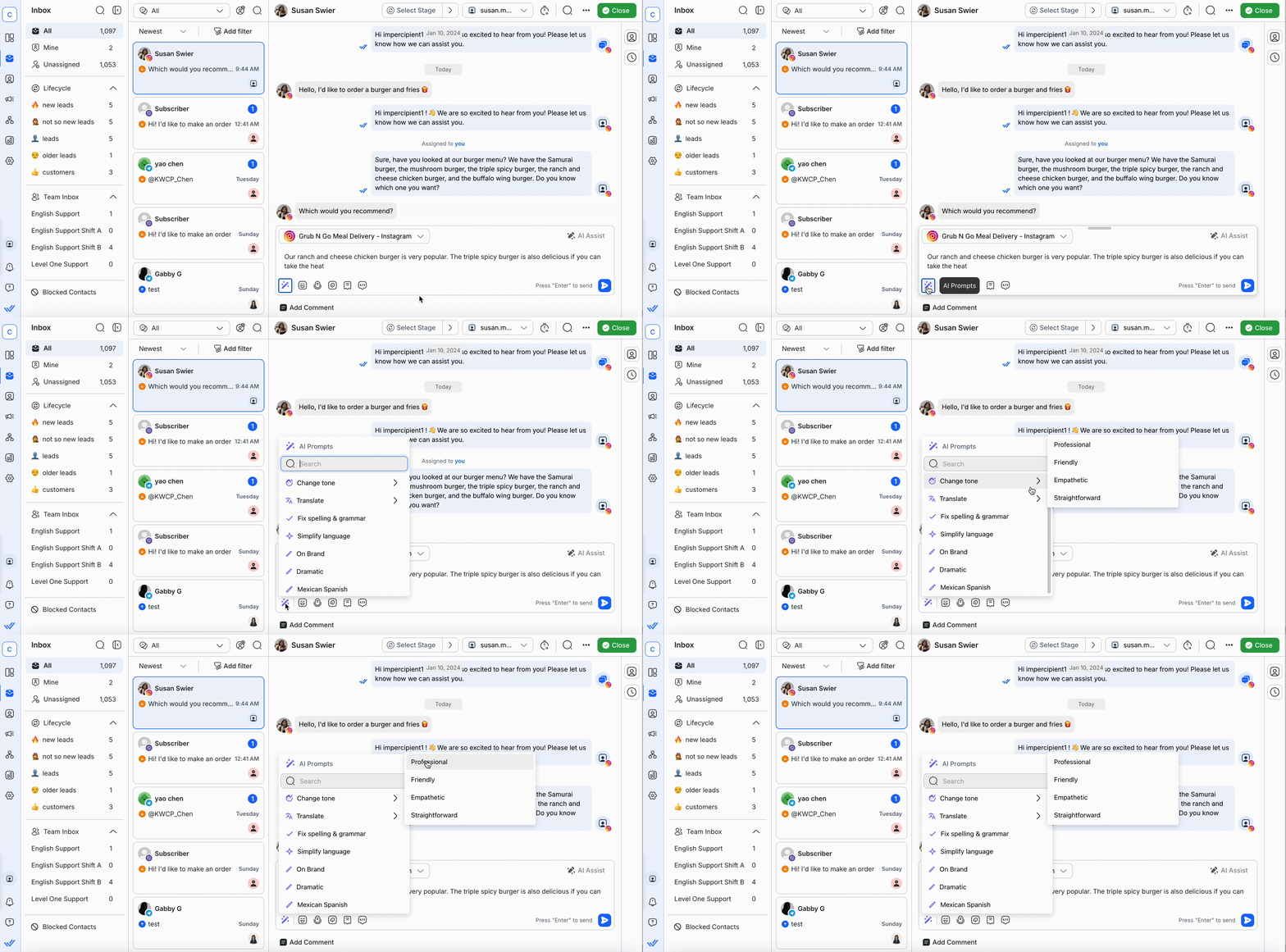
Choose Wati with Astra if you want a specialist AI agent for your website and WhatsApp and are comfortable running it as a second tool. Choose respond.io if your AI, automation and human team need to work as one system across every channel your customers message you on.
What happens to automation as volume grows?
Automation that's metered per trigger gets more expensive, or stops, exactly when a campaign works. Wati counts each time a chatbot, keyword or rule fires for a customer against a monthly cap of 1,000 triggers on Growth, 2,000 on Pro and 5,000 on Business. Past the cap, your team replies manually unless you buy more triggers ($40 per 1,000 a month).
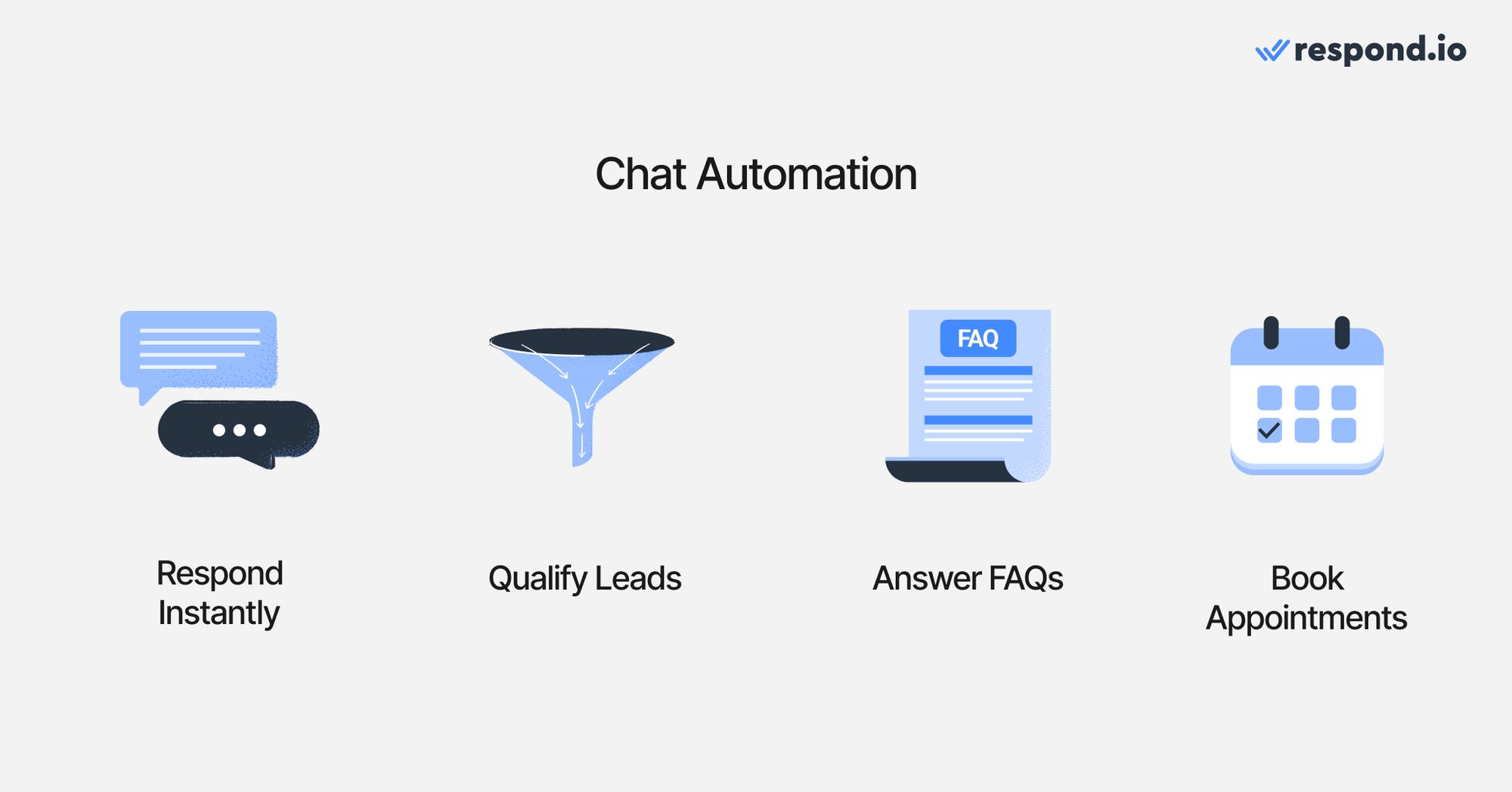
Respond.io doesn't cap automation triggers. An automation can start from a new conversation, a Meta or TikTok ad click, or an AI Agent, and it runs the same way on every connected channel.
Which channels does each platform cover?
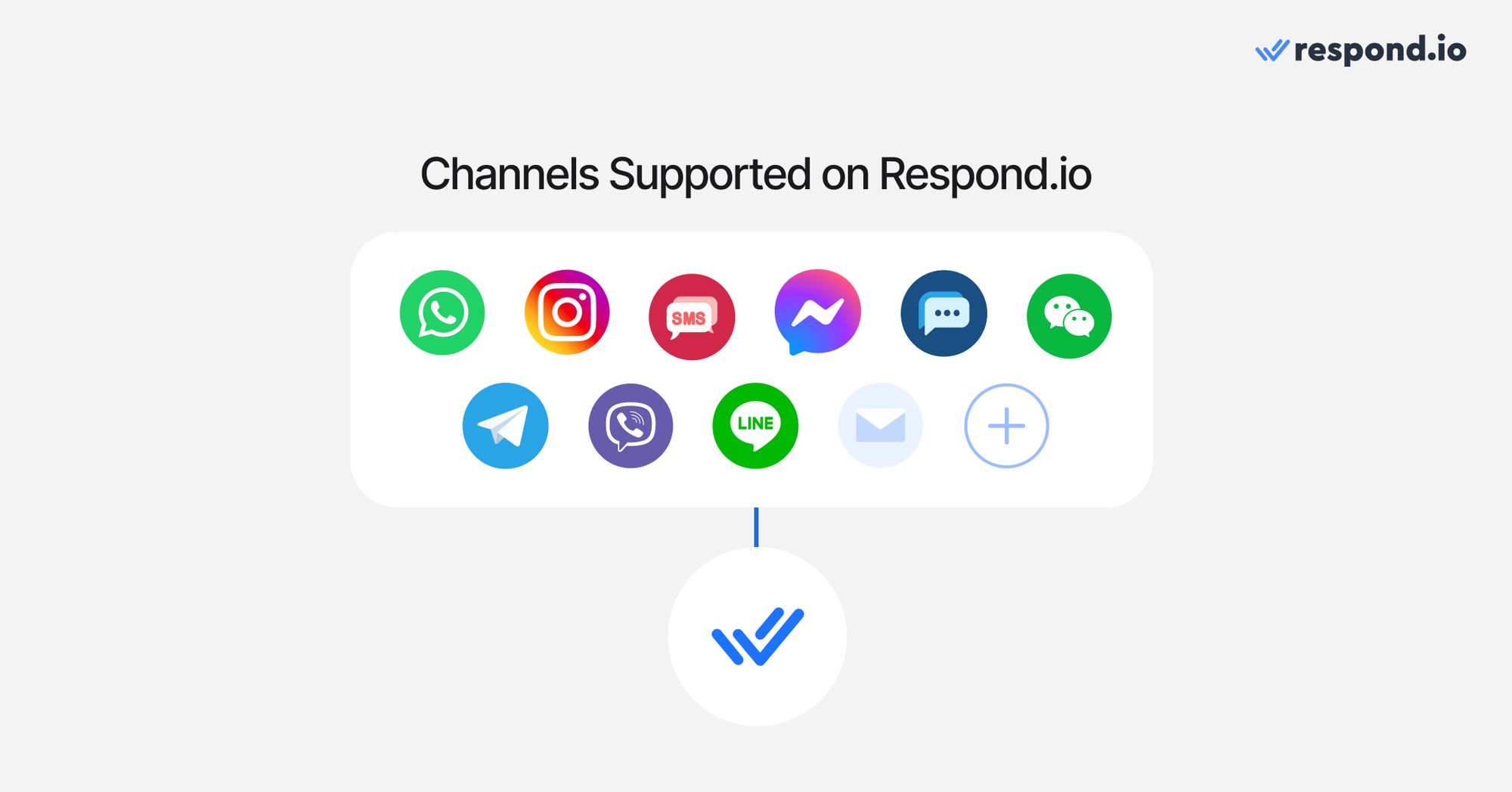
Both platforms cover the main Meta channels and TikTok. Respond.io covers more channels and call types in one inbox; Wati is the only one of the two with RCS.
Messaging channels
Wati was built for WhatsApp and now includes Instagram, Facebook Messenger, TikTok, RCS and a website widget on every plan, with SMS on the Business plan. It doesn't support email, Telegram, Viber, LINE or WeChat, so teams whose customers use those channels need a separate tool and lose the full conversation history in one place.
Respond.io connects WhatsApp, Instagram, Facebook Messenger, TikTok, Telegram, Viber, LINE, WeChat, SMS, email and website chat to one inbox, plus custom channels from the Advanced plan, with automations and AI Agents working across them. It also connects TikTok Messaging Ads to automations. Respond.io doesn't support RCS.
Calls and voice AI
Both platforms support WhatsApp Business Calling. Respond.io also handles VoIP calls and Messenger Calls in the same inbox as your chats, with AI call recordings, transcripts and summaries from the Growth plan.
For AI on calls, Wati's voice agent runs in Astra and uses Astra credits (5 credits per minute of a voice call). Respond.io's AI Agents answer WhatsApp and VoIP calls from the Advanced plan, in the same inbox as your human agents, and can transfer the call to a person.
How do security, uptime and support compare?
Both platforms publish security certifications and uptime figures. The differences are which certification each holds and which plan unlocks each control.
Certifications. Wati states SOC 2 Type II and GDPR/CCPA compliance. Respond.io is ISO 27001 certified.
Access and data controls. Respond.io includes 2FA on every plan, with SSO and contact masking from the Advanced plan. Wati includes phone number masking, roles and IP whitelisting on its Business plan.
Uptime. Wati publishes 99.99% historical uptime. Respond.io publishes 99.999% uptime on its public status page.
Support. Wati's Growth plan gets 24/5 email support. Chat support starts on Pro, and Business adds priority support and a dedicated Customer Success Manager. Respond.io includes 24/7 human and AI support on every plan.
Onboarding. Wati's onboarding is free with an annual plan and a paid add-on on monthly plans. Respond.io's onboarding is available on every plan.
On G2, respond.io rates 4.8/5 (545 reviews) and Wati rates 4.6/5 (514 reviews).
What does each cost as your team grows?
Cost depends on team size and whether you need AI agents: for a small team without AI agents, Wati is cheaper; once you need more users or AI agents, respond.io costs less.
Wati | Respond.io | |
|---|---|---|
Entry | Growth $69/month, 3 users, no extra users | Starter $99/month, 5 users. No Workflows, AI Agents or broadcasts |
Mid | Pro $149/month, 5 users, +$39/user | Growth $199/month, 10 users, +$20/user. AI Agents and Workflows included |
Upper | Business $349/month, 5 users, +$89/user | Advanced $349/month, 10 users, +$24/user. Adds voice AI Agents, SSO and Salesforce |
AI agents | Astra: +$99/month (Pro) or +$399/month (Business) | Included from Growth |
Automation | 1,000 / 2,000 / 5,000 triggers a month, then $40 per 1,000 | No trigger caps |
WhatsApp message fees | Up to 60% above Meta's marketing rates, up to 80% above utility and authentication | Meta's rates, no markup |
Example: 5 users with an AI agent. Wati Pro ($149) plus Astra Pro ($99) costs $248/month. Respond.io Growth costs $199/month and includes 10 users and AI Agents.
Example: 10 users. Wati Pro with 5 extra users costs $344/month before Astra. Respond.io Growth includes 10 users for $199/month.
WhatsApp message fees come on top of both. Wati charges its own WhatsApp rate card, while respond.io passes through Meta's rates, so the gap grows with every marketing and utility message you send.
Verdict: should you choose Wati or respond.io?
If you run a small, WhatsApp-first team or a Shopify store and want the lowest entry price, Wati is the stronger fit, because its Growth plan includes chatbots and up to 15,000 broadcasts a month for $69/month, and its Shopify app ($4.99/month) adds abandoned-cart and order templates.
If you're a mid-market B2C business whose customers message you across several channels and you handle 500+ chats a month, respond.io is the safer fit, because AI Agents, automations and your human team share one inbox, with no trigger caps and no second AI subscription. AI Agents answer and qualify leads, hand off to the right person, and move each contact to the right lifecycle stage, so you can see where every lead is.
If you only need a WhatsApp inbox with basic chatbot flows and don't plan to add channels or AI agents, respond.io may be more platform than you need.
For example, Yoho, an eCommerce & Retail company, consolidated 6 support channels into one platform using respond.io and saw an 84% improvement in chat response times as a result.
Sign up for a free trial or book a customized demo today.
Turn customer conversations into business growth with respond.io. ✨
Manage calls, chats and emails in one place!
FAQs about Wati vs Respond.io
When should I switch from Wati to respond.io?
Switch when your setup needs more than one product to work:
You're paying for Astra on top of Wati to get AI agents, and you want AI and your team in one inbox and one bill.
Your automation regularly reaches its monthly trigger cap, and you're replying manually or buying extra triggers.
Your customers message you on channels Wati doesn't support, such as email, Telegram, Viber, LINE or WeChat, or call you over VoIP.
Upgrading to a higher Wati plan raises the trigger cap but doesn't change the other two. Respond.io includes AI Agents from the Growth plan and runs automations across every connected channel without trigger caps.
Is Astra included in Wati's plans?
No. Astra is a separate subscription: Free (web widget only), Pro at $99/month and Business at $399/month. Connecting Astra to Wati requires a Wati Pro or Business plan, and a Wati Pro subscription doesn't include Astra or Astra credits. For teams that want AI agents, that's a second bill on top of Wati. Respond.io's AI Agents are included from the Growth plan ($199/month), with no separate AI subscription.
Do I still need a CRM or a shared inbox tool if I switch to respond.io?
You don't need a separate shared inbox tool, but you'll usually keep your CRM. Respond.io is a customer conversation platform: it includes a shared inbox, contact profiles, lifecycle stages and AI Agents, so your team manages every chat and call in one place. It isn't a CRM replacement. It connects to CRMs such as HubSpot and Salesforce (Salesforce from the Advanced plan), so customer data stays in sync while conversations happen in respond.io. If your team only needs a WhatsApp inbox and has no CRM to connect, a simpler tool may be enough.
What does switching from Wati to respond.io involve?
The main work is rebuilding your automations, not moving your WhatsApp number. Your WhatsApp number and approved templates can move to respond.io, and you can export contacts from Wati and import them. Wati's chatbots don't transfer to respond.io's Workflows, so they need rebuilding, and respond.io's onboarding, available on every plan, helps with that. On Wati, onboarding is a paid add-on on monthly plans.
Does respond.io work for businesses that only use WhatsApp?
Yes, if you expect to grow. Respond.io is a customer conversation platform, not a WhatsApp-only tool. It supports WhatsApp end to end, including calling, catalogs and click-to-WhatsApp ads, and gives you room to add channels, AI Agents and automations later without switching platforms. If you're a small team on WhatsApp only, with basic chatbot needs and no plans to add channels, Wati costs less to start.
Which platform is better for broadcast campaigns?
For WhatsApp-only campaigns, both cover the basics. Wati's Growth plan includes up to 15,000 broadcasts a month, and Pro and Business are unlimited. Respond.io includes broadcasts from the Growth plan, with scheduling, segmentation and sending to each contact's last interacted channel, so a campaign reaches customers on the channel they actually use.
Further Reading
If you’re interested in more comparisons to help you choose a conversation platform, consider the following articles:


