
















 Electronics
 Fashion & Apparel
 Furniture
 Jewelry and Watches
 Afterschool Activities
 Sport & Fitness
 Beauty Center
 Dental Clinic
 Medical Clinic
 Home Cleaning & Maid Services
 Photography & Videography
 Car Dealership
 Travel Agency & Tour Operator


The WhatsApp customer service platform empowers your team to deliver better support. In this article, we’ll discuss the advantages of conversational support with WhatsApp API over traditional customer service channels. Plus, you’ll learn the basics of WhatsApp API and best practices to deliver customer support via WhatsApp. That’s not all — we’ll also show you some successful examples of how companies around the world are using WhatsApp for customer service.
Why Choose WhatsApp Customer Service Platform Over Traditional Support Channels
Traditionally, businesses use emails and webchat for customer service. However, email interactions are slow and people don’t check their inboxes frequently. Webchat visitors tend to be anonymous and it can be difficult for businesses to verify their identities.
Conversation threads on both channels are also scattered, resulting in no overview of the contact’s conversation history. These limitations challenge what every business wants: to provide personalized solutions, reduce resolution time and improve quality assurance.
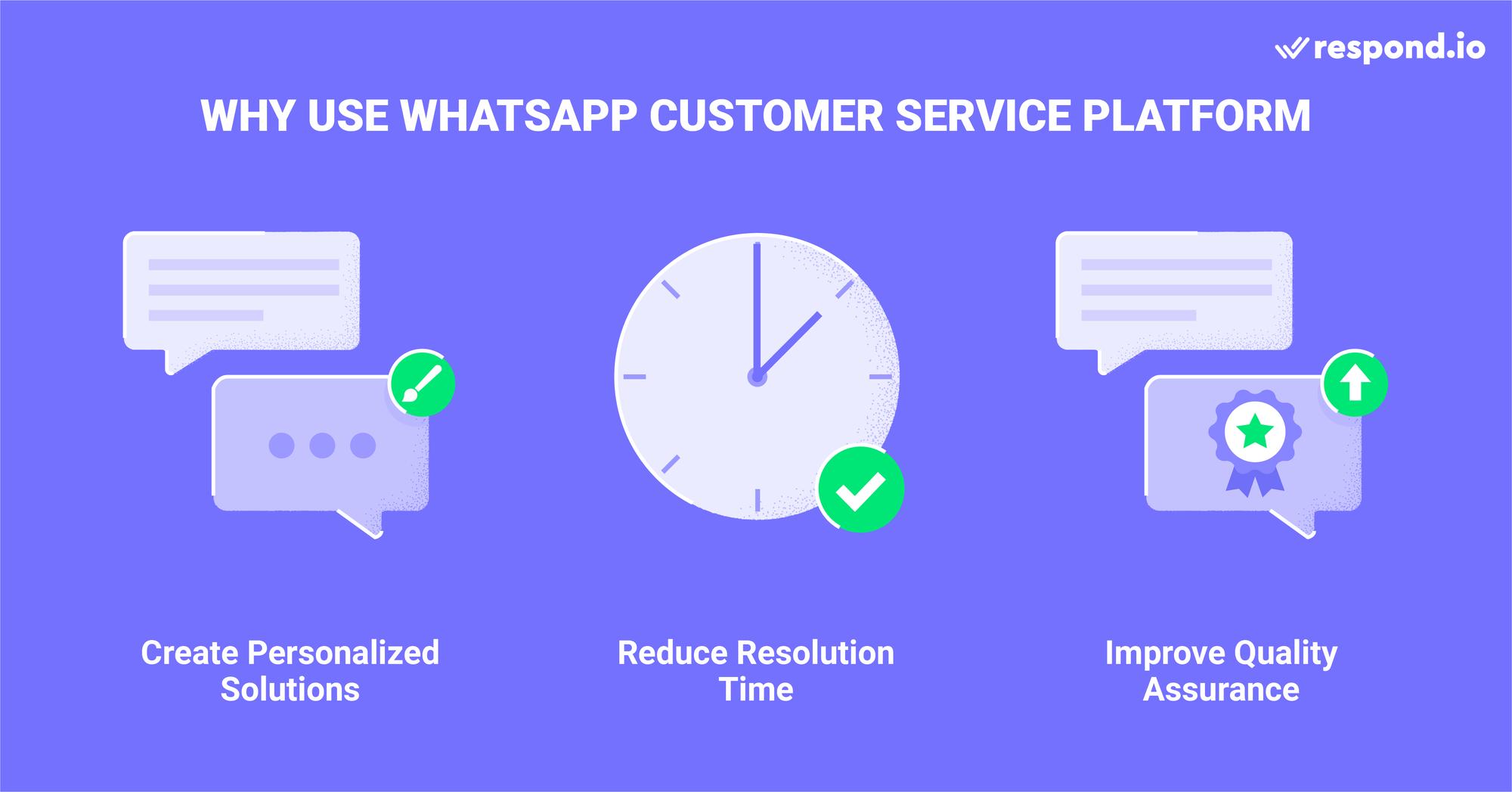
By contrast, WhatsApp interactions are fast-paced, allowing inquiries to be resolved sooner. Agents can also identify the contacts by their number and access the conversation history on the same thread, enabling customized support for each contact.
To use WhatsApp as a customer service platform, you’ll need a WhatsApp Business account. WhatsApp offers two types of business accounts - WhatsApp Business App and WhatsApp Business API.
WhatsApp Business App is designed for small businesses and lacks multi-user functionality and advanced automation. For medium to large companies looking to use the WhatsApp customer service platform with a team of agents, go for the WhatsApp API.
WhatsApp Customer Service Platform: What You Should Know
WhatsApp API is more complex than the WhatsApp Business App. Before you start using WhatsApp for customer service, let’s learn the fundamentals of the WhatsApp API.
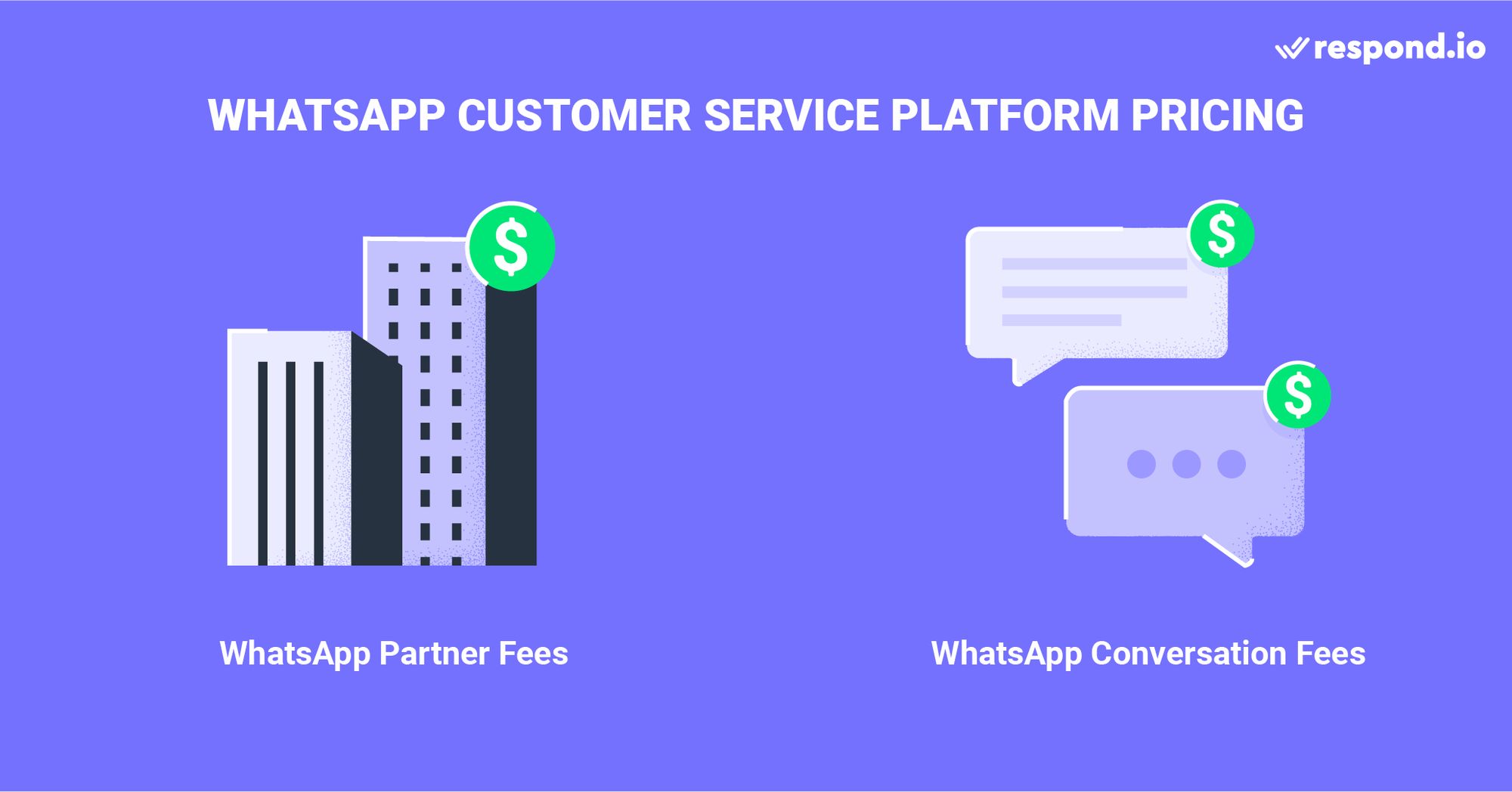
1) WhatsApp BSP fees — the fixed/variable layer you pay your provider
These are separate from Meta’s charges and vary by WhatsApp BSP. Common items:
Platform subscription (per seat/workspace) and number/WABA hosting
Setup/migration and SLA/premium support
Possible per-message markups (avoid these if you handle high volumes)
Add-ons (storage, advanced analytics, compliance, premium integrations)
💡 Cost control: pick a BSP with no per-message markup, transparent hosting, and inclusive support. (Example: respond.io doesn’t charge setup, hosting, or per-message markups.)
2) Messaging costs — now billed per message, not per conversation
User-initiated (common in customer support scenarios) messages open a 24-hour service window.
Replies with free-form text or utility templates are free during the window.
Free entry points (Click-to-WhatsApp ads or Facebook Page CTA) extend the window to 72 hours and all replies stay free (including utility templates).
Outside the window, you must use a pre-approved template (billed per message) by category: Utility, Authentication, Marketing. Rates vary by recipient country code.
From October 1, 2026, WhatsApp service messages and utility templates are chargeable within the 24-hour service window.
💡 Cost control: resolve cases within 24/72 hours, lean on utility templates, and use free entry points for inbound support flows.
3) Calling costs (WhatsApp Business Calling API)
Inbound calls (user-initiated): free, and they open/refresh the 24-hour service window.
Outbound calls (business-initiated): billed only if answered, by country and duration (6-second increments). Consent required.
💡 Cost control: call only when it shortens resolution time; the answered-only billing keeps waste down.
What this means for support teams
You can keep most support chats (user-initiated) free by staying inside the 24/72-hour window.
Your biggest levers are BSP fee structure (avoid markups) and free entry points..
Templates and calls become targeted tools: Use utility templates for timely follow-ups and outbound calls only when they accelerate resolution.
Turn conversations into customers with respond.io's official WhatsApp API ✨
Manage WhatsApp calls and chats in one place!
How to Use WhatsApp for Customer Support: 4 Quick Wins to Deliver Customer Service via WhatsApp on Respond.io
Let's look at how using respond.io can improve your WhatsApp customer support delivery.
Use Message Templates to Follow Up on Complex Enquiries
A Message Template is able to reopen WhatsApp’s messaging window, enabling agents to follow up on customers’ inquiries outside the 24-hour window.
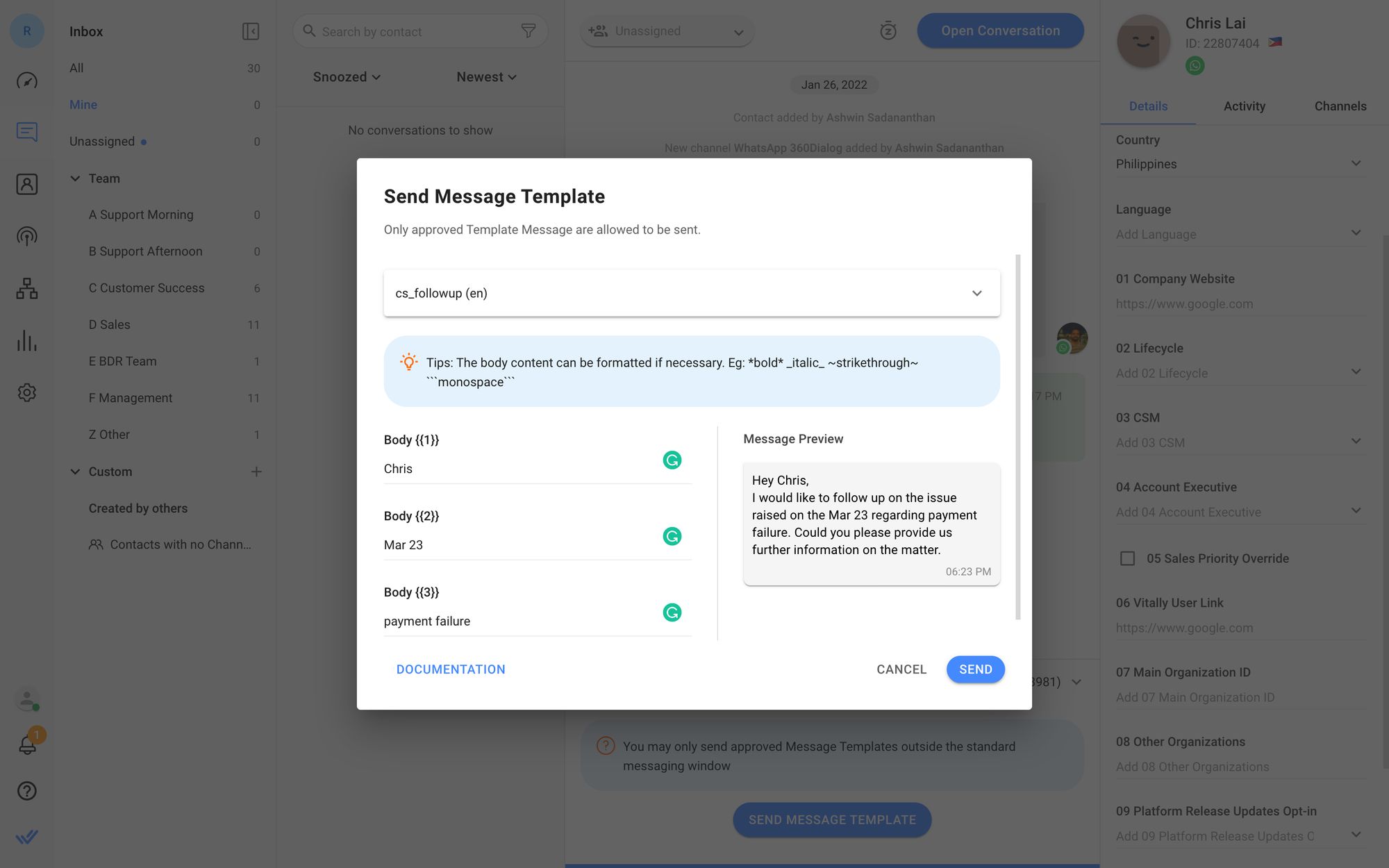
Unlike other WhatsApp Inbox products, respond.io allows you to sync, create and send WhatsApp message templates for support directly from the platform without the need to move between your Partner's Hub and WhatsApp Inbox.
Provide Instant Support with AI Agents
Respond.io AI Agents provide instant support across chat and voice calls, helping businesses respond faster without increasing agent workload. AI Agents can handle inbound calls to greet customers, qualify their needs, and answer frequently asked questions automatically.
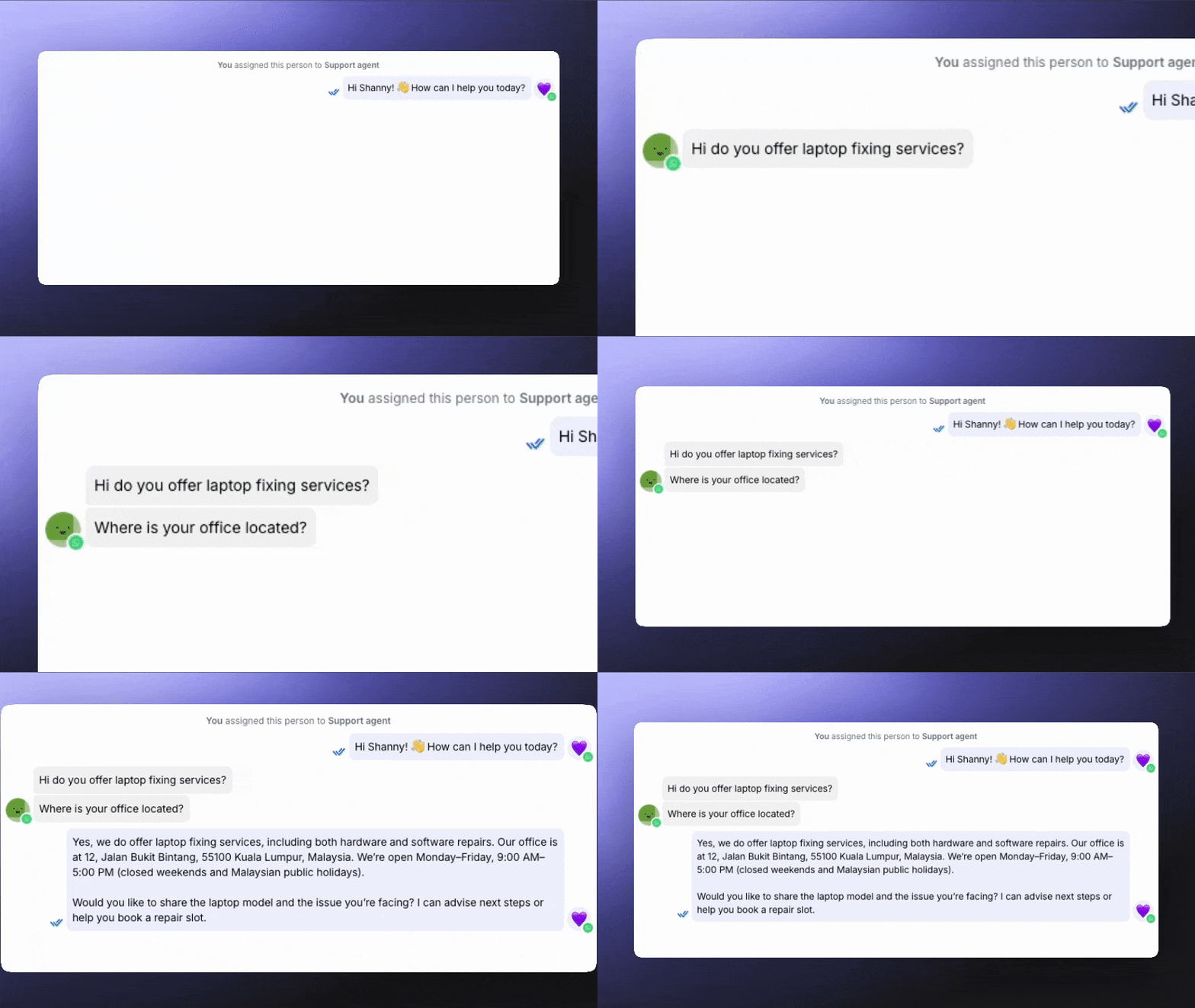
Over chat, AI Agents can take action. With the right setup, they can route conversations to the correct team, trigger Workflows, add internal comments for context, or escalate cases to human agents when needed. This allows your team to focus on complex issues while AI Agents handle first-line support consistently and at scale.
Answer Messages Anywhere with the Mobile App
The respond.io mobile app allows agents to answer customer inquiries through WhatsApp on multiple phones. The app has vital modules such as Dashboard, Contacts and Messaging for an effortless messaging experience.
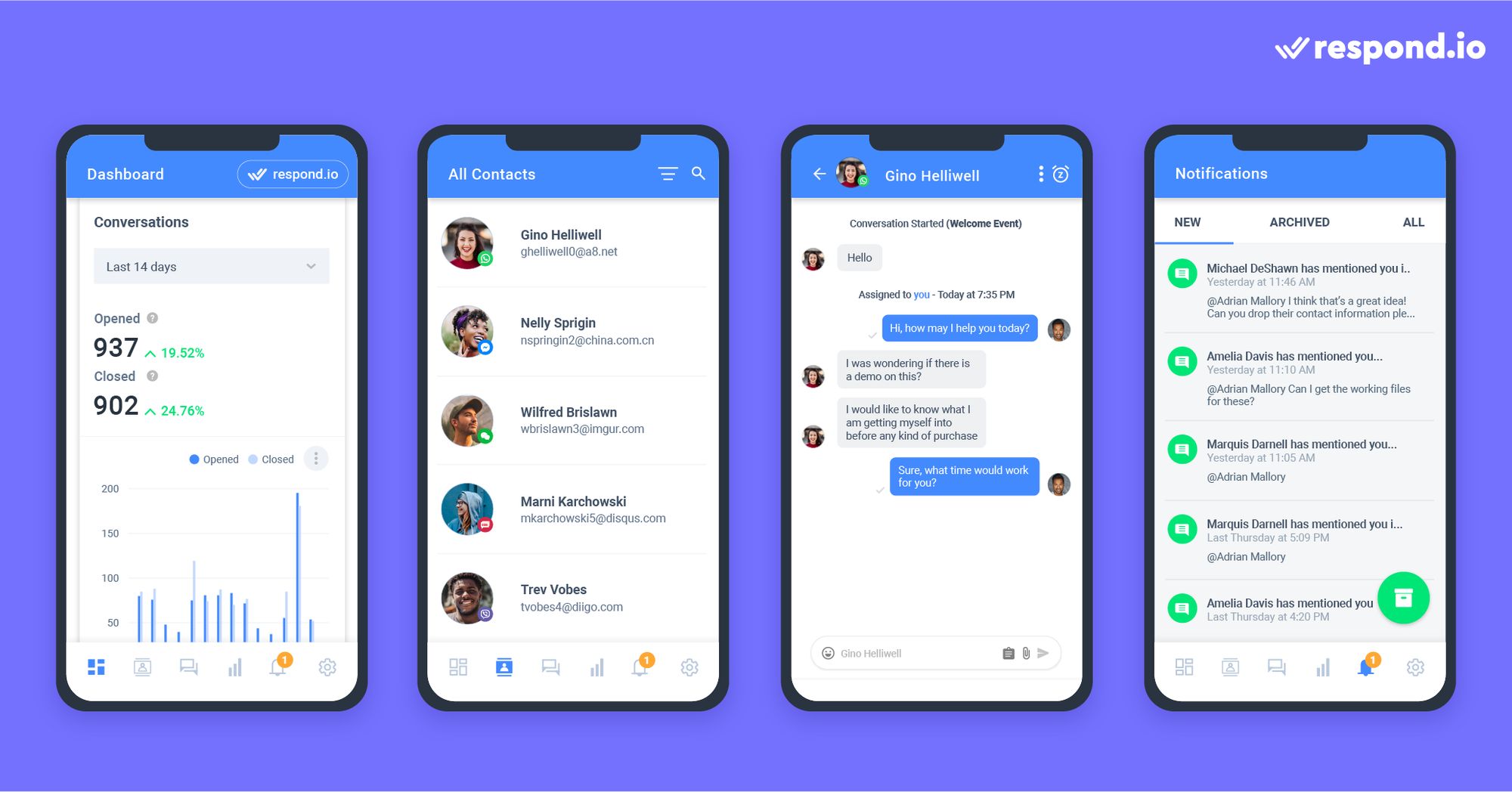
Agents will receive a push notification every time a new message comes in or when they are assigned new Contacts. This way, they won't miss any messages. The respond.io Android and iOS apps are available on Google Play Store and Apple App Store respectively.
Get a Holistic View of Customers with Contact Merge
Apart from WhatsApp, your Contacts are likely to use other messaging channels to reach you. However, this results in siloed conversations and Contact duplication. Luckily, respond.io supports Contact Merge so you can consolidate all Contact details and conversation history into a unified profile for a 360-degree view of the customer.
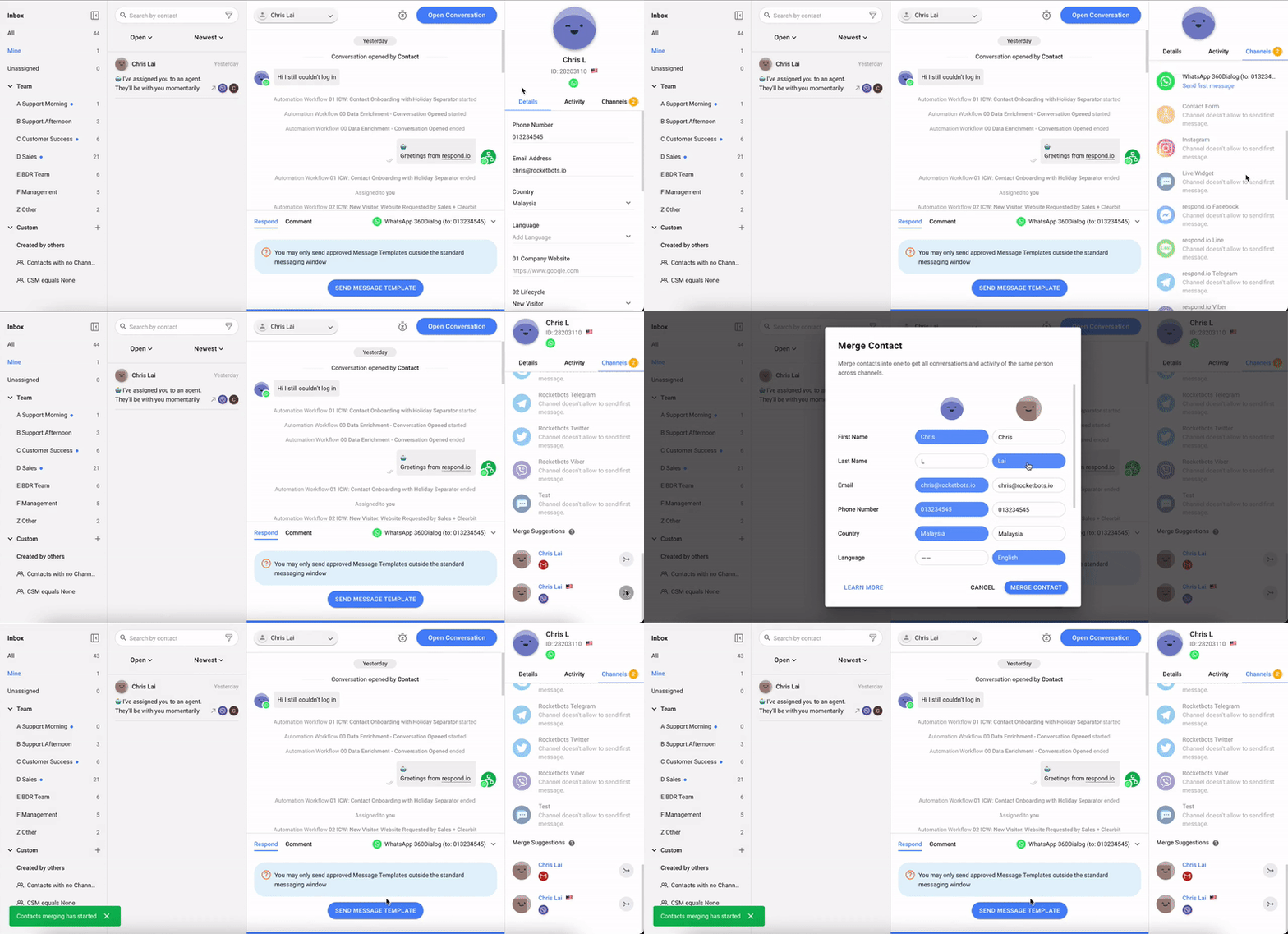
Ultimately, this helps agents understand the customers’ context and make an informed decision about the best way to help them. Looking for ideas to use the WhatsApp customer service platform? Read on to find out how other companies deliver customer support via WhatsApp.
Firsthand Report: 3 Companies using WhatsApp for Customer Service
Now that we've got the theoretical part of using the WhatsApp customer service platform out of the way, let's take a look at some practical examples of how companies around the world use WhatsApp for customer service.
1. How Alfa-Bank Uses the WhatsApp Customer Service Platform
Alfa-Bank, one of the largest banks in Kazakhstan, has chosen WhatsApp Business API as its customer service platform. Account holders can now receive account information, payment reminders and operational support over WhatsApp.
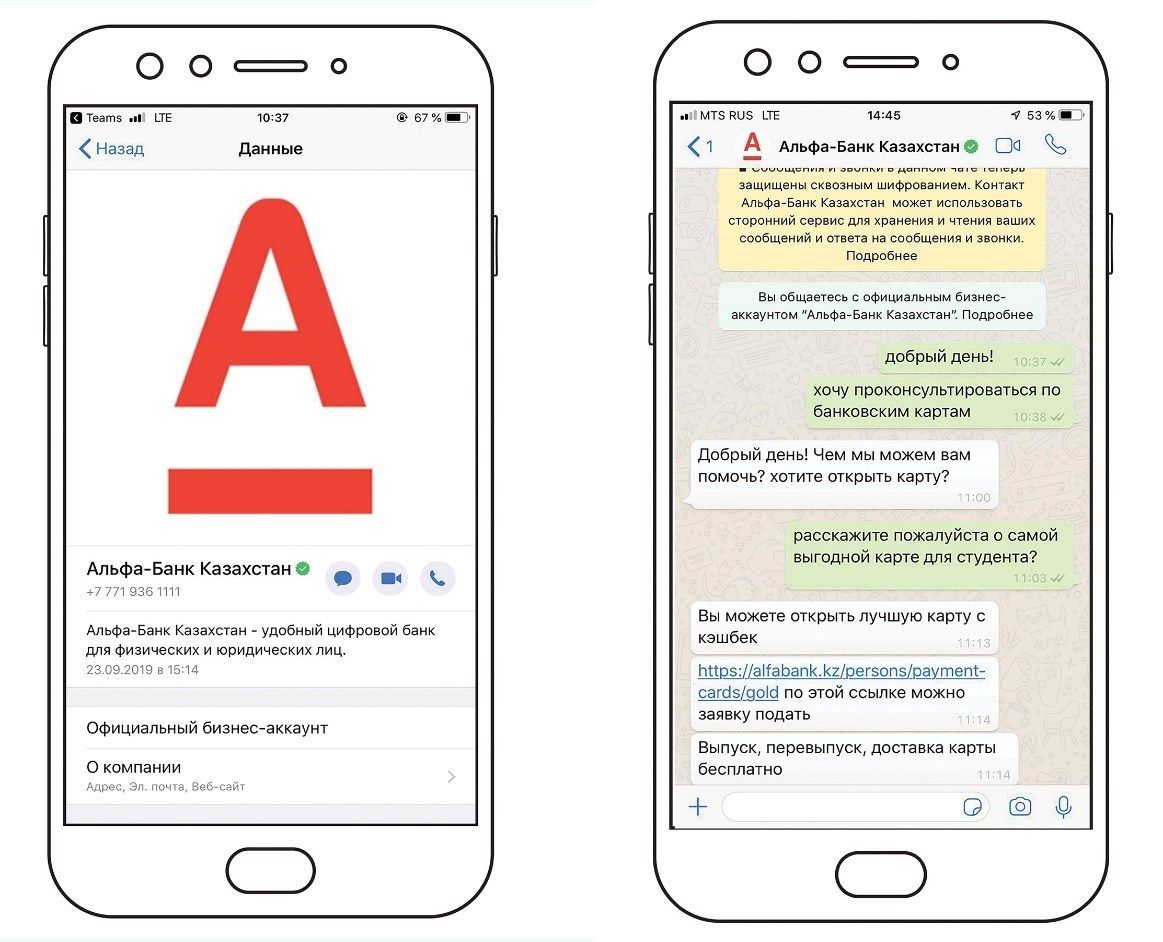
Many banks have started using messaging apps to answer simple banking inquiries through chatbots. However, Alfa-Bank goes one step further and offers live customer support on WhatsApp.
How does Alfa-Bank Offer Customer Service via WhatsApp?
To speak to a human representative while using WhatsApp for customer service, just add Alfa-Bank's WhatsApp number to your contact list and send the first message.
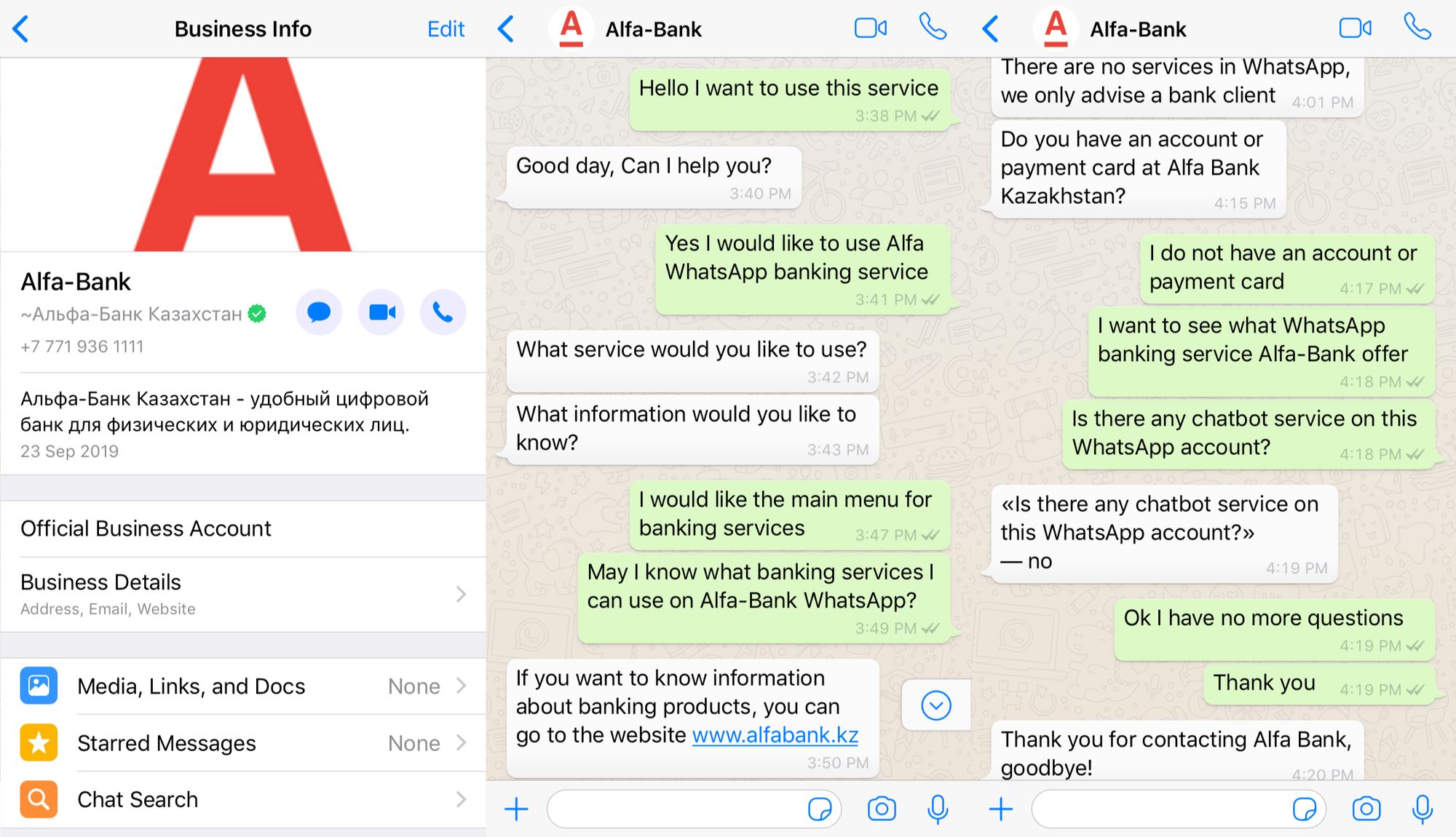
We tested Alfa-Bank’s WhatsApp Customer Service platform and were impressed by the response speed — we received a typed response within 2 minutes! What’s more, there was no generic greeting message or main menu in the chat. We were able to chat with an agent right away.
Is Alfa-Bank’s Whatsapp Customer Service Platform a Success?
Alfa-Bank breaks away from the industry norm by putting their customers in touch with a live agent instead of using a chatbot for their WhatsApp customer services. Let's hope more banks rethink their chatbot strategies and provide customers direct access to quality human support over WhatsApp.
2. How Bupa Uses the WhatsApp Customer Service Platform?
Wouldn’t it be nice to message your insurance company on WhatsApp? Bupa Australia has made that possible by launching WhatsApp Business customer support. Let's see what that looks like.
How Does Bupa offer Customer Service via WhatsApp?
There are two ways to start the chat. During a call, you may be directed to WhatsApp by an automated voice, or you can start by using a WhatsApp chat link on their website.
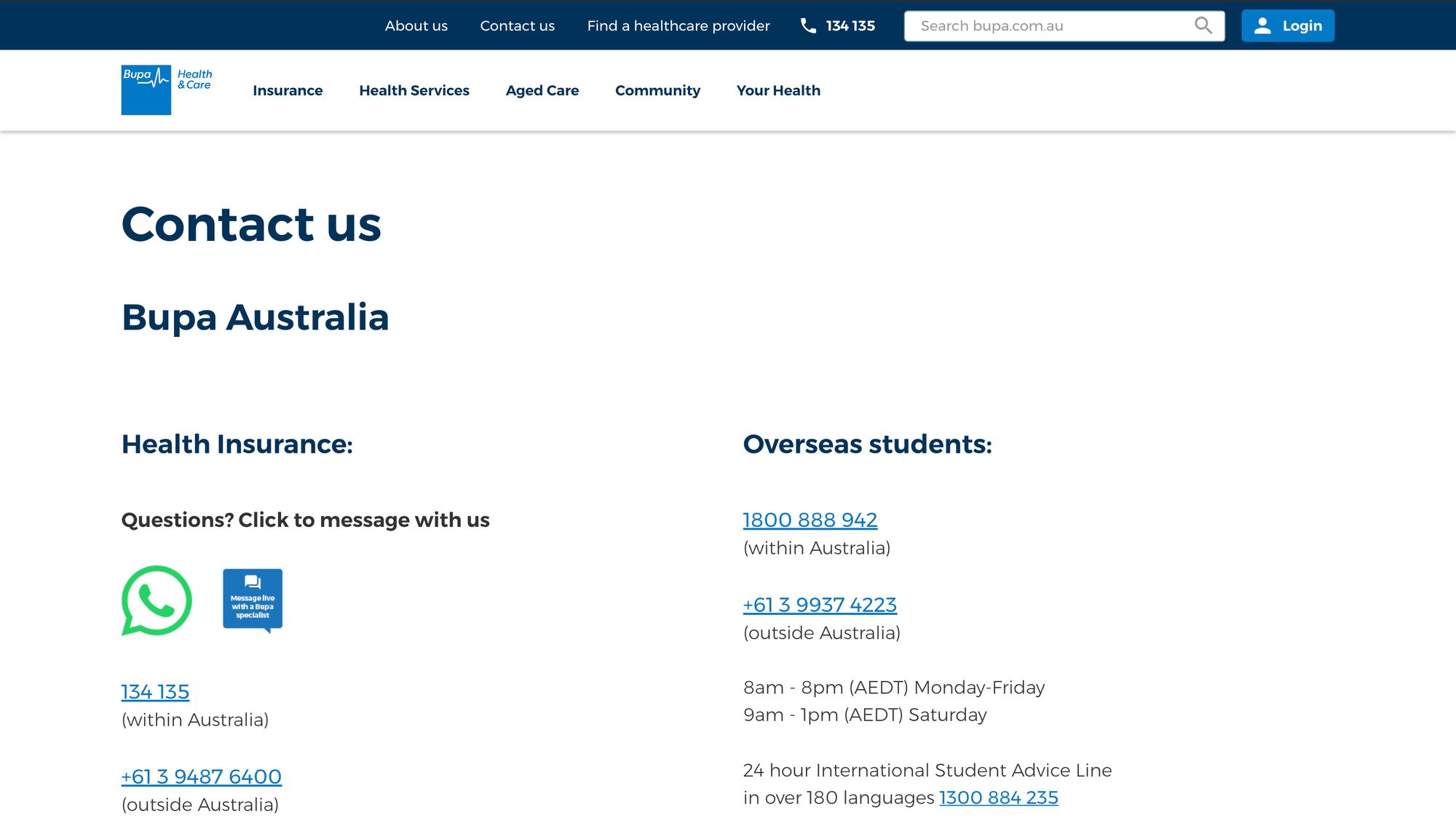
Gloriously, once you’ve sent a message you’ll be connected to a real person. A wide range of actions is possible on Bupa’s WhatsApp customer service platform, including signing up for insurance plans, getting a price quote or even making a claim.
Here’s what happened when we tested the service — we inquired about health insurance plans and the agent asked a series of questions including the conditions we want to be covered for and how often we go to the doctor.
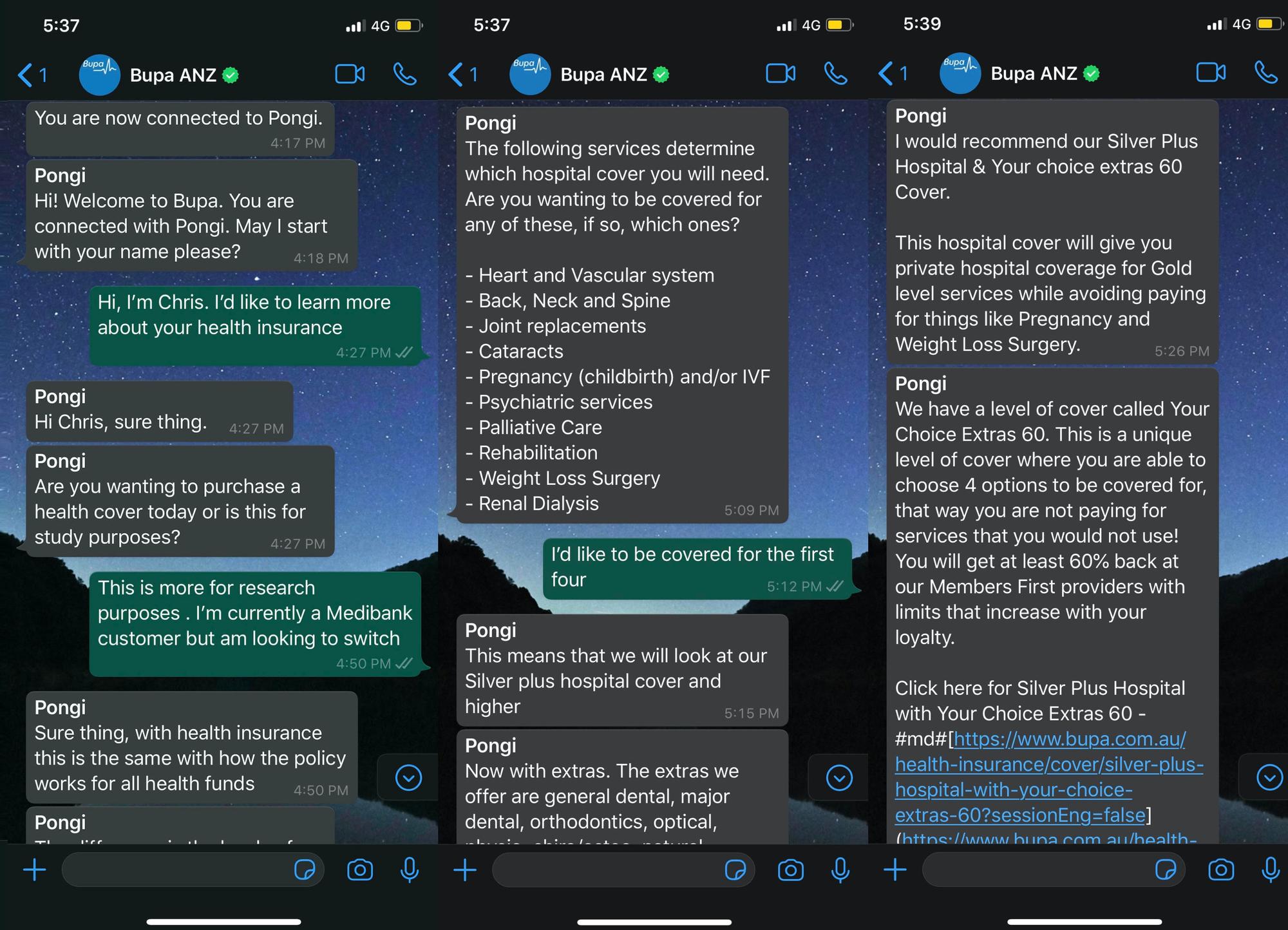
Once we answered the questions, she linked us to a recommended plan on the Bupa website so we could examine the coverage details. Although we couldn’t get a price quote through WhatsApp, the agent made understanding the best plan for us easy.
Is Bupa’s Whatsapp Customer Service Platform a Success?
We don’t know if it’s going to be a long term success but we certainly had a good experience. The agent always replies within a few minutes, plus we have a written record of the conversation. This is the type of customer service people want - we just wish it didn’t take Covid-19 to get there.
3. How Yas Island Uses the WhatsApp Customer Service Platform
Yas Island is a massive recreation facility situated in Abu Dhabi that comprises race tracks, theme parks, hotels and much more. To help visitors plan their vacation, Yas Island has rolled out the WhatsApp customer service platform.
How Does the Yas Island WhatsApp Customer Service Platform Work?
Yas Island visitors have two ways to discover the channel. They can add the number listed on the Yas Island website and Facebook page, or they can use the WhatsApp Click to Chat link shown on the Yas Island website contact page.
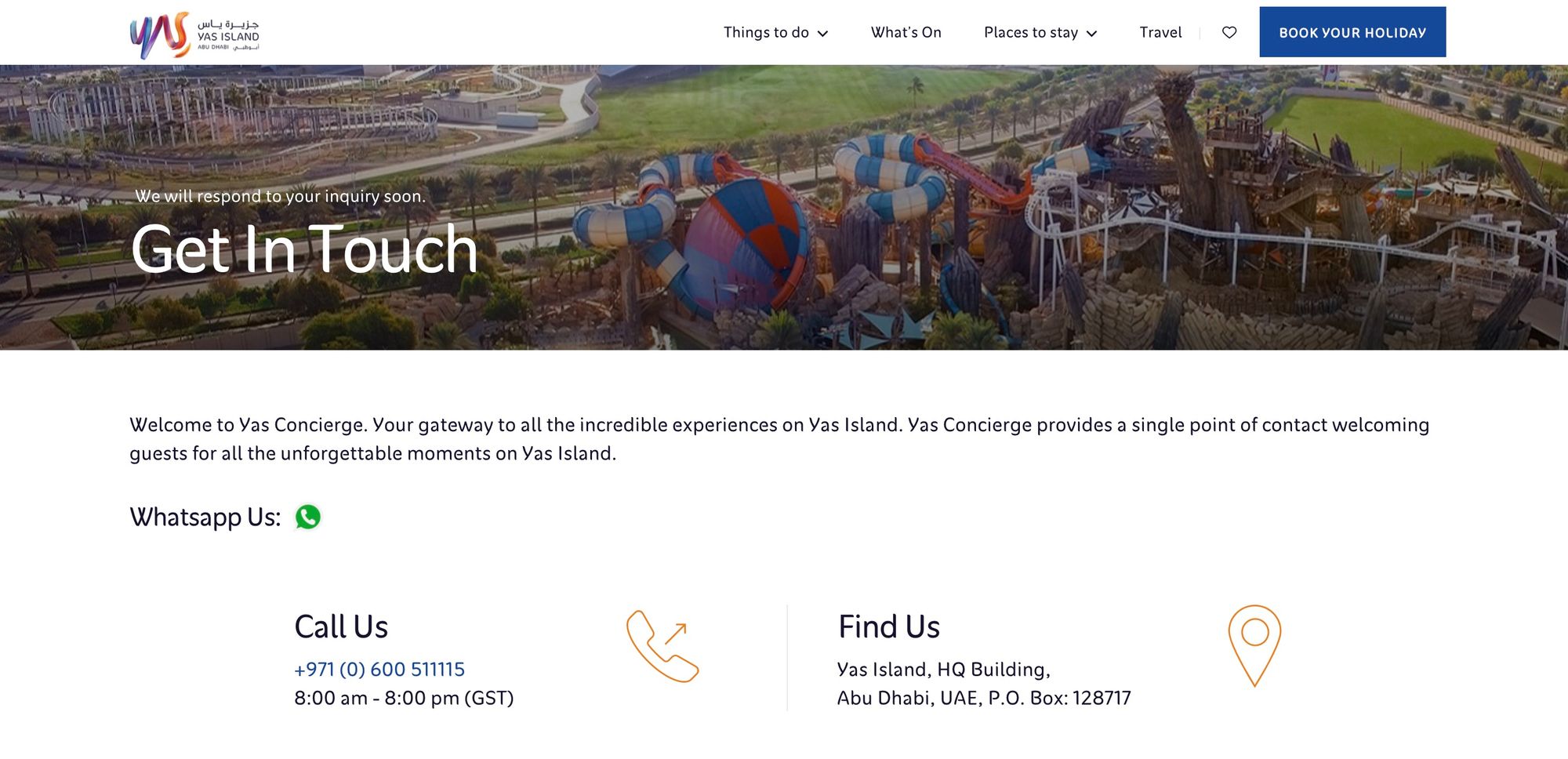
To join the channel, start a chat by sending a message. An automated response will provide a menu with a list of commonly asked questions, ranging from directions to events. You can select an option by answering with the numbers 1 to 11.
The automated response provides a mixture of long and short answers. For questions that require additional detail, you’ll be asked to choose from more options or directed to their website via a link.
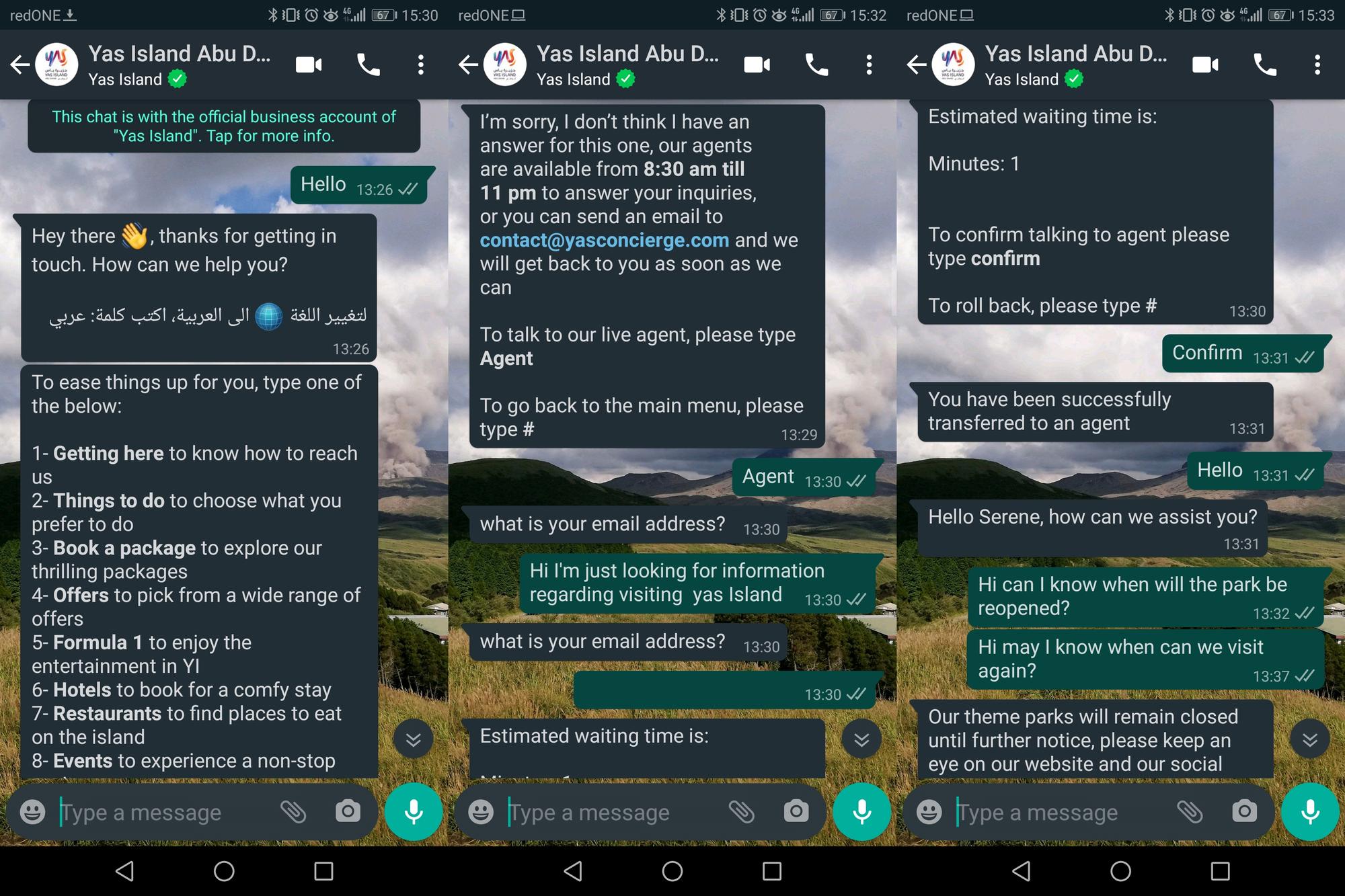
Although there's no indication, you can actually talk to a live agent. You’ll be given the option after typing a specific question or misspelling something like we did. It’s not instantaneous, but you’ll get an expected wait time for an agent's response.
In our case, the wait time was about 1 minute, which is pretty amazing considering we thought this was going to be a fully automated experience.
Is Yas Island’s Whatsapp Customer Service Platform a Success?
We certainly think so. Combining automated messaging with a live agent often results in a messy experience, so companies choose either a live agent or automated messaging, but not both. This solution by Yas Island is one of the best we’ve ever seen.
At the end of the day, the goal of customer service is to give the customers the information they need while providing a pleasant experience. Has Yas Island met these goals? With both the instant automated responses and live agents, it’s a resounding Yas.
Inspired to give customer service over WhatsApp a go? Try respond.io for free and get a WhatsApp Business API account in minutes!
Turn conversations into customers with respond.io's official WhatsApp API ✨
Manage WhatsApp calls and chats in one place!
Further Reading
If you're interested in more info on how to use WhatsApp, you'll want to check out these articles:


