What are the most common pros and cons mentioned by companies using respond.io at scale?

TL;DR: Pros and cons from businesses using respond.io

Respond.io is a customer conversation management platform built for mid-market B2C businesses that need speed, reliability and intelligent automation at scale — and users consistently say it delivers on that promise. Teams that use respond.io highlight AI Agents, omnichannel control, lifecycle tracking and CRM sync as the capabilities that directly reduce the time between first contact and closed revenue. The real-world tradeoffs are setup investment and a learning curve, so for earlier stage teams — low volume, single channel, or basic automation needs — a lighter tool may be more efficient right now.

Respond.io is built for high-volume B2C teams that need speed, reliability and intelligent automation — and it delivers.

It’s consistently highly rated with an average 4.8/5 on G2 (470 reviews) and 4.6/5 on Capterra (52 reviews).

But like any powerful platform, it comes with a learning curve. Mid-market B2C businesses that use respond.io at scale often highlight the benefits of AI Agents, omnichannel control and CRM sync, while also noting that setup and AI training may take some upfront effort.

Here’s what businesses consistently say after scaling with respond.io — the wins and the real-world trade-offs.

Most companies highlight AI automation, omnichannel capability, customer lifecycle tracking and scalability as top pros

Respond.io is built for speed, stability and scale, and customers frequently note how it improves productivity across teams and channels.

Centralize all customer communication in one place

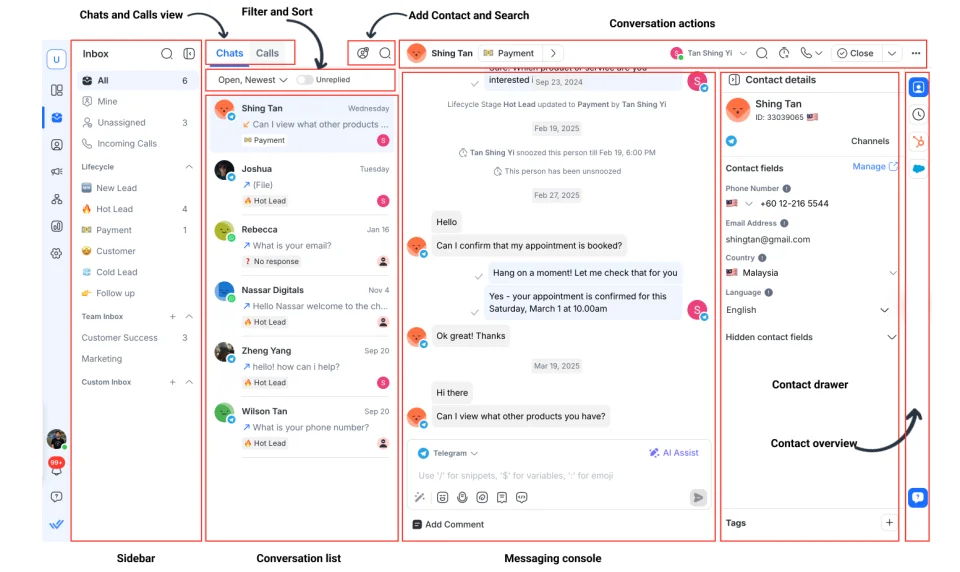
The omnichannel inbox lets teams manage calls and messages from WhatsApp, Instagram, Messenger, Telegram, LINE, TikTok and more in a single workspace while maintaining complete customer context. This setup improves response times and eliminates silos across sales and support teams.

Screenshot of the respond.io omnichannel inbox showing chats from multiple platforms like WhatsApp and Telegram, with labeled sections for sidebar, conversation list, messaging console and contact drawer to manage all customer communication in one place.

Automate repetitive tasks with AI-powered efficiency

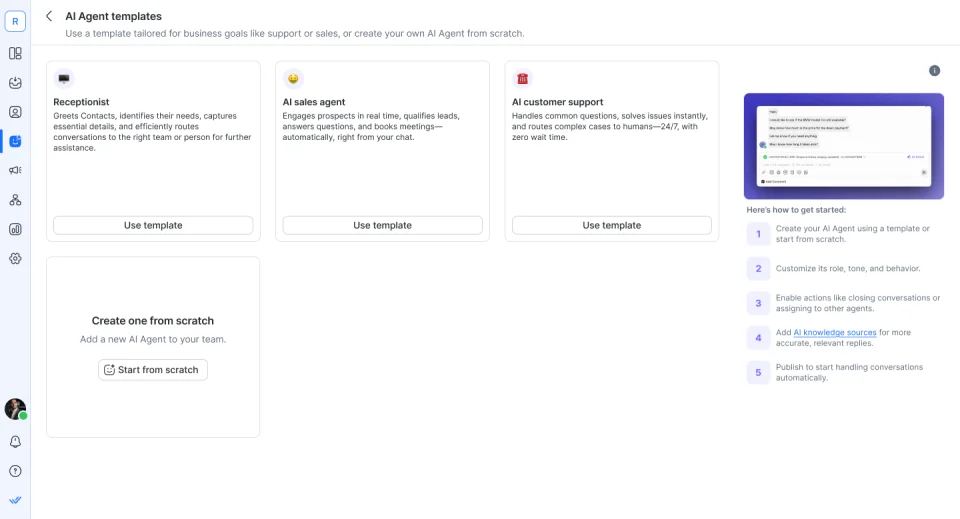
Out of the box, AI Agents answer FAQs, qualify leads and route conversations. They can also send HTTP requests to external systems to retrieve or update data in CRMs, order systems and booking tools, enabling real-time integration during a chat.

In addition, AI Agents can update lifecycle stages, trigger Workflow automation and escalate conversations to human agents. This reduces manual workload and allows teams to focus on complex or high-value interactions.

Screenshot of the respond.io AI Agent templates page showing ready-made options like AI Receptionist, AI Sales Agent and AI Customer Support, illustrating how AI automates repetitive tasks such as FAQs, lead qualification and routing.

Sync data seamlessly across your CRM and tools

Respond.io connects directly with HubSpot and Salesforce or integrates with thousands of apps via Make and Zapier. These integrations keep customer data aligned across your software stack.

Screenshot of the respond.io Integrations page showing available connectors like HubSpot, Salesforce, Google Sheets, Make and Zapier, used to sync customer data seamlessly across CRM and workflow tools.

Gain complete visibility into the customer journey

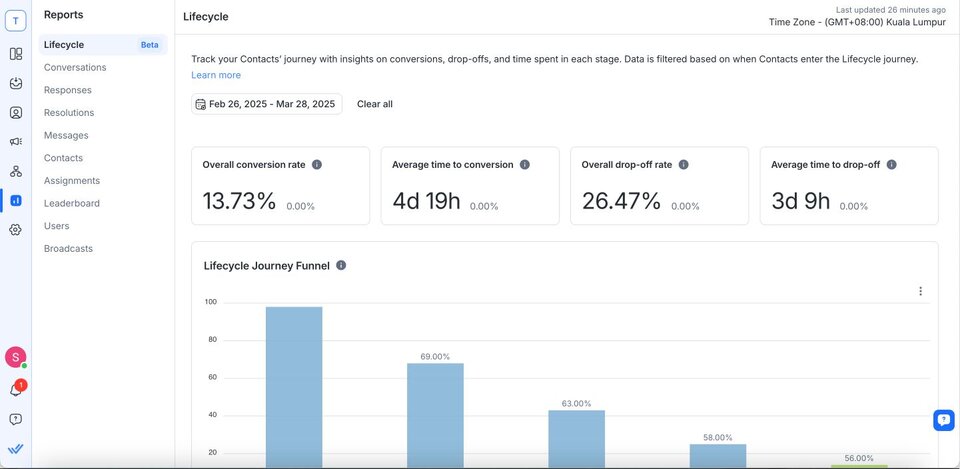
With lifecycle tracking, every chat, note and tag is logged from first contact to repeat purchase, helping teams identify common drop-offs, re-engagement opportunities and optimize retention.

Screenshot of the respond.io Lifecycle settings page showing the setup of lifecycle stages such as New Lead, Hot Lead, Payment and Customer, with options to track lost stages and identify drop-offs throughout the customer journey.

Make smarter decisions with analytics that matter

Detailed dashboards and reporting track response times, conversation trends and agent and ad performance — empowering businesses to make data-driven decisions, optimize ad campaigns and continuously improve processes.

Screenshot of the respond.io AI Knowledge Sources page showing a synced website source with status completed, last synced date and URL, illustrating how AI Agents stay updated through re-syncing or uploads.

Scale confidently with expert support at every step

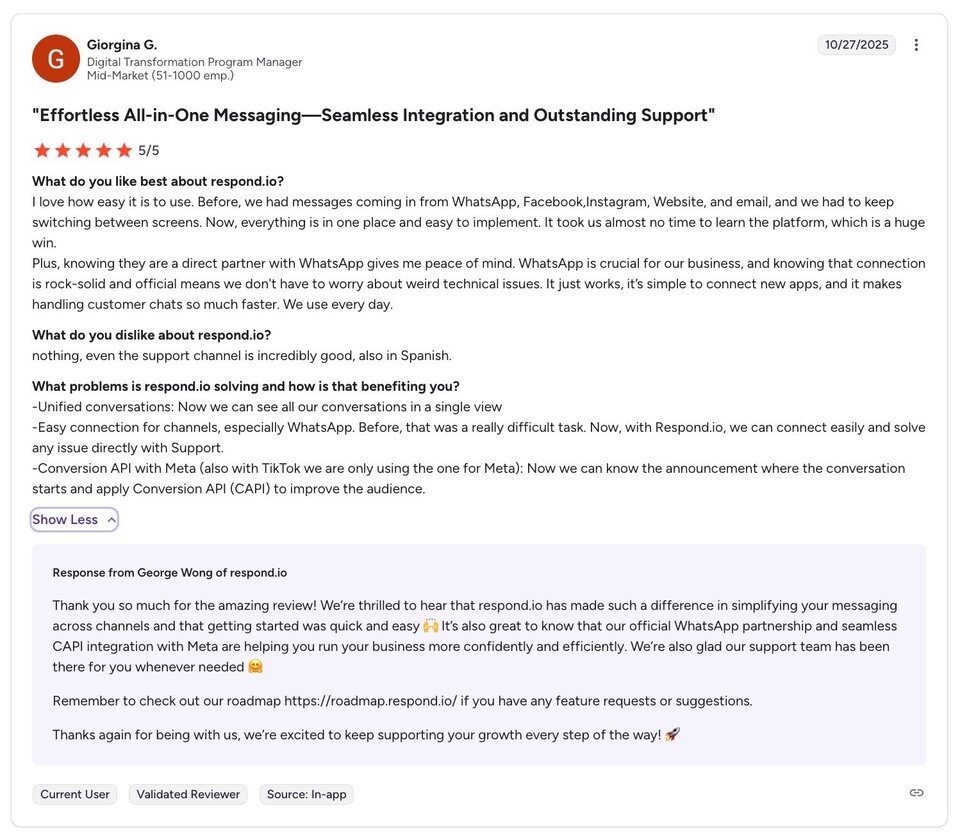
Businesses get 24/7 AI Agent assistance, 24/5 human support and scheduled success calls that help optimize setup, automation and troubleshoot as their operations expand.

Screenshot of a respond.io customer review praising its seamless integration, reliability and outstanding support, highlighting 24/7 assistance, official WhatsApp partnership and Conversion API (CAPI) integration with Meta.

Operate without interruption, even at scale

With 99.999% uptime, respond.io ensures business continuity during peak seasons, product launches or large-scale campaigns. For example, this case study shows how a respond.io customer, Automax®, sends over 80,000 follow-up broadcasts per month.

Common tradeoffs include a steep learning curve and plan-based feature access

While the platform is powerful, a few users mention early-stage adjustments as they adopt more advanced features.

Extensive features can feel overwhelming at first

From AI Agents to CRM integration to lifecycle tracking, respond.io offers broad capabilities. New users may need time and support to get started and set up high-priority functionalities. However, 24/5 live support and 24/7 AI support is always available to help businesses get started. Plus, guided onboarding and dedicated success managers, available on Advanced and Enterprise plans, streamline setup and get you results faster.

AI accuracy depends on knowledge source quality

The performance of AI Agents improves when company documents, FAQs and SOPs are well-structured and regularly updated.

Channel and broadcast constraints

Some channels, like WhatsApp, have strict policies around messaging limits, fees and usage — and complaints about these are common. These constraints are enforced by Meta. Respond.io does not impose any additional restrictions.

Pricing favors scale

Smaller businesses or teams with limited messaging volume may find the starting plans less cost-efficient. Respond.io’s Monthly Active Contact pricing model becomes more competitive at scale, with lower cost per contact as volumes increase — and for growing teams, the platform helps convert more leads and retain more customers, making the investment worthwhile

Some features are only available on higher-tier plans

Advanced tools like AI Agents, Workflows, Broadcast and custom reporting unlock at higher pricing levels.

When respond.io is the right fit — and when it isn't

The pros and cons businesses report at scale point to a clear fit profile — and an equally clear set of cases where respond.io is more platform than you need right now.

When it's the right fit

  • Mid-market B2C team with high conversation volumes across multiple channels
  • Your current setup creates silos, slows response times, or relies on manual work that should be automated
  • You need AI Agents, lifecycle tracking, and CRM integration to work together to drive measurable revenue impact from customer conversations
  • Your team is growing and needs a platform that scales without breaking

When it isn't

  • You have low conversation volume with one or two channels and basic automation needs
  • Learning curve and pricing will cost more than the platform saves
  • You have no bandwidth to invest in AI Agents setup and workflow configuration upfront

Related FAQs