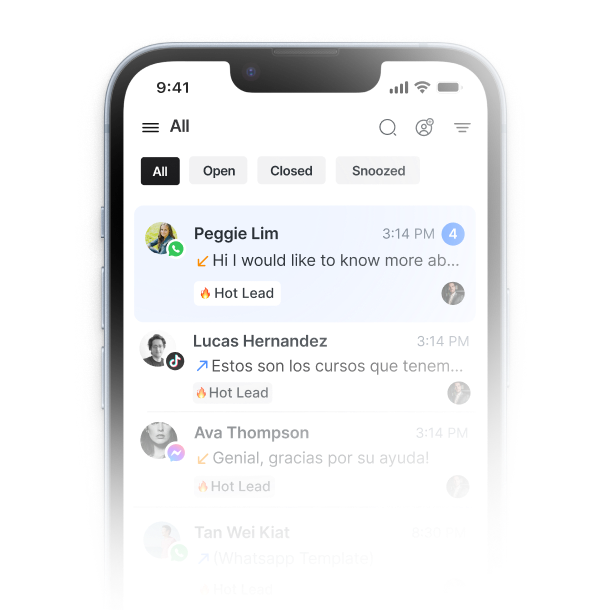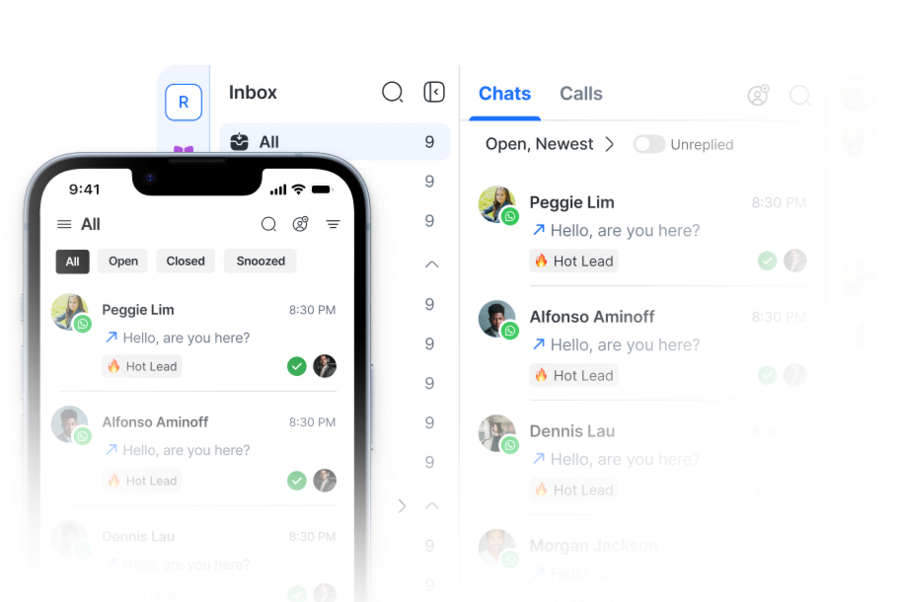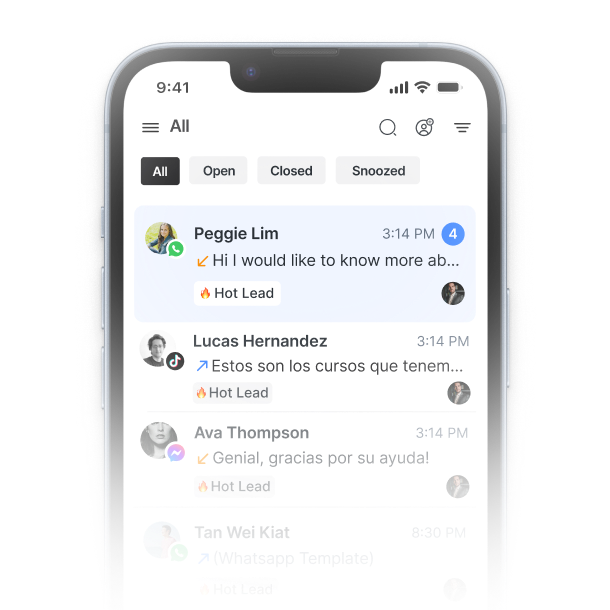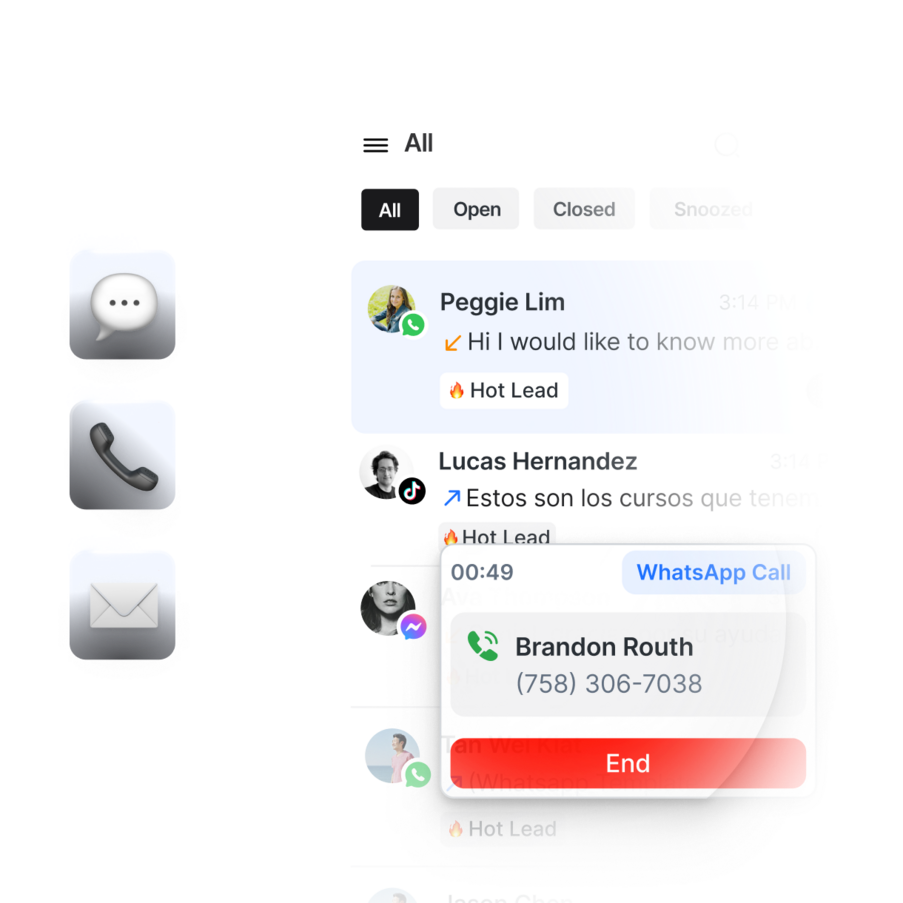











The respond.io mobile app keeps hybrid teams connected to live conversations — so being on the move doesn't mean losing deals.
For B2C teams running high conversation volumes, the cost of being unreachable is concrete:
The respond.io mobile app is built for multi-agent B2C teams where response continuity is the difference between a closed deal and a lost one. It's designed for teams that work in the field — sales reps at client meetings, agents running exhibitions, managers who need visibility when they're away from their desk. Teams running low-volume conversations during fixed office hours don't need it; the desktop platform alone is sufficient.
The respond.io mobile app is full inbox functionality on mobile, not a watered-down version. Everything your team handles at a desk, available from their phones.
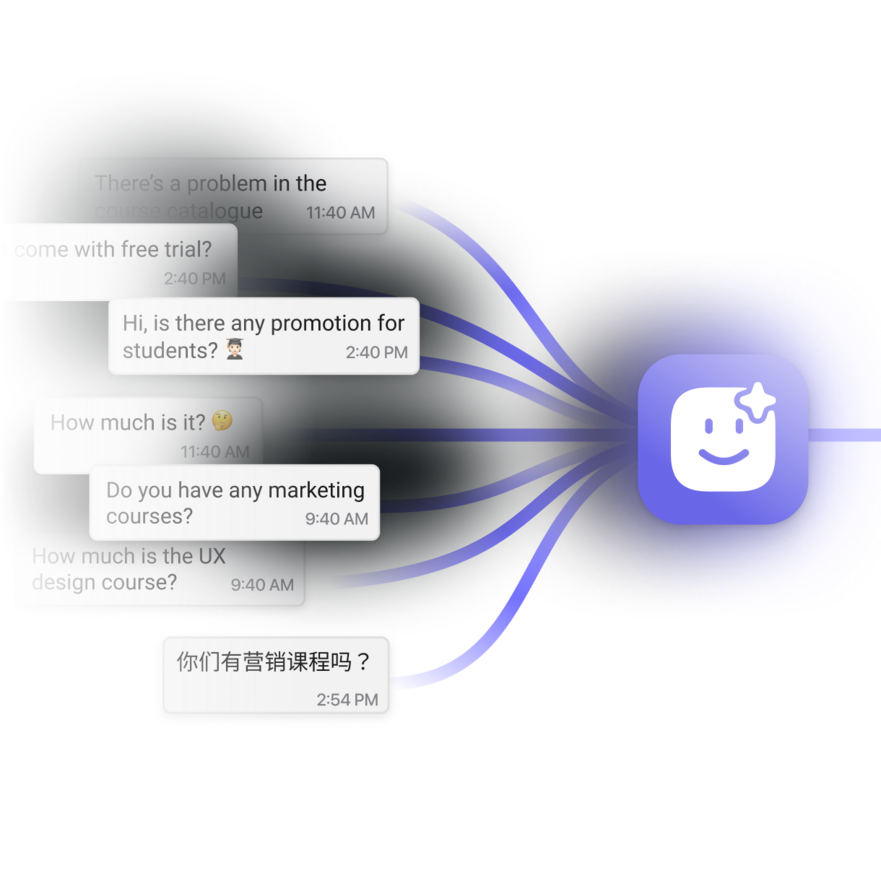
Reply to and manage conversations across WhatsApp, Instagram, Facebook Messenger, email and more — in the same unified inbox your team uses on desktop.
Learn More
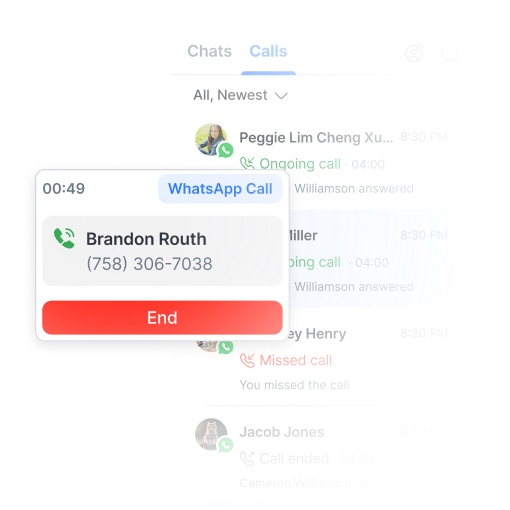
Handle and return calls directly from the app — WhatsApp calls, VoIP, all in the same conversation thread as your chats.
Learn More
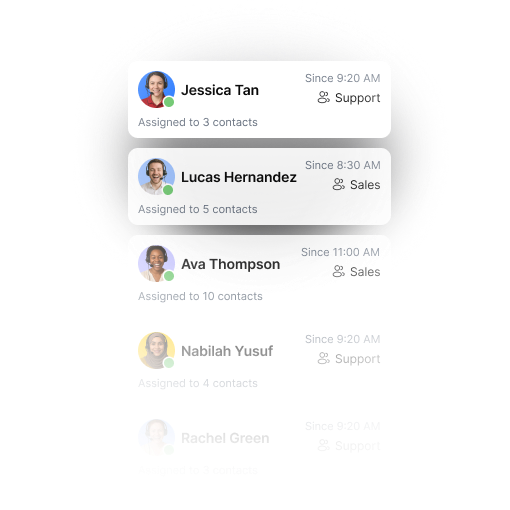
Assign conversations to agents or AI Agents, manage team workload and keep queues clear — so nothing sits unattended when your team is on the move.
Learn More
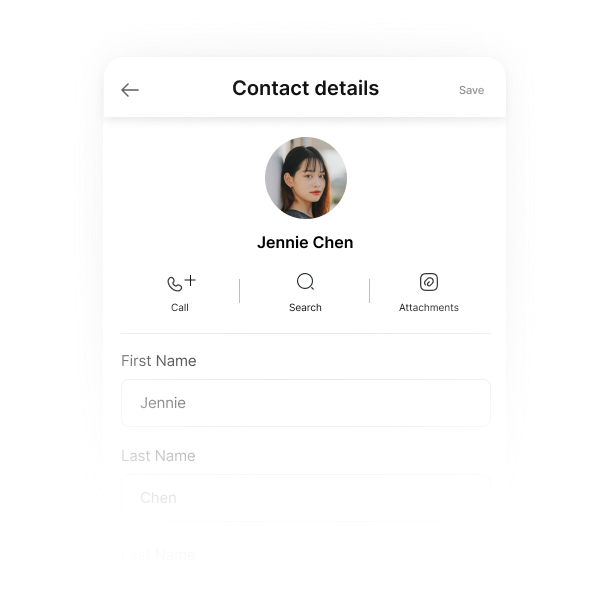
Pull up full contact details, conversation history, and data from your connected CRM before you reply. Every interaction, in context, regardless of which agent handled it before.
Learn More
Managers can monitor team activity and conversation status from anywhere — not just when they're at a desk.
Learn More
Most business messaging platforms treat mobile as an afterthought — they ship a web app wrapped in an app shell rather than building natively. Respond.io is built natively for iOS and Android: same inbox, same features, same performance as desktop, because for high-volume B2C teams, mobile access isn't optional.
respond.io | Most competing platforms | What it means for your team | |
|---|---|---|---|
App type | Native iOS and Android | Web app in an app shell | Faster to load, built for mobile navigation — not a desktop layout adapted for a smaller screen |
Inbox on mobile | Full: chats, calls, AI Agents, assignments, team visibility | Partial or stripped-down | Agents can manage everything from their phone that they'd manage at a desk |
Calls + chat in the same thread | Yes | Separate dialer or not supported | No context-switching — calls and messages stay in one conversation thread |
Team visibility on mobile | Yes | Not available on mobile | Managers can monitor workload and step in from anywhere |
Performance under load | 99.939% crash-free | Degrades when volume spikes | Busy periods and campaigns don't cause missed conversations or slow replies |
If your team handles low conversation volumes during fixed office hours on a single channel, most competing platforms will work fine.
If your team manages multiple channels, handles voice calls, runs multi-agent workflows, or needs agents responsive in the field, respond.io is built for that — with a native mobile app that keeps your team connected wherever they work.
Competing platform apps work for teams that rarely need mobile access — low volume, standard hours, a single channel. If your team manages multiple channels, handles voice calls, runs multi-agent workflows, or needs agents to stay responsive when they're away from their desks, native architecture makes the difference.
If your team handles low conversation volumes during fixed office hours on a single channel, most competing platforms will work fine.
If your team manages multiple channels, handles voice calls, runs multi-agent workflows, or needs agents responsive in the field, respond.io is built for that — with a native mobile app that keeps your team connected wherever they work.
Competing platform apps work for teams that rarely need mobile access — low volume, standard hours, a single channel. If your team manages multiple channels, handles voice calls, runs multi-agent workflows, or needs agents to stay responsive when they're away from their desks, native architecture makes the difference.
"They have an excellent mobile app — almost none of the other platforms we tried have it, and it's crucial for our business since our agents are not always in front of a computer."
João Carlos R., G2
“Recently switched from Wati afer 2 years with that. HUGE difference! worth every shekel. the app works smoothly with no bugs, is feature rich and you can tell they have put a lot of thought on UX. also the support team is very helpful- it was really easy to get an agent, and they proactively called me to make sure everything is OK. i tried many whatsapp API solutions prior, and this one is the best i tried. glad i have found it.”
אביב .ש., Google Play
“Easy deployment, and very comprehensive support to all messaging platforms available. They improved features so much that they have to abandon old one, re-write and give it a new name. Having a mobile app makes my life easy tremendously.”
Justin Z., Capterra
Respond.io is built for mid-market B2C teams managing high-volume, revenue-critical inbound conversations across WhatsApp, Instagram, calls, and email, with multiple agents working across locations or outside fixed desk hours. If gaps in response continuity have a direct cost — missed leads, stalled deals, or managers losing visibility when away from their desk — the platform is built for that operating condition.
It is not the right fit for teams that handle all conversations during fixed desk hours at low enough volume that a single agent can manage from desktop — in those cases, the desktop platform alone is sufficient and the mobile layer adds no operational benefit. It is also not suited to teams whose primary use case is cold outreach or broadcast acquisition; respond.io is built around inbound lifecycle conversations, and its routing and automation model reflects that design.
The respond.io mobile app is designed for mid-market B2C teams running high-volume, revenue-critical inbound conversations — sales and support teams managing WhatsApp, Instagram, calls, email and other channels with multiple agents. It is most valuable for teams where agents are regularly away from their desks — in the field, between client meetings, or managing conversations across time zones — and for managers who need visibility across team activity when not at their desk. It is not the right fit for teams that handle all conversations during fixed desk hours or at low enough volume that a single agent can manage without mobile access — in those cases, the desktop platform alone is sufficient and the mobile app adds no meaningful operational benefit.
No. The mobile app is a companion product. The desktop platform is where teams configure workflows, automation, and settings. The mobile app is designed for active conversation management — handling inbound, assigning work, monitoring team activity, and maintaining response continuity when agents or managers are away from their desks.
The respond.io mobile app is not a web app wrapped in an app shell — it's a purpose-built iOS and Android application using parallel native processing, as documented here. The result: a 99.939% crash-free rate and a 54.2% reduction in screen-switching latency, so agents can move instantly between live conversations during high-volume periods without the app degrading. For high-volume B2C teams, unreliable mobile apps have direct operational consequences: missed leads when the app crashes mid-conversation, slower replies during campaign spikes, and agents forced into workarounds at the worst possible moment. Native architecture means the app holds up when inbound volume peaks.
The mobile app supports all channels available in respond.io's unified inbox, including WhatsApp, Instagram, Facebook Messenger, and email. Voice calls can also be managed and returned directly from the app, in the same conversation thread as chat messages. For teams handling conversations across multiple channels, this means agents don't need to switch between separate apps to stay responsive — all channels are accessible from one place on mobile, the same as on desktop.
The respond.io mobile app is the mobile layer of a Customer Conversation Management platform built for teams managing high-volume B2C conversations across WhatsApp, Instagram, Facebook Messenger, calls, and email. It is a native iOS and Android application that gives multi-agent B2C teams full access to their respond.io inbox — conversations, calls, assignments, and contact history — from their phones. Unlike web-wrapper alternatives, which degrade under load, respond.io's native build and 99.939% crash-free rate means mobile performance matches desktop, including during the high-inbound periods when B2C teams cannot afford degradation. It is a companion to the respond.io desktop platform, not a standalone product.