
















 Electronics
 Fashion & Apparel
 Furniture
 Jewelry and Watches
 Afterschool Activities
 Sport & Fitness
 Beauty Center
 Dental Clinic
 Medical Clinic
 Home Cleaning & Maid Services
 Photography & Videography
 Car Dealership
 Travel Agency & Tour Operator


TL;DR — SleekFlow vs respond.io
Respond.io is the best fit for businesses that need chat with WhatsApp Business Calling API, Voice AI and a platform built for high-volume customer conversations. 9 years of experience and processing 2 billion messages every quarter reflect the maturity of a platform proven at scale.
If customer conversations drive revenue across teams and channels, respond.io is built for growth.
SleekFlow may be a better fit for businesses with lower conversation volumes that don't require Voice AI or WhatsApp Business Calling API.
SleekFlow and respond.io both help businesses manage customer conversations, but they're designed for different stages of growth. Respond.io is built for businesses running high-volume customer conversations across chat, calls and email, while SleekFlow is better suited to businesses with lower messaging volumes.
In this guide, we compare SleekFlow and respond.io across use case fit, scalability, AI capabilities, support, reliability and pricing behavior, so you can choose the platform that best supports how your business communicates today and the level of complexity you plan to grow into.
SleekFlow vs respond.io side-by-side comparison
This side-by-side comparison highlights how SleekFlow and respond.io differ in focus, scalability and operational depth.
Category | SleekFlow | Respond.io |
|---|---|---|
Best for | Businesses handling lower-volume social messaging mostly | Mid-large B2C businesses managing high volumes of conversations across chat, calls & email |
Channels supported | WhatsApp, Instagram, Facebook Messenger, TikTok, Telegram, LINE, WeChat, SMS, Webchat, email | WhatsApp, Instagram, Facebook Messenger, TikTok, Telegram, LINE, WeChat, SMS, Webchat, email, VoIP calls and custom channels |
Calls support | VoIP | VoIP, WhatsApp Business Calling API and Messenger Calls |
AI capabilities | Qualifies leads, scores contacts and updates fields | Qualifies leads, updates lifecycle stages, triggers automation and routes by intent |
Voice AI | Not available | AI Agent answers inbound calls, handles conversations and escalates to a human agent |
Lifecycle management | AI-assisted stage transitions, with workflow automation via Advanced Flow Builder | Native lifecycle management integrated with AI and Workflows automation, with conversion and performance reporting |
Reporting | Conversation Analytics, Performance and Conversion Analytics dashboards on Premium and Enterprise plans | Real-time dashboard, conversation & team performance reporting on all plans; advanced conversation, conversion and broadcast reporting from Growth plan onwards; lifecycle-to-conversion reporting included |
Reliability transparency | Status page with incident history | Status page and published 99.999% uptime commitment |
Security | ISO 27001 and GDPR | ISO 27001, GDPR, SSO, 2FA and Trust Center |
Support availability | Chat support available Mon–Fri, 9am–6pm across APAC, EMEA and LATAM time zones | 24/7 human and AI assistance including scheduled calls for complex issues on every plan, plus a dedicated Customer Success Manager for Enterprise |
Customer sentiment | Praised for ease of use in social messaging | Praised for reliability and revenue-driving performance |
Scalability | G2 users report slower platform performance at higher message volumes | Built to scale with high chat and call volumes |
Who is respond.io and SleekFlow built for?
Respond.io is built for mid-market B2C businesses with complex, high-volume customer conversations across email, chat and call, while SleekFlow is built for teams running lower-volume messaging.
Who should use respond.io?
Respond.io is a mature customer conversation platform built for businesses that rely on customer conversations to generate revenue. It brings messaging, email and calling into one workspace, combining AI, automation and lifecycle management with the reliability and scalability needed for high-volume operations.
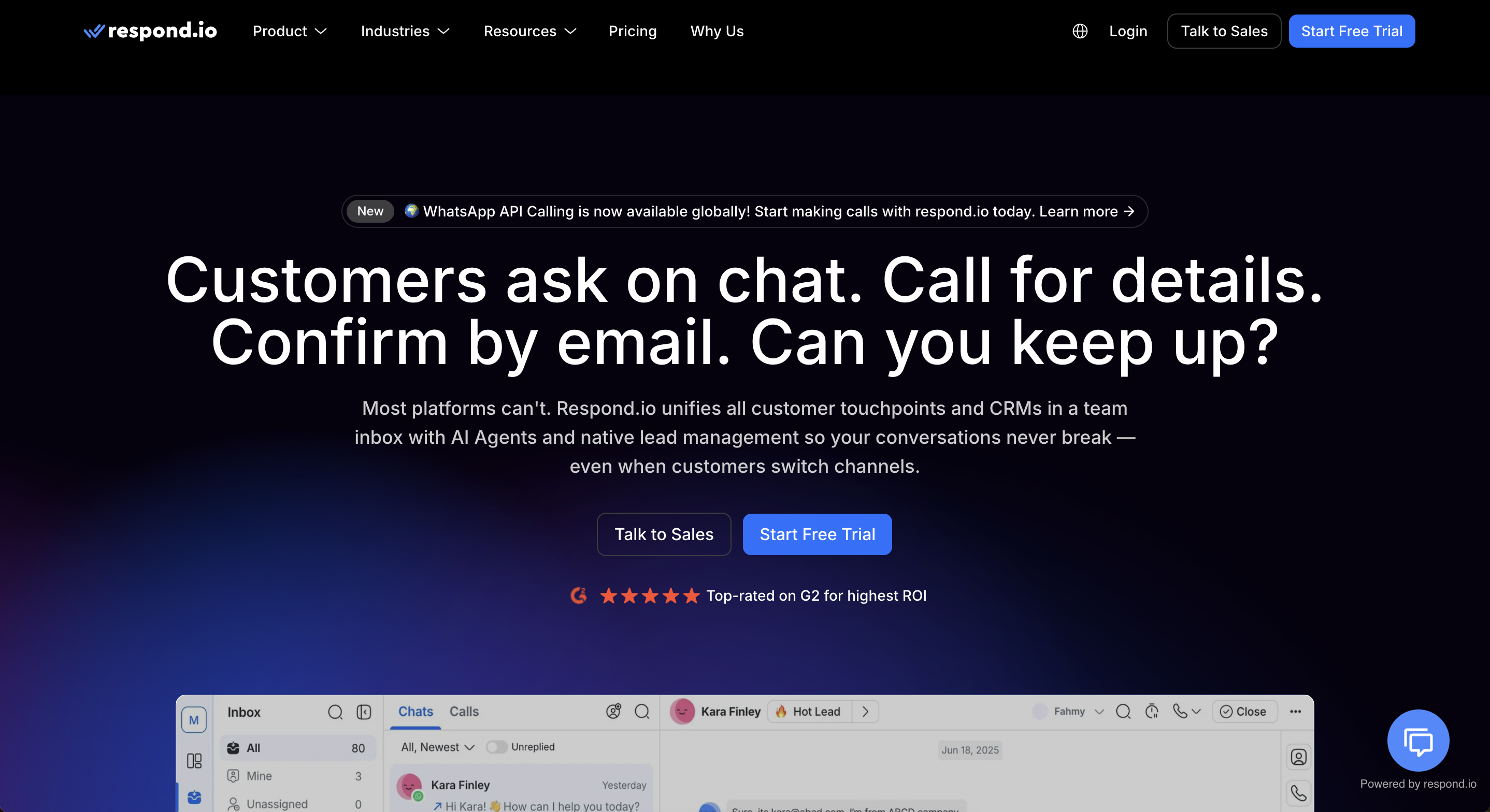
Respond.io is best for mid-large B2C businesses that:
Handle high chat and call volumes
Run sales, marketing and customer service together
Need AI, automation and lifecycle management built for high-volume operations
Require full visibility into customer progress and team performance
Depend on customer conversations as a revenue-critical operational channel
Who should use SleekFlow?
SleekFlow supports a broad set of messaging channels and does not currently offer Voice AI, making it a fit for teams that don't need it.
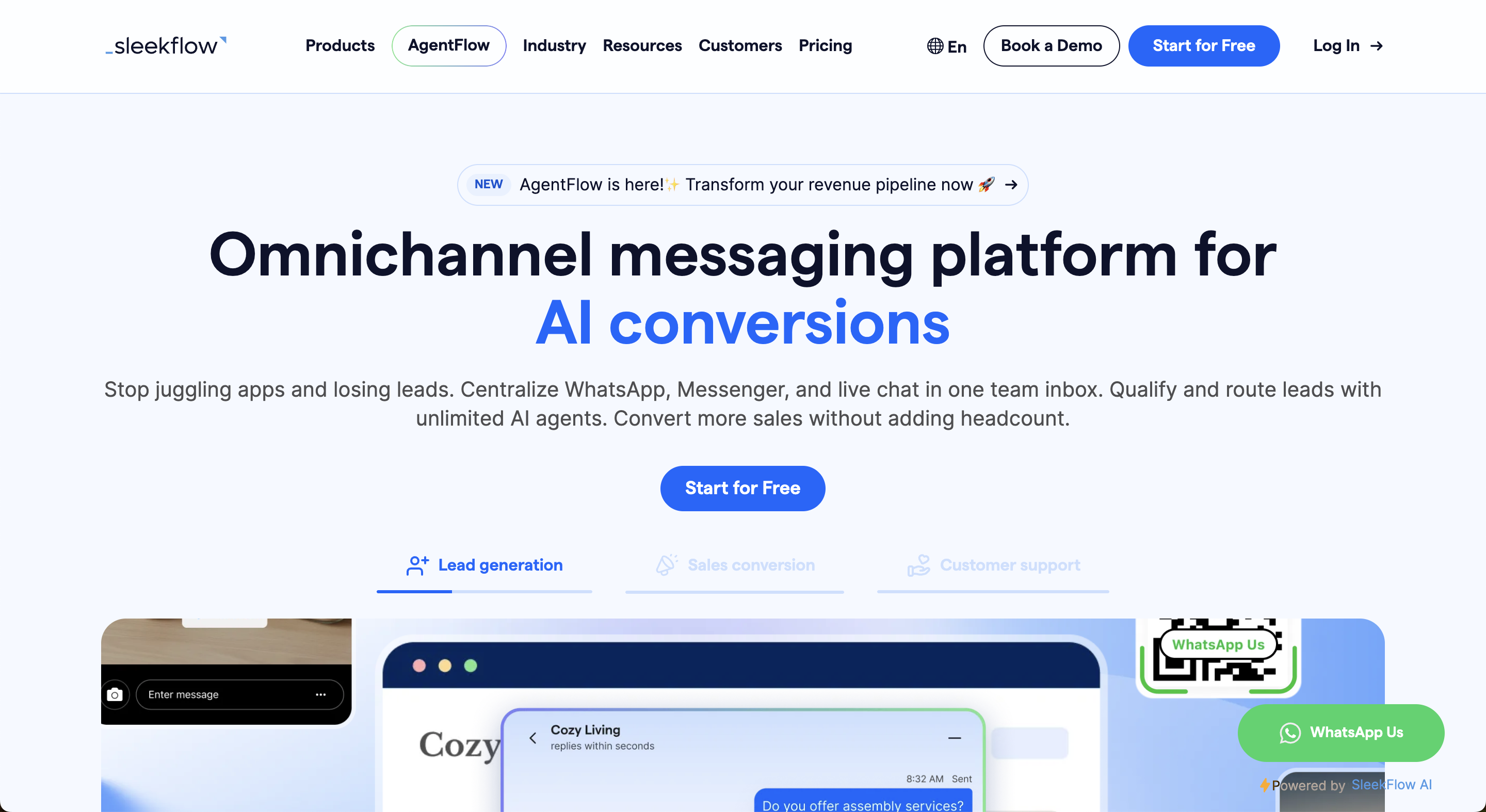
SleekFlow is best for businesses that:
Run lower-volume messaging
Do not need WhatsApp Business Calling API or voice AI capabilities
Need AI agents for messaging only
Which platform offers stronger omnichannel capabilities?
A stronger omnichannel platform lets teams handle messaging, email and calls in one workspace while keeping customer context unified across channels. In this comparison, respond.io fits that need better because it supports WhatsApp Business Calling API and custom channels while maintaining unified contact context across channels.
Channel support across messaging, email and calls
Respond.io supports messaging channels such as WhatsApp, TikTok, Instagram, Facebook, Telegram, Viber, WeChat, SMS, LINE, plus email, VoIP calls and custom channels.
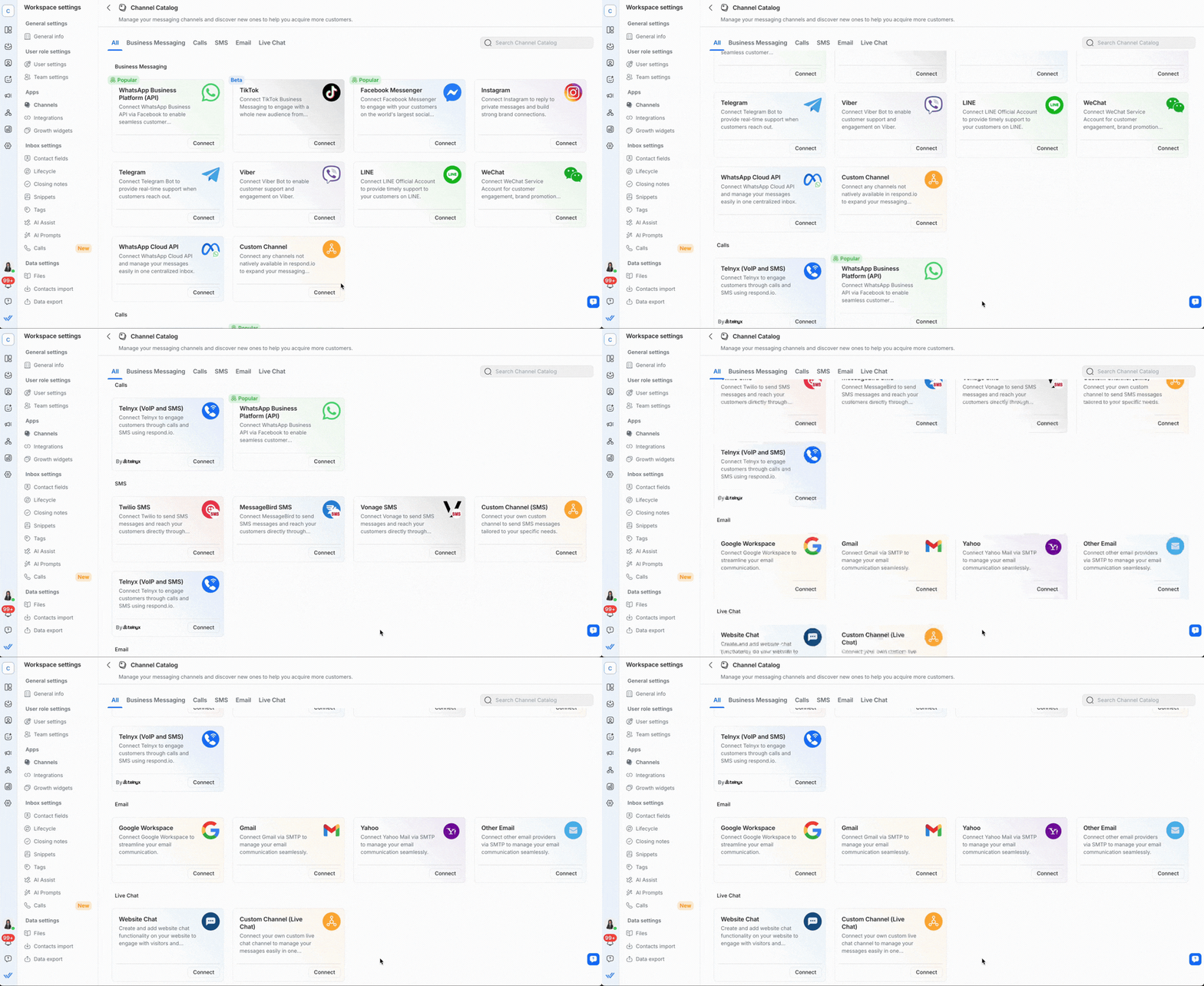
It supports calling through VoIP and WhatsApp Business Calling API, allowing teams to manage chat and voice conversations from the same Inbox. This enables teams to move seamlessly from chat to voice for faster resolution and higher conversion.
SleekFlow supports a broad set of messaging channels. However, it does not support WhatsApp Business Calling API.
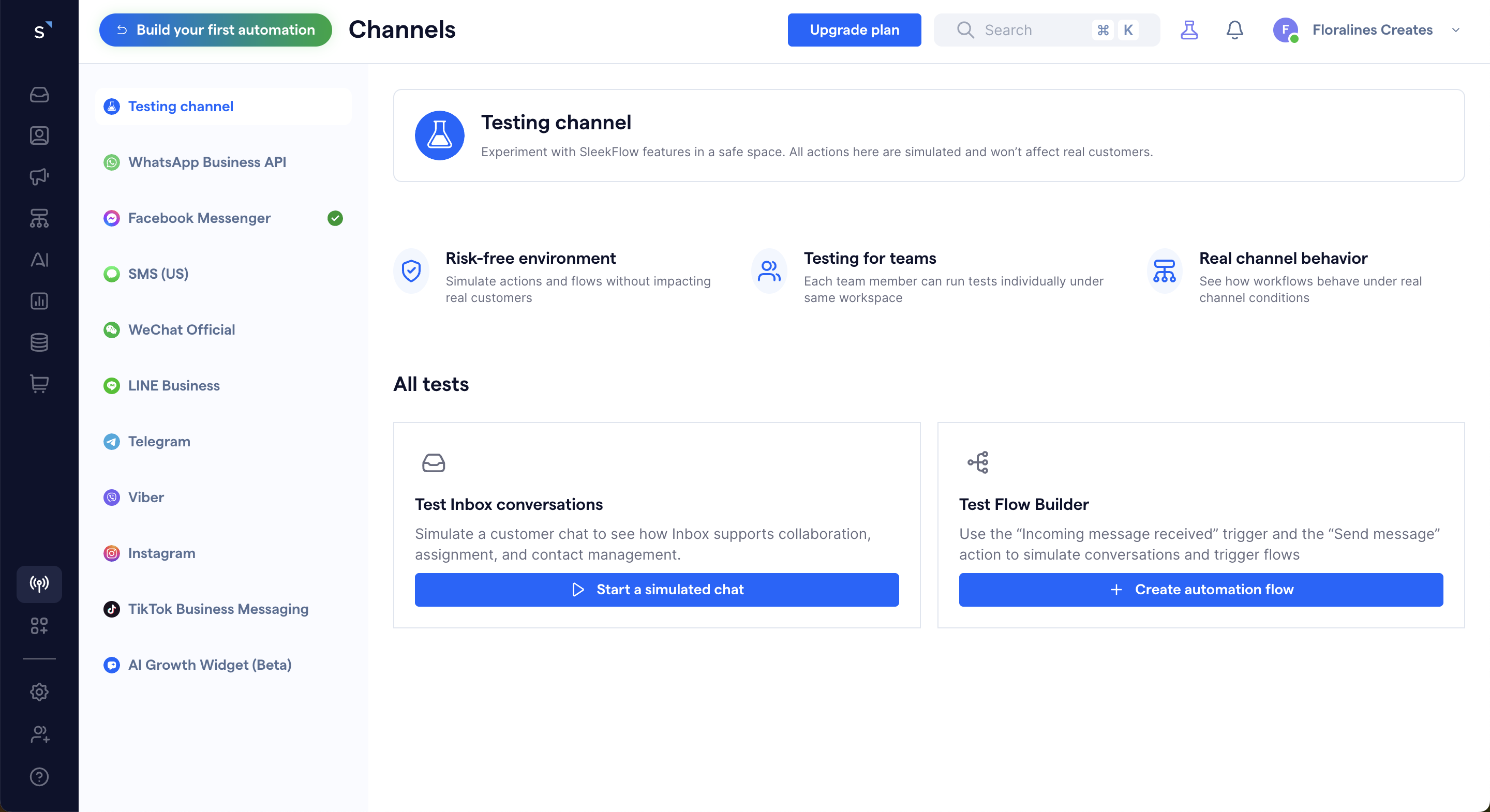
For scaling businesses, this difference matters. Customers don’t always stay on messaging channels, and as communication needs expand, teams need a platform that supports the channels customers are on. Respond.io is built for this growth, helping businesses future-proof their customer conversations across messaging, email and calls.
Maintaining customer context across channels
Respond.io maintains a unified customer profile across channels by identifying duplicate contacts across channels and suggesting merges to create a unified profile. This helps teams keep customer data clean and conversations connected even when customers switch channels.
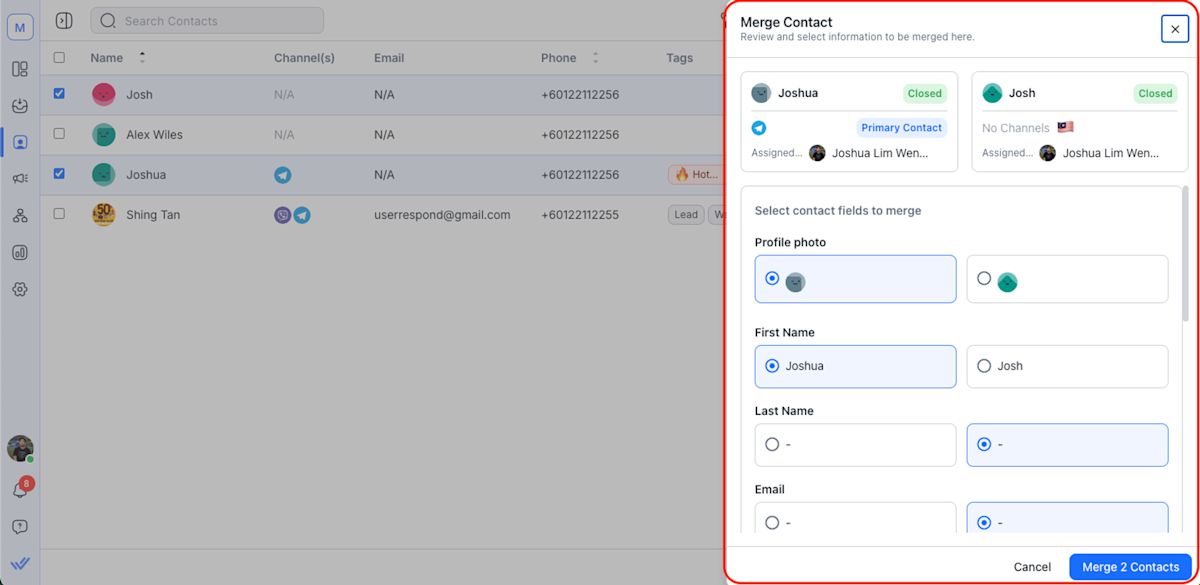
SleekFlow does not offer the same level of contact merge support, which can lead to fragmented customer context when conversations happen across multiple channels.
Which platform offers better lifecycle management?
Lifecycle management at scale requires stages that can be automated, reported on and shared across teams. Both SleekFlow and respond.io allow teams to define lifecycle stages and update them while chatting with customers.
However, respond.io differentiates itself by combining lifecycle data with reporting in a single experience.
End-to-end lifecycle management
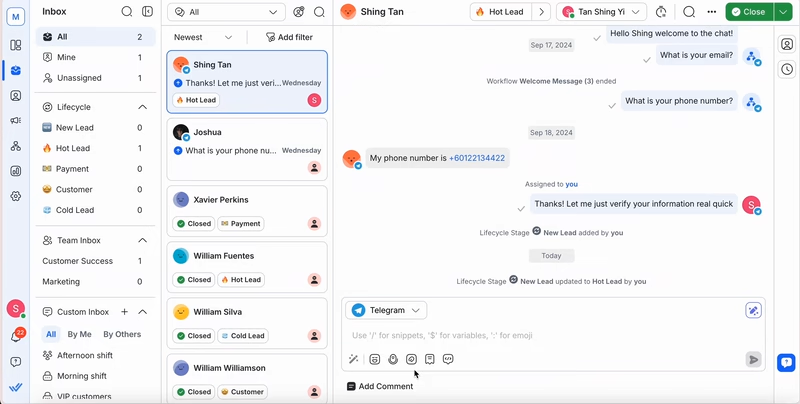
Respond.io includes a native Lifecycle feature that tracks contacts from first interaction through conversion and retention. While agents can update lifecycle stages manually in the Inbox, AI Agents can also update them automatically while chatting with customers, helping keep records accurate throughout the customer journey.
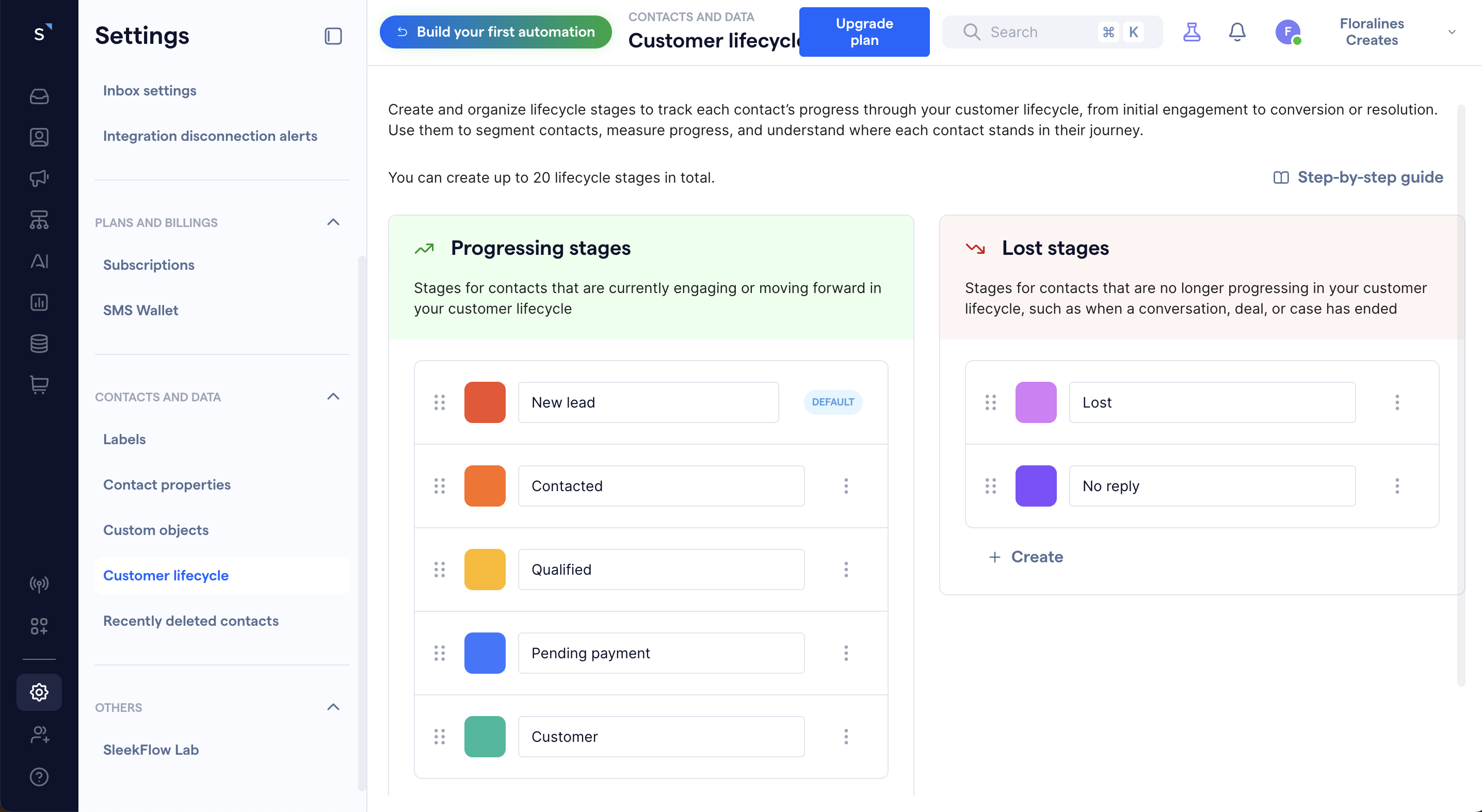
SleekFlow also supports lifecycle stages that can be updated manually by agents or automatically through AI and automation, helping teams track customer progress throughout the customer journey.
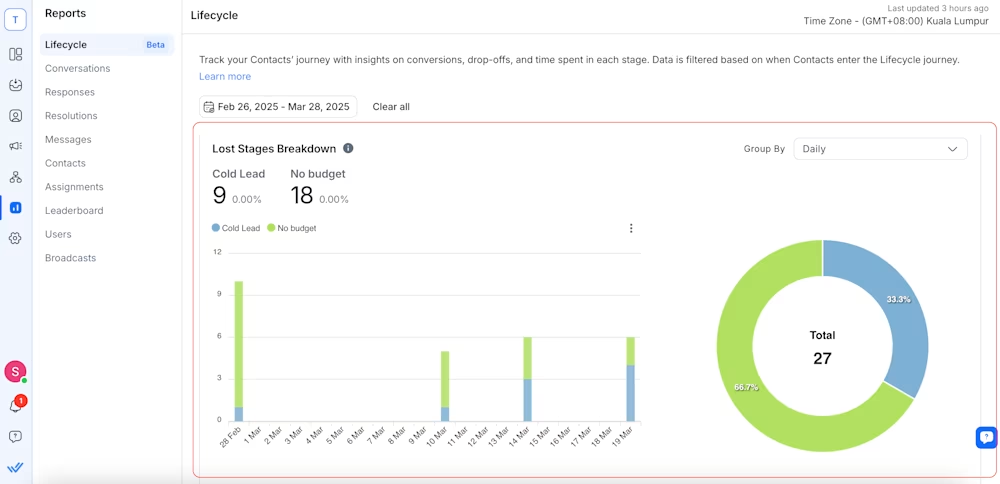
Lifecycle Insights
Respond.io ties lifecycle data directly to conversion and performance reports, giving teams visibility into where leads convert, stall or drop off across the customer journey. This helps businesses identify bottlenecks, optimize follow-up and improve conversion rates over time.
SleekFlow provides lifecycle monitoring through a Kanban view, while Conversion Analytics tracks funnel performance and conversion rates. Together, these tools help teams monitor customer progress and measure sales performance.
Turn customer conversations into business growth with respond.io. ✨
Manage calls, chats and emails in one place!
Which platform provides better AI capabilities?
Both respond.io and SleekFlow offer AI capabilities that go beyond drafting replies. Their AI Agents can qualify leads, update customer records, trigger workflows and take actions across the platform, making AI a core part of day-to-day customer operations.
AI Agents for messaging
Both respond.io and SleekFlow offer AI Agents for messaging that can answer customer questions, qualify leads, update lifecycle stages and trigger workflows. They also support AI Agents that can process PDFs, images and voice notes.
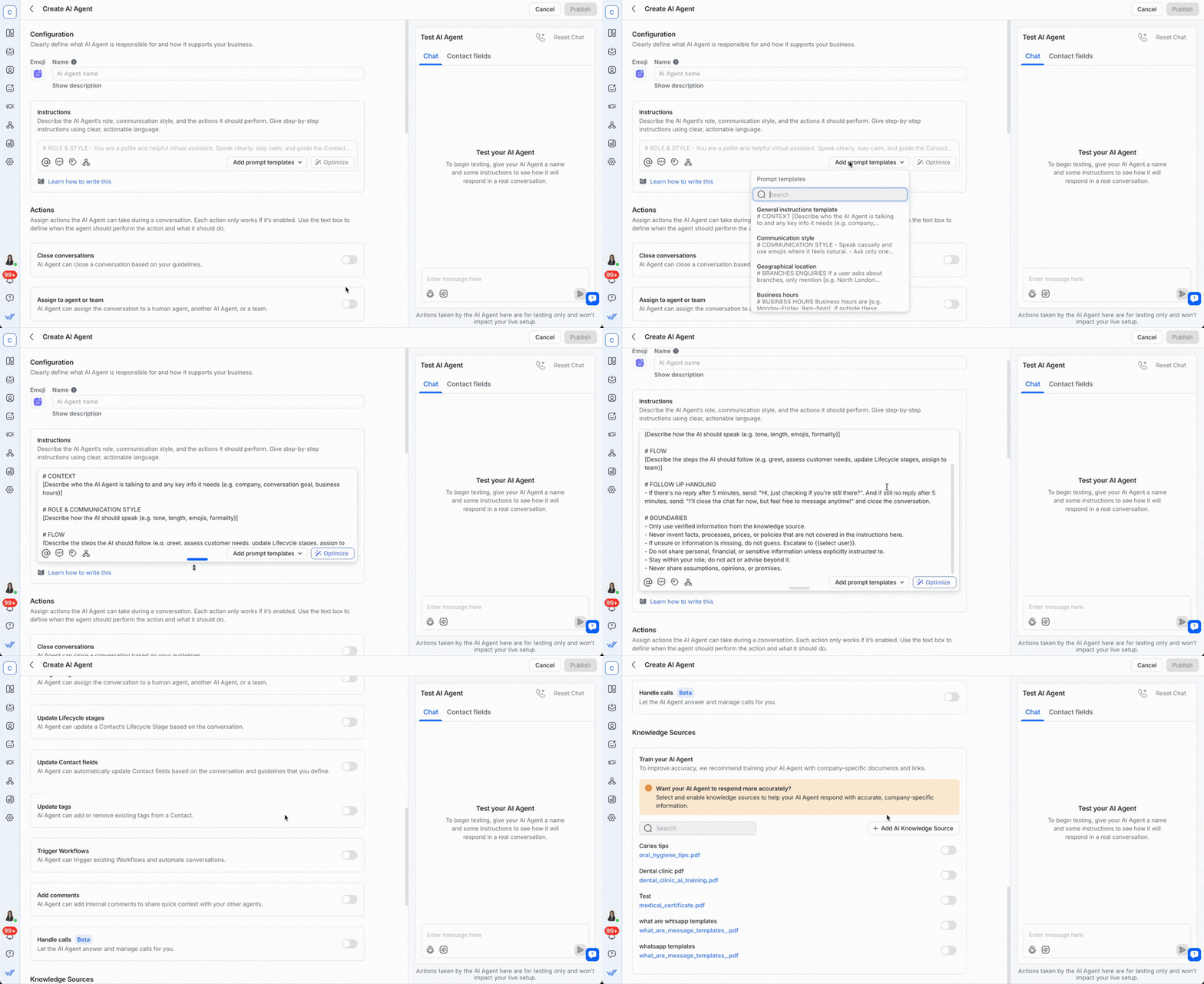
As with any AI system, response quality depends on how well the AI Agent is configured. Respond.io includes built-in prompt templates to help teams configure AI Agents faster with less trial and error, while SleekFlow does not currently offer prompt templates.
Voice AI Agents
Respond.io includes a Voice AI Agent that automatically answers inbound calls, supports multiple languages and provides call recordings and transcripts directly in the Inbox. If a call needs a human touch, the Voice AI Agent can transfer it to an available agent without dropping the connection. This helps businesses avoid missed calls and handle customer inquiries even outside working hours. Meanwhile, SleekFlow does not offer a Voice AI Agent or voice-based AI capabilities.

AI assistance for agents
Both SleekFlow and respond.io provide AI assistance to help agents generate and improve replies during conversations. Agents can use AI to draft responses, refine tone and improve clarity when replying to customers.
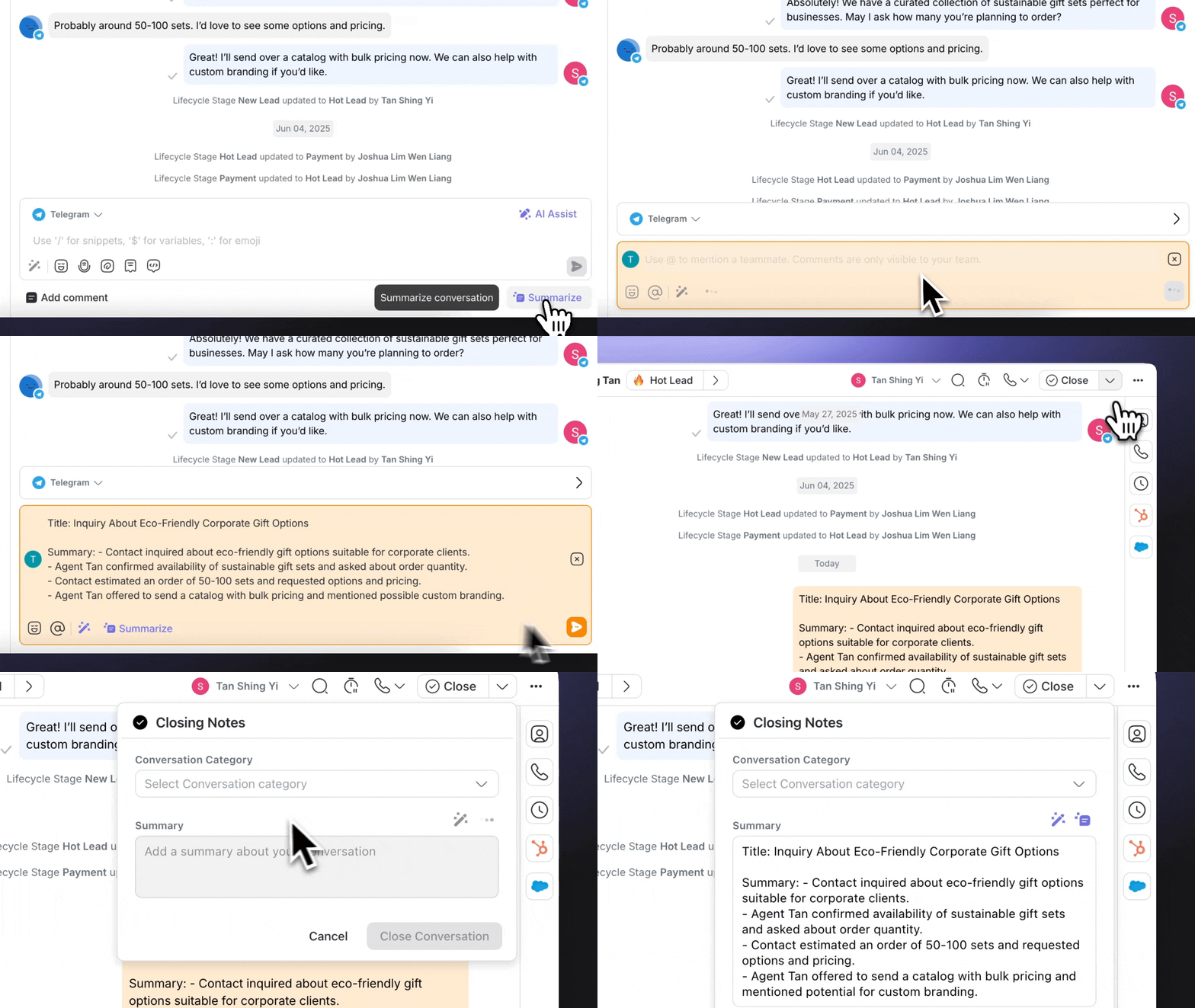
Both respond.io and SleekFlow offer one-click AI conversation summaries directly in the Inbox, allowing agents to generate concise summaries of long conversations for faster handovers, follow-ups and conversation closures without manually reviewing message history.
Which platform scales better with automation?
Both respond.io and SleekFlow offer mature automation capabilities, allowing businesses to automate lead qualification, routing and customer engagement. Businesses should instead evaluate platform maturity, reliability and omnichannel capabilities when deciding between them.
Which platform offers better reporting?
Both respond.io and SleekFlow provide conversation, campaign and conversion reporting, as well as support for Meta's Conversion API (CAPI) to optimize Click-to-Chat campaigns. The difference lies in how these insights are connected.
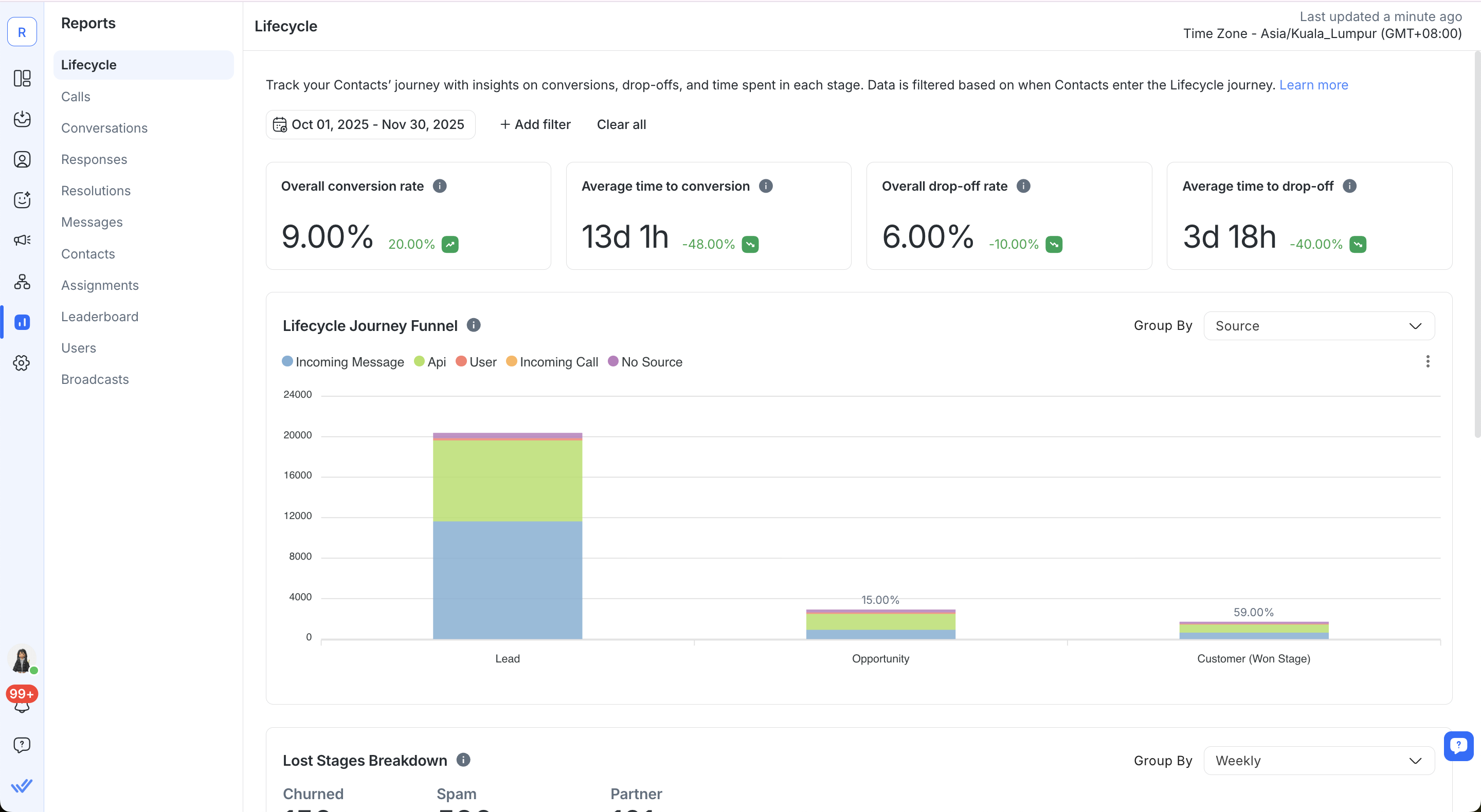
Respond.io brings conversation, broadcast, lifecycle and conversion insights together in a connected reporting view. Teams can see where leads convert, stall or drop off throughout the customer journey, making it easier to identify bottlenecks, measure team performance and optimize revenue-driving conversations.
SleekFlow provides conversation, campaign and conversion reporting, with agent performance and advanced analytics available on higher-tier plans. It also offers lifecycle management and Conversion Analytics, allowing teams to monitor customer progress and funnel performance across dedicated reporting views.
Which platform is more reliable and secure?
Respond.io offers stronger security controls and clearer reliability guarantees, making it better suited for businesses operating at scale.
Platform security
Respond.io is built with enterprise-grade security standards from the ground up. It is ISO 27001 certified, GDPR compliant, supports role-based access, SSO and 2FA, and provides a dedicated Trust Center where teams can review security policies, certifications and best practices.
SleekFlow also meets baseline security requirements such as ISO 27001 certification and GDPR compliance. However, it does not currently support SSO, which can be a key requirement for larger teams managing access across multiple users and departments.
While both platforms address core compliance needs, respond.io offers stronger access controls, greater transparency and the security foundations that mid to large businesses expect as they scale.
Platform reliability
Respond.io maintains a public status page, publishes an uptime of 99.999% and processes over 2 billion messages every quarter, reflecting the operational maturity businesses expect from a platform supporting revenue-critical conversations.
SleekFlow does not publish a public uptime commitment. Its status page documents incidents and resolution timelines, including disruptions to incoming and outgoing messaging.
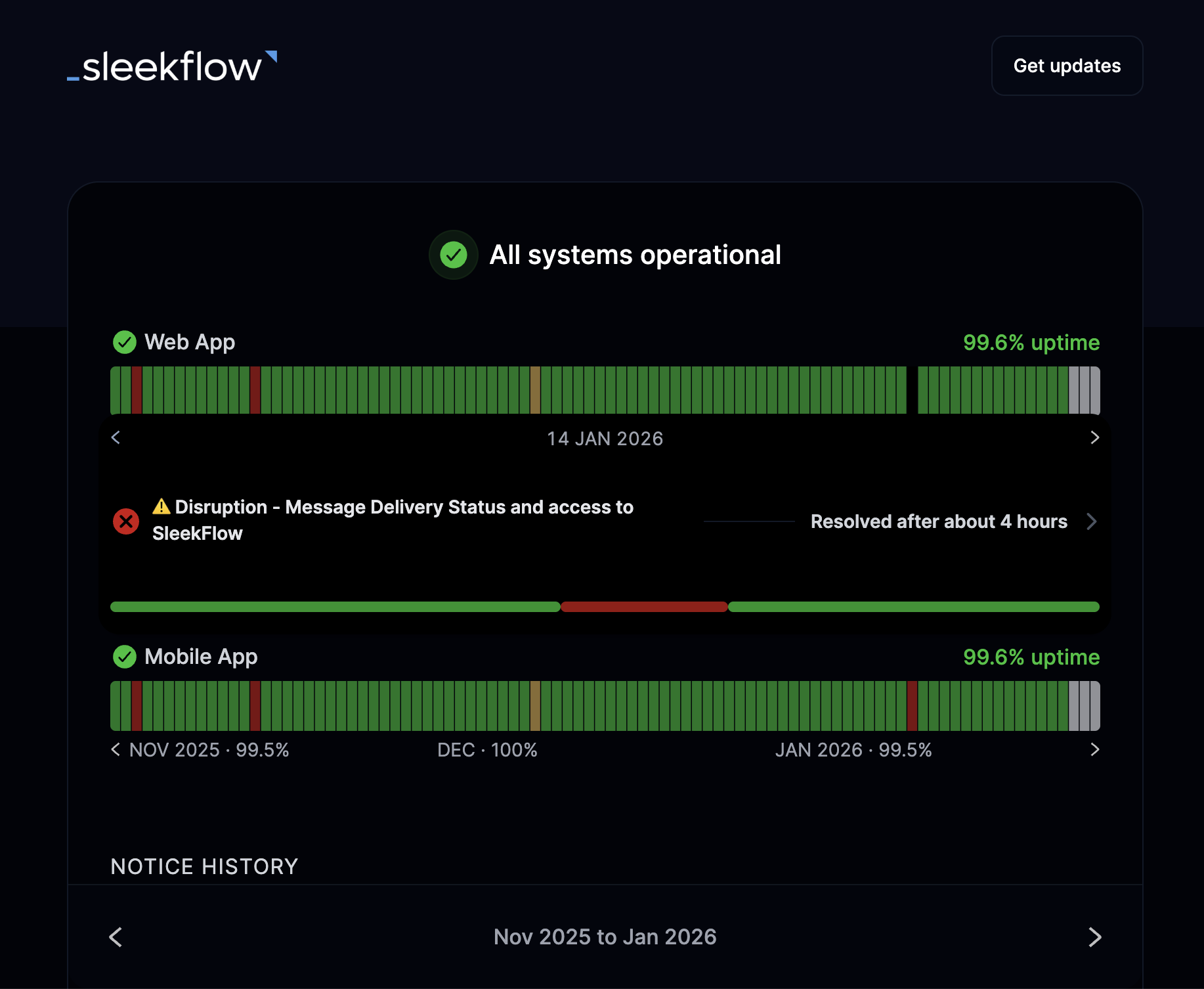
For businesses that rely on messaging and calls to generate revenue, reliability and transparency are not optional. Gaps here can directly impact customer experience, missed opportunities and operational continuity.
Which platform offers better customer support?
A mature platform is backed by responsive, accessible support when businesses need it most. Respond.io offers faster, more accessible and higher-quality support than SleekFlow, backed by real businesses that have switched platforms.
Customer support quality
Respond.io is consistently praised on G2 for its responsive, hands-on support.
This is also reflected in customer stories like GETUTOR, an education business that switched from SleekFlow to respond.io after struggling with slow and ineffective support, rising contact costs and platform stability issues that disrupted operations. After switching to respond.io, GETUTOR stopped missing messages and increased sales by 24% in just two months.
Customer support availability
Respond.io provides 24/7 human and AI support and the option to schedule calls for complex use cases and strategic growth discussions. Enterprise customers also get access to a dedicated Customer Success Manager.
SleekFlow offers chat support Mon–Fri, 9am–6pm across APAC, EMEA and LATAM time zones. Both platforms offer support, but when your business relies on messaging and calls to drive revenue, the difference comes down to how quickly you can reach help and how helpful they are.
Which pricing offers the best value for scaling businesses?
Pricing delivers better value when it remains predictable as your business grows. While both respond.io and SleekFlow use Monthly Active Contacts pricing, additional fees and platform restrictions can impact long-term costs.
Pricing value with respond.io
With respond.io, pricing is designed to support business growth without additional platform restrictions.
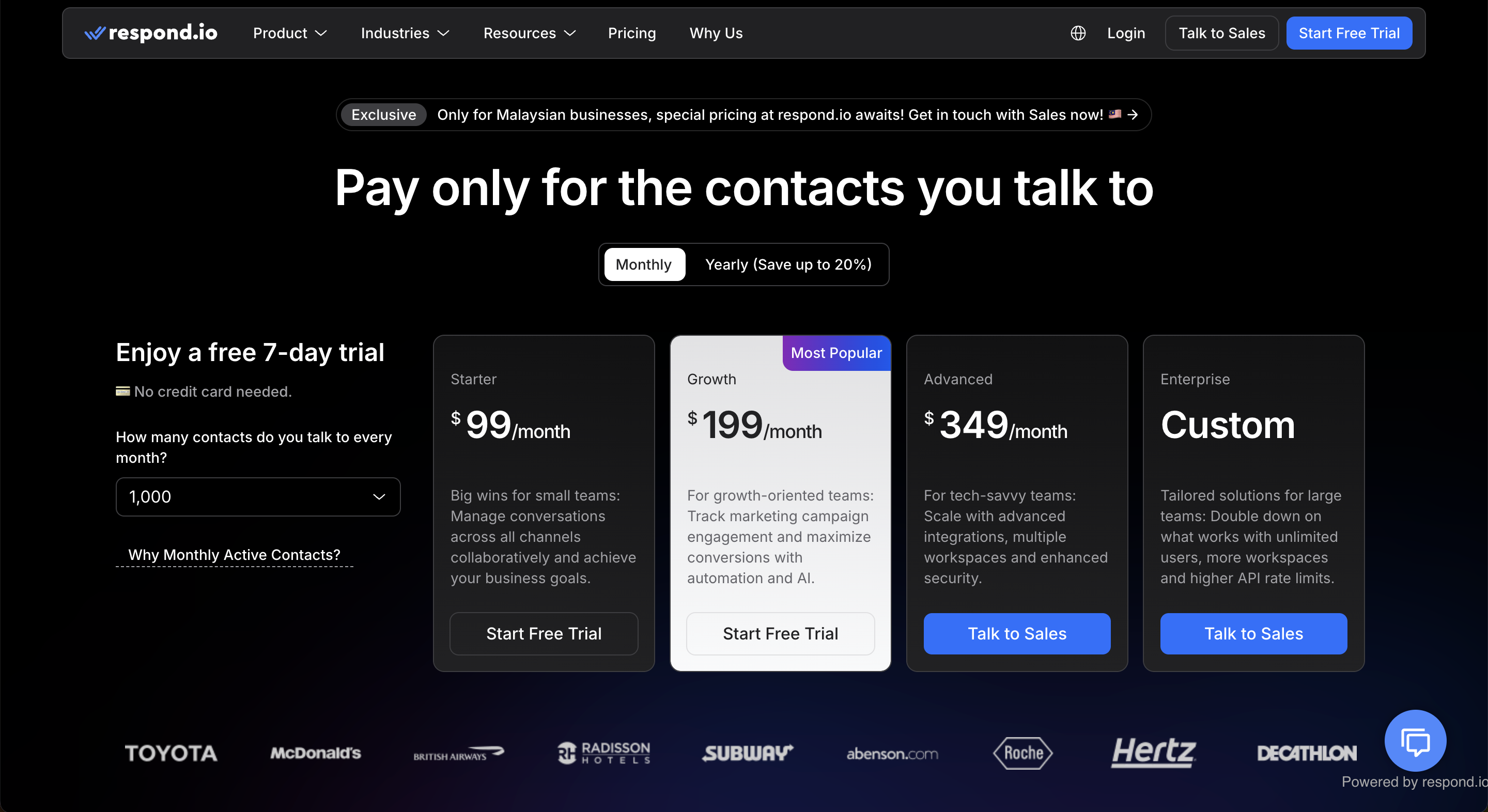
Monthly Active Contacts are the primary usage-based cost
Charges are based only on contacts you actively message
Operations continue smoothly, even as volumes increase
Multiple WhatsApp Business phone numbers can be connected without additional fees
This means pricing remains predictable even as conversation volume increases, which is critical for businesses where messaging and calls directly impact revenue.
Pricing value with SleekFlow
SleekFlow's pricing model introduces additional costs and platform restrictions as usage grows.
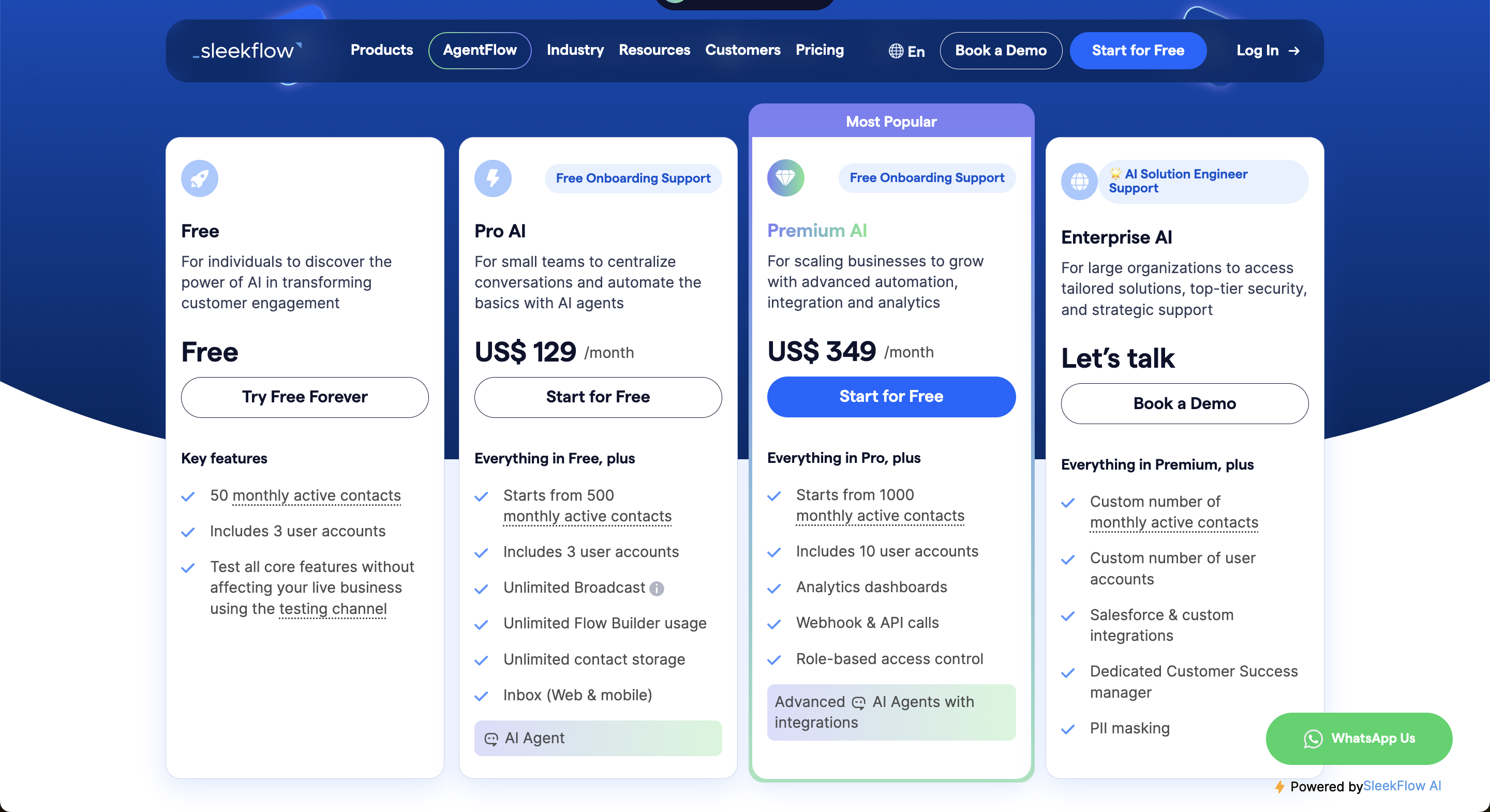
Monthly Active Contacts are only one part of the cost structure
Channel connection limits on non-Enterprise plans
Each WhatsApp Business phone number incurs an additional $15 monthly fee
As your business grows, these additional fees and platform restrictions can increase the total cost beyond the headline subscription price.
What do customers say about them?
Respond.io has more reviews and a higher average rating than SleekFlow.
On G2, Respond.iois rated around 4.8 out of 5 from nearly 500+ reviews. Reviews frequently highlight platform reliability, fast time to value, strong omnichannel support and excellent customer support.
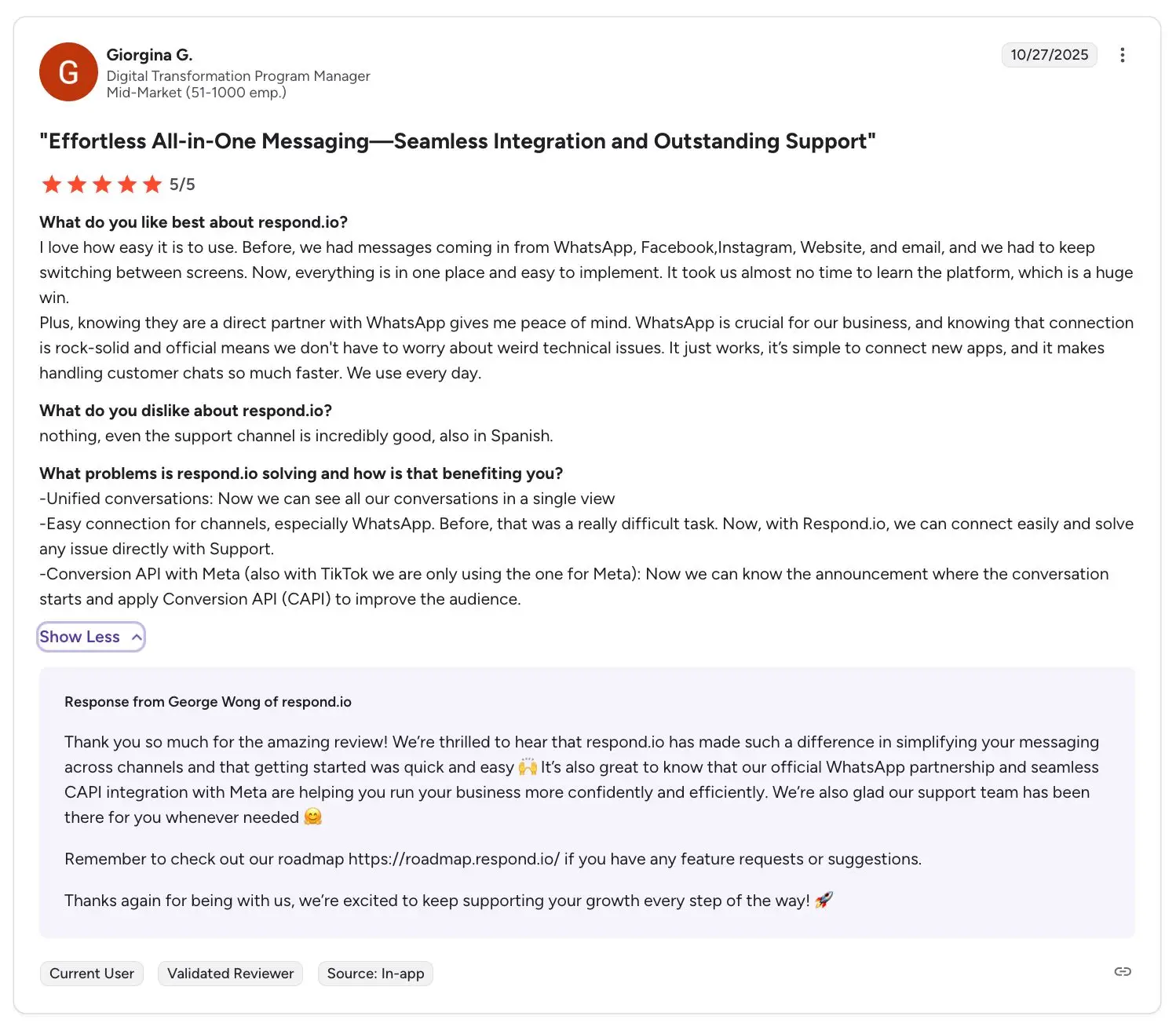
SleekFlow is rated around 4.6 out of 5 from about 200+ reviews. Its reviews tend to focus more on ease of use for social messaging across multiple channels.
Which platform should you choose: SleekFlow or respond.io?
Choose respond.io if your business relies on customer conversations to generate revenue and needs a mature, reliable platform built for high-volume operations. With Voice AI, WhatsApp Business Calling API, customer lifecycle management, predictable pricing and responsive support, it's designed to help businesses scale with confidence.
Choose SleekFlow if you primarily handle lower-volume messaging and don't require capabilities like Voice AI or WhatsApp Business Calling API.
If your business is growing in conversation volume, channels or team size, respond.io provides a scalable foundation and advanced capabilities to support that growth. Start a free trial or book a personalized demo to see how respond.io helps teams succeed across sales, marketing and customer service.
Turn customer conversations into business growth with respond.io. ✨
Manage calls, chats and emails in one place!
FAQs about SleekFlow vs respond.io
Is respond.io better than SleekFlow for scaling businesses?
Yes. Respond.io is better suited for scaling businesses because it's built for high-volume customer conversations across chat, email and calls. Backed by 9 years of experience and processing over 2 billion messages every quarter, it combines Voice AI, lifecycle management, predictable pricing and enterprise-grade reliability for businesses where customer conversations drive revenue.
Does SleekFlow support omnichannel communication like respond.io?
Both platforms support a wide range of messaging channels. However, respond.io extends beyond messaging by supporting WhatsApp Business Calling API, VoIP, email and custom channels in a single workspace while maintaining unified customer context across channels. SleekFlow does not currently support WhatsApp Business Calling API or custom channels.
Which platform has more advanced AI capabilities, SleekFlow or respond.io?
Both respond.io and SleekFlow offer mature AI capabilities for customer conversations, including AI Agents that can answer questions, qualify leads and automate workflows. Respond.io differentiates itself with Voice AI, allowing businesses to automate inbound calls, transfer conversations to human agents and manage voice interactions alongside messaging in the same platform..
How do respond.io and SleekFlow differ in pricing as usage grows?
Both platforms use a Monthly Active Contacts pricing model, but their pricing structures differ. Respond.io doesn't charge additional platform fees for WhatsApp Business phone numbers or limit how many channels you can connect, making costs more predictable as your business grows. SleekFlow charges per WhatsApp Business phone number and limits channel connections on non-Enterprise plans, which can increase costs as usage scales.
Which platform is better for sales, marketing and customer service teams?
Respond.io is better suited for businesses running sales, marketing and customer service from a single platform. It combines messaging, email and calling with lifecycle management, reporting and AI, backed by the reliability and support needed for high-volume operations. SleekFlow is a strong option for businesses focused primarily on social messaging with lower conversation volumes.
Further Reading
If you’ve found this article helpful, here are some more for you to check out:


