Operate without interruption, even at scale
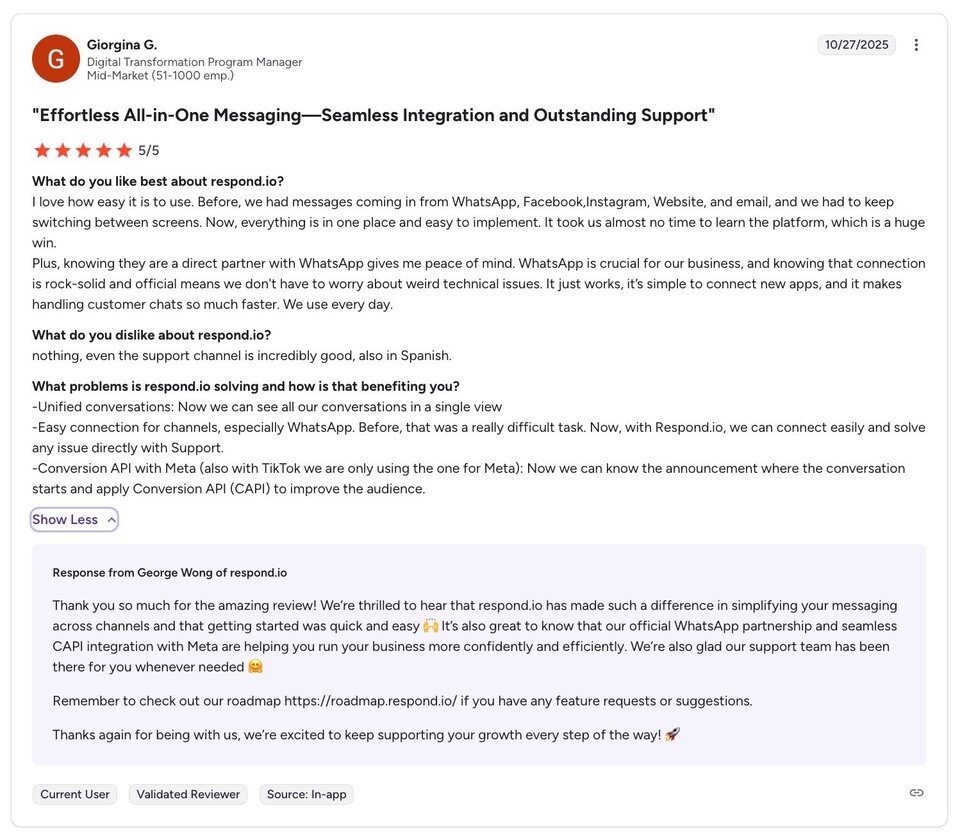
With 99.999% uptime, respond.io ensures business continuity during peak seasons, product launches or large-scale campaigns. For example, this case study shows how a respond.io customer, Automax®, sends over 80,000 follow-up broadcasts per month.
Common tradeoffs include a steep learning curve and plan-based feature access
While the platform is powerful, a few users mention early-stage adjustments as they adopt more advanced features.
Extensive features can feel overwhelming at first
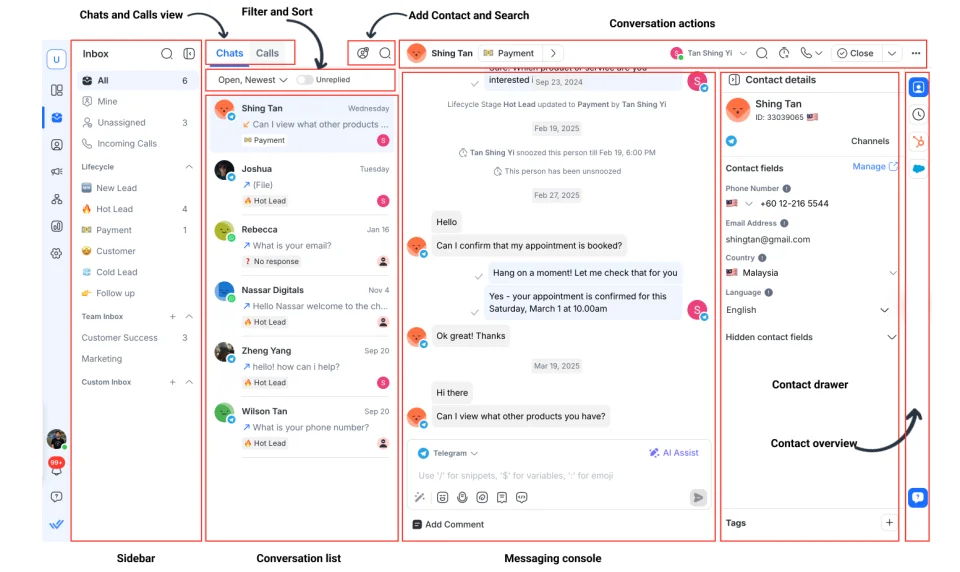
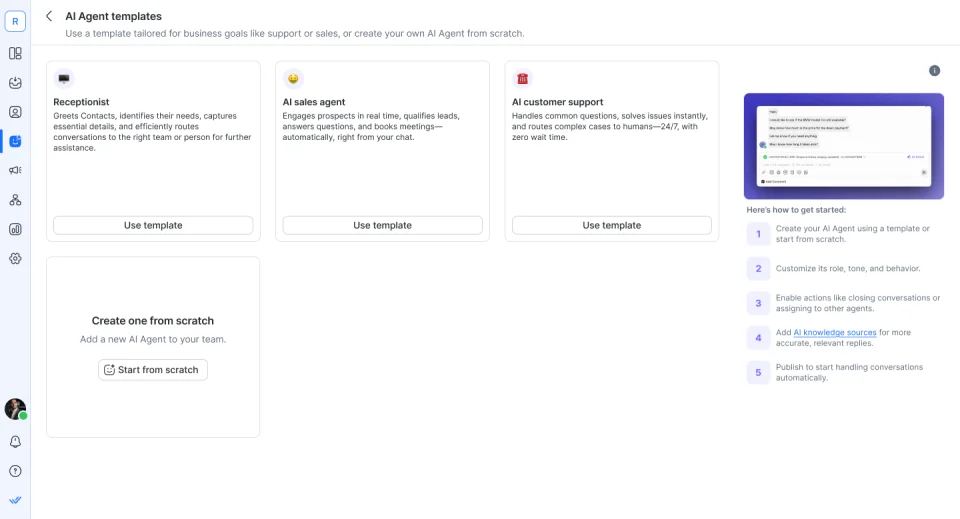
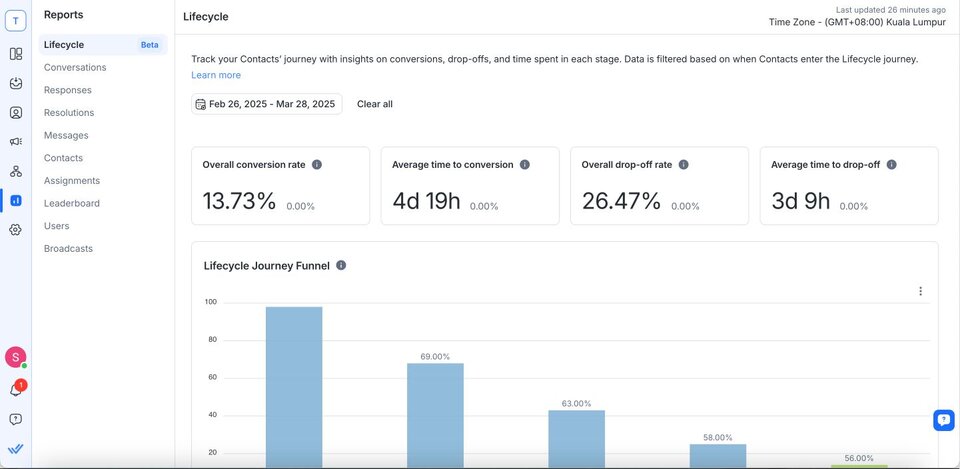
From AI Agents to CRM integration to lifecycle tracking, respond.io offers broad capabilities. Initial channel connection is quick, but more complex set-ups require an investment of time and sometimes additional support. The in-workspace Copilot breaks down the process so it's less overwhelming. It quickly answers product questions, provides navigation assistance and offers an interactive AI Agent builder that helps run test cases and apply best practices. For those who need further guidance, 24/7 human and AI support is always available to help businesses get started. Plus, guided onboarding and dedicated success managers, available on Advanced and Enterprise plans, streamline setup and get you results faster.
AI accuracy depends on knowledge source quality
The performance of AI Agents improves when company documents, FAQs and SOPs are well-structured and regularly updated.
Channel and broadcast constraints
Some channels, like WhatsApp, have strict policies around messaging limits, fees and usage — and complaints about these are common. These constraints are enforced by Meta. Respond.io does not impose any additional restrictions.
Pricing favors scale
Smaller businesses or teams with messaging volume of less than 500 conversations per month may find the starting plans less cost-efficient. Respond.io’s Monthly Active Contact pricing model becomes more competitive at scale, with lower cost per contact as volumes increase — and for growing teams, the platform helps convert more leads and retain more customers, making the investment worthwhile
Some features are only available on higher-tier plans
Advanced tools like AI Agents, Workflows, Broadcast and custom reporting unlock at higher pricing levels.
When respond.io is the right fit — and when it isn't
The pros and cons businesses report at scale point to a clear fit profile — and an equally clear set of cases where respond.io is more platform than you need right now.
When it's the right fit
- Mid-market B2C team handling at least 500 high-value sales conversations per month across multiple channels
- Your current setup creates silos, slows response times, or relies on manual work that should be automated
- You need AI Agents, lifecycle tracking, and CRM integration to work together to drive measurable revenue impact from customer conversations
- Your team is growing and needs a platform that scales without breaking
When it isn't
- You have low conversation volume (less than 500 conversations/month) with one or two channels and basic automation needs
- Learning curve and pricing will cost more than the platform saves
- You have no bandwidth to invest in AI Agents setup and workflow configuration upfront
Related FAQs

















 Electronics
 Fashion & Apparel
 Furniture
 Jewelry and Watches
 Afterschool Activities
 Sport & Fitness
 Beauty Center
 Dental Clinic
 Medical Clinic
 Home Cleaning & Maid Services
 Photography & Videography
 Car Dealership
 How Srikandi Streamlined Communication for 47 Branches and Accelerated Revenue GrowthRead Customer Story
  Travel Agency & Tour Operator