Types of businesses respond.io is ideal for
Respond.io is a great fit for businesses that meet one or more of the following needs:
- Mid-market B2C teams with high volumes of chat and call interactions
- Multi-location businesses that need to centralize and streamline customer conversations and manage complex processes
- Industries like automotive, retail, beauty, healthcare, education where customers need a chat or call before buying or booking
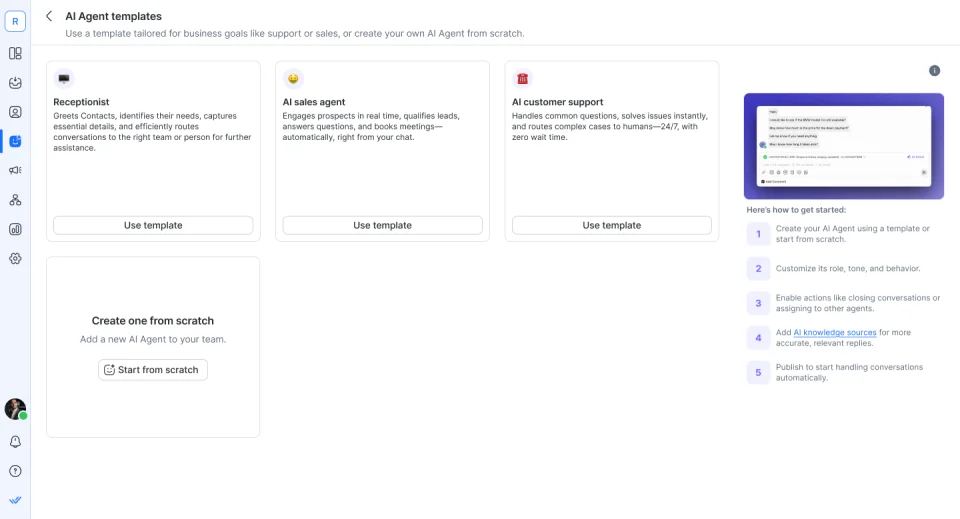
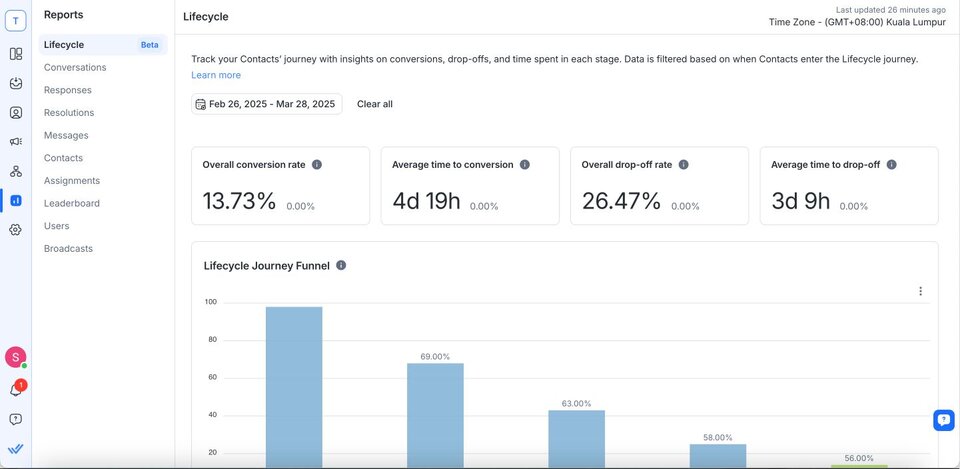
- Teams that need advanced features such as AI Agents, CRM integrations, customer lifecycle tracking and reporting
For these businesses, respond.io delivers the reliability, intelligence and control they need to scale. Its always-on infrastructure and human-backed support ensure that no message is ever missed, no workflow breaks and every agent stays productive—whether you’re handling 100 or 100,000 conversations a day.
- As seen in this case study on Automax, one of respond.io’s customers in the automotive industry sends 80,000 follow-up broadcasts per month for 45.2x ROI
For B2C businesses that have outgrown their current customer conversation platform and need a more reliable choice
Respond.io is designed to help businesses centralize, automate and scale customer conversations and operations across every channel.
Here’s how its features empower teams to deliver faster, smarter and more personalized experiences:
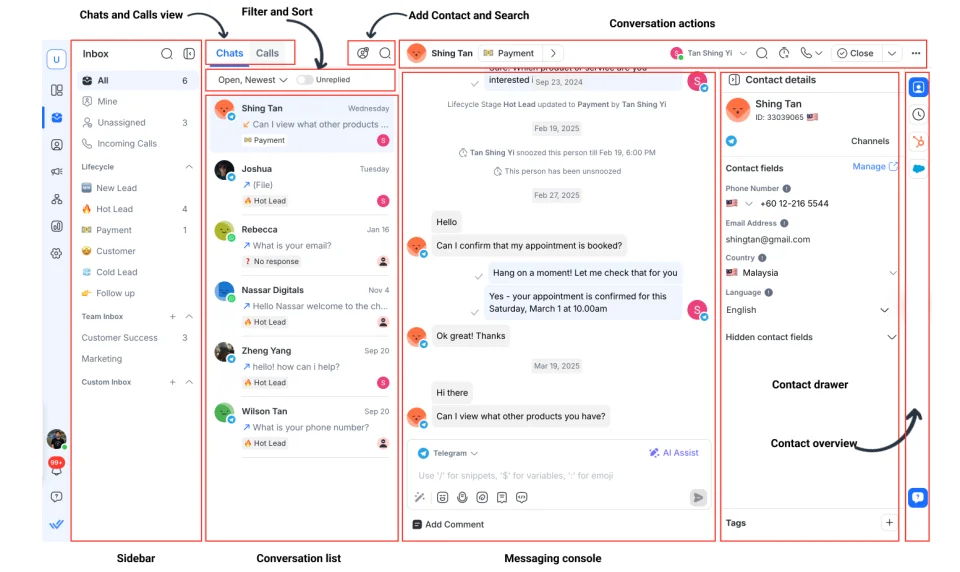
Omnichannel Inbox: centralize all customer conversations
Manage WhatsApp, TikTok, Instagram, Messenger, Telegram, LINE, Viber, WeChat and more from a single inbox while keeping contact data streamlined, even when customers switch channels.
















 Electronics
 Fashion & Apparel
 Furniture
 Jewelry and Watches
 Afterschool Activities
 Sport & Fitness
 Beauty Center
 Dental Clinic
 Medical Clinic
 Home Cleaning & Maid Services
 Photography & Videography
 Car Dealership
 How Srikandi Streamlined Communication for 47 Branches and Accelerated Revenue GrowthRead Customer Story
  Travel Agency & Tour Operator