
















 Elektronik
 Mode & Pakaian
 Mebel
Mebel Perhiasan dan Jam Tangan
 Kegiatan Setelah Sekolah
 Olahraga & Kebugaran
 Pusat Kecantikan
 Klinik Gigi
 Klinik Medis
 Layanan Pembersihan Rumah & Pembantu
 Fotografi & Videografi
 Dealer Mobil
 Agen Perjalanan & Operator Tur


TL;DR — Apa yang perlu diketahui tim B2C tentang penggunaan agen AI WhatsApp untuk pembuatan prospek
Berikut yang perlu diketahui tim B2C tentang penggunaan agen AI WhatsApp untuk pembuatan prospek, kualifikasi, dan manajemen.
Agen AI WhatsApp menangani kualifikasi, pengalihan, dan konversi calon pelanggan secara otomatis — sehingga tim dengan volume tinggi tidak perlu memilih antara kecepatan dan kualitas.
Berbeda dengan bot berbasis aturan, mereka memahami pesan teks bebas dan menyesuaikan diri dengan setiap percakapan — menjadikannya jauh lebih efektif untuk manajemen pipeline prospek yang sebenarnya.
Hasilnya terbukti di berbagai industri — dari ritel dan otomotif hingga kesehatan dan pariwisata.
Untuk menjalankannya secara efektif, Anda membutuhkan lebih dari sekadar alat AI — platform yang tepat menentukan apakah calon pelanggan lolos kualifikasi atau hilang.
Untuk tim B2C dengan volume tinggi di WhatsApp, respond.io menggabungkan eksekusi AI, sinkronisasi CRM, dan atribusi dalam satu platform — sehingga tim Anda dapat menangani volume pesan yang tinggi tanpa kinerja menjadi hambatan.
Setiap hari, bisnis menerima pertanyaan WhatsApp sepanjang waktu, seringkali di luar jam kerja dan di berbagai zona waktu. Pesan ini berasal dari berbagai titik masuk, termasuk iklan, situs web, dan media sosial, dan pelanggan semakin mengharapkan respons cepat secara real-time.
Sebagian besar pesan masuk bersifat berulang atau meminta informasi dasar. Ketika tim menangani percakapan ini secara manual, waktu respons melambat, tindak lanjut menjadi tidak konsisten, dan prospek berkualitas terlewatkan. Ekspektasi pelanggan terus meningkat, tetapi agen manusia saja tidak bisa menjaga kecepatan dan konsistensi seiring meningkatnya volume.
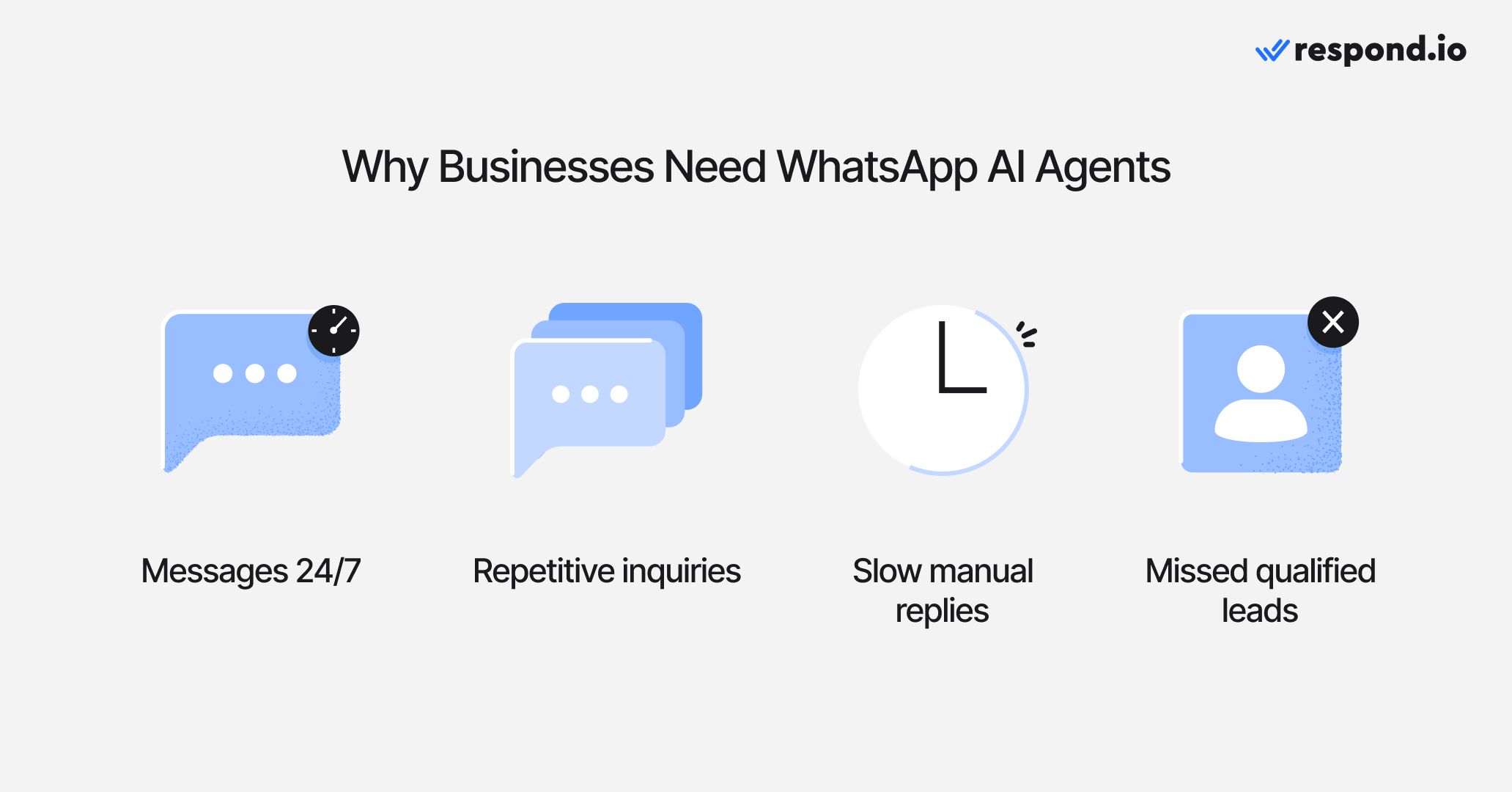
Agen AI WhatsApp mengatasi tantangan ini dengan mengotomatisasi pembuatan prospek, kualifikasi dan manajemen secara efisien. Dengan menangani tugas berulang dan mengumpulkan informasi terstruktur sejak awal, AI memungkinkan tim mempertahankan kecepatan, akurasi, dan konsistensi tanpa menambah jumlah staf.
Artikel ini membahas bagaimana agen AI WhatsApp menangani siklus hidup prospek secara penuh, apa yang perlu dicari pada sebuah platform, dan mengapa tim B2C dengan volume tinggi memilih respond.io untuk menjalankannya.
Apa itu agen AI WhatsApp?
Agen AI WhatsApp adalah asisten bertenaga AI yang berkomunikasi dengan pelanggan menggunakan bahasa alami. Dibangun di atas large language models (LLM), mereka memahami pesan ketik, menafsirkan intent, dan merespons secara percakapan — tidak seperti bot berbasis aturan tradisional yang bergantung pada pohon keputusan dan kata kunci tetap.
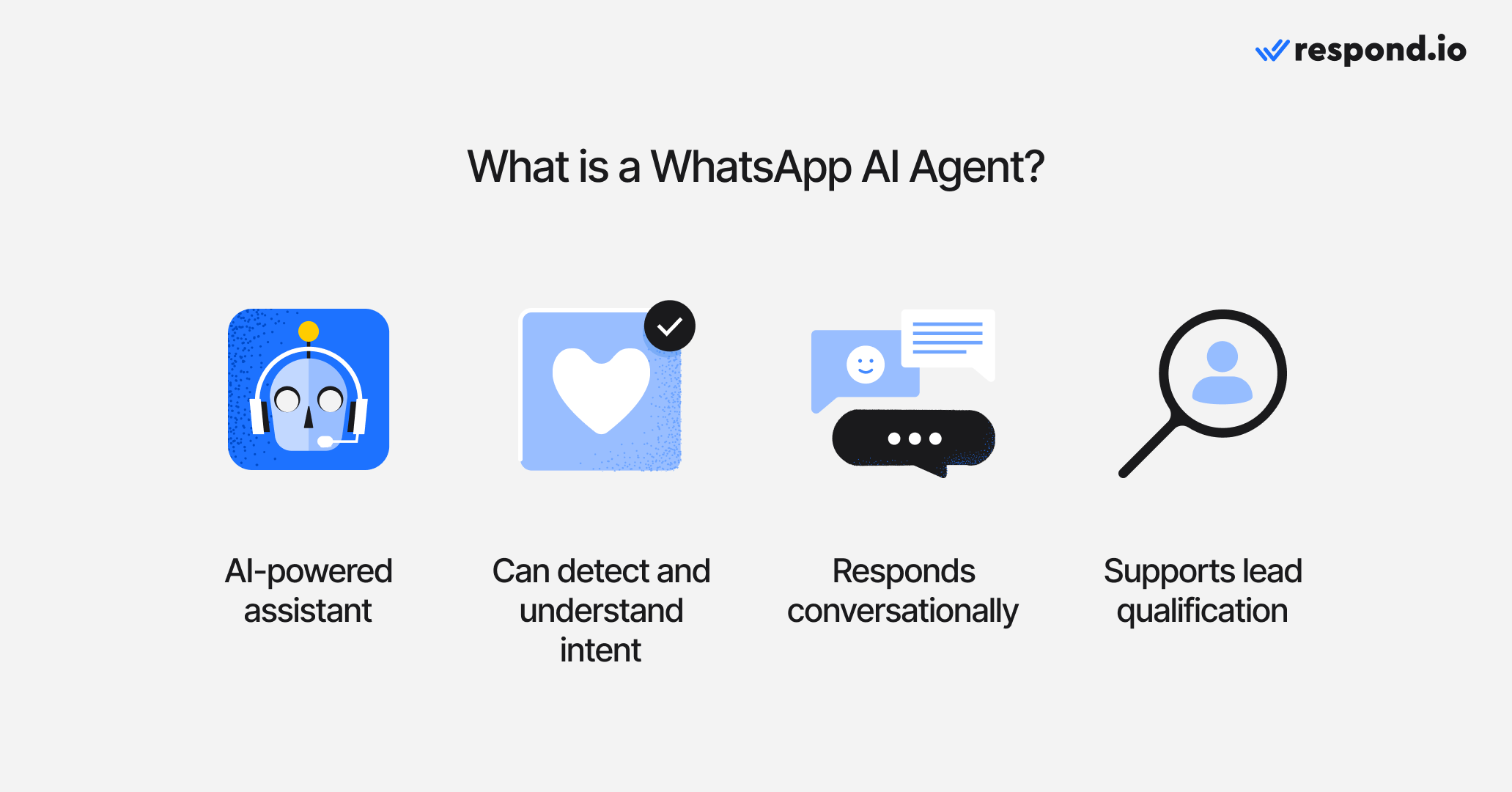
Chatbot berbasis aturan bekerja baik untuk FAQ sederhana, tetapi kesulitan dengan penanganan prospek karena prospek nyata jarang mengikuti skrip yang dapat diprediksi. Saat pesan tidak jelas, tidak lengkap, atau dirumuskan secara tak terduga, mereka gagal mendeteksi intent dan menimbulkan friksi.
Untuk pembuatan prospek dan penjualan, agen AI dapat menyapa pengguna, menanyakan pertanyaan relevan, mengkualifikasi intent, memfilter spam, dan mengarahkan percakapan secara tepat — semuanya secara real time. Untuk menjalankannya di WhatsApp, bisnis membutuhkan akses WhatsApp API dan platform pendukung seperti respond.io, yang menyediakan kotak masuk, otomatisasi, integrasi dan pelaporan yang diperlukan untuk mengelola percakapan dalam skala besar.
AI agent vs rule-based chatbot vs human agents
Berikut perbandingan bagaimana agen AI dibandingkan dengan bot berbasis aturan dan agen manusia untuk penanganan prospek:
Fitur | Agen AI | Bot berbasis aturan | Agen manusia |
Kecepatan | Instan pada setiap volume | Instan, tetapi terganggu oleh input tak terduga | Bervariasi; melambat saat volume tinggi |
Penanganan Percakapan Kompleks | Terbatas — dialihkan ke manusia dengan ringkasan konteks lengkap | Tidak dapat beradaptasi; percakapan macet atau berulang | Sangat baik — menangani nuansa, negosiasi, dan pengecualian |
Penanganan FAQ | Sangat baik | Baik | Baik |
Biaya | Rendah | Rendah | Tinggi |
24/7 | Ya | Ya | Tidak |
AI paling baik digunakan untuk penanganan prospek yang berulang dan volume tinggi, dengan manusia mendukung pengecualian dan keputusan berisiko tinggi.
Bagaimana agen AI WhatsApp benar-benar meningkatkan konversi prospek?
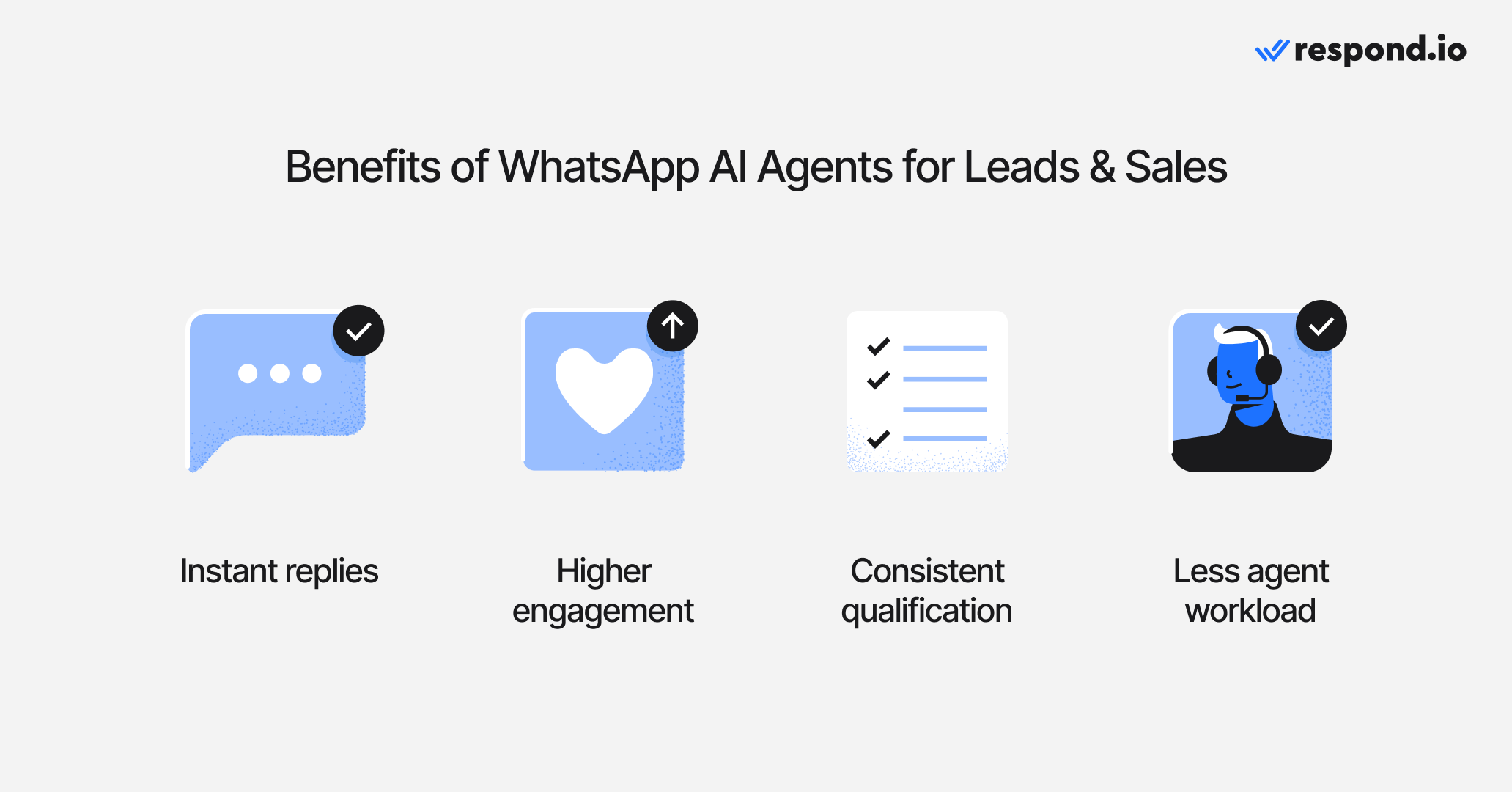
Agen AI WhatsApp meningkatkan konversi prospek dengan merespons secara instan, mengkualifikasi secara konsisten, dan mengurangi beban manual pada agen manusia. Untuk tim B2C bervolume tinggi, dampaknya terlihat di lima area:
Balasan instan 24/7
Agen AI membalas begitu pesan masuk, tanpa mempedulikan zona waktu atau jam kerja. Ini memastikan tidak ada prospek yang hilang akibat respons yang tertunda, terutama di luar jam kerja.
Keterlibatan lebih tinggi dibanding formulir
Percakapan WhatsApp terasa lebih cepat dan lebih alami dibanding mengisi formulir. Pelanggan lebih cenderung membalas, menjawab pertanyaan, dan tetap terlibat dalam alur berbasis chat.
Konversi lebih baik dari iklan click-to-chat
Agen AI mengubah klik iklan menjadi percakapan aktif secara langsung. Dengan menyapa pengguna dan menanyakan pertanyaan relevan segera, mereka mengurangi kehilangan antara klik iklan dan kualifikasi.
Kualifikasi prospek yang konsisten
Setiap prospek melewati logika kualifikasi yang sama, tanpa memandang waktu atau saluran. Ini menghilangkan variabilitas yang disebabkan oleh penanganan manual dan memastikan pengumpulan data yang konsisten.
Beban kerja agen manusia berkurang
AI menangani pertanyaan berulang, permintaan informasi dasar, dan langkah awal kualifikasi. Ini memungkinkan agen manusia fokus pada percakapan kompleks bernilai tinggi daripada menyaring setiap pertanyaan.
Hasil ini bergantung pada bagaimana AI disetel untuk menangani setiap tahap siklus hidup prospek — di sinilah perbedaan nyata terlihat.
Bagaimana agen AI WhatsApp menangani pipeline prospek Anda
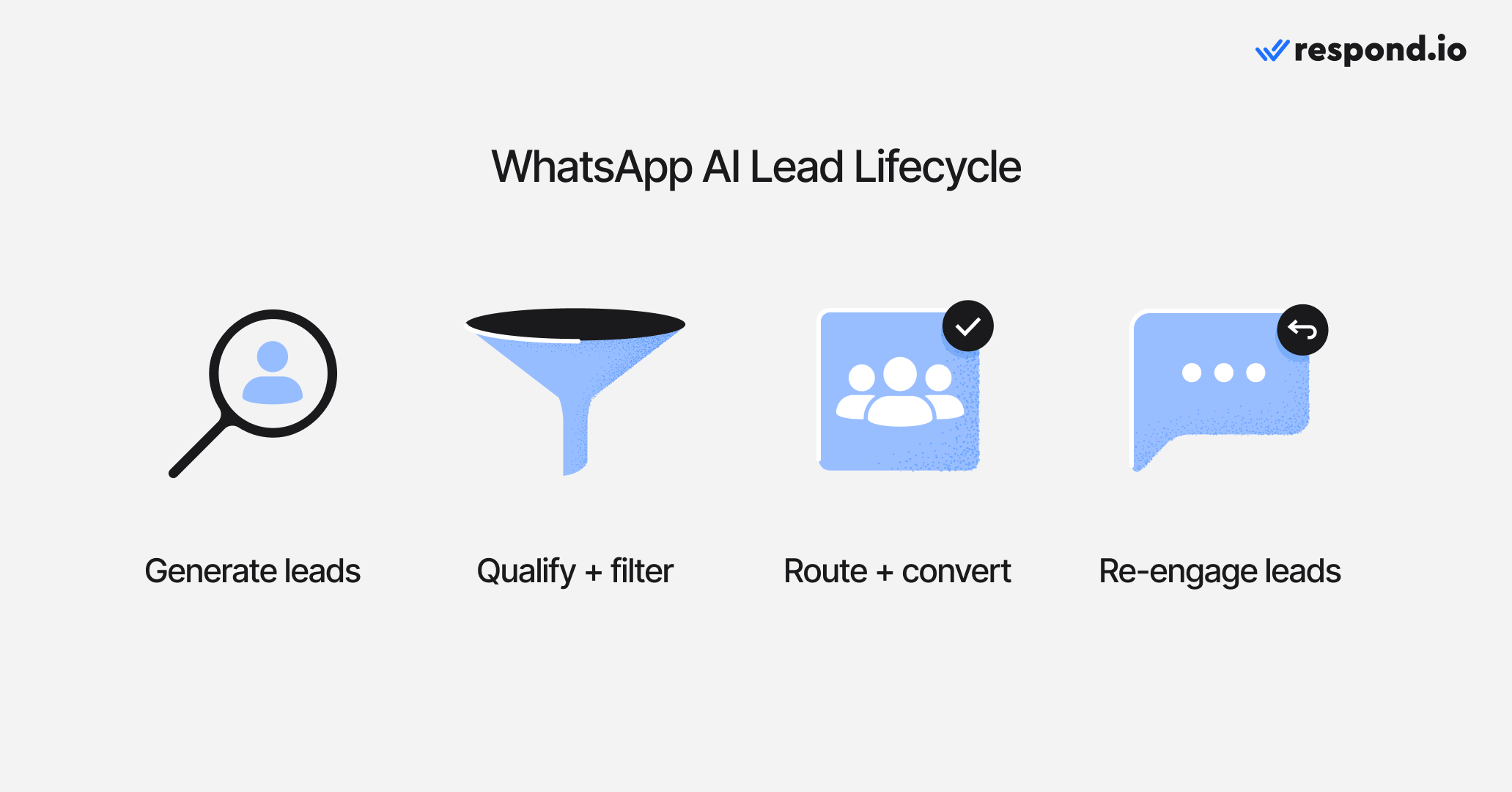
Agen AI WhatsApp memindahkan prospek melalui setiap tahap pipeline secara otomatis — dari pesan pertama hingga serah terima yang sudah dikualifikasi — tanpa memerlukan intervensi manual di setiap langkah. Di platform yang dirancang untuk manajemen prospek terstruktur seperti respond.io, ini terjadi dalam satu alur kerja terhubung daripada melalui alat yang terputus-putus. Di bawah ini adalah bagaimana setiap tahap bekerja dalam praktik, dengan contoh bagaimana AI biasanya merespons dalam percakapan nyata.
Pembuatan prospek
Agen AI mendukung pembuatan prospek di berbagai titik masuk, termasuk Click-to-WhatsApp ads, QR code, short link, dan formulir online. Saat pengguna memulai chat, AI menyapa mereka secara instan dan menjawab pertanyaan umum, meningkatkan konversi dari klik ke percakapan.
Contoh:
AI: “Hai! Apa yang bisa saya bantu cari hari ini?”
Pengguna: “Saya mencari SUV hybrid.”
Kualifikasi prospek
AI menanyakan pertanyaan kualifikasi, mendeteksi inquiry ber-intent rendah atau spam, dan mengumpulkan informasi yang diperlukan. AI menerapkan tag, label, atau skor untuk mengurangi beban kualifikasi manual.
Contoh:
AI: “Apakah Anda punya kisaran anggaran?”
Pengguna: “US$30k–US$40k.”
Pengarahan prospek
Berdasarkan intent dan data yang dikumpulkan, AI merekomendasikan pengarahan berdasarkan tim, produk, wilayah, atau prioritas. AI meningkatkan percakapan hanya saat perlu, sehingga meningkatkan kecepatan dan akurasi.
Contoh:
AI: “Izinkan saya menghubungkan Anda dengan penasihat penjualan kami untuk model hybrid.”
Konversi prospek
AI memberikan informasi produk, harga, dan FAQ, serta melakukan tindak lanjut secara instan. Agen manusia turun tangan untuk diskusi kompleks, dengan AI merangkum konteks percakapan. Panggilan suara atau WhatsApp Calling dapat digunakan bila diperlukan.
Contoh:
AI: “Berdasarkan apa yang Anda cari, model ini dimulai dari US$38,000. Apakah Anda ingin memesan test drive atau berbicara dengan penasihat penjualan?”
Pengguna: “Ya, saya ingin memesan test drive akhir pekan ini.”
AI: “Bagus. Saya akan menghubungkan Anda dengan penasihat penjualan untuk memastikan ketersediaan.”
Reaktivasi prospek
AI memicu siaran WhatsApp, kampanye drip yang dipersonalisasi, dan alur reaktivasi berbasis segmen. Nurturing jangka panjang menjaga prospek tetap terlibat hingga mereka siap berkonversi.
Contoh:
AI (setelah 48 jam tanpa respons):
“Sekadar mengecek — apakah Anda ingin bantuan mengenai opsi harga atau ketersediaan?”
Pengukuran & optimasi
Metrik kinerja dilacak untuk mengevaluasi atribusi Click-to-Chat, tingkat konversi, dan efektivitas tindak lanjut. Wawasan AI membantu tim mengoptimalkan alur dan meningkatkan hasil dari waktu ke waktu.
Contoh:
Sebuah tim mengidentifikasi bahwa satu kampanye Click-to-WhatsApp menghasilkan lebih banyak prospek berkualitas dan memperbarui logika kualifikasi AI untuk memprioritaskan trafik serupa.
Manajer penjualan menyesuaikan waktu tindak lanjut setelah melihat tingkat konversi lebih rendah untuk prospek yang dihubungi di luar jam kerja.
Tim menyempurnakan logika pengarahan saat laporan menunjukkan delay setelah serah terima ke manusia, meningkatkan kecepatan respons untuk prospek ber-intent tinggi.
Data kinerja titik masuk mengungkap bahwa website widgets mengonversi lebih baik daripada QR code, sehingga memandu keputusan anggaran dan penempatan.
Use case agen AI WhatsApp menurut industri
Cara agen AI menangani prospek bervariasi menurut industri — pertanyaan kualifikasi, logika pengarahan, dan pemicu serah terima berbeda tergantung bisnis. Di bawah ini contoh bagaimana tim B2C bervolume tinggi di ritel, otomotif, pendidikan, kesehatan, perjalanan, dan properti menggunakannya dalam praktik.
Ritel/ecommerce
Di ritel dan ecommerce, agen AI WhatsApp membantu tim menangani pertanyaan produk bervolume tinggi, mengonfirmasi detail pesanan, dan mengurangi tugas penjualan berulang tanpa memperlambat waktu respons.

Sebagai contoh, Diskat menggunakan Agen AI untuk mengotomatisasi pertanyaan penjualan dan konfirmasi pesanan, sekaligus meningkatkan penargetan iklan dengan CAPI Meta dan mengintegrasikan data chat dengan ERP mereka untuk pembuatan pesanan. Hasilnya, mereka mencapai tingkat konversi 81,4%, 90% penjualan ditangani oleh Agen AI, dan mengurangi biaya pemasaran serta operasional sebesar 50%.
Otomotif
Prospek otomotif sering membutuhkan kualifikasi cepat terkait intent (beli vs jual), anggaran, waktu, dan preferensi model—terutama saat berbagai tipe inquiry masuk bersamaan.

Misalnya, iMotorbike menggunakan template Agen AI yang disesuaikan untuk perjalanan berbeda (seperti pembeli vs penjual), menambahkan pembaruan siklus hidup otomatis, dan hanya mengarahkan prospek yang siap jual ke tim manusia. Ini membantu mereka mengelola 2x lebih banyak prospek setiap hari, merespons 67% lebih cepat, dan lebih dari 70% percakapan ditangani oleh AI.
Pendidikan
Pertanyaan pendidikan cenderung rinci dan memerlukan pertimbangan tinggi, jadi agen AI berguna untuk mengumpulkan kebutuhan awal (kebutuhan siswa, preferensi, dan kecocokan) dan mencegah percakapan terlewat saat periode sibuk.

Contoh yang baik adalah GETUTOR, yang menggunakan agen AI untuk menangani pertanyaan awal, mengumpulkan informasi dan preferensi siswa, lalu menyusun detail sebelum menugaskan prospek ke agen manusia yang tersedia. Dengan prioritisasi dan pelacakan prospek yang lebih baik, mereka menangani 50% lebih banyak prospek per hari, tidak ada pesan yang terlewat, dan memesan 24% lebih banyak kelas dalam 2 bulan.
Kesehatan
Layanan kesehatan dan layanan terkait sering menghadapi volume spam dan pertanyaan berkualitas rendah, yang dapat memperlambat waktu respons dan membuat prospek yang sah hilang.

Praga Medica menggunakan AI untuk menyaring spam dan mengurangi gangguan bagi konsultan, sekaligus meningkatkan kecepatan respons. Hasilnya termasuk 70% lebih banyak prospek yang dipulihkan, 97% spam disaring, dan pengurangan 50% waktu respons pertama.
Perjalanan
Bisnis perjalanan sering menerima pertanyaan berulang (persyaratan, harga, pengecekan status) dan membutuhkan cakupan di luar jam kerja—tanpa memaksa staf tetap online.

Only Tourism menerapkan AI Agent yang disesuaikan dan mengoptimalkan sumber pengetahuan sehingga AI dapat menangani pertanyaan terkait visa secara akurat dan menyediakan cakupan setelah jam kerja. Ini memungkinkan mereka mengotomatisasi 80% pertanyaan terkait visa, menangani 2× lebih banyak percakapan harian, dan menghasilkan 6× lebih banyak prospek per bulan.
Cara menjalankan agen AI WhatsApp dalam skala besar
Menjalankan agen AI WhatsApp dalam skala besar memerlukan empat komponen yang bekerja bersama: akses WhatsApp API, platform berkemampuan AI, basis pengetahuan, dan CRM + analitik. Tanpa keempatnya, AI beroperasi secara terisolasi — prospek terkualifikasi di chat tetapi datanya tidak mencapai tim penjualan Anda, dan kinerja tetap tersembunyi.
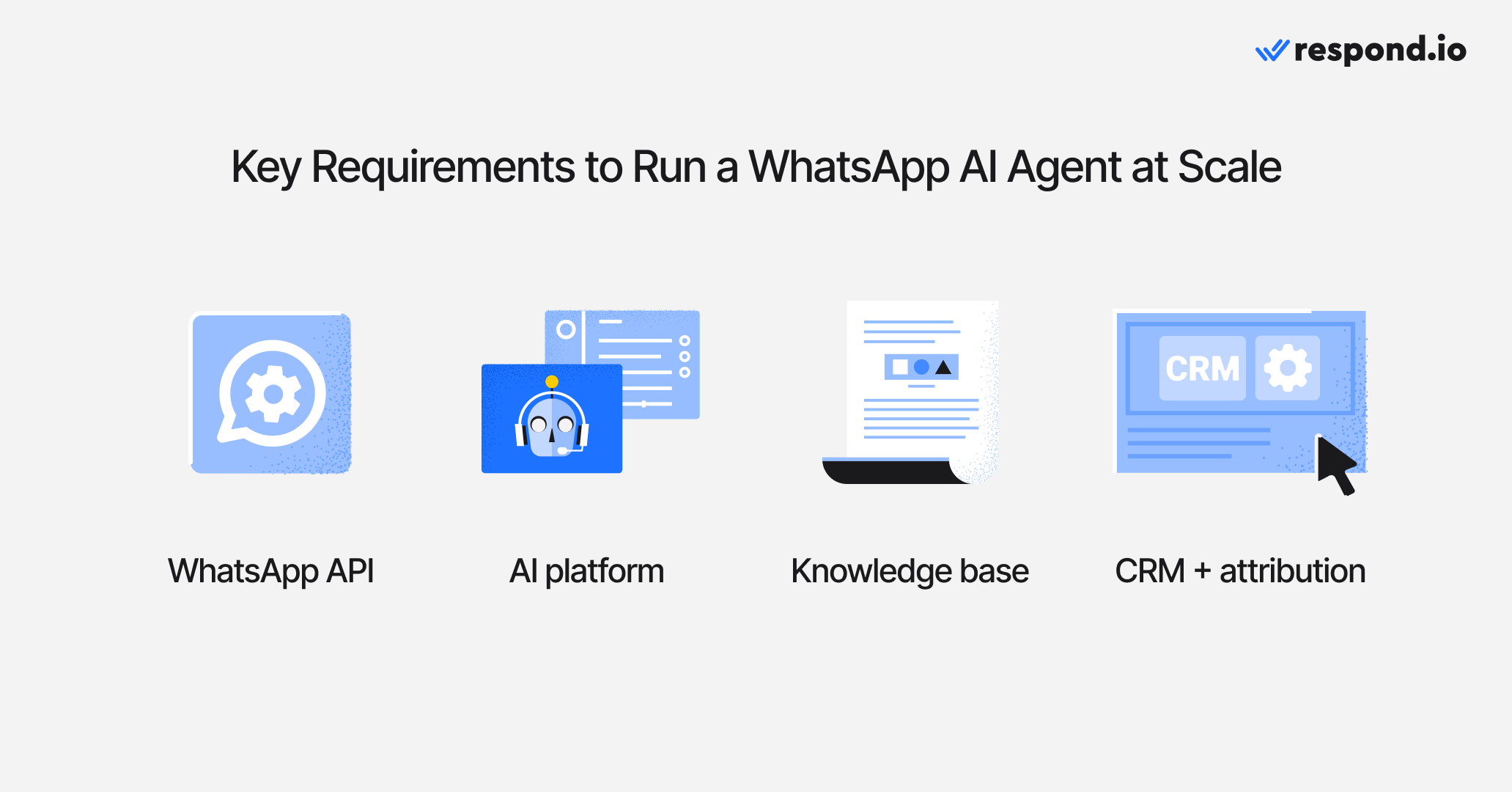
Akses WhatsApp API: Diperlukan untuk mendukung otomatisasi, multi-user dan integrasi. AI-enabled platform (e.g., respond.io): Menyediakan antarmuka, kotak masuk bersama, dan lapisan otomatisasi yang tidak termasuk dalam WhatsApp API.
Platform berkemampuan AI (misalnya, respond.io): Menyediakan antarmuka, kotak masuk bersama, dan lapisan otomatisasi yang tidak termasuk dalam WhatsApp API. Di sinilah agen AI berjalan dan logika pengarahan/kualifikasi dikonfigurasi.
Basis pengetahuan: Memberi agen AI informasi akurat untuk menjawab pertanyaan, mengarahkan percakapan, dan menjaga konsistensi respons.
CRM + analytics: Menyinkronkan detail prospek yang dikumpulkan di WhatsApp (intent, anggaran, tahap siklus hidup) ke sistem penjualan dan membuat kinerja terlihat.
Jika Anda menjalankan iklan Click-to-WhatsApp: dukungan Conversion API (CAPI) membantu menghubungkan iklan, percakapan, dan konversi sehingga Anda dapat melihat kampanye mana yang menghasilkan prospek berkualitas dan di mana mengoptimalkan pengeluaran.
Bersama-sama, komponen ini memungkinkan agen AI WhatsApp berfungsi sebagai bagian dari sistem manajemen prospek terstruktur, bukan sekadar responder mandiri.
Platform agen AI WhatsApp mana yang tepat untuk manajemen prospek B2C?
Untuk manajemen prospek B2C, platform yang tepat menghubungkan kualifikasi AI, serah terima ke manusia, dan sinkronisasi CRM dalam satu ruang kerja — bukan gabungan alat terpisah yang disambung. Berikut kriteria yang paling penting:
Dukungan WhatsApp API
Platform harus secara resmi mendukung WhatsApp API. Tanpa ini, Anda tidak akan bisa menjalankan agen AI, otomatisasi, atau akses multi-user dalam skala besar. Akses API adalah fondasi untuk setiap setup manajemen prospek WhatsApp yang serius.
Kotak masuk bersama
Cari kotak masuk bersama yang memungkinkan beberapa anggota tim mengelola percakapan WhatsApp bersama-sama. Kotak masuk terpusat memastikan visibilitas, mencegah balasan duplikat, dan menjaga konteks percakapan tetap utuh, terutama saat AI menyerahkan ke agen manusia.
Kemampuan agen AI
Tidak semua platform menawarkan agen AI sejati. Pilih solusi yang mendukung AI berbasis LLM, bukan sekadar bot berbasis aturan. AI harus mampu memahami pesan teks bebas, mengkualifikasi intent, mengumpulkan data terstruktur, dan mengambil tindakan berdasarkan konteks percakapan.
Integrasi CRM
Platform chat Anda harus terhubung langsung ke CRM atau sistem penjualan Anda. Ini memungkinkan detail prospek, tahap lifecycle, dan data kualifikasi yang dikumpulkan di WhatsApp tersinkronisasi otomatis, memastikan tim penjualan selalu bekerja dengan informasi lengkap dan terbaru.
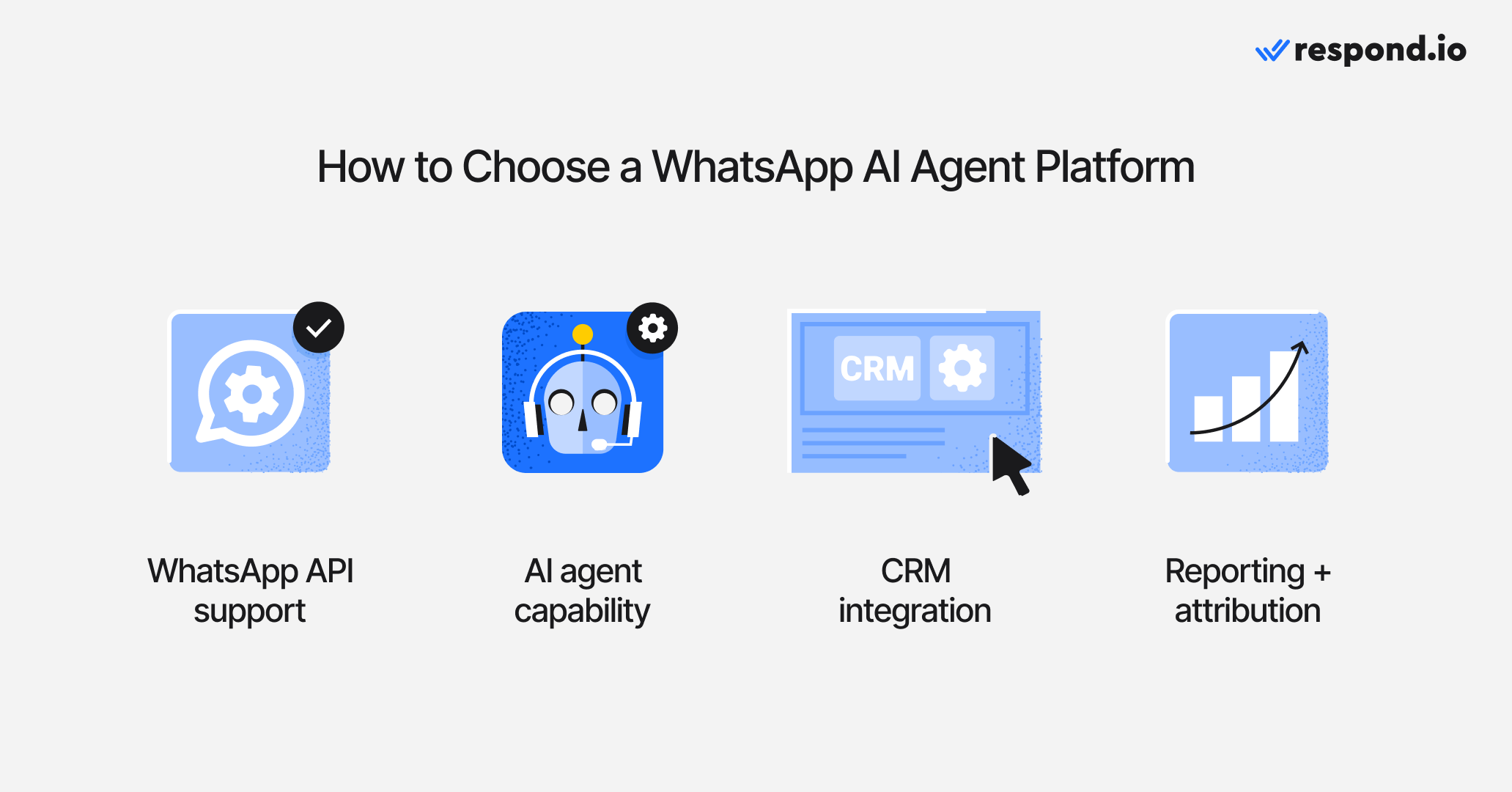
Analitik dan pelaporan
Platform yang baik memberikan visibilitas yang jelas terhadap kinerja. Ini mencakup waktu respons, tingkat kualifikasi, hasil konversi, dan kinerja titik masuk. Tanpa analitik, sulit meningkatkan kualitas prospek atau membenarkan investasi.
Otomatisasi alur kerja
Bahkan dalam pengaturan yang mengutamakan AI, platform harus mendukung eksekusi terstruktur di balik layar. Ini memastikan tindakan seperti pengarahan, tindak lanjut, dan pembaruan lifecycle terjadi konsisten setelah AI mengambil keputusan.
Dukungan Conversion API (CAPI)
Jika Anda menjalankan Click-to-WhatsApp ads, dukungan CAPI sangat penting. Ini memungkinkan atribusi akurat antara iklan, percakapan, dan konversi, membantu Anda memahami kampanye mana yang menghasilkan prospek berkualitas dan pendapatan.
Keamanan dan kepatuhan
Percakapan WhatsApp sering berisi data pelanggan sensitif. Pilih platform yang mendukung persyaratan kepatuhan seperti GDPR dan menawarkan keamanan tingkat enterprise untuk melindungi informasi pelanggan.
Skalabilitas
Akhirnya, platform harus dapat diskalakan seiring pertumbuhan volume pesan Anda. Ini termasuk dukungan untuk lebih banyak percakapan, lebih banyak agen, saluran tambahan, dan kasus penggunaan AI yang lebih canggih tanpa masalah kinerja.
Jika Anda mengevaluasi platform berdasarkan kriteria ini, berikut bagaimana respond.io dibandingkan.
Mengapa tim B2C bervolume tinggi memilih respond.io untuk WhatsApp AI?
Respond.io membantu bisnis mengoperasionalkan agen AI WhatsApp dengan menggabungkan eksekusi AI, kolaborasi tim, dan pelaporan dalam satu workspace. Alih-alih berfungsi sebagai responder tunggal, AI menjadi bagian dari sistem manajemen prospek lengkap yang menghubungkan percakapan, tim, data, dan wawasan kinerja di satu tempat.
Agen AI yang dibuat untuk manajemen prospek
Agen AI respond.io dikonfigurasi untuk kualifikasi prospek, ringkasan serah terima dan sinkronisasi CRM, bukan hanya FAQ. Mereka dapat menafsirkan niat, mengajukan pertanyaan kualifikasi, mengumpulkan informasi terstruktur, dan menentukan tindakan terbaik berikutnya untuk setiap percakapan.
Kualifikasi prospek otomatis
Agen AI mengkualifikasi prospek secara konsisten dengan mengumpulkan detail seperti niat, anggaran, preferensi, atau tingkat kesiapan. Ini memastikan setiap prospek dinilai menggunakan logika yang sama, tanpa mempedulikan waktu, saluran, atau volume percakapan.
Pengarahan cerdas dan serah terima ke manusia
Setelah prospek dikualifikasi, respond.io memastikan percakapan mencapai agen manusia atau tim yang tepat. AI hanya melakukan eskalasi percakapan saat diperlukan, meneruskan konteks percakapan penuh sehingga agen dapat melanjutkan tanpa mengulang pertanyaan.
Sinkronisasi CRM
Informasi yang dikumpulkan oleh AI—seperti tahap siklus hidup, tag, atau detail kualifikasi—tersinkronisasi secara otomatis ke CRM Anda. Ini menjaga keselarasan tim penjualan dan memastikan percakapan WhatsApp diterjemahkan menjadi data pipeline yang bisa ditindaklanjuti.
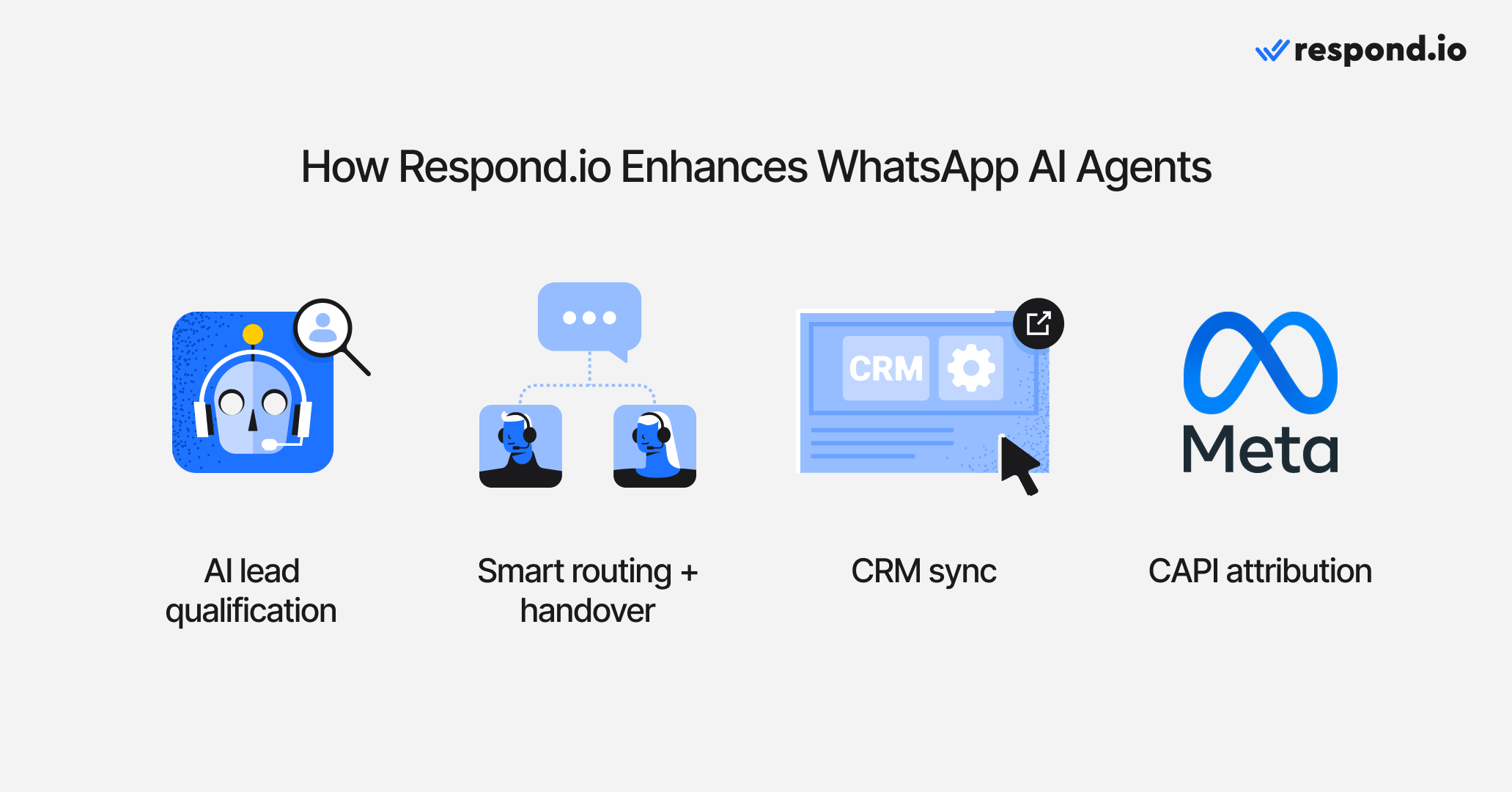
Iklan Click-to-WhatsApp dan atribusi CAPI
Respond.io menghubungkan iklan Click-to-WhatsApp langsung ke percakapan yang digerakkan AI dan mendukung Meta’s Conversion API (CAPI). Ini memungkinkan tim melacak iklan mana yang menghasilkan prospek berkualitas dan konversi, bukan sekadar klik.
Visibilitas siklus hidup
Pelacakan siklus hidup Respond.io memberi agen AI konteks yang lebih jelas tentang posisi tiap prospek—misalnya pertanyaan baru, terkwalifikasi, dalam tahap nurturing, atau sudah dikonversi—sehingga mereka dapat menyesuaikan tindakannya. Ini membantu AI menerapkan pertanyaan, tindak lanjut, dan waktu serah terima yang tepat untuk setiap tahap, sekaligus memberi tim tampilan kemajuan yang konsisten agar prospek tidak terlewat atau ditangani salah.
Analitik dan pelaporan kinerja
Respond.io menyediakan pelaporan tentang waktu respons, tingkat kualifikasi, kinerja agen, dan hasil konversi. Wawasan ini membantu tim mengoptimalkan perilaku AI, waktu tindak lanjut, dan keputusan pengalihan prospek.
Dukungan omnichannel dan panggilan
Selain pesan WhatsApp, Respond.io mendukung saluran tambahan dan WhatsApp Calling, sehingga tim dapat beralih ke panggilan suara ketika prospek membutuhkan klarifikasi lebih cepat atau diskusi yang lebih rinci. Agen AI juga dapat menangani panggilan masuk dengan menjawab pertanyaan umum dan mengumpulkan detail penting sebelum menyerahkannya ke agen manusia—membantu tim menjaga konteks dan visibilitas baik di obrolan maupun panggilan suara.
Bersama-sama, kemampuan ini memastikan agen AI WhatsApp tidak beroperasi secara terisolasi. Mereka menjadi bagian dari sistem terstruktur yang mendukung pembuatan prospek, kualifikasi, konversi, dan pengukuran—tanpa menambah kompleksitas operasional.
Apakah Respond.io platform AI WhatsApp yang tepat untuk tim Anda?
Agen AI WhatsApp paling efektif saat menjadi bagian dari sistem yang dirancang untuk manajemen prospek nyata—bukan sekadar balasan otomatis. Untuk mengubah percakapan menjadi peluang yang terkwalifikasi, bisnis membutuhkan AI yang dapat memahami niat, mengumpulkan informasi yang tepat, menyerahkannya ke tenaga manusia secara mulus, dan menghubungkan semuanya ke sistem penjualan.
Respond.io mengumpulkan kemampuan ini dalam satu platform. Dengan dukungan WhatsApp API, agen AI yang dibuat untuk kualifikasi prospek, sinkronisasi CRM, pelaporan, dan atribusi Click-to-Chat, tim dapat mengelola prospek WhatsApp dari pesan pertama hingga konversi dengan visibilitas dan kontrol penuh.
Jika Anda adalah bisnis B2C yang mengelola volume percakapan WhatsApp tinggi — melalui iklan, sosial, atau secara langsung — dan membutuhkan AI yang mengkualifikasi prospek, mengarahkan percakapan, dan menyinkronkan ke CRM Anda, Respond.io dibuat untuk itu. Tidak untuk penjangkauan dingin, operasi sepenuhnya tanpa keterlibatan manusia, atau tim dengan volume rendah yang mengelola prospek secara manual.
Mulai uji coba gratis Anda dan lihat bagaimana Respond.io menjalankan agen AI WhatsApp yang dibuat untuk pembuatan prospek, kualifikasi, dan manajemen.
Ubah percakapan menjadi pelanggan dengan API WhatsApp resmi Respond.io ✨
Kelola panggilan WhatsApp dan obrolan di satu tempat!
FAQ tentang agen AI WhatsApp
Apa itu agen AI WhatsApp dan bagaimana bedanya dengan chatbot berbasis aturan?
Agen AI WhatsApp adalah asisten bertenaga AI yang berkomunikasi dengan pelanggan di WhatsApp menggunakan bahasa alami. Berbeda dari chatbot berbasis aturan yang mengandalkan pohon keputusan tetap dan pemicu kata kunci, agen AI dibangun di atas large language models (LLM), sehingga mereka dapat memahami pesan ketik, menafsirkan intent, dan merespons secara percakapan.
Bot berbasis aturan bekerja baik untuk alur yang dapat diprediksi, tetapi kesulitan dengan pertanyaan tak terduga, variasi pengungkapan, atau informasi yang tidak lengkap. Agen AI lebih cocok untuk pembuatan prospek dan kualifikasi karena mereka dapat menanyakan pertanyaan lanjutan, mengekstrak detail terstruktur dari balasan tidak terstruktur, dan menyesuaikan percakapan berdasarkan respons prospek. Ini membuat kualifikasi lebih cepat dan lebih konsisten, terutama pada volume pesan yang lebih tinggi.
Apakah saya perlu WhatsApp API untuk menggunakan agen AI di WhatsApp?
Ya. WhatsApp API diperlukan untuk menjalankan agen AI di WhatsApp dalam skala besar. WhatsApp Business App dirancang untuk messaging dasar dan tidak mendukung otomatisasi, integrasi, akses multi-user, dan kemampuan agen AI yang biasanya dibutuhkan untuk manajemen prospek terstruktur.
WhatsApp API menyediakan infrastruktur untuk messaging programatik, tetapi tidak termasuk antarmuka sendiri. Oleh karena itu, bisnis menggunakan WhatsApp API melalui platform pihak ketiga yang menyediakan kotak masuk tim, konfigurasi AI, integrasi, dan pelaporan. Misalnya, respond.io dapat digunakan untuk menghubungkan WhatsApp API dan menerapkan agen AI untuk pembuatan prospek, kualifikasi, dan manajemen.
Bagaimana agen AI WhatsApp menghasilkan prospek dari iklan Click-to-WhatsApp dan situs web?
Agen AI WhatsApp menghasilkan prospek dengan merespons secara instan ketika pelanggan memulai chat dari titik masuk seperti iklan Click-to-WhatsApp, widget situs web, QR code, short link, atau profil sosial. Keterlibatan segera mengurangi kehilangan prospek dan membantu menangkap niat saat prospek masih aktif.
AI dapat menyapa pengguna, mengidentifikasi apa yang mereka cari, dan menanyakan pertanyaan kualifikasi pertama dalam beberapa pesan pertama. Ini meningkatkan konversi dari klik ke percakapan dibanding penanganan manual, di mana penundaan sering menyebabkan hilangnya inquiry.
Bagaimana agen AI mengkualifikasi prospek WhatsApp dan mengidentifikasi pembeli ber-intent tinggi?
Agen AI WhatsApp mengkualifikasi prospek dengan menafsirkan bahasa alami dan mengumpulkan informasi kunci secara bertahap. AI dapat menanyakan pertanyaan relevan untuk memahami intent, urgensi, kecocokan, dan kesiapan, lalu mengekstrak detail terstruktur dari balasan teks bebas—seperti minat produk, kisaran anggaran, timeline, atau lokasi.
AI juga dapat mendeteksi sinyal pembelian dan mengkategorikan prospek berdasarkan kesiapan (misalnya, panas/hangat/dingin) berdasarkan apa yang dikatakan prospek. Ini mengurangi penyaringan manual dan membantu tim penjualan memprioritaskan percakapan ber-intent tinggi lebih awal di funnel.
Bisakah agen AI WhatsApp menyaring spam dan inquiry berkualitas rendah secara otomatis?
Ya. Agen AI WhatsApp dapat mengidentifikasi spam dan inquiry berkualitas rendah dengan menganalisis konten pesan dan pola intent. Ini termasuk menyaring pesan tidak relevan, konten promosi berulang, atau inquiry yang tidak cocok dengan profil pelanggan target Anda.
Menyaring kebisingan sejak awal meningkatkan waktu respons untuk prospek asli dan mengurangi beban kerja agen manusia. Ini juga membantu mencegah tim penjualan menghabiskan waktu pada percakapan yang kecil kemungkinan untuk dikonversi.
Bagaimana agen AI WhatsApp mengarahkan prospek yang dikualifikasi ke tim atau agen yang tepat?
Setelah kualifikasi, agen AI dapat mengarahkan prospek berdasarkan informasi yang dikumpulkan, seperti minat produk, wilayah, prioritas, atau kesiapan prospek. Pengarahan juga dapat didasarkan pada aturan bisnis seperti spesialisasi tim atau ketersediaan.
Saat prospek membutuhkan manusia, AI mengeskalasikan dengan konteks lengkap sehingga agen dapat melanjutkan tanpa mengulang pertanyaan. Ini meningkatkan kecepatan respons dan menciptakan pengalaman pelanggan yang lebih mulus, terutama saat volume tinggi.
Bisakah agen AI WhatsApp menyinkronkan detail prospek dan tahap siklus hidup ke CRM secara otomatis?
Ya, jika terhubung ke sistem yang mendukung integrasi CRM. Agen AI WhatsApp dapat mengumpulkan data terstruktur selama percakapan—seperti intent, anggaran, preferensi, dan tahap prospek—dan menyinkronkan detail tersebut ke CRM sehingga tim penjualan memiliki catatan yang dapat digunakan.
Sinkronisasi CRM meningkatkan visibilitas pipeline dan konsistensi tindak lanjut karena informasi prospek tidak terjebak dalam thread chat. Ini juga mengurangi entri data manual dan membantu tim melacak hasil dari pesan pertama hingga konversi.
Bagaimana saya mengukur kinerja agen AI WhatsApp dalam kualifikasi prospek dan konversi?
Anda dapat mengukur kinerja melalui metrik seperti waktu respons pertama, tingkat kualifikasi, waktu hingga kualifikasi, hasil konversi, dan porsi percakapan yang ditangani oleh AI dibandingkan agen manusia. Melacak kinerja sumber prospek (iklan, widget, QR code, organik) juga penting untuk memahami dari mana prospek ber-intent tinggi berasal.
Metrik ini membantu tim meningkatkan perilaku AI dan proses prospek seiring waktu—misalnya, menyempurnakan pertanyaan kualifikasi, menyesuaikan waktu tindak lanjut, atau mempercepat serah terima untuk prospek ber-intent tinggi. Jika Anda menggunakan platform dengan pelaporan bawaan (seperti tampilan laporan respond.io), Anda bisa melacak metrik ini di satu tempat tanpa spreadsheet manual.
Apa persyaratan utama untuk menerapkan agen AI WhatsApp untuk manajemen prospek dalam skala besar?
Pengaturan yang dapat diskalakan biasanya membutuhkan akses WhatsApp API, platform perpesanan berkemampuan AI, basis pengetahuan, integrasi CRM, dan analitik. WhatsApp API memungkinkan otomatisasi dan penanganan multi-user, sementara platform menyediakan kotak masuk tim, konfigurasi AI, dan lapisan integrasi yang tidak disertakan WhatsApp API.
Jika Anda menjalankan Click-to-WhatsApp ads, dukungan Conversion API (CAPI) dapat meningkatkan atribusi antara iklan, percakapan, dan konversi. Platform seperti respond.io dapat menyediakan konektivitas WhatsApp API bersama agen AI, sinkronisasi CRM, dan pelaporan dalam satu sistem.
Bagaimana saya memilih platform agen AI WhatsApp untuk pembuatan prospek, kualifikasi, dan manajemen?
Pilih platform yang secara resmi mendukung WhatsApp API dan menyediakan kotak masuk bersama untuk tim, agen AI berbasis LLM, integrasi CRM, dan analitik. Platform juga harus mendukung eskalasi andal ke agen manusia dengan konteks penuh dan memungkinkan manajemen prospek terstruktur, seperti penandaan atau pelacakan siklus hidup.
Jika Anda menjalankan Click-to-WhatsApp ads, pertimbangkan apakah platform mendukung peningkatan atribusi seperti Conversion API (CAPI) Meta. Platform seperti respond.io dapat digunakan untuk menghubungkan WhatsApp API, menerapkan agen AI, memusatkan percakapan, menyinkronkan data ke CRM, dan melacak kinerja.


