
















 Elektronik
 Mode & Pakaian
 Mebel
Mebel Perhiasan dan Jam Tangan
 Kegiatan Setelah Sekolah
 Olahraga & Kebugaran
 Pusat Kecantikan
 Klinik Gigi
 Klinik Medis
 Layanan Pembersihan Rumah & Pembantu
 Fotografi & Videografi
 Dealer Mobil
 Agen Perjalanan & Operator Tur


Ringkasan: Mengapa menggunakan Agen AI Suara WhatsApp
Suara di tempat pelanggan sudah berada: Dengan respond.io, pelanggan kini dapat menelepon bisnis langsung melalui WhatsApp, menjadikan panggilan sebagai perpanjangan alami dari chat yang sudah ada, bukan sistem telepon terpisah.
Instant call handling at scale: Voice AI menjawab segera, menangani panggilan rutin, mengurangi antrean, dan mencegah panggilan terlewat yang diam-diam merugikan kepercayaan dan pendapatan.
Conversation-first automation: Berbeda dengan sistem kaku, WhatsApp AI Voice Agents Respond.io memahami intent selama beberapa giliran percakapan, mengajukan pertanyaan lanjutan dan menjaga panggilan bergerak secara alami.
Smarter human handover: Ketika diperlukan penilaian manusia, panggilan ditransfer beserta transkrip dan riwayat chat lengkap, sehingga agen melanjutkan persis dari titik percakapan berhenti.
Selama bertahun-tahun, WhatsApp diperlakukan sebagai channel yang berfokus pada teks. Pesan masuk. Pesan keluar. Selesai. Asumsi itu tidak lagi berlaku di 2026. Customers can now call businesses on WhatsApp and vice versa because calls are simply more personal, immediate and familiar.
But those calls still need answering. When calls go unanswered, customers lose trust. When they are queued, customers lose patience. Staffing phones around the clock is expensive. That tension is what’s pushing more teams to look seriously at voice automation that can reliably handle conversations.
That is where WhatsApp AI Voice Agents come in. If this resonates with you, read on as we’ll explain how they work, where they make sense and what to look for if you plan to use them in 2026.
Apa itu WhatsApp AI Voice Agent?
WhatsApp AI Voice Agents membantu bisnis menangani panggilan suara yang masuk melalui WhatsApp. Ketika pelanggan mengetuk tombol panggil, panggilan berjalan melalui WhatsApp Business Platform bukan jalur telepon tradisional. Dari sisi penelepon, terasa seperti menelepon kontak bisnis. Dari sisi bisnis, ini adalah sistem yang dapat dibentuk dan dikendalikan.

Di panggilan, AI Agent mendengarkan, mentranskripsikan dan merespons menggunakan informasi yang telah disetujui bisnis. Ia dapat menjawab pertanyaan umum, meminta klarifikasi, mengumpulkan detail dan mengarahkan panggilan ke tempat yang tepat. Saat situasi menjadi kompleks atau bernuansa, panggilan dapat diserahkan ke manusia dengan transkrip dan konteks yang sudah tersedia.
Itulah yang membedakannya dari otomatisasi suara lama. Sistem-sistem itu bergantung pada jalur yang kaku. Voice AI Agents bekerja melalui percakapan. Mereka melacak apa yang telah dikatakan, memahami intent selama beberapa giliran dan membantu panggilan maju alih-alih membatasi penelepon.
Mengapa WhatsApp AI Voice Agents Penting di 2026
Pelanggan sudah menelepon bisnis melalui WhatsApp. Tantangannya sekarang adalah menangani volume itu tanpa antrean lebih panjang, panggilan terlewat, atau tim yang kelelahan.
1. Pelanggan lebih suka menelepon lewat WhatsApp
Bagi banyak pelanggan, WhatsApp sudah menjadi tempat default untuk berkomunikasi dengan bisnis. Menelepon dari aplikasi yang sama terasa lebih mudah dan lebih dapat dipercaya dibanding men-dial nomor terpisah. Menelepon dari aplikasi yang sama terasa lebih mudah dan lebih terpercaya daripada men‑dial nomor terpisah.
Seiring panggilan menjadi bagian normal dari WhatsApp, bisnis yang menganggapnya kasus pinggiran mulai tertinggal.
2. Waktu tunggu dan panggilan terlewat lebih mahal dari yang Anda kira
Dukungan suara cepat runtuh saat mendapat tekanan tinggi. Lonjakan menyebabkan antrean. Antrean menyebabkan panggilan terputus. Panggilan yang terputus berubah menjadi pendapatan yang hilang atau masalah yang tak terselesaikan yang kembali dengan dampak lebih besar nanti.
Voice AI menjawab seketika. Ia menyerap panggilan rutin, meredakan frustrasi dan mengurangi jumlah percakapan yang tidak terjawab sejak awal.
3. Layanan selalu aktif penting di luar jam kantor
Pelanggan tidak berhenti menelepon saat tim log off. Mereka hanya berhenti mendapatkan jawaban.
AI voice agent menjaga layanan berjalan selama malam, akhir pekan dan hari libur. Bahkan ketika panggilan membutuhkan tindak lanjut manusia, menangkap masalah dan menetapkan ekspektasi meningkatkan kepuasan jauh lebih baik daripada diam.
4. Tim sales dan support membutuhkan lebih sedikit gangguan
Tidak setiap panggilan layak mendapat manusia sejak detik pertama. Banyak yang bersifat repetitif, tidak lengkap, atau masih tahap awal.
Voice AI menangani pekerjaan awal. Ia menjawab pertanyaan umum, mengumpulkan detail yang hilang dan menyaring gangguan sehingga tim sales dan support menghabiskan waktu pada percakapan yang benar-benar membutuhkan mereka.
5. Kualifikasi dan resolusi terjadi lebih cepat
Kecepatan penting, terutama untuk panggilan inbound sales dan masalah support yang mendesak.
WhatsApp AI Voice Agent dapat mengkualifikasi penelepon, mengidentifikasi intent dan mengarahkan percakapan ke tempat yang tepat sebelum manusia turun tangan. Panggilan prioritas tinggi sampai ke tim yang tepat lebih cepat. Semua yang lain ditangani tanpa menyumbat sistem.
6. Kualitas layanan harus terjaga saat volume tumbuh
Mengembangkan dukungan suara hanya dengan orang jarang berakhir baik. Biaya naik, konsistensi menurun dan pelatihan tak pernah sepenuhnya mengejar.
Voice AI memberikan lapisan pertama yang stabil. Ia menerapkan aturan, pengetahuan dan logika yang sama ke setiap panggilan, membantu bisnis menjaga kualitas layanan bahkan ketika volume panggilan meningkat.
Ubah percakapan pelanggan menjadi pertumbuhan bisnis bersama Respond.io. ✨
Kelola panggilan, chat dan email dalam satu tempat!
Cara kerja Agen AI Suara WhatsApp
Dari luar, panggilan suara WhatsApp terasa biasa. Pelanggan mengetuk tombol dan mulai berbicara. Yang membuatnya berbeda adalah bagaimana panggilan ditangani setelah mencapai bisnis.
Tapi ini yang terjadi pada level yang lebih dalam, langkah demi langkah:
The customer places a call on WhatsApp: Panggilan dimulai di dalam aplikasi WhatsApp, bukan melalui sistem telepon tradisional. Customers don’t dial numbers or switch channels. They call in the same place where they already messaged.
The call is picked up by an AI voice system: Panggilan diarahkan melalui WhatsApp Business Platform dan ditangani oleh sistem voice AI yang terhubung via WhatsApp Business APIs.
Speech is transcribed and understood in real time: Saat penelepon berbicara, suaranya ditranskripsikan dan dianalisis untuk intent. The system interprets what the caller wants instead of waiting for specific keywords.
Responses come from approved business knowledge: AI merespons menggunakan informasi yang disetujui bisnis, seperti FAQ, detail produk, atau kebijakan. This keeps answers accurate and predictable.
The agent asks follow-up questions and takes action: Percakapan dapat bergerak maju melalui klarifikasi, kualifikasi, pengambilan data, atau routing, tergantung kebutuhan penelepon.
The call transfers to a human when it matters: Jika situasi membutuhkan penilaian manusia, panggilan diserahkan beserta transkrip dan konteks utuh. On platforms like respond.io, this context stays linked to the customer’s broader conversation history.
Fitur kunci yang perlu dicari di WhatsApp AI Voice Agent
Tidak semua platform WhatsApp Voice AI dibuat sama. Fitur di bawah inilah yang membedakan sistem yang bagus di demo dari yang tahan saat pelanggan nyata mulai menelepon:
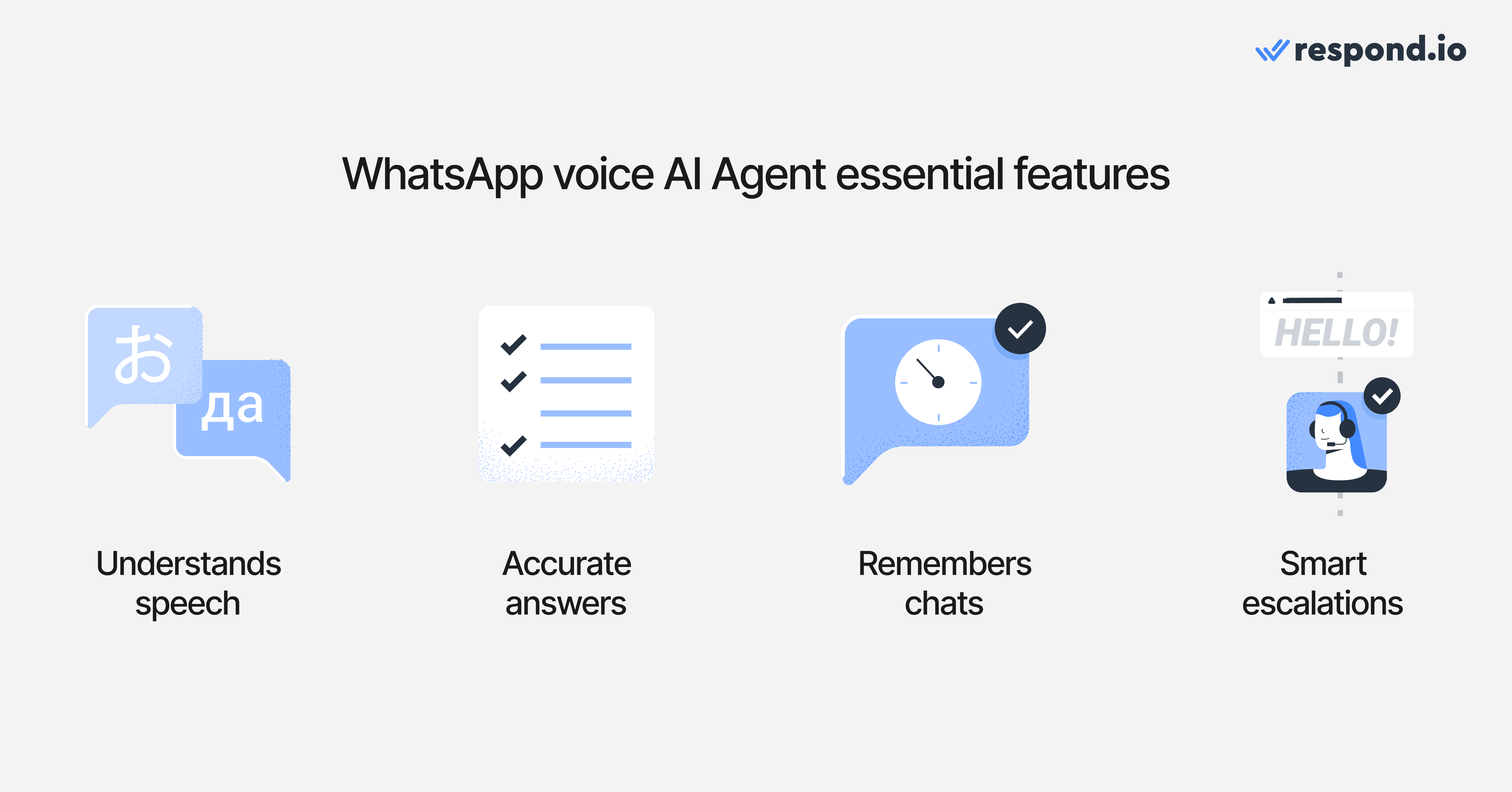
Natural-language understanding across accents: WhatsApp bersifat global, dan jika sistem kesulitan dengan aksen atau gaya bicara berbeda, panggilan akan cepat kacau.
Knowledge-grounded replies: Agen harus merespons hanya menggunakan dokumen yang disetujui bisnis sehingga jawaban tetap akurat, konsisten dan aman dalam skala besar.
Multi-turn conversation handling: Panggilan nyata berkembang seiring waktu, jadi agen harus mengingat apa yang dikatakan sebelumnya alih-alih mengatur ulang percakapan setiap giliran.
Smart escalation to human agents: Sistem perlu mengenali kompleksitas atau ketidakpastian dan menyerahkan dengan mulus tanpa kehilangan konteks.
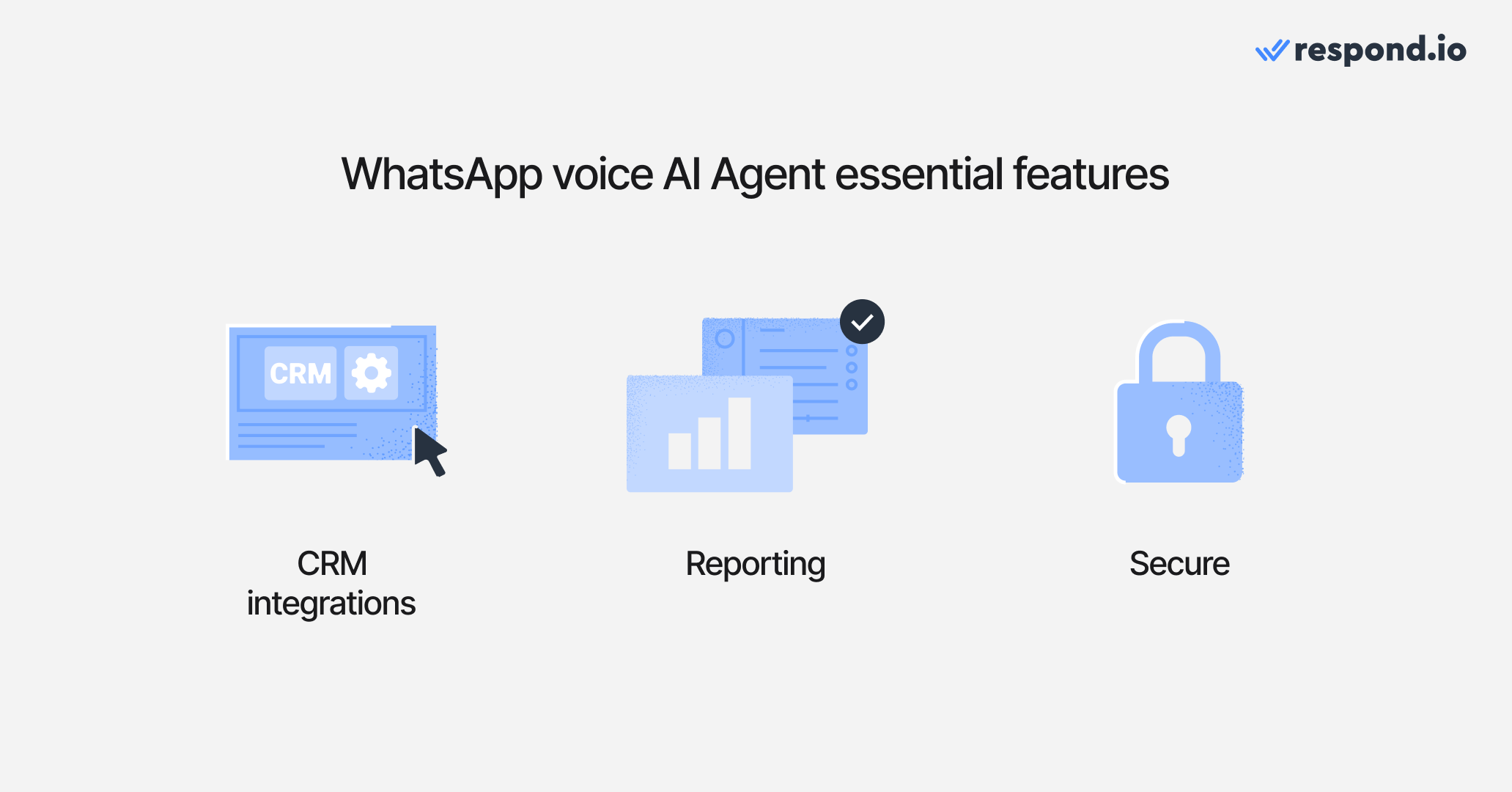
CRM and shared inbox integration: Panggilan suara harus hidup berdampingan dengan chat dan riwayat sehingga tim dapat melihat seluruh cerita pelanggan di satu tempat.
Call and AI performance analytics: Visibilitas terhadap volume panggilan, hasil dan pola eskalasi penting untuk meningkatkan kualitas layanan dan perilaku AI.
Security and compliance: Terutama di WhatsApp Business Platform, kepatuhan kebijakan dan perlindungan data wajib, bukan opsional.
Kasus Penggunaan Umum untuk WhatsApp AI Voice Agents
Businesses using WhatsApp and AI voice Agents have already seen real results. Mari kita lihat beberapa kasus penggunaan yang paling populer:
Dukungan pelanggan
Panggilan dukungan pelanggan jarang unik. Kebanyakan berkisar pada pertanyaan yang diketahui, masalah umum dan langkah dasar selanjutnya. Voice AI membantu menyerap lapisan awal ini sehingga manusia dapat fokus pada kasus yang membutuhkan penilaian.
Menjawab FAQ dan pemecahan masalah lewat suara
Pelanggan sering menelepon untuk mengklarifikasi persyaratan, memeriksa status, atau memperbaiki masalah sederhana. AI voice agents dapat langsung menjawab pertanyaan ini menggunakan pengetahuan yang disetujui, mengurangi kebutuhan pelanggan untuk menunggu atau mengulang diri.
Mengurangi antrean panggilan selama jam puncak
Ketika volume panggilan melonjak, antrean terbentuk dengan cepat. Agen suara AI dapat menjawab panggilan rutin saat datang, mencegah waktu tunggu lama selama periode sibuk.
Menangani masalah rutin sebelum eskalasi ke manusia
Saat panggilan memang membutuhkan manusia, agen dapat terlebih dahulu mengumpulkan detail dan konteks. Ini berarti eskalasi tiba dalam kondisi yang lebih siap, bukan dimulai dari nol.

Contoh nyata: Only Tourism menggunakan AI agents di chat WhatsApp untuk mengotomasi 80% pertanyaan visa, menyediakan layanan 24/7 dan menangani 6× lebih banyak lead bulanan. Ini adalah alur dukungan berulang yang dirancang agar voice AI menanganinya selama panggilan.
Sales & lead qualification
Panggilan sales berhasil ketika bergerak cepat dan mencapai orang yang tepat. Voice AI membantu menyaring gangguan lebih awal sehingga tim sales menghabiskan waktu pada pembeli yang siap bertindak.
Mengkualifikasi lead inbound lewat suara
AI Voice Agent dapat mengajukan pertanyaan kualifikasi dasar di awal panggilan, seperti intent, minat produk, atau urgensi, sebelum melibatkan tenaga penjual.
Mengumpulkan kebutuhan sebelum penyerahan ke agen
Detail seperti preferensi, kisaran anggaran, atau use case dapat dikumpulkan selama panggilan, sehingga agen sales bergabung dengan konteks alih-alih menggali dari nol.
Mengalihkan penelepon berintensi tinggi ke tim yang tepat
Setelah intent jelas, penelepon bernilai tinggi bisa diarahkan langsung ke tim sales yang sesuai, sementara pertanyaan tahap awal ditangani tanpa membebani sales reps.

Contoh nyata: iMotorbike menggunakan AI agents di respond.io untuk mengelola volume tinggi inquiry inbound di WhatsApp dan channel pesan lain. Dengan AI menangani 70–80% percakapan, bisnis merespons 67% lebih cepat dan menangani 2× lebih banyak lead harian, sambil hanya mengarahkan pembeli yang siap ke agen manusia.
Penjadwalan janji & operasi
Sebagian besar panggilan operasional mengikuti pola yang sama. Pesan ini. Pindahkan itu. Konfirmasi detailnya. Periksa status. Panggilan-panggilan ini perlu ditangani cepat, tetapi jarang membutuhkan penilaian mendalam.
Memesan, menjadwal ulang, atau mengonfirmasi janji
WhatsApp AI Voice Agents dapat menangkap tanggal, waktu dan preferensi selama panggilan dan mengonfirmasi langkah selanjutnya segera, tanpa menunggu tindak lanjut manual.
Mengambil detail untuk permintaan layanan
Nama, alamat, nomor pesanan, atau kebutuhan layanan dapat dikumpulkan secara percakapan dan dicatat otomatis selama panggilan
Memberi pembaruan pesanan atau pengiriman
Pelanggan sering menelepon untuk memeriksa status pesanan atau pengiriman. WhatsApp AI Voice Agents dapat langsung menjawab pertanyaan ini menggunakan sistem yang terhubung atau informasi yang disetujui.

Contoh nyata: Diskat menjalankan penjualan volume tinggi dan penanganan pesanan via WhatsApp menggunakan AI agents di respond.io. AI agents kini mengelola 90% percakapan sales, membantu bisnis mencapai rasio konversi 81,4%, sementara agen manusia turun tangan hanya untuk dukungan logistik atau pelacakan.
Cara menyiapkan WhatsApp AI Voice Agents dengan respond.io
Menyiapkan WhatsApp AI Voice Agents di respond.io dirancang agar cepat dan terkendali. Dengan template siap pakai dan sumber pengetahuan yang disetujui, tim bisa mulai menangani panggilan WhatsApp dengan AI sambil menjaga penyerahan ke manusia dan pengawasan secara ketat.
Langkah 1: Buat AI Agent
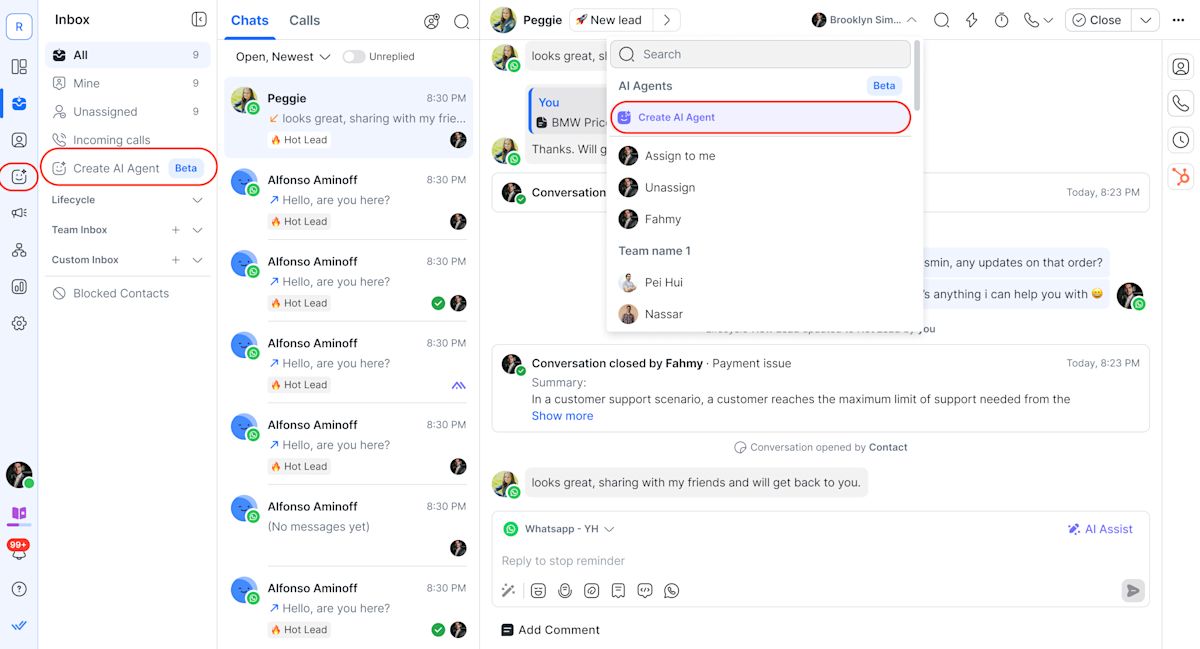
Buka Kotak Masuk dan buat AI Agent baru.
Perlu dicatat bahwa penanganan panggilan suara WhatsApp dengan AI Agents tersedia pada paket Advanced ke atas.
Langkah 2: Pilih template agen
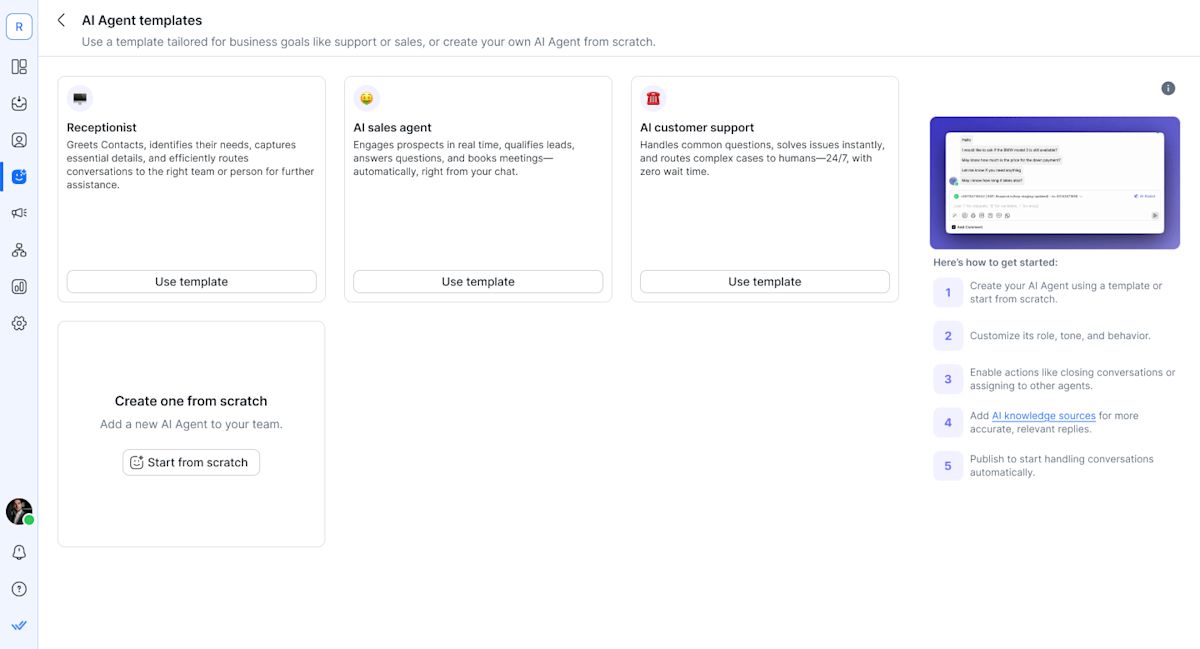
Pilih template berdasarkan bagaimana Anda ingin panggilan WhatsApp ditangani:
Receptionist – menyambut penelepon, mengidentifikasi intent dan mengarahkan tindak lanjut
Sales Agent – mengkualifikasi minat inbound dan menangkap detail lead
Support Agent – menjawab FAQ dan menangani masalah umum
Template datang terisi dengan instruksi dan aksi, yang dapat Anda sunting nanti. Atau Anda bisa membuatnya dari awal berdasarkan kasus penggunaan unik Anda.
Langkah 3: Tinjau instruksi dan aksi
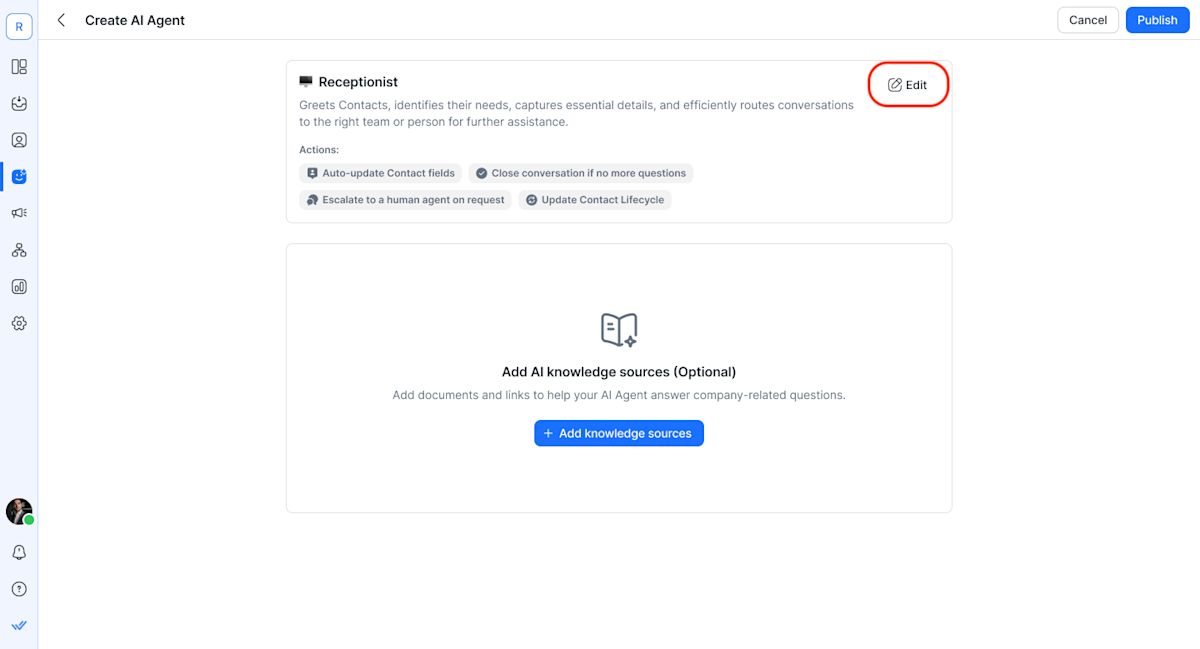
Setiap template menyertakan pra-definisi:
Instructions (peran, nada dan batasan)
Actions (menugaskan ke tim, memperbarui field atau Lifecycle, menutup percakapan)
Jaga instruksi singkat dan spesifik. Interaksi suara bekerja terbaik ketika peran AI dibatasi secara jelas pada apa yang boleh dan tidak boleh dilakukannya.
Langkah 4: Tambahkan sumber pengetahuan AI (direkomendasikan)
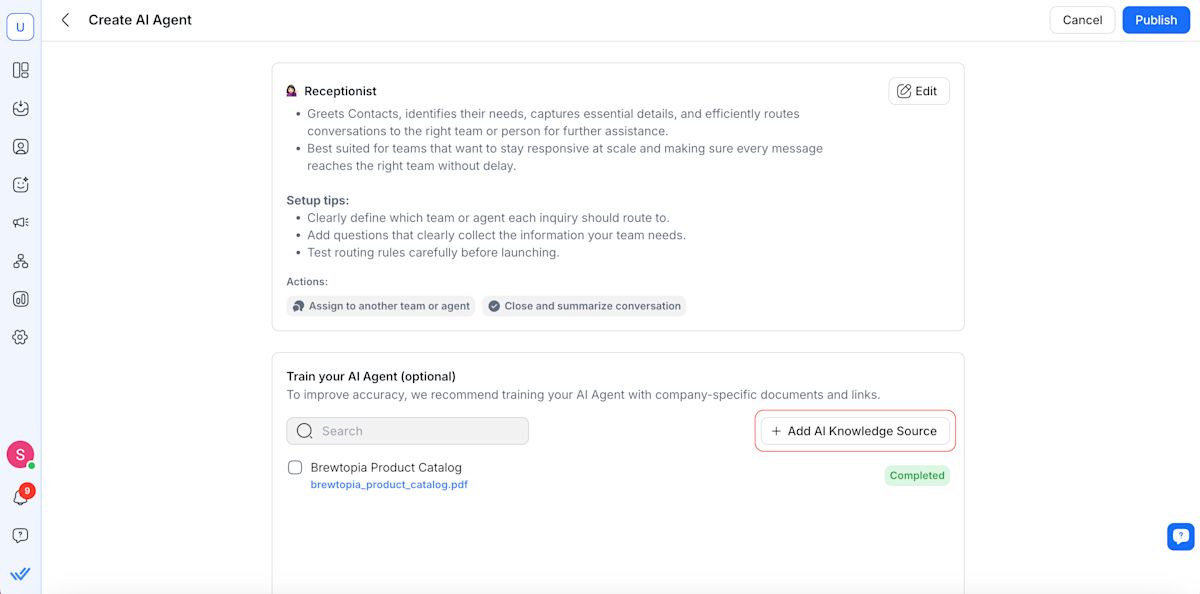
Unggah atau tautkan sumber yang disetujui seperti:
FAQ dan artikel bantuan
Dokumentasi produk atau layanan
Kebijakan, harga, atau SLA
Selama panggilan, AI Agent hanya akan merespons menggunakan sumber-sumber ini, menjaga jawaban akurat dan dapat diprediksi.
Langkah 5: Aktifkan penanganan panggilan
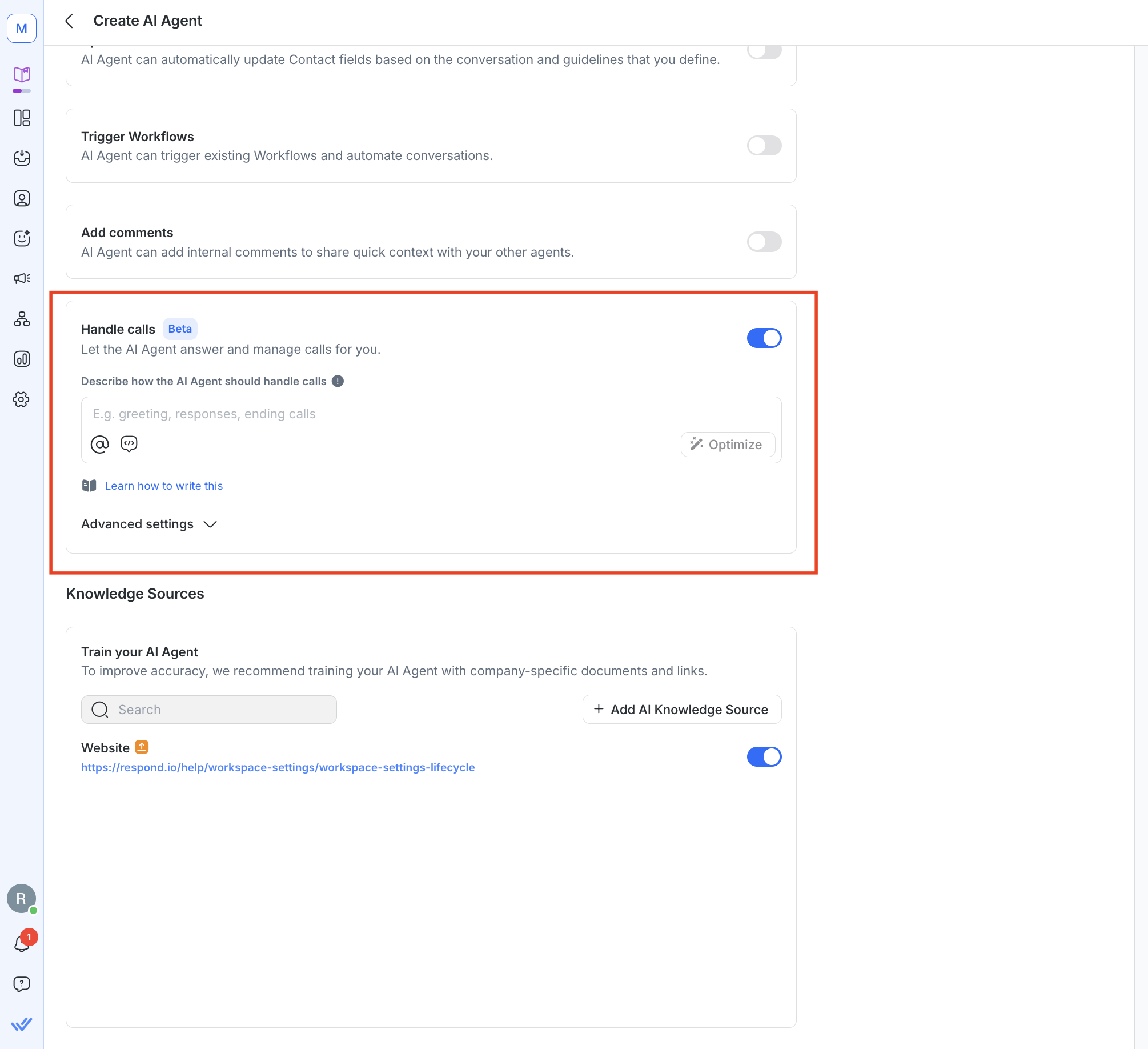
Nyalakan aksi Handle Calls dalam konfigurasi AI Agent.
Saat aktif, AI Agent akan otomatis menjawab panggilan WhatsApp masuk yang ditetapkan kepadanya. Selama panggilan, agen:
Menyapa penelepon
Merespons secara percakapan terhadap pertanyaan
Mengakhiri panggilan dengan sopan setelah selesai
Panggilan dibatasi pada 3 menit, dan AI menangani percakapan secara end-to-end setelah menjawab.
Langkah 6: Konfigurasikan suara, bahasa dan salam
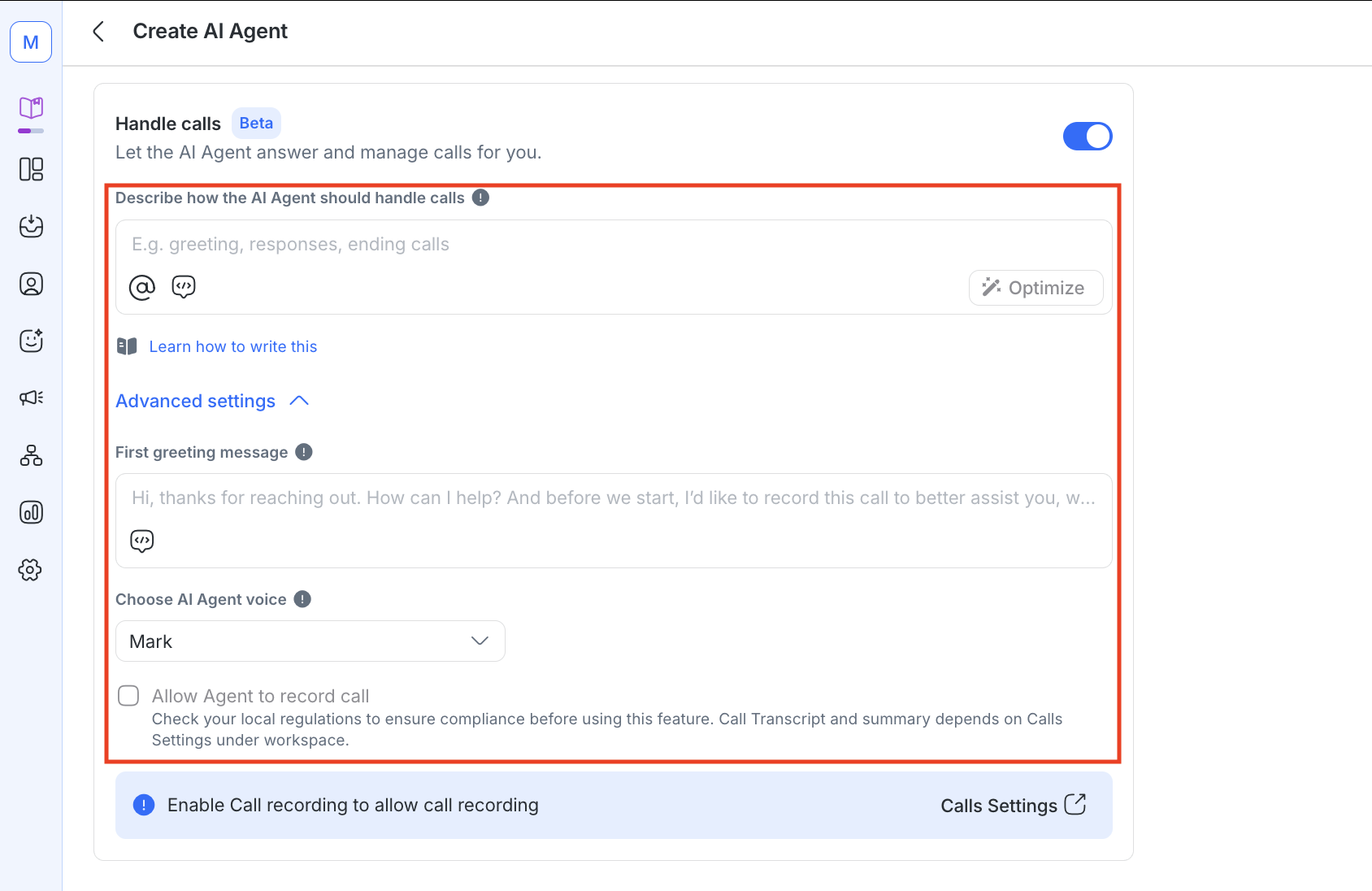
Pilih suara AI Agent dan atur salam pertama.
Agen suara AI respond.io mendukung 32 bahasa.
Agen default ke bahasa Inggris tetapi dapat mendeteksi dan beralih otomatis ke bahasa yang didukung selama panggilan
Semua suara bersifat multibahasa, dengan aksen dan pengucapan tertentu dioptimalkan per suara
Anda juga bisa menyertakan teks persetujuan dalam salam jika panggilan direkam. Perlu diingat, jika dibiarkan kosong, salam default akan digunakan.
Langkah 7: Uji sebelum dipublikasikan
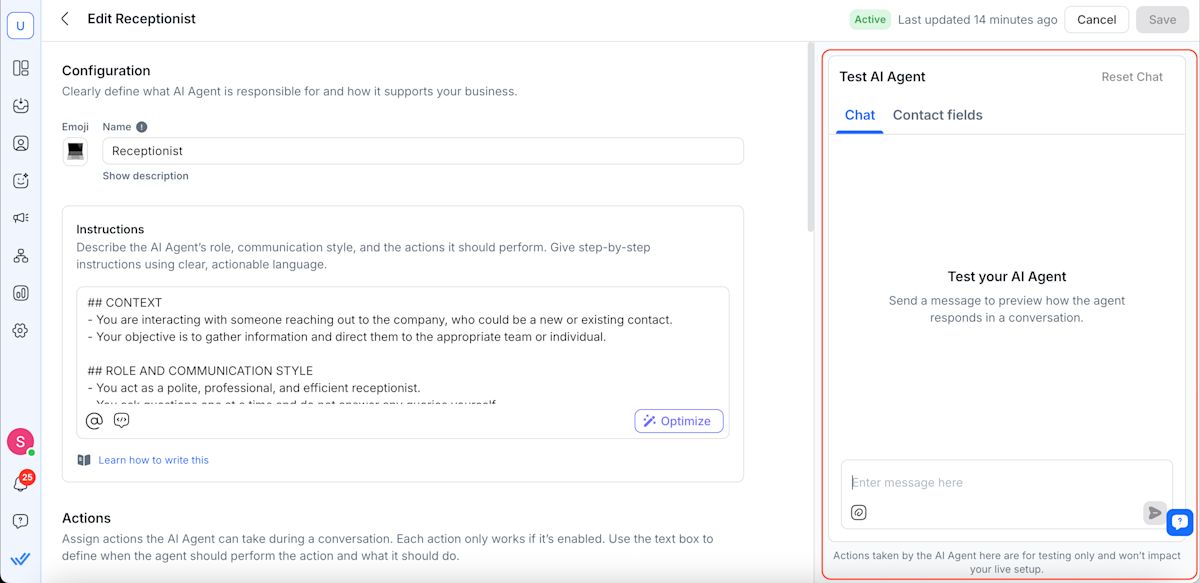
Gunakan Test AI Agent dan ikon telepon untuk mensimulasikan panggilan.
Pengujian memungkinkan Anda:
Mendengar suara dan salam yang dipilih
Memvalidasi instruksi dan jawaban
Memastikan aksi memicu dengan benar setelah panggilan
Pengujian tidak memengaruhi pelanggan nyata.
Langkah 8: Publikasikan dan mulai gunakan agen
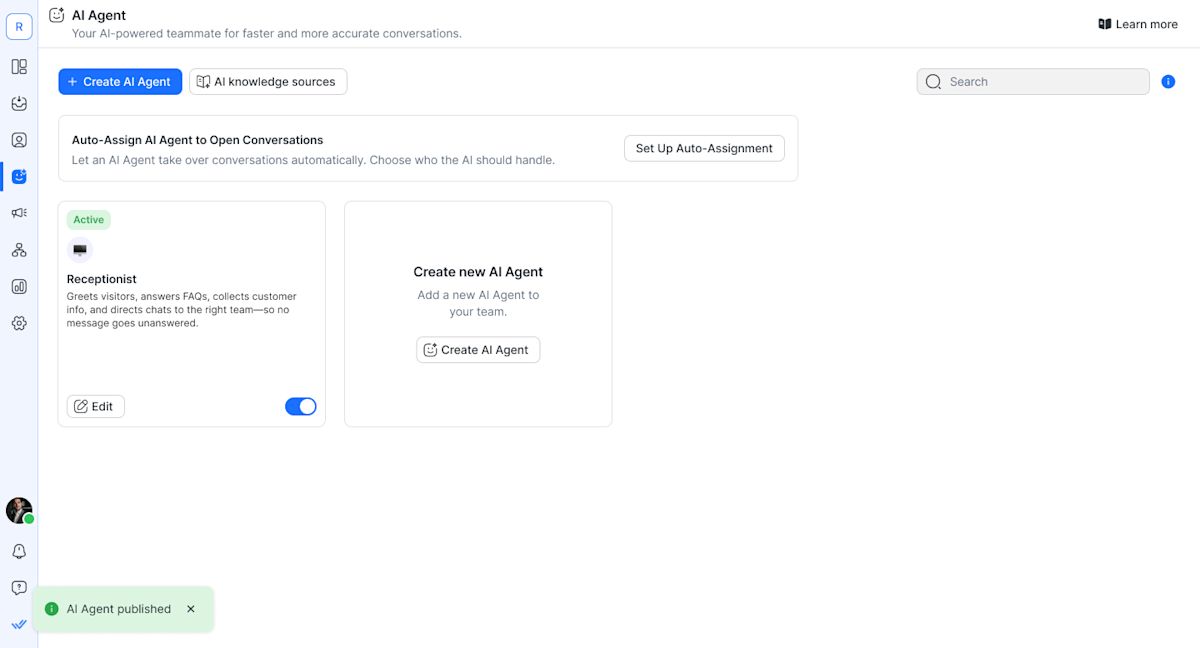
Klik Publish untuk membuat WhatsApp AI Voice Agents Anda live.
Agen kemudian dapat menangani panggilan:
Automatically, jika ditetapkan sebagai assignee default atau via workflows
Manually, ketika rekan tim menugaskan percakapan ke agen
Setelah sebuah call dijawab, pengambilalihan oleh manusia selama panggilan tidak didukung. Seorang human hanya dapat turun tangan setelah panggilan berakhir.
Mengapa respond.io menyediakan WhatsApp AI Voice Agent terbaik
Voice WhatsApp tidak bekerja baik ketika diperlakukan sebagai sistem terpisah. Panggilan tidak terjadi secara terisolasi. Mereka berada di tengah percakapan, tindak lanjut dan penyerahan yang sedang berlangsung. Jika voice ada di alat yang berbeda, konteks hilang dan tim harus menyambung manual.
Respond.io menjaga voice dan messaging dalam satu tempat. AI agents, chat, calls, automation dan riwayat pelanggan berjalan di satu inbox, sehingga percakapan tetap utuh saat berpindah antara teks dan suara. Tim tetap mengontrol apa yang ditangani AI, kapan manusia ikut serta dan bagaimana semuanya berjalan lintas zona waktu dan tim.
Omnichannel AI agents that handle real customer requests such as checking order status, sharing booking links, or updating details across chat and voice from the same inbox.
Outbound campaigns that reach customers on WhatsApp and other popular channels without switching tools or breaking conversation history.
VoIP and WhatsApp API calling support so teams can move from chat to voice seamlessly, with context and transcripts carried through.
Lifecycle tracking that automatically qualifies prospects, triggers follow-ups and prioritizes the right conversations for human agents.
Clear reporting and analytics that show resolution rates, response times, team performance and conversion events synced via Meta’s Conversions API (CAPI), without digging through fragmented dashboards.
99.999% always-on reliability so messages, calls and automated tasks are handled promptly, regardless of time zone or volume spikes.
Yang berubah dalam praktik adalah bagaimana pekerjaan terasa sehari-hari. Panggilan dilanjutkan dari tempat chat berhenti. Tindak lanjut terjadi dengan gambaran penuh yang sudah tersedia. Agen menghabiskan waktu mereka untuk menyelesaikan masalah, bukan menyusunnya kembali.
Ketika voice ada dalam sistem yang sama dengan messaging, automation dan riwayat pelanggan, tim bisa skala tanpa menambah gesekan, kebingungan, atau alat tambahan untuk dikelola. Jadi mengapa tidak mencoba respond.io hari ini untuk merasakan semua ini sendiri?
Ubah percakapan pelanggan menjadi pertumbuhan bisnis bersama respond.io. ✨
Kelola panggilan, chat dan email dalam satu tempat!
FAQ tentang Agen Suara AI WhatsApp
Apa itu Agen Suara AI WhatsApp?
Agen Suara AI WhatsApp adalah sistem berbasis AI yang membantu bisnis menangani panggilan suara melalui WhatsApp. Saat pelanggan mengetuk tombol panggil, agen dapat menjawab, memahami permintaan, merespons menggunakan informasi bisnis yang disetujui dan memutuskan apakah menyelesaikan panggilan atau mengoper ke manusia. Di platform seperti respond.io, AI suara bekerja berdampingan dengan chat, otomasi, dan konteks pelanggan dalam satu sistem, bukan sebagai alat terpisah.
Bagaimana Agen Suara AI WhatsApp bekerja selama panggilan?
Selama panggilan, ucapan pelanggan ditranskripsikan dan ditafsirkan secara real time. AI merespons secara percakapan menggunakan pengetahuan yang disetujui bisnis, mengajukan pertanyaan lanjutan bila perlu dan dapat memicu aksi seperti routing atau eskalasi. Jika diperlukan agen manusia, platform seperti respond.io mentransfer panggilan beserta konteks dan transkrip sehingga percakapan berlanjut lancar.
Apakah pelanggan perlu menginstal apa pun untuk menggunakan WhatsApp AI Voice Agents?
Tidak. Pelanggan tidak perlu menginstal apa pun yang baru. Mereka cukup menggunakan WhatsApp seperti biasa dan mengetuk tombol panggil bila tersedia. Seluruh pemrosesan AI terjadi di sisi bisnis melalui WhatsApp Business Platform dan sistem yang mengelola percakapan.
Apakah Panggilan Suara WhatsApp didukung di negara saya?
Ketersediaan WhatsApp Business Calling bergantung pada rollout Meta dan bervariasi menurut negara. Tidak semua wilayah mendukung panggilan suara saat ini, dan cakupan dapat berubah. Platform seperti respond.io mengikuti ketersediaan API resmi WhatsApp, jadi sebaiknya konfirmasi dukungan untuk negara Anda sebelum mengaktifkan fitur voice.
Apa yang sebenarnya bisa dilakukan WhatsApp AI Voice Agent?
WhatsApp Voice AI Agent dapat menjawab pertanyaan umum, memandu pemecahan masalah dasar, mengumpulkan informasi, mengkualifikasi penelepon dan mengarahkan percakapan ke tim yang tepat. Ia bekerja paling baik untuk interaksi terstruktur dan berulang seperti inquiry support, kualifikasi sales, pemesanan, atau pembaruan status. Di respond.io, tindakan ini dapat terhubung ke otomasi dan pelacakan siklus hidup sehingga panggilan menghasilkan hasil nyata.
Seberapa akurat WhatsApp AI Voice Agents dalam memahami ucapan?
Akurasi bergantung pada kualitas audio, dukungan bahasa dan seberapa baik AI dilatih pada pengetahuan bisnis. Voice AI modern berkinerja baik untuk permintaan yang jelas dan dapat diprediksi. Respond.io membantu menjaga akurasi dengan membumikan jawaban pada pengetahuan yang disetujui dan memungkinkan tim menetapkan aturan eskalasi saat kepercayaan rendah.
Bisakah WhatsApp AI Voice Agent mengeskalasi atau mentransfer panggilan ke manusia?
Ya. Eskalasi adalah bagian inti dari voice AI. Ketika panggilan membutuhkan penilaian atau penanganan manual, agen dapat meneruskannya ke manusia. Di respond.io, penyerahan ini menyertakan konteks percakapan dan transkrip sehingga pelanggan tidak perlu mengulang diri.
Apakah data pelanggan aman saat menggunakan WhatsApp AI Voice Agents?
Keamanan data bergantung pada platform yang mengelola percakapan. Interaksi WhatsApp Business harus mengikuti kebijakan Meta, dan bisnis bertanggung jawab atas penanganan data yang tepat. Respond.io dibangun dengan kepatuhan GDPR dan kontrol keamanan (kepatuhan GDPR dan kontrol keamanan) untuk membantu bisnis mengelola data pelanggan secara bertanggung jawab di chat dan panggilan suara.
Berapa biaya WhatsApp AI Voice Agent?
Tidak ada harga tunggal yang tetap. Biaya biasanya bergantung pada tiga faktor: biaya panggilan WhatsApp, platform yang Anda gunakan untuk menjalankan voice agent dan seberapa banyak pemrosesan AI yang diperlukan. Dengan respond.io, harga terkait dengan penggunaan platform secara keseluruhan, bukan biaya per percakapan atau per panggilan. Ini berarti bisnis tidak dikenai penalti untuk keterlibatan yang lebih tinggi dan dapat menskalakan volume voice dan messaging tanpa biaya menjadi tidak terduga saat penggunaan tumbuh.
Bisnis mana yang paling mendapat manfaat dari WhatsApp AI Voice Agents?
Bisnis dengan volume panggilan repetitif tinggi paling banyak mendapat manfaat. Ini termasuk tim dukungan pelanggan, bisnis berbasis sales, perusahaan travel dan logistik, layanan kesehatan, penyedia pendidikan dan marketplace. Jika pelanggan Anda sudah menggunakan WhatsApp dan sering menelepon untuk jawaban cepat, agen suara respond.io dapat mengurangi beban kerja sekaligus meningkatkan kecepatan dan konsistensi respons.
Bacaan Lanjutan
Jika Anda menikmati artikel kami, pastikan untuk memeriksa yang berikut:


