
















 Electronics
 Fashion & Apparel
 Furniture
 Jewelry and Watches
 Afterschool Activities
 Sport & Fitness
 Beauty Center
 Dental Clinic
 Medical Clinic
 Home Cleaning & Maid Services
 Photography & Videography
 Car Dealership
 Travel Agency & Tour Operator


TL;DR — Sleekflow Alternative: Choose the Best Solution for Enterprises
If you need TikTok, voice and automation that keeps running as volume grows, respond.io is the better fit for mid-market B2C teams.
If you need a simpler chat-first setup with basic automation and lower conversation volume, SleekFlow is a reasonable fit.
If you're searching for SleekFlow alternatives that can handle complex business processes, you've landed in the perfect spot!
In this comparison, we’ll evaluate what to look for in a SleekFlow alternative for mid-market B2C teams so you can avoid missed leads and lost revenue when conversation volume spikes.
SleekFlow alternative: SleekFlow vs respond.io
If your team needs to scale multi-channel conversations with deeper automation and routing, respond.io is typically a stronger fit than SleekFlow.
They provide tools like AI automation, broadcasts and conversation analytics for businesses to drive customer engagement, streamline communication processes and make data-driven decisions.
Although built for the same purpose, their capabilities in handling high volumes of messages and automating complex customer journeys differ.
SleekFlow is a lightweight conversational inbox and automation tool for chat-first teams, while respond.io is a customer conversation management platform with multi-channel routing and lifecycle automation
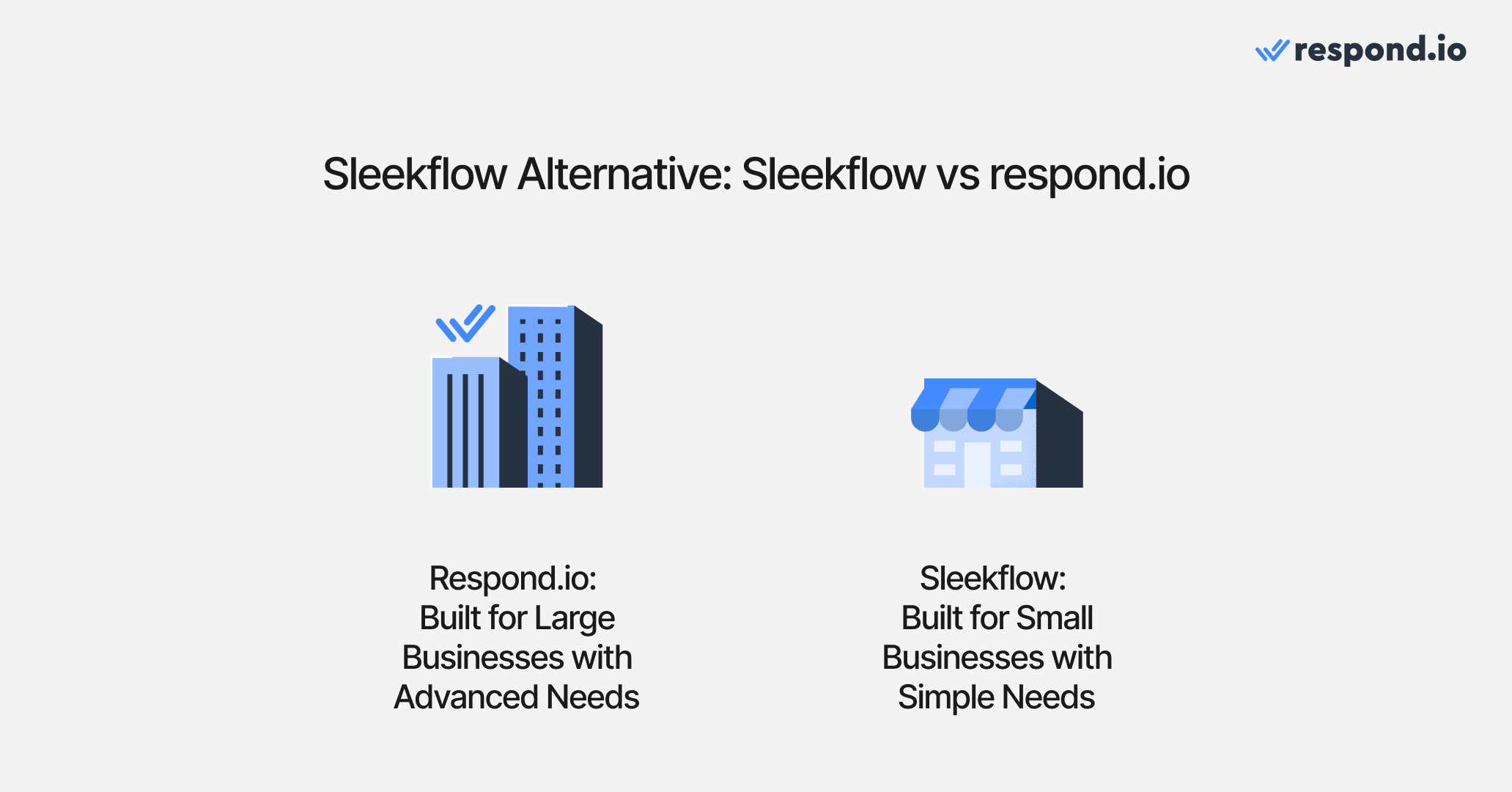
For instance, SleekFlow features like rule-based automation are adequate for small businesses or those with straightforward processes. In contrast, respond.io's advanced AI-powered automation caters to large businesses with complex business processes.
While this is just one example, their capabilities for different business sizes will become clearer as you read this blog. Now, let's look at how respond.io stacks up against SleekFlow so you can decide if respond.io is a better alternative.
Capability area | Respond.io | SleekFlow | Why it matters for revenue |
|---|---|---|---|
Channels supported | WhatsApp, Instagram, Facebook Messenger, TikTok, Telegram, LINE, Viber, WeChat, email and voice in one workspace | Gaps across key messaging or calling channels | Teams can capture and follow up wherever customers prefer to message or call |
AI Agents and automation | AI Agents can qualify leads, update lifecycle stages, trigger workflows, route by intent, escalate high-value opportunities and generate handover summaries | Simpler automation with more manual handling | Faster qualification and routing reduce lead drop-off |
Broadcast and segmentation | Multi-channel broadcasts with targeting by lifecycle stage, tags, channel source and external triggers | Shallower targeting or heavier feature gating | Better targeting creates more qualified conversations |
Lifecycle and CRM context | Merged conversations, notes, tags and lifecycle context with HubSpot and Salesforce sync | Less context in the conversation or more tab switching | Agents follow up faster with less context loss |
Analytics | Broadcast results, ad source context and lifecycle reporting in one place | Limited visibility into funnel movement | Managers can shift budget and fix drop-off points sooner |
Reliability and support | Built for high-volume messaging with 24/5 support and dedicated customer success support on Enterprise | Narrower support coverage or weaker performance under load | Stable operations protect campaign continuity and response speed |
MAC pricing | Monthly Active Contacts pricing with Starter at $99, Growth at $199, Advanced at $349 and Enterprise custom | More hidden cost risk through feature gating, add-ons or operational pauses at limits | Buyers get clearer cost visibility as campaigns scale |
Migration support | Guided migration with official WhatsApp API number continuity and channel reconnection support | Less clarity around the switching process | Lower migration risk makes it easier to move without disrupting live conversations |
Why teams decide to switch
Teams usually start looking for an alternative when the current platform limits growth in ways that directly affect revenue. Common pressure points include missing sales channels such as TikTok or voice, extra charges tied to messaging setup and features that only unlock after another upgrade.
Reliability and automation depth matter just as much. When message spikes slow down response times, campaigns lose momentum and agents miss hot leads. If automation cannot qualify leads, update lifecycle stages, route by intent or escalate high-value opportunities, teams spend more time on manual follow-up and less time closing revenue.
For mid-market B2C teams, these issues compound quickly. Slower lead response, interrupted campaigns and higher operating cost make it harder to scale across sales, marketing and support, which is why many teams switch before those gaps become a larger commercial problem.
SleekFlow alternative: who should choose respond.io vs SleekFlow
Respond.io is a customer conversation management platform built for mid-market and growing B2C teams that manage sales, marketing and support conversations across key messaging, social, voice and email channels. It is the better fit when conversation volume is rising and slower follow-up starts affecting pipeline, conversion and repeat purchase.
A simpler setup may not need a switch yet if the team handles low message volume, works on only one or two chat channels, routes conversations manually and does not need AI Agents, voice follow-up or lifecycle tracking across teams.
A switch makes more commercial sense when the business:
runs paid messaging campaigns and needs AI Agents to qualify leads before a human handoff
manages WhatsApp and other key channels together and wants voice follow-up in the same customer record
routes conversations across sales, support and multiple branches without losing context
needs lifecycle routing, customer relationship management sync and reporting to see where leads stall or handoffs fail
wants automation to keep working as campaigns scale instead of adding more manual triage
For teams in that second group, the value is not just more features. It is faster lead response, cleaner handoffs and better visibility into which conversations are producing revenue.
Teams using respond.io commonly report faster lead response and improved conversion rates after automating qualification and routing. Below, we'll explore how respond.io enables businesses to accomplish these objectives.
Centralize all messaging channels in a team inbox
Respond.io supports more revenue-critical channels, including TikTok and voice, than SleekFlow, which reduces missed leads and context switching.
While SleekFlow markets itself as an omnichannel platform, it does not support TikTok, email, VoIP or custom channels, which we'll discuss later. Now, let's look at respond.io's omnichannel capabilities.
Connect WhatsApp, TikTok and more in one place
Because respond.io is a WhatsApp Business Solution Provider, teams can launch with official WhatsApp API access without hidden markup on conversation fees. Meta fees are passed through at zero markup, which gives marketing and sales leaders a clearer view of campaign cost before volume scales.
Official support also matters after launch. Teams running broadcasts, follow-up sequences and one-to-one sales conversations need smoother template operations, clearer guidance during setup and less uncertainty when managing an existing number. With structured migration support, businesses can keep their official WhatsApp API number continuity and reconnect channels without breaking active campaigns or losing conversation history.
That reduces delays at the exact points where revenue can slow down: sending approved promotions, following up on ad leads and moving live WhatsApp conversations between automation and agents.
Businesses can also connect other messaging channels like TikTok, Facebook Messenger,Instagram, Telegram,LINE and Viber along with traditional channels like email and SMS to receive and reply to messages in an omnichannel inbox.
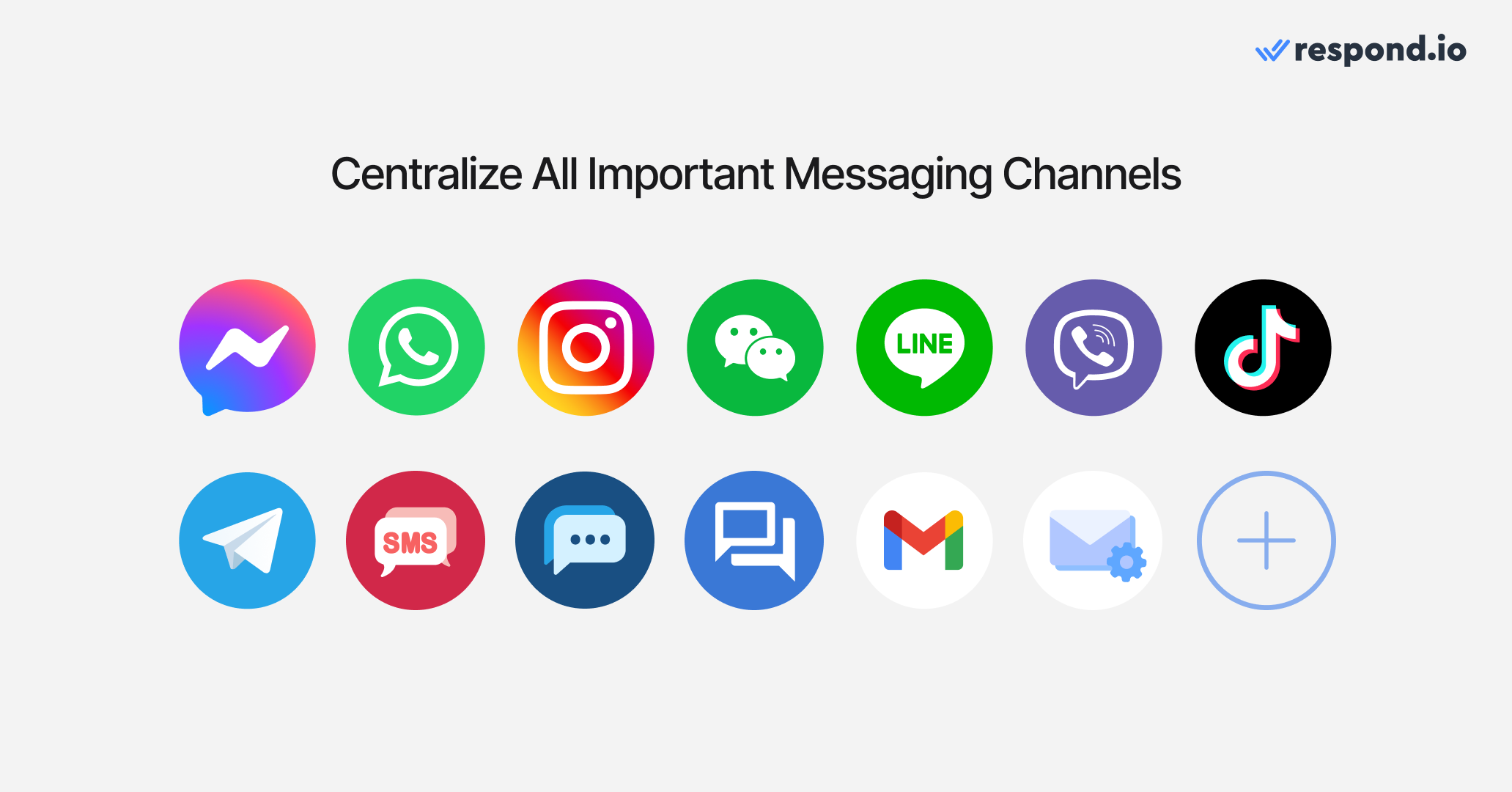
It also allows you to connect multiple channel accounts or numbers. For example, if you have individual WhatsApp or Messenger accounts for each branch or outlet, you can connect them all to respond.io and reply to messages in one place.
Move from chat to call effortlessly
Respond.io offers more than just messaging—it supports voice calls too. As one of the select WhatsApp Partners with access to the WhatsApp Business Calling API, it enables businesses to make and receive calls directly through WhatsApp, a function that was once only available in the WhatsApp Business App. This helps companies connect with customers on a deeper, more personal level.
Respond.io also works with VoIP systems, letting businesses integrate their existing phone setup to manage all communication—chat and voice—in one place.
That's not all. WhatsApp and VoIP calls can be transferred among agents for collaboration. Calls can also be automatically summarized and transcribed with AI so businesses have a record of all conversations in respond.io.
Integrate custom channels like in-app chat, chats from e-commerce platforms and more
Centralizing all popular messaging channels is important. However, connecting business-specific messaging channels in the same place is also essential to provide an omnichannel experience. This includes your company's own messaging app or an e-commerce platform's native inbox like Lazada chat inbox.
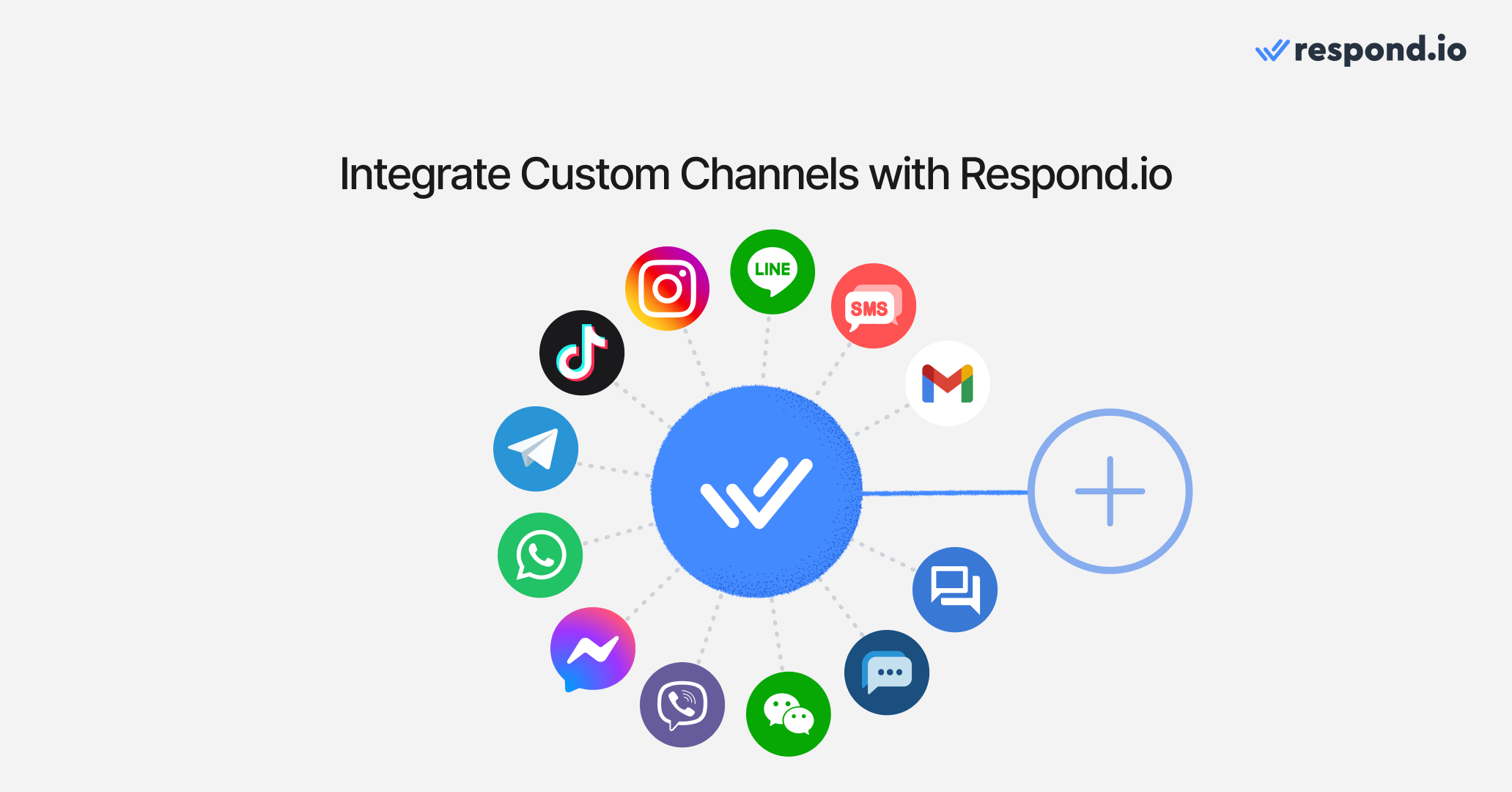
With respond.io's custom channels integration, you can connect any channel with an open API to the platform. This way, you can reply to customers who message you from both popular and business-specific messaging channels from a shared inbox.
Merge conversations from WhatsApp, TikTok, Instagram and other channels in a single thread
Businesses with a presence on multiple channels must provide an omnichannel experience. One way to do this is by recognizing returning customers on any channel.
With respond.io, businesses can merge conversations from different channels in a single thread for a unified customer profile. If a customer has previously emailed you but decided to message you on WhatsApp next, you can merge the conversations to get context easily.
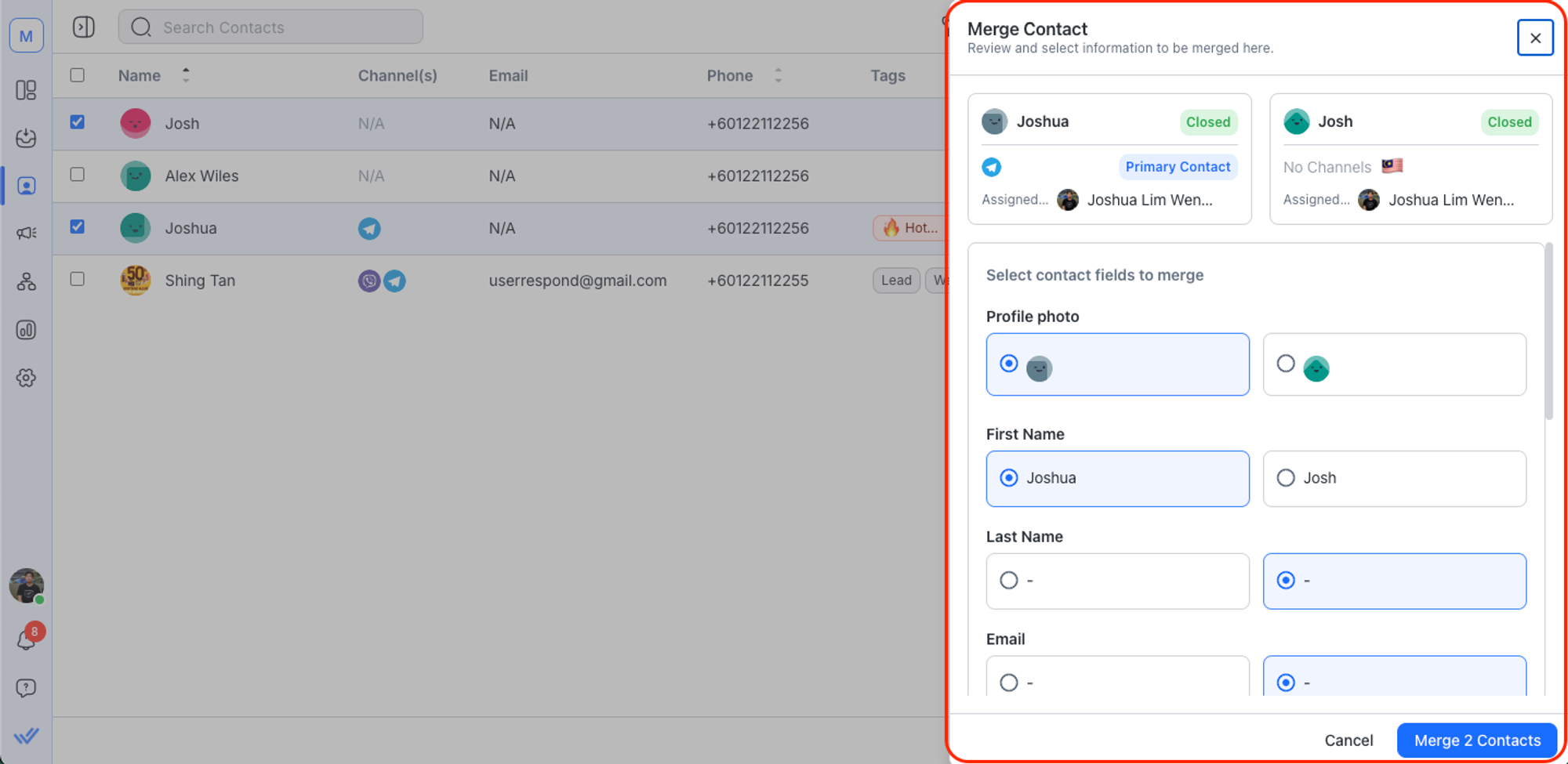
As a result, you can identify returning customers, spot recurring issues and make informed decisions when assisting them. Next, we'll look at how to send and handle promotional messages on multiple channels.
Turn customer conversations into business growth with respond.io. ✨
Manage calls, chats and emails in one place!
Capture and manage leads on multiple channels
By leveraging the ability to broadcast promotional messages on multiple channels, businesses can increase their reach and engage with customers through various touchpoints, leading to increased sales and revenue.
Therefore, it is important that platforms like respond.io and SleekFlow support promotional messaging capabilities such as click-to-chat ads and broadcasts for every available messaging channel. That said, let's look at what respond.io has to offer.
Generate leads through click to WhatsApp, Instagram, Facebook and TikTok messaging ads
Social media channels like Instagram and Facebook present a valuable opportunity for targeted advertising through click-to-chat ads. These ads enable businesses to encourage leads to start a conversation directly and engage with them when their interest is at its peak.
For Instagram-first brands, respond.io also supports trigger-based workflows — automatically DMing users who comment on a post or reply to a story — turning passive engagement into trackable conversations without manual follow-up.
TikTok Messaging Ads offer an additional way to capture new audiences with video content that seamlessly blends into their feeds and entices them to send a message on WhatsApp or Facebook Messenger.
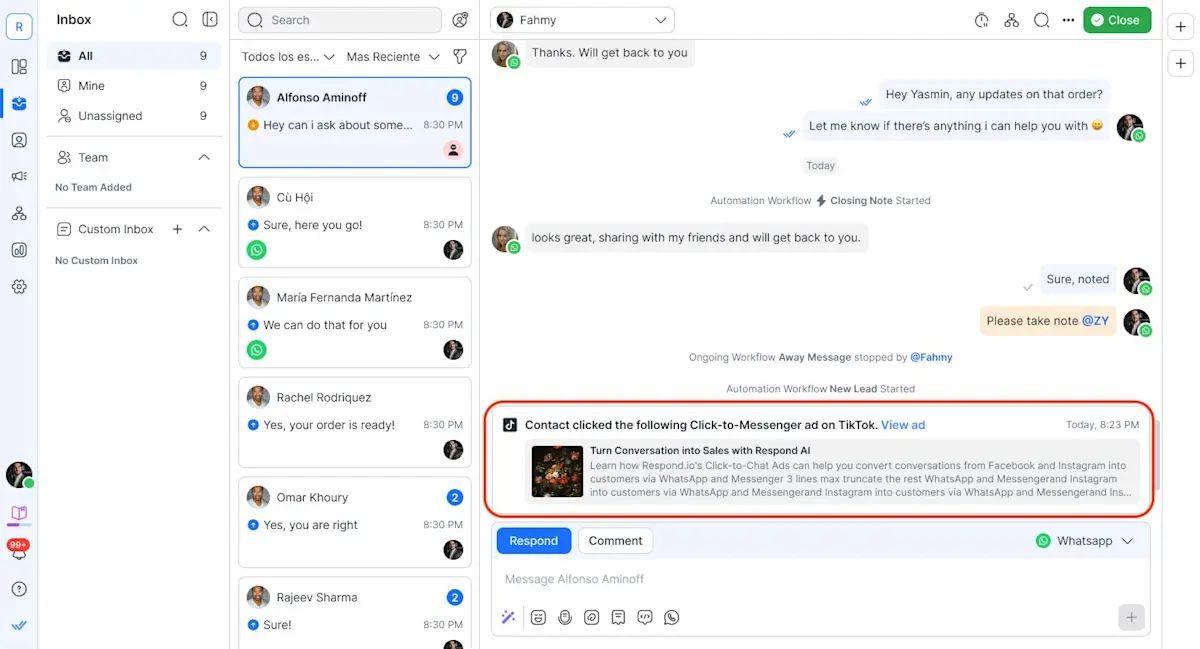
When a lead messages you through click-to-chat ads, respond.io shows you which ad a customer clicked on when they message you, giving agents useful context to respond intelligently. You can also automate these conversations to gain lead information and qualify them automatically.
Broadcast on WhatsApp, Facebook Messenger, Telegram and more
Respond.io's Broadcast Module supports multiple channels including SMS, WhatsApp, Facebook Messenger, Telegram, LINE and Viber. This gives businesses the ability to engage with customers on their preferred channels. Teams can capture leads from click-to-WhatsApp ads, let AI Agents qualify intent, collect key details and route conversations to the right team while interest is still high.
From there, marketers can send approved broadcasts to segmented audiences, continue follow-up in one-to-one chat and move to WhatsApp Business Calling or VoIP when a conversation needs faster resolution. Because Meta fees are passed through at zero markup and respond.io does not charge an extra official WhatsApp API connection fee, teams get clearer campaign cost visibility as volume grows.
This matters most when WhatsApp sits at the center of sales and remarketing. The right platform should help teams acquire leads, automate follow-up, keep handover context intact and track outcomes without forcing them to juggle separate tools.
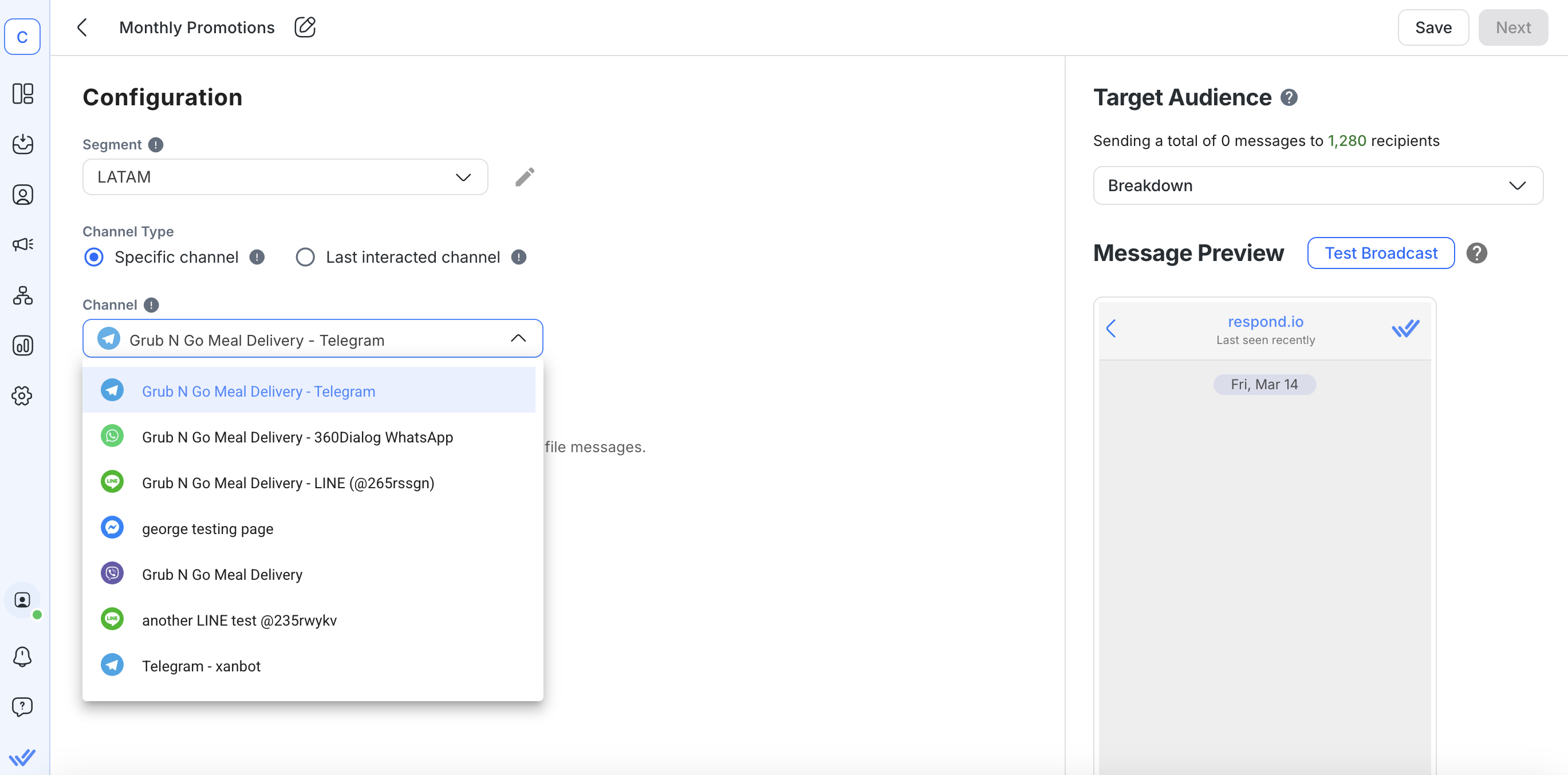
Businesses can segment broadcasts using lifecycle stage, tags, channel source and behavior captured from external events. That lets teams target contacts differently after cart abandonment, order updates, restock alerts or other high-intent moments instead of sending one broad campaign to everyone.
This kind of targeting helps revenue teams start more relevant conversations with the right contacts. Rather than chasing more message volume, they can focus budget and agent time on audiences that are more likely to reply, convert or return to purchase.
Trigger promotional messages from customer actions on external platforms
Respond.io enables businesses to trigger promotional messages based on customer actions on external platforms like Shopify, WooCommerce, Magento and more.
For instance, if a customer adds items to their cart but doesn't complete the purchase, businesses can trigger an abandoned cart message on the customer's preferred channel. The message can include discounts or other incentives to encourage the customer to complete the transaction.
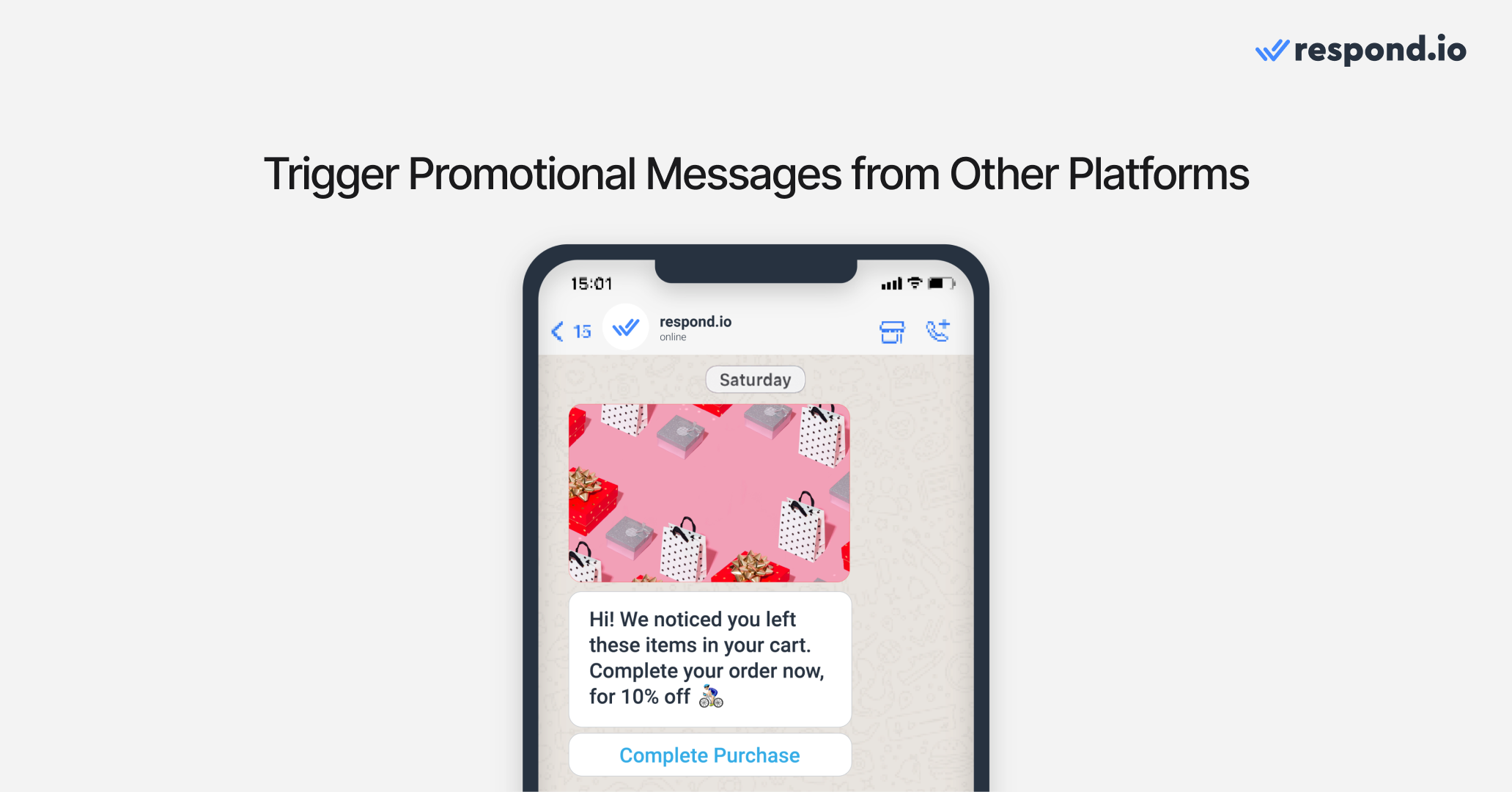
Customers can then select a predetermined reply button or send a response and be automatically connected to an agent. This way, customers can easily get what they want, enhancing the customer experience and satisfaction.
When connected to Shopify, you can also trigger conversations based on order events — delivery updates, post-purchase follow-ups and restock reminders — keeping customers engaged across the full purchase cycle, not just at the cart stage.
Now that you know how to send promotional messages on respond.io, let's explore how you can use its advanced AI and automation capabilities.
Close deals faster with advanced AI and automation capabilities
Automating conversations is crucial, especially when businesses receive high volumes of messages from various messaging channels or accounts. A quick response can be the difference between losing a lead and closing a deal, so you can't afford delays.
AI Agents can qualify leads, handle basic inquiries, make product recommendations, settle appointment bookings, trigger workflows and even answer calls. Conversations that require a human touch should then be automatically handed off to an agent who can answer complex inquiries or jump into a quick call on Telnyx, WhatsApp or Facebook Messenger.
Streamline processes with Workflows and AI Agents
Respond.io combines AI Agents with Workflows so teams can automate the steps that usually slow revenue when handled manually. When a lead comes in from WhatsApp, Instagram, Facebook Messenger or TikTok ads, AI Agents can ask qualifying questions, capture intent, update the lifecycle stage and route the conversation to sales or support based on the answers.
Workflows then carry the process forward without extra handoffs. Teams can trigger follow-up actions, sync details to HubSpot or Salesforce, escalate high-value opportunities and generate a summary before handing the conversation to a human agent. That gives the next agent context immediately instead of forcing them to repeat the same questions.
This is where automation depth matters. Simpler rule-based setups may send an auto-reply or basic assignment, but teams still end up qualifying leads, correcting routing and chasing follow-up manually. For mid-market B2C teams handling high conversation volume, deeper automation shortens response time, keeps lifecycle data current and helps sales teams reach qualified buyers sooner.
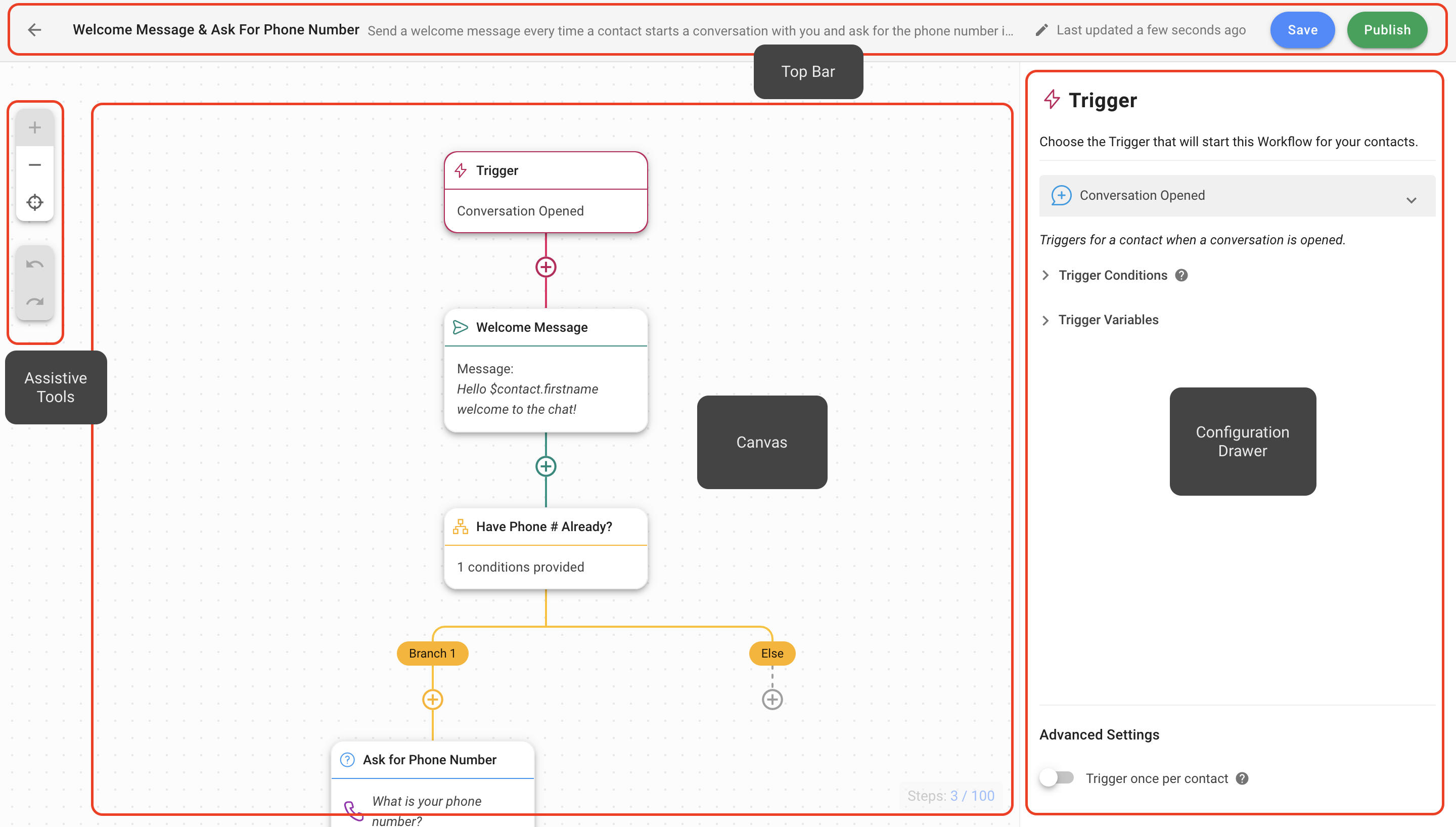
You can plan, design and implement your workflow from A to Z with any amount of complexity in one space. This includes automating FAQs, chat routing, case escalations and creating deals or tickets in CRMs. Best of all, you can do all this from scratch or use ready-made templates.
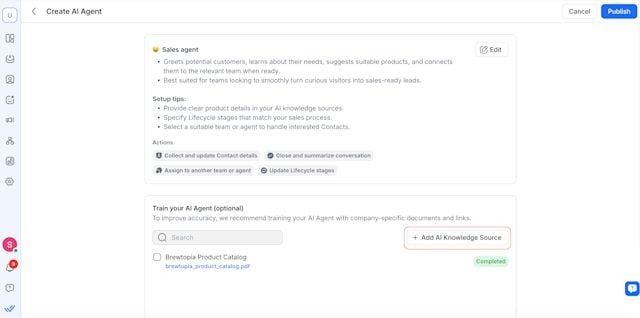
You can also build a sales AI Agent to answer customer questions on its own before passing the conversation to a human agent. Train the AI agent based on uploaded company resources or even allow it to crawl your website to provide high quality answers.
Unlike traditional single-model bots, Respond.io's AI runs tasks in smaller steps instead of overloading each request with unnecessary context. This reduces errors and speeds up replies — especially valuable when automating large volumes of conversations.
And if an issue requires a human, the AI hands off cleanly with no lingering responses, ensuring perfect collaboration between automation and your team.
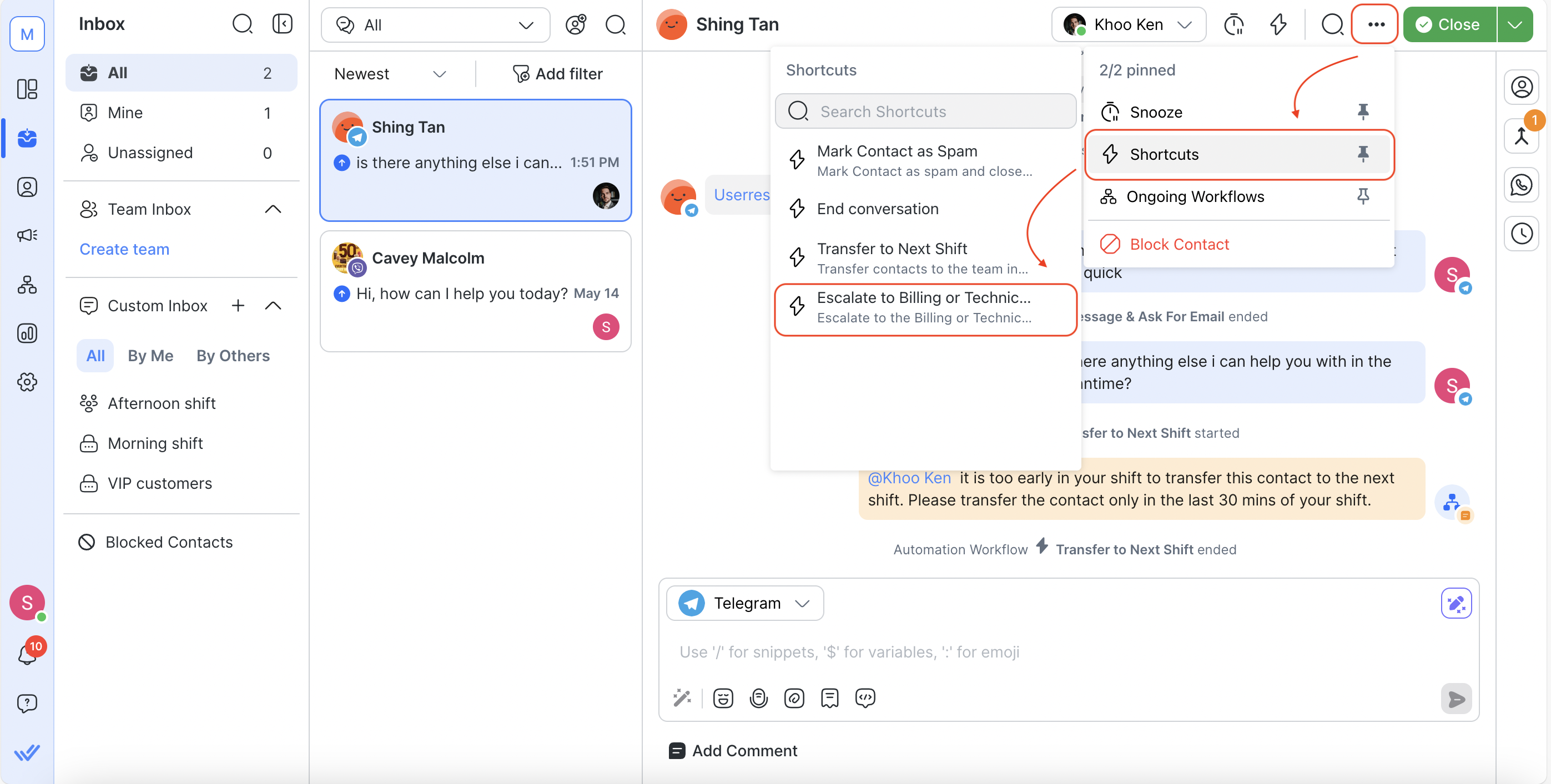
Managers can also create Workflows for complicated tasks like shift transfer, case escalation, syncing data in external CRMs and getting customer feedback, then allow agents to launch them with a click while talking to customers.
Note that automating and executing complicated manual tasks with a single click is not possible on SleekFlow.
Now that you know how respond.io's automation works, it's important to highlight one of the critical components of improving customer satisfaction: auto assigning conversations to agents quickly.
Note that SleekFlow only supports manual conversation assignments and automatic round-robin assignments.
Auto assign conversations based on team function and customer needs
There are two ways for businesses to automatically assign new conversations on respond.io: Round-robin for equal workload distribution or assign them to agents with the least conversations open. AI Agents can also assign conversations to online agents only, ensuring contacts reach someone who can respond immediately. Round-robin assignments ensure each sales agent has an equal opportunity to convert leads and earn their commissions.
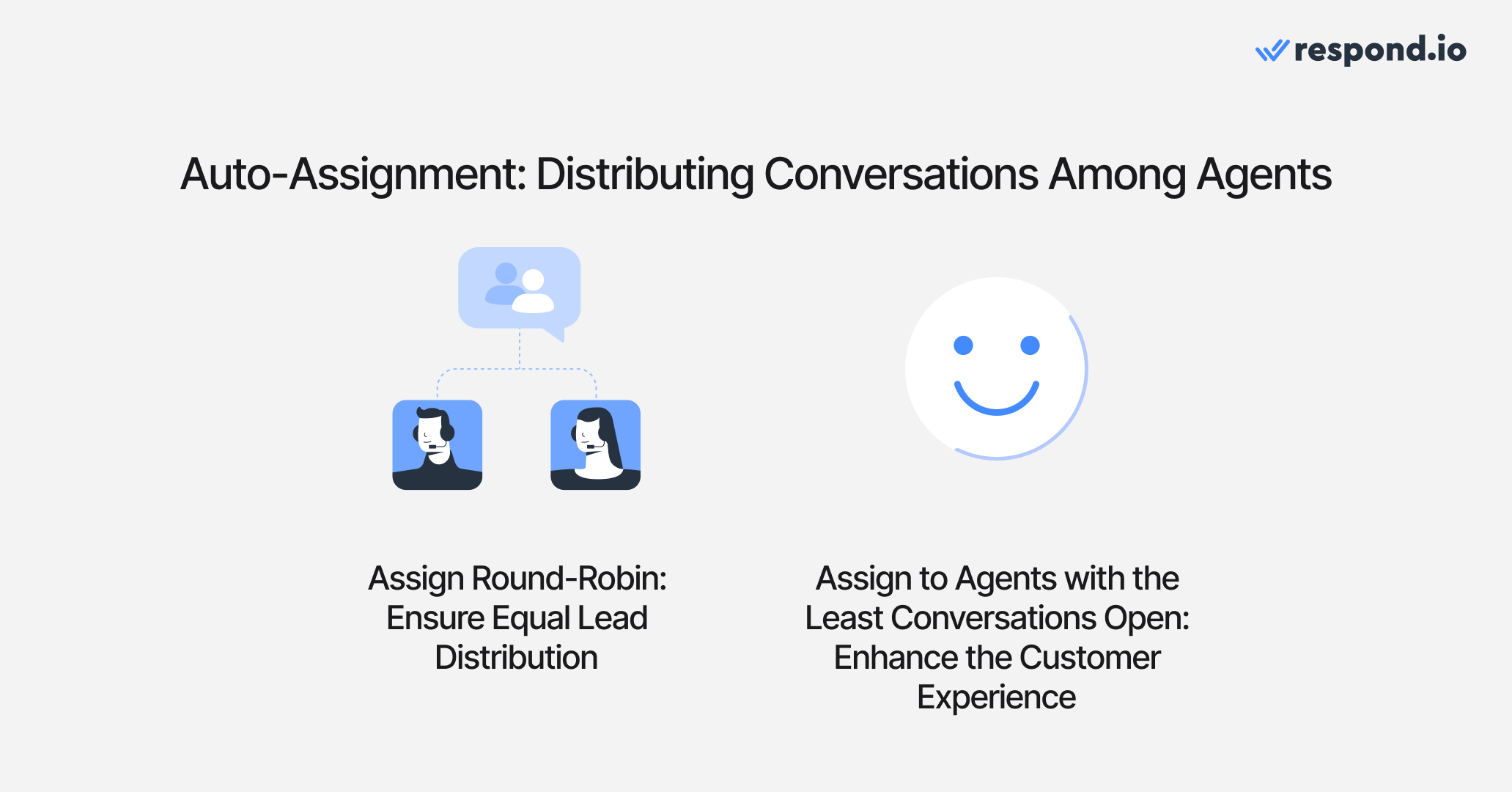
Assigning agents with the least conversations lets businesses provide a better customer experience. AI Agents can verify agent availability before assigning, ensuring conversations go to online agents and reducing wait times and resolution times.
As for new conversations, businesses can assign them to a new agent and route returning customers with a history of interactions to the same agent who handled their case before.
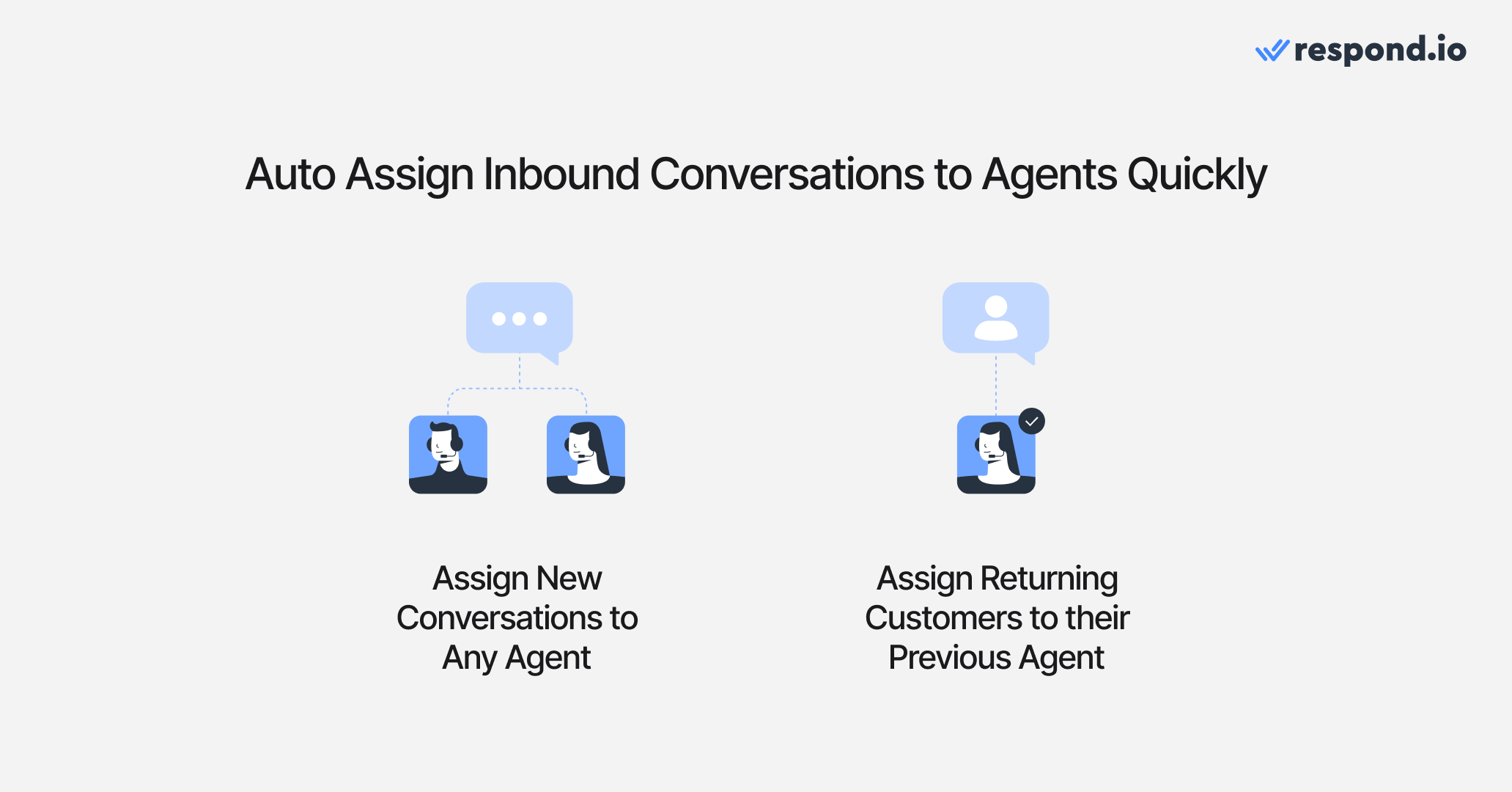
This approach gives agents the context to address recurring or related issues and build long-term customer relationships. Consequently, customers can receive a more personalized and efficient support experience.
To prioritize high-value customers who contribute substantially to revenue, businesses usually provide them with a dedicated agent as a primary point of contact for all their needs. These agents will work closely with customers to understand their goals or desires. Then, provide guidance and support to help them achieve their desired outcomes.
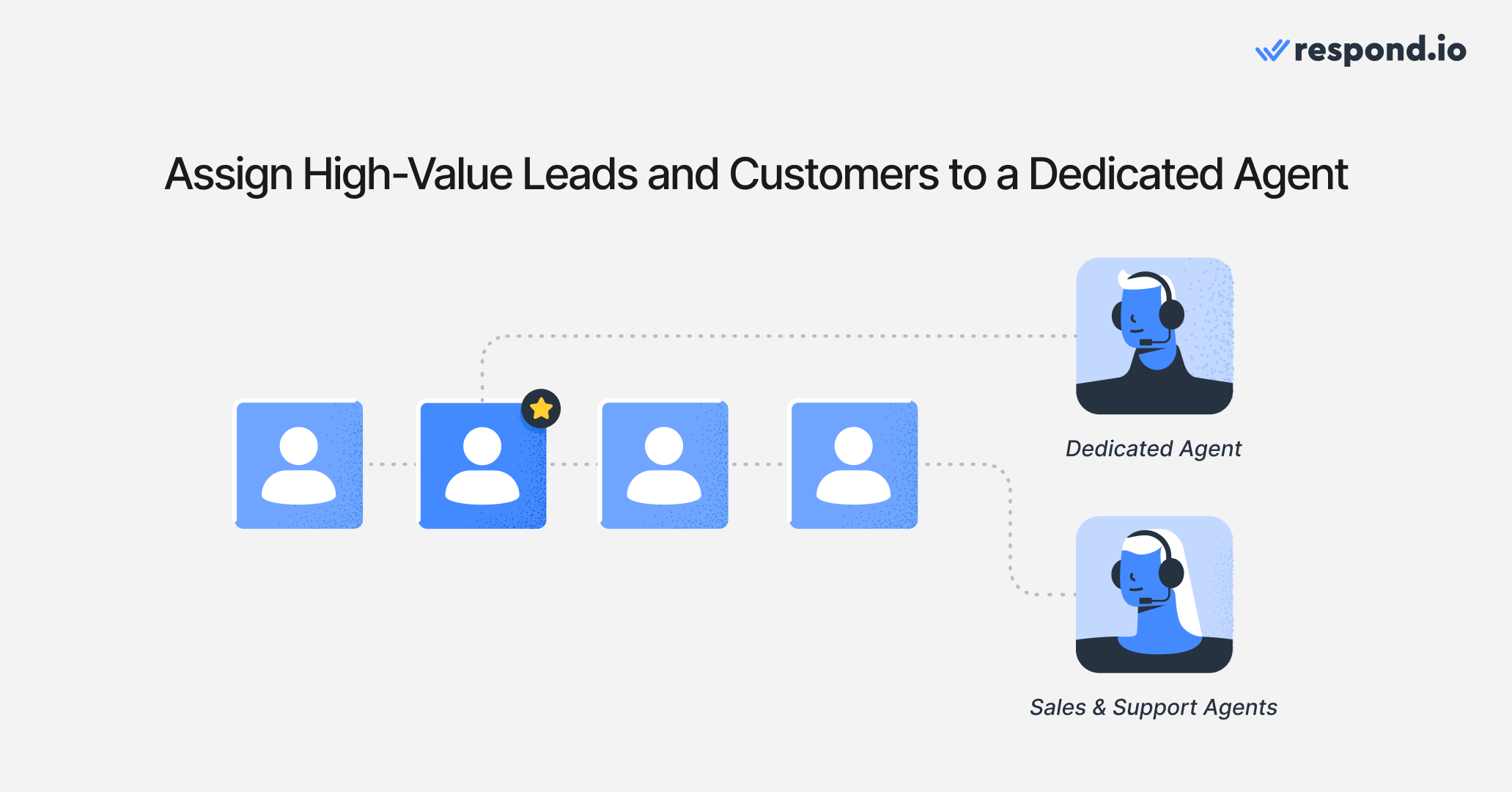
Since high-value customers are crucial to the success of any business, it is important that companies minimize any difficulties or inconveniences they may face while interacting with their brand.
Respond quickly, accurately and professionally with AI
With respond.io, agents can leverage AI capabilities to answer inquiries promptly and efficiently. Respond AI Prompts allow agents to refine their messages, ensuring clarity and precision in communication. They can also translate messages into different languages, reducing potential language barriers.
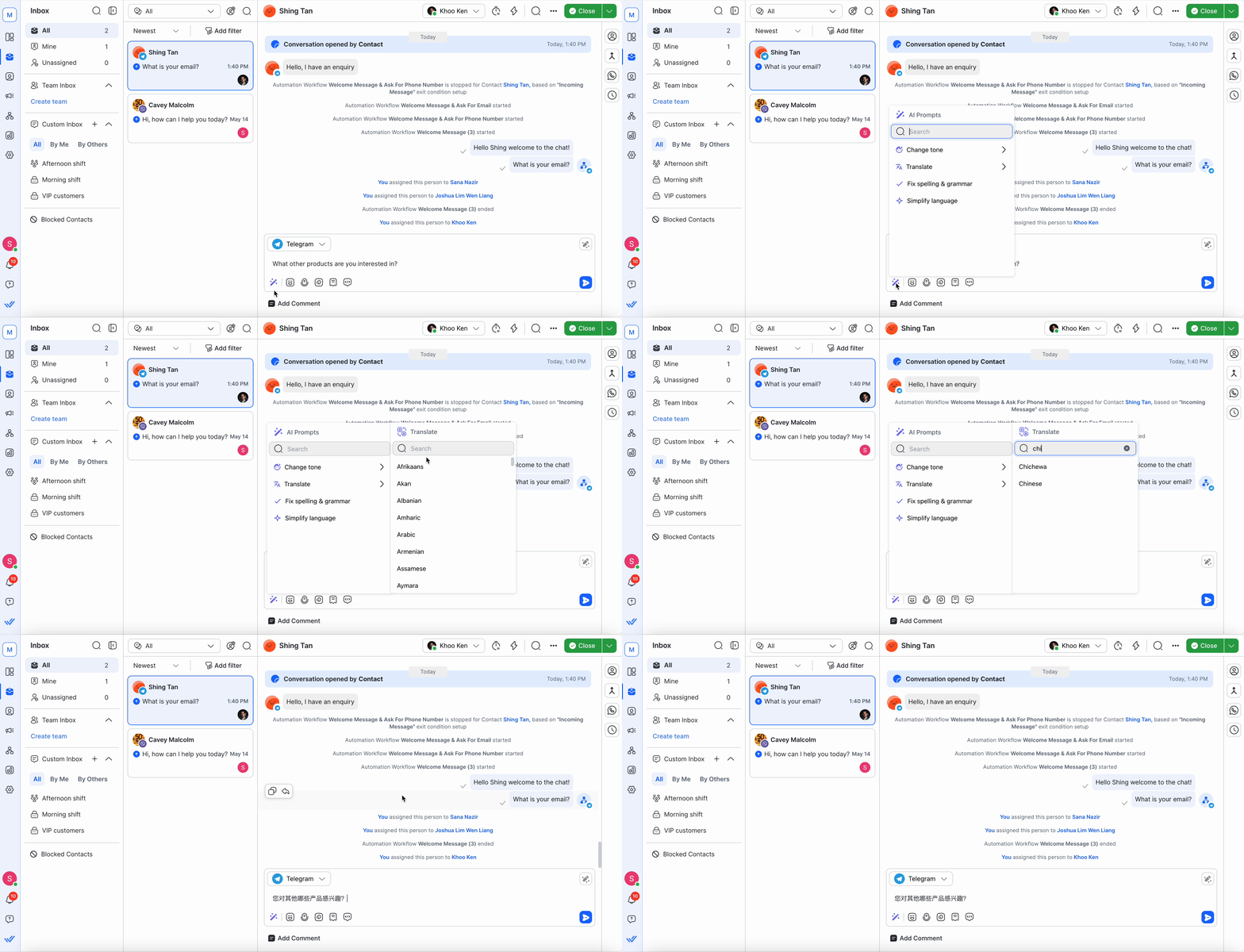
Moreover, tools like AI Assist can be a game-changer for providing agents with quick replies based on customer context. This rapid access to information allows agents to respond quickly and accurately to customer inquiries, enhancing response times and contributing to a more satisfying customer experience.
AI Assist also understands voice notes to generate relevant replies. For detailed review, agents can tap a Transcribe button on any inbound audio message to display a readable transcript inline.
Automation helps sales agents close deals faster, but you'll want to see the evidence and make any necessary improvements to your processes. Here's how respond.io helps businesses measure success.
Boost business results with analytics and lifecycle tracking
With any marketing and sales efforts, you need to track results to see what's working and what's not to continuously optimize tactics. SleekFlow's analytics are limited and it's not possible to track lead progress in stages.
Respond.io offers advanced analytics, customer lifecycle tracking and CRM integrations to improve customer experience throughout the entire funnel.
Get marketing performance insights with broadcast analytics
The most useful reporting tells leaders which conversations are creating revenue, not just which campaigns created replies. Teams should be able to see which ad or channel started the conversation, whether the contact moved through lifecycle stages and which sources are generating qualified follow-up instead of low-intent volume.
Managers also need to spot where conversion slows down after the first message. If response time slips, routing sends leads to the wrong team or a handoff happens without enough context, drop-off starts before purchase. Seeing those breaks by source helps teams fix the exact step that is leaking revenue.
Respond.io brings broadcast results, ad source context and lifecycle visibility together so marketing and sales managers can use reporting as an operating tool. They can shift budget toward channels that produce better conversations, tighten follow-up on stalled stages and recover conversions that would otherwise be lost between qualification and handoff.
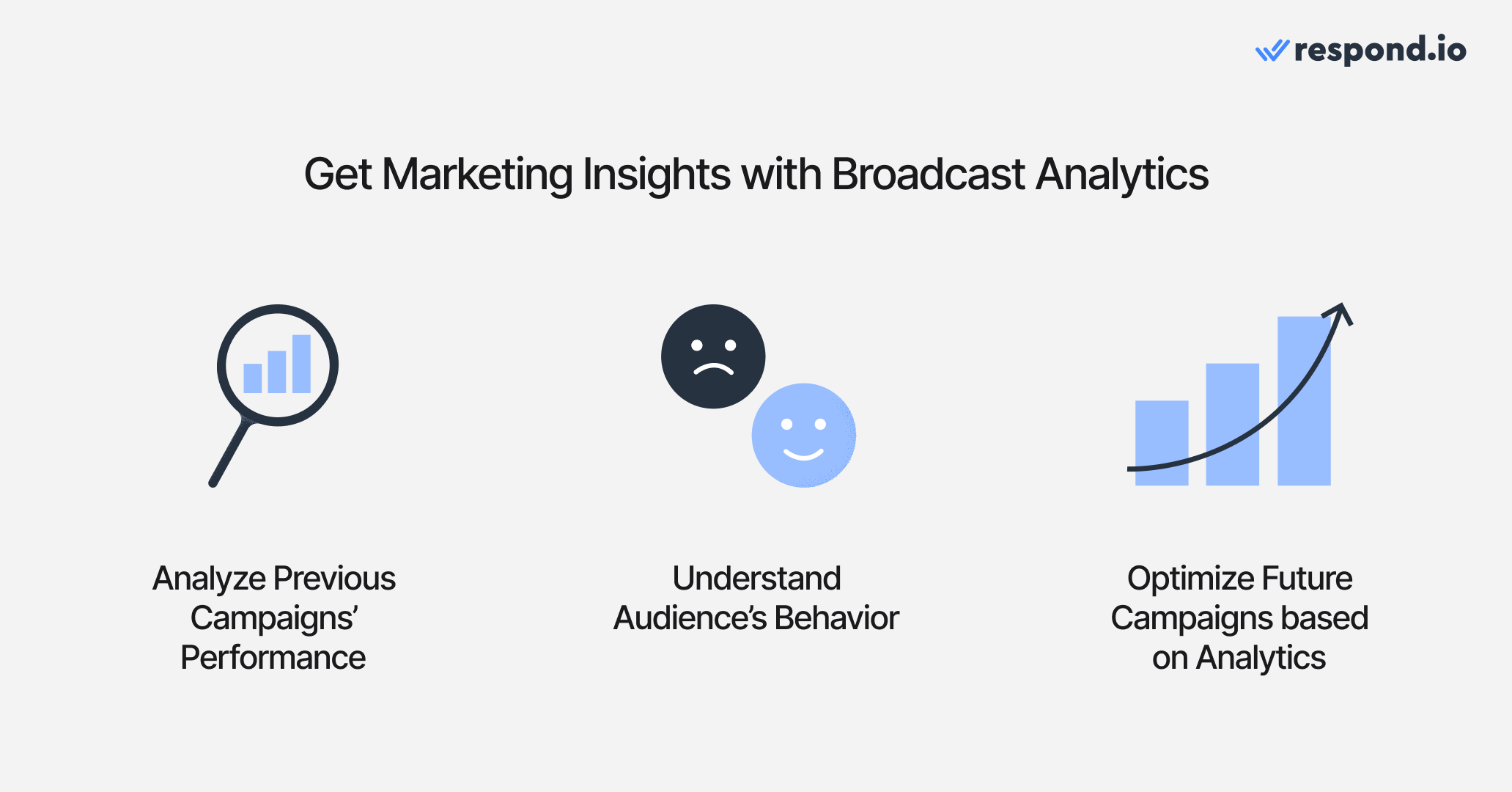
By analyzing the performance of past campaigns, businesses can identify campaigns that resonated with their audience and gain a deeper understanding of their audience's behavior and preferences. Then, they can optimize their messaging, targeting and channels accordingly.
Respond.io's lifecycle tracking takes this further by combining broadcast results, ad source context and funnel stage visibility in one place. That helps managers answer practical questions such as which campaigns are generating qualified conversations, which channels deserve more budget and where leads are stalling before purchase.
Instead of treating analytics as a report card, teams can use it to reallocate spend, adjust routing and tighten follow-up where revenue is being lost. This makes reporting more useful for day-to-day management decisions across marketing, sales and support.
Track the customer lifecycle through the full funnel
Respond.io gives sales and marketing teams enough native customer management to move faster inside the conversation. Agents can see full contact history, merged conversations across channels, lifecycle stages, tags, notes and assignment context in one place, which makes prioritization and follow-up easier during live conversations.
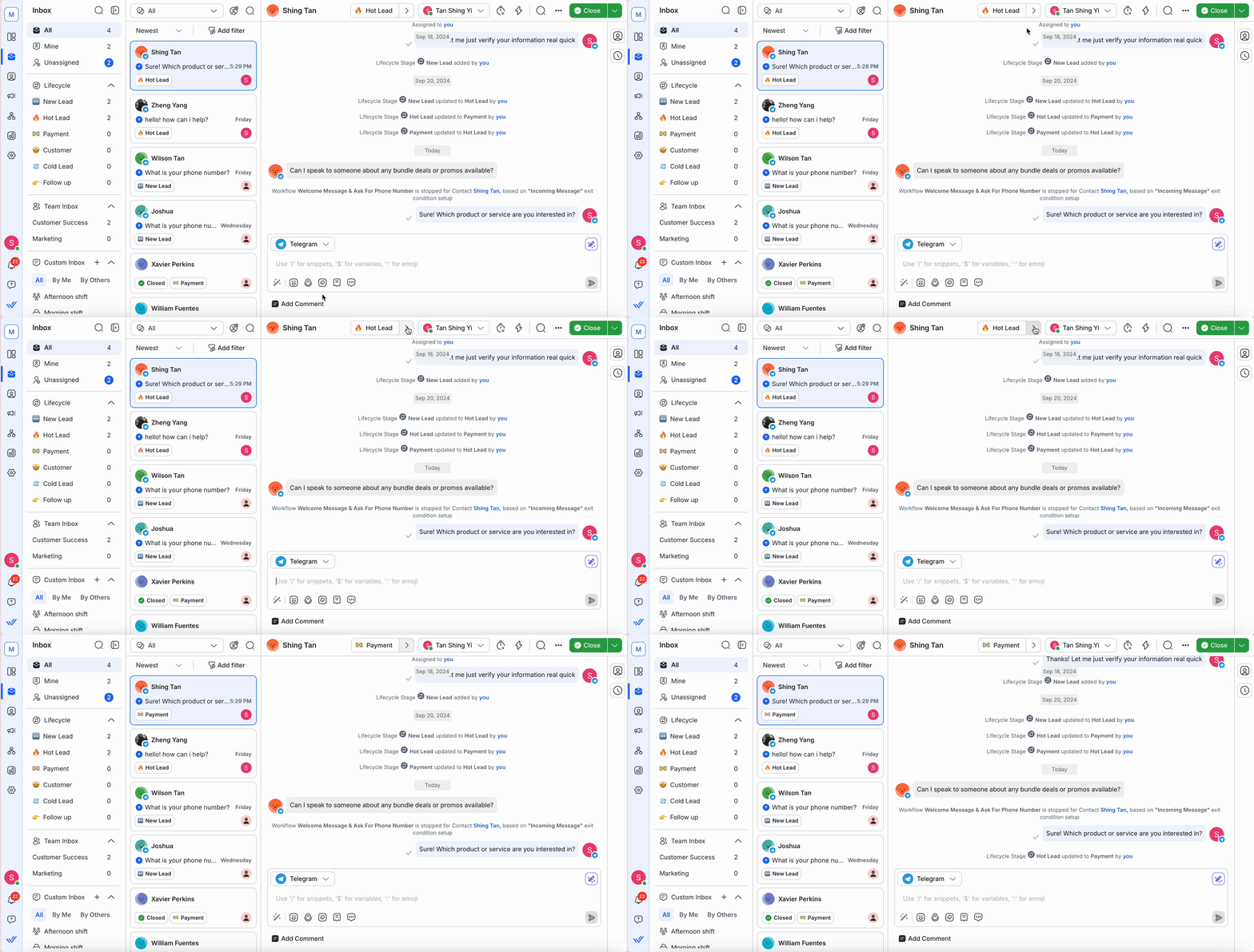
For many mid-market B2C teams, that means fewer handoffs and less tab switching in day-to-day execution. AI Agents and workflows can also update lifecycle stages, route by intent and escalate high-value opportunities so records stay current as conversations progress.
When a business already runs customer records, pipeline management or reporting from a separate system, HubSpot or Salesforce should remain the source of truth. Respond.io then becomes the execution layer where teams talk to customers, capture context and sync updates back to the CRM.
Enrich data with HubSpot, Salesforce and other integrations
Native HubSpot and Salesforce sync matters most when teams need customer context during live conversations, not after the fact. Agents can open a conversation, view the customer record, verify lifecycle status and update follow-up actions without jumping across tabs. That helps sales and support teams qualify faster, keep records cleaner and avoid losing context between channels.
For teams already using a CRM as the primary record system, this setup keeps conversation execution and record management aligned. AI Agents and workflows can capture details in the chat, update lifecycle stages and pass the latest context back to HubSpot or Salesforce so the next follow-up starts with accurate information.
Other use cases do not always need a native two-way sync. External triggers from platforms such as Shopify, WooCommerce or Magento are useful for campaign and follow-up moments like abandoned carts, order updates, restock alerts or re-engagement after a customer action. That gives mid-market B2C teams a practical mix of native CRM depth and connector-based flexibility without forcing every workflow into one system.
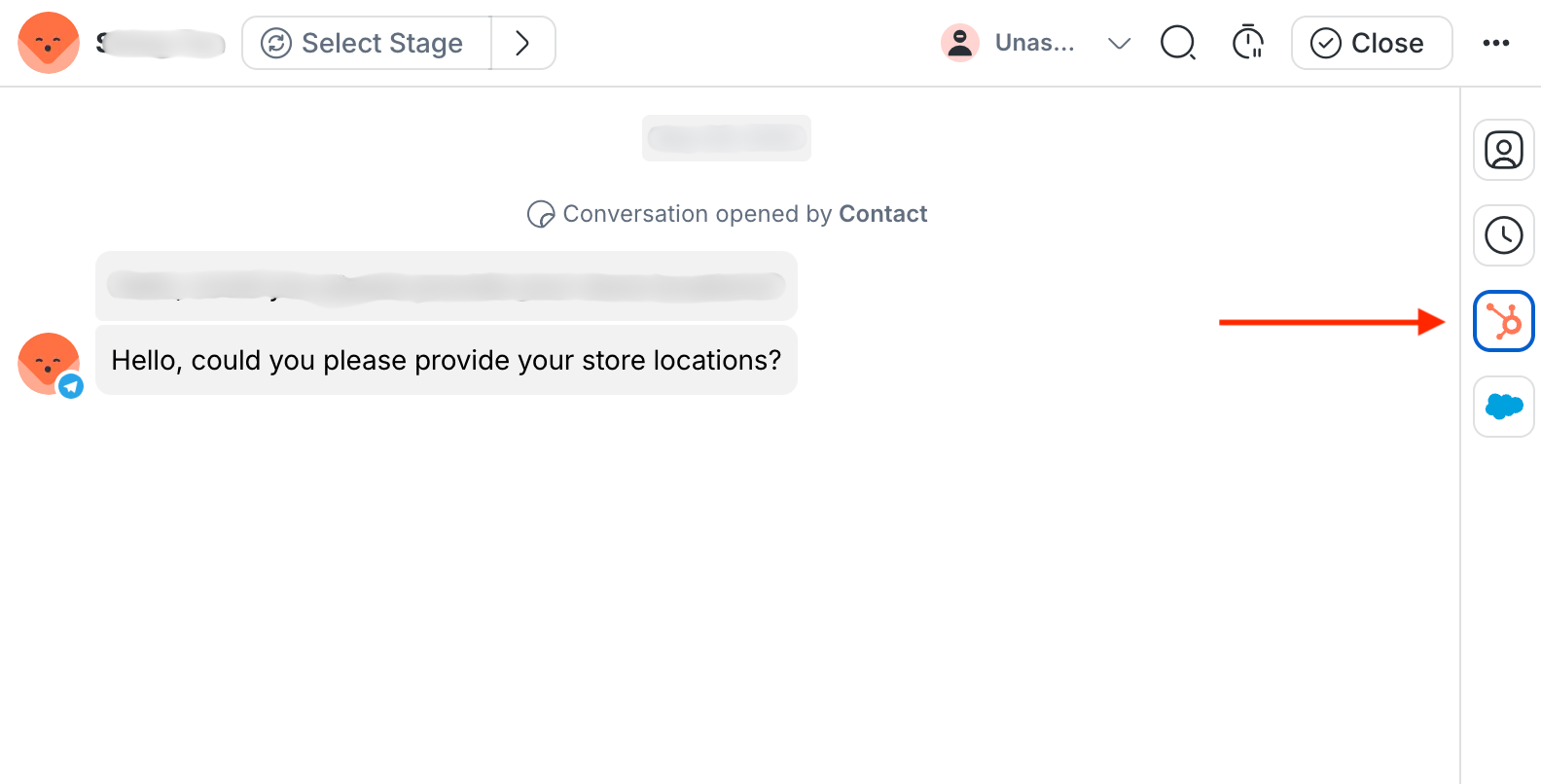
To integrate with other software, use Zapier or Make for quick connection with thousands of other platforms.
While SleekFlow also offers HubSpot integration, it's only available on the Premium plan and above.
Now that we've shown how respond.io allows you to measure success throughout the funnel, let's explore the benefits of using a reliable platform.
Achieve success with a reliable platform and customer support
Given that companies rely on platforms like SleekFlow and respond.io to manage their business operations and communicate with customers, it is critical that they offer reliable services and excellent customer support.
That said, SleekFlow's customer support is only reachable on Mondays to Fridays, 9 am to 6 pm Hong Kong Time (HKT). If there are critical issues outside these hours, businesses cannot contact them.
Additionally, its platform cannot handle high volumes of messages. It fails to display incoming messages in real time and tends to slow down when it receives too many messages at the same time. Now, let's look at how respond.io is more reliable.
Robust platform stability for consistent operations
Platform reliability is essential for smooth operations, as any downtime or disruptions can negatively impact customer satisfaction and harm a brand's reputation.
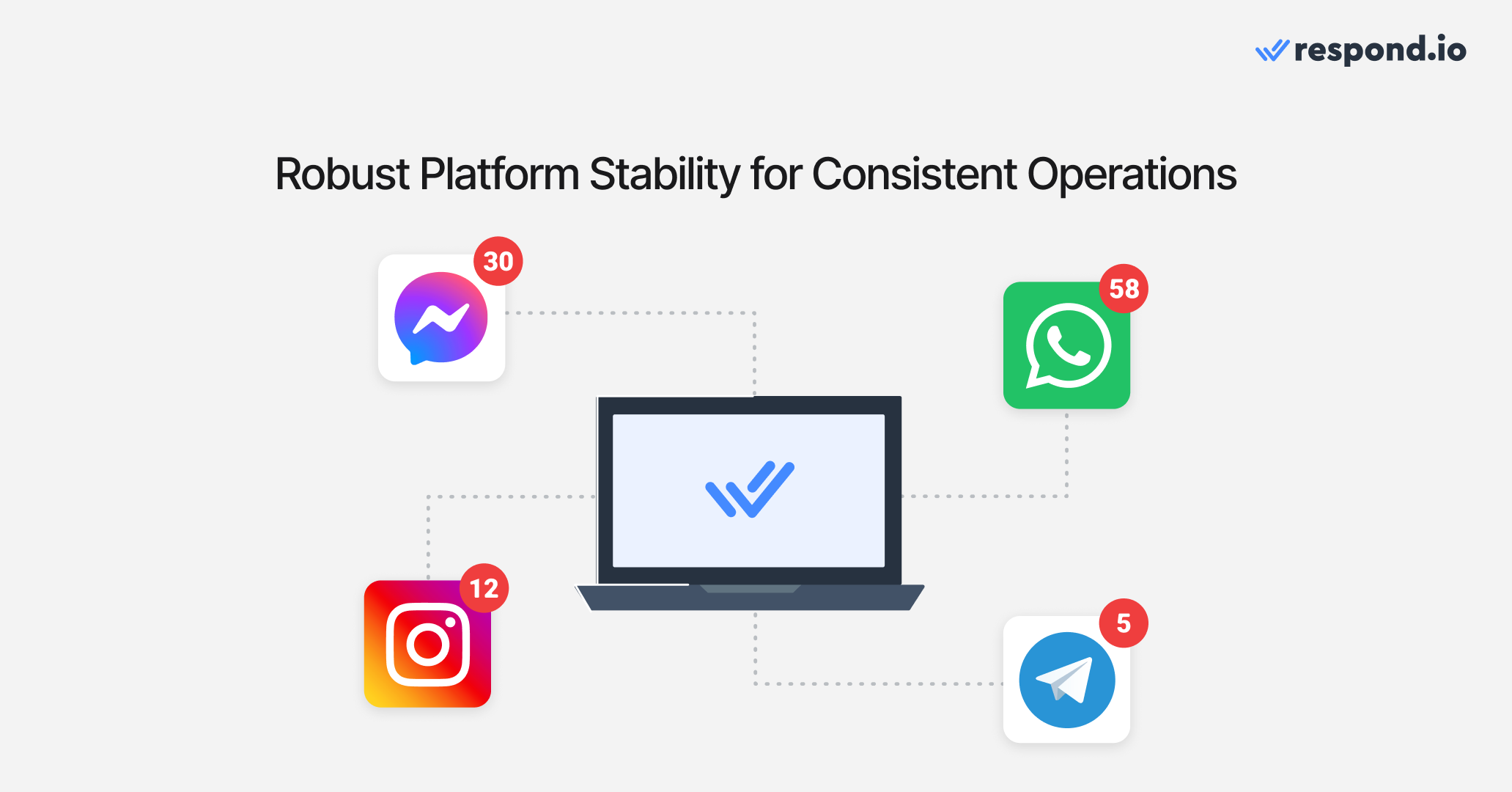
Unlike SleekFlow, respond.io is a dependable platform designed to handle high volumes of messages without interruption, guaranteeing 99.999% uptime. With this, businesses can maintain consistent operations and focus on communicating with customers.
Get speedy assistance with 24/5 conversational support
Responsive and efficient customer support is as important as having a stable platform. That's why respond.io's support team is available 24 hours a day via chat or call, Monday to Friday, to assist you in multiple languages, including English, Spanish, Chinese and Arabic. On weekends, chat with our AI agent anytime.
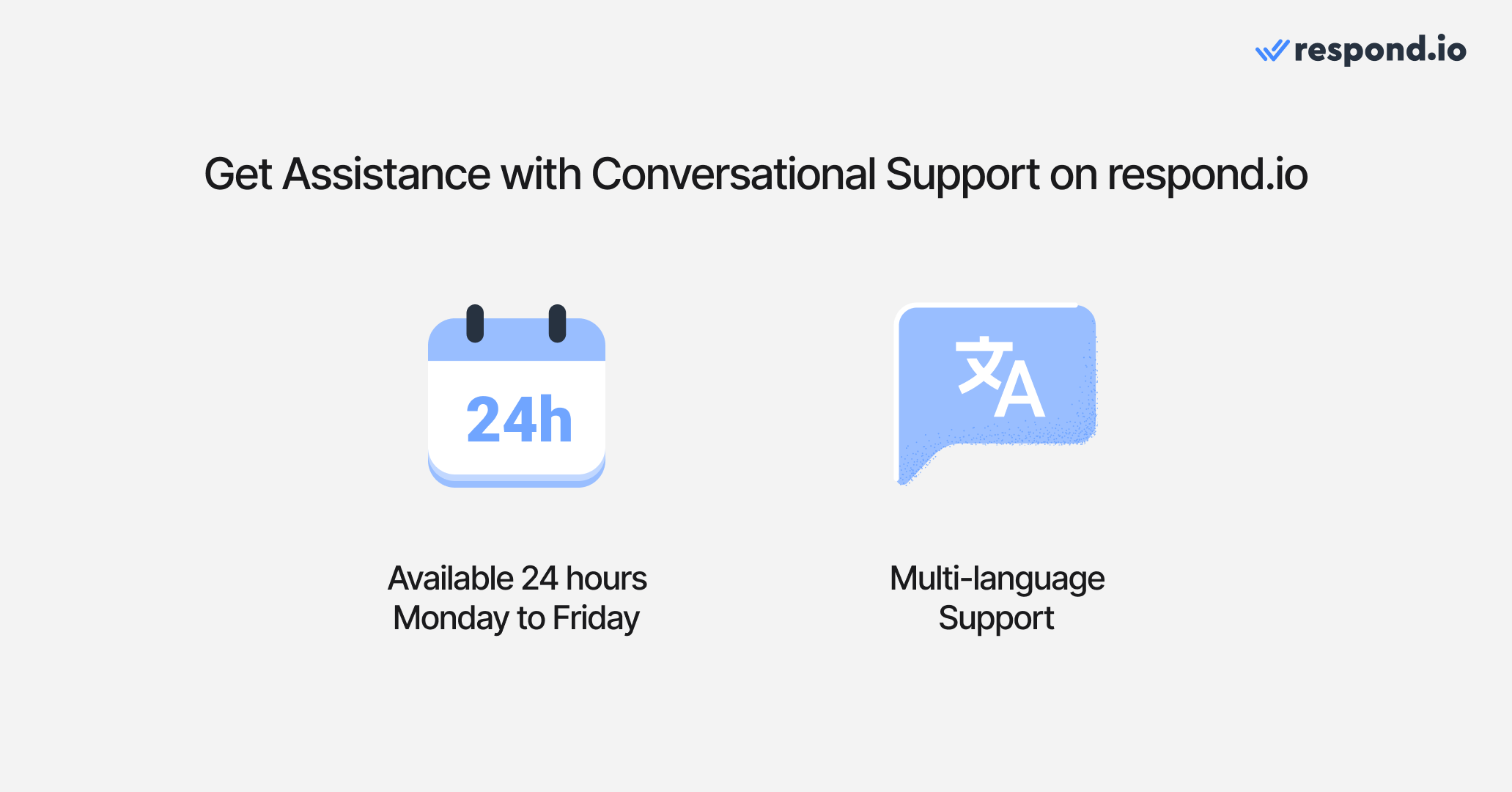
You can get general assistance with navigating the platform, help with billing issues, troubleshooting bugs and more. Respond.io's comprehensive support resolves any issues you encounter, giving you the peace of mind to focus on growing your business and providing exceptional customer experiences.
Get dedicated support from a Customer Success Manager
When your enterprise has complex needs, a dedicated customer success manager can make all the difference. Our experts specialize in providing personalized support for planning and setting up Workflows, integrating with third-party tools and more.
With a customer success manager on your side, you can tap into the full potential of the platform and achieve success like many of our satisfied customers. Now, let's compare respond.io and SleekFlow pricing plans to determine which one provides the most value.
The best solution for maximum value
If your costs and operations must stay predictable as Monthly Active Contacts grow, compare what happens at the limit: respond.io keeps messaging and automation running, while SleekFlow can stall key functions until you upgrade.
This section compares SleekFlow and respond.io's entry and mid-level plans to help you determine which platform offers the most value. Both tools price by Monthly Active Contacts, but pricing at scale differs: on respond.io, campaigns can continue operating while you manage overages; on SleekFlow, hitting limits can pause messaging and automation, creating downtime that can directly reduce lead conversions.
Respond.io vs SleekFlow: which platform offers better value?
For mid-market B2C teams, Monthly Active Contacts pricing is only predictable when buyers test three things before comparing plan names. First, estimate how fast active contacts will grow when campaigns expand across WhatsApp and other key messaging, social, voice and email channels. A low starting price can stop being efficient once more campaigns, follow-up and remarketing pull more contacts into the active base.
Second, check the costs around official WhatsApp usage. Buyers should confirm whether the platform charges an extra connection fee, whether Meta fees are passed through or marked up and which capabilities are gated into higher plans. Respond.io does not charge an extra fee for official WhatsApp API access and keeps Meta fees at zero markup, which makes budget planning easier.
Third, check what happens when limits are reached. If messaging, AI Agents or workflows pause at the limit, campaigns can slow down, follow-up can stall and hot leads can sit without a reply during peak buying windows. Respond.io uses Monthly Active Contacts pricing with Starter at $99 per month, Growth at $199, Advanced at $349 and Enterprise custom, plus a 7-day free trial, so buyers can evaluate cost against day-to-day operating impact before switching.
SleekFlow alternative: Why respond.io?
For mid-market B2C teams replacing SleekFlow to handle higher conversation volume, more channels and deeper automation, respond.io is a strong fit. It supports the highest number of channels while preventing siloed conversations across channels.
Its advanced AI and automation capabilities enable businesses to streamline their processes in one place, helping them achieve results quickly with significantly less effort.
Most importantly, respond.io's high uptime can meet the demand of larger businesses that receive high volumes of messages. It provides free high-quality support 24/5 to help customers whenever they need it, while Enterprise users have a dedicated customer success manager.
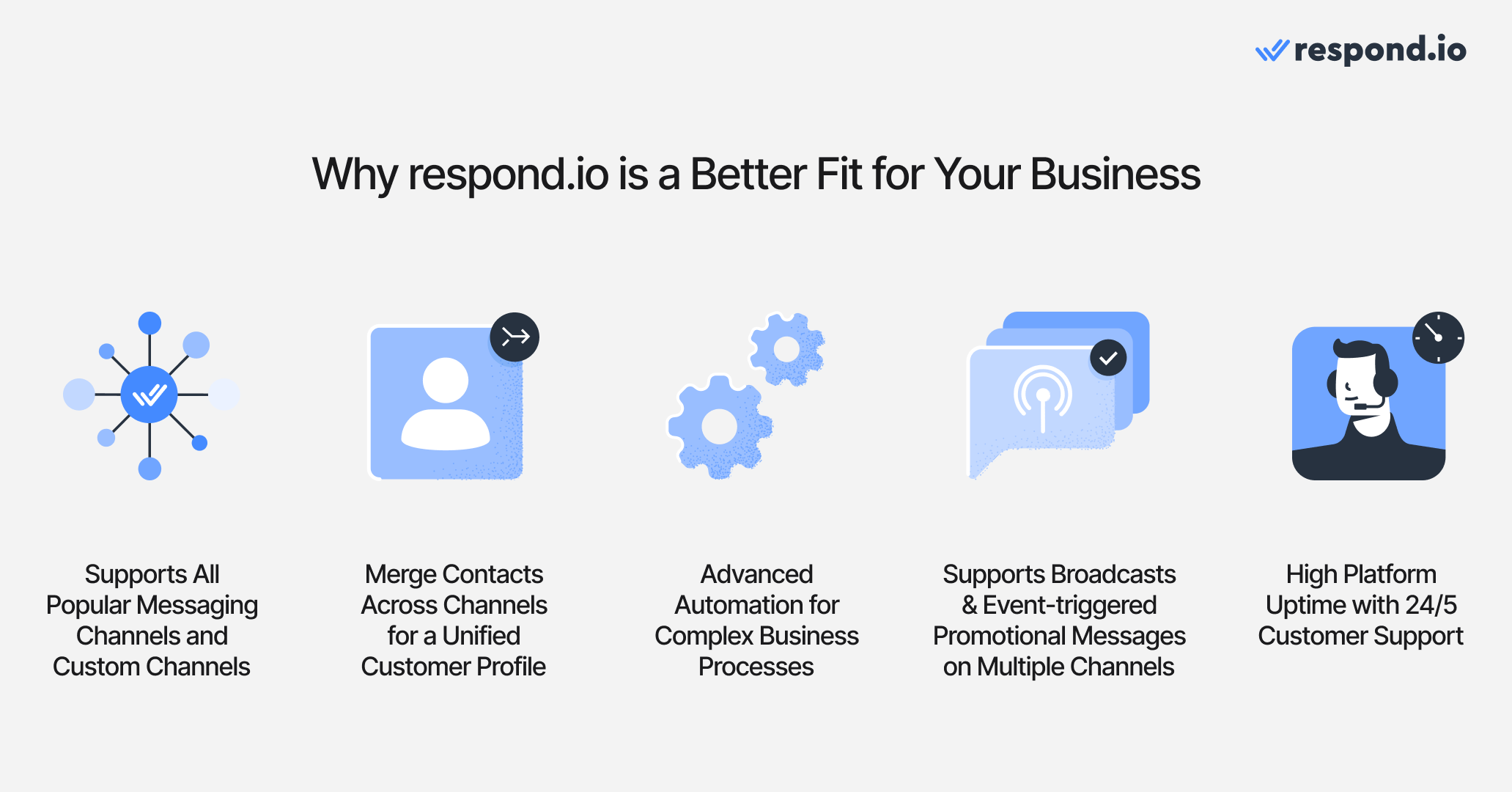
With all this in hand, businesses can create better customer experiences and build customer loyalty to increase their revenue.
If you only need basic chat handling on a small number of channels with simple rules, the added depth may be more than you need.
If you're considering migrating from SleekFlow to respond.io, contact our support team for help. You'll be able to effortlessly move all your channels, including your WhatsApp API accounts, while maintaining your existing WhatsApp API number. Contact our support team to discuss what's involved — we'll guide you through the process so the switch doesn't disrupt your active conversations or campaigns.
Verdict: choose respond.io or SleekFlow?
Choose respond.io when scaling multi-channel sales and support requires automation-driven routing, lifecycle visibility and reliability under high volume; choose SleekFlow when your team is chat-first with simpler workflows and lower volume.
If conversation spikes regularly, respond.io is better equipped to keep routing, automation and follow-up moving without adding manual work.
If you need only a lighter shared inbox and basic workflows across fewer channels, SleekFlow may be enough.
When pricing limits can pause messaging or automation, the operational cost can show up as slower follow-up and lost leads, so buyers should compare behavior at scale, not just entry plan price.
Ready to get started with respond.io? Sign up for a free trial and experience powerful automation like no other platform!
Turn customer conversations into business growth with respond.io. ✨
Manage calls, chats and emails in one place!
FAQs about SleekFlow Alternatives
Which businesses is Sleekflow best for?
A lighter chat-first inbox is usually best for small teams with low message volume; SleekFlow tends to fit when you have fewer than 10 agents and straightforward processes.
How does Sleekflow work?
Sleekflow is a subscription-based platform that connects popular communication channels including WhatsApp and Facebook Messenger to a single inbox.
Why do I need a Sleekflow alternative?
Sleekflow has recently nearly doubled its prices without adding significant value to its features. Additionally, it does not support TikTok, a popular channel for marketing and sales. The platform has been reported to be unstable under high volumes of messages, so businesses operating at scale should consider an alternative.
What features should you look for in a customer conversation management platform?
Look for features that reduce manual work and help teams move leads faster from first message to purchase. For mid-market B2C teams, the biggest decision points are support for WhatsApp, Instagram, Facebook Messenger, TikTok, Telegram, LINE, Viber, WeChat, email and voice, plus AI Agents that can qualify leads, update lifecycle stages, route by intent and generate handover summaries.
It also helps to evaluate broadcast targeting, merged conversation history, native HubSpot or Salesforce sync, lifecycle reporting and migration support for official WhatsApp API numbers. Pricing should be reviewed through the full Monthly Active Contacts cost, not just the headline plan fee.
Can teams keep their WhatsApp API number when migrating, and what does the switch usually involve?
In most cases, yes. Teams can usually keep the same official WhatsApp API number while reconnecting their channels to a new customer conversation management platform. A typical migration includes reconnecting channels, mapping users and permissions, rebuilding workflows, checking integrations and testing routing before launch.
Teams should also review contact records and conversation continuity so agents keep context during the switch. With structured migration support, the move can happen without interrupting active sales, marketing and support conversations.
Does Sleekflow or respond.io have better customer support?
Sleekflow only offers email support for the Pro plan and is only reachable via chat during Hong Kong office hours for customers on higher tier plans. Respond.io offers 24/5 customer support and 24-hour AI chat over the weekends.
How much does it cost to use WhatsApp API with Sleekflow?
Sleekflow charges $15 per WhatsApp number per month to use WhatsApp API.
What is the best choice for WhatsApp-heavy teams
Respond.io is a strong fit for mid-market B2C teams that rely on WhatsApp for lead capture, broadcasts and sales follow-up. It combines official WhatsApp API access, AI Agents, lifecycle routing and WhatsApp Business Calling in the same customer conversation management platform.
It also gives buyers clearer cost control because there is no extra fee for official WhatsApp API access and Meta fees are passed through at zero markup. For teams that need to scale campaigns without losing number continuity or conversation context, that makes it easier to switch and keep revenue moving.
How should teams compare pricing between customer conversation management platforms?
Start with how Monthly Active Contacts will grow as campaigns expand across WhatsApp, Instagram, Facebook Messenger, TikTok, email and voice. Then check the hidden cost drivers: extra fees for official WhatsApp API access, any markup on Meta fees, feature gating for AI Agents, advanced workflows or CRM integrations and what happens when plan limits are reached.
The real comparison is not just the entry plan. Buyers should compare whether messaging and automation continue running at the limit, how much manual work the team must absorb on lower plans and whether the platform offers a 7-day free trial to validate fit before switching.
What should buyers test before switching platforms
Before switching, buyers should test the workflows that affect revenue every day: capturing leads from ads, qualifying them with AI Agents, routing by team or intent, moving from chat to voice and syncing context to HubSpot or Salesforce.
They should also test broadcasts, template approval flow, conversation merge, lifecycle updates and what happens when usage limits are reached. A short trial should confirm that campaigns, follow-up and handoffs keep moving without extra manual work.
Further reading
If you're interested in learning more about respond.io, here are some readings that may pique your interest.


