
















 Elektronik
 Mode & Pakaian
 Mebel
Mebel Perhiasan dan Jam Tangan
 Kegiatan Setelah Sekolah
 Olahraga & Kebugaran
 Pusat Kecantikan
 Klinik Gigi
 Klinik Medis
 Layanan Pembersihan Rumah & Pembantu
 Fotografi & Videografi
 Dealer Mobil
 Agen Perjalanan & Operator Tur


TL;DR — Titik kritis yang sering dialami tim penjualan WhatsApp, dan cara mengatasinya
respond.io dibangun untuk titik kritis — ketika tim B2C segmen menengah menangani 50+ percakapan WhatsApp per hari di antara beberapa agen dan sistem mulai kehilangan prospek, respond.io menutup celah dengan Inbox bersama, agen AI, routing dan visibilitas untuk manajer
WhatsApp menjaring pembeli berniat tinggi — pelanggan biasanya memulai percakapan setelah melihat iklan, tautan atau kode QR, sehingga diskusi penjualan dimulai saat minat sudah tinggi
Titik kritis bukan tentang WhatsApp — melainkan tentang infrastruktur. Ketika percakapan tersimpan di satu ponsel dan tindak lanjut bergantung pada ingatan, tim kehilangan prospek yang seharusnya mereka tutup
Alur kerja inti yang dapat diskalakan — tangkap prospek di WhatsApp, kualifikasikan dengan agen AI yang tetap aktif sepanjang percakapan, rutekan ke agen yang tepat berdasarkan wilayah, bahasa dan lini produk, beri visibilitas kepada manajer dan tutup penjualan di dalam chat
Pengaturan WhatsApp menentukan batas kemampuan — WhatsApp Business App cocok untuk tim kecil; WhatsApp Business API dengan platform seperti respond.io memungkinkan pengalihan, agen AI, pelacakan SLA dan integrasi CRM untuk tim penjualan multi-agen
Bisnis nyata membuktikannya — SchuVar Tours memangkas siklus penjualan mereka hingga 60%, Automax menghasilkan 6.000–8.000 prospek baru setiap bulan dan EMAX Beauté meningkatkan janji yang dipesan hingga 18x
Menjual di WhatsApp di 2026 berarti mengubah pesan masuk menjadi percakapan penjualan yang terstruktur yang mengkualifikasi prospek, mendorong kesepakatan maju dan menutup transaksi di dalam chat.
Kebanyakan bisnis sudah menerima pesan WhatsApp dari pelanggan yang berminat. Seseorang melihat posting Instagram, mengklik tautan atau mendengar tentang Anda dari seorang teman lalu mengirim pesan singkat. "Hi, berapa harganya?" Ada peluang di sini, tetapi seringkali eksekusinya yang mengecewakan.
Banyak tim masih memperlakukan WhatsApp seperti Inbox santai. Seorang tenaga penjualan membalas saat mereka melihat pesan. Orang lain ikut menanggapi kemudian. Tindak lanjut bergantung pada ingatan. Itu berfungsi ketika ada sepuluh pesan sehari tetapi runtuh ketika jumlahnya dua ratus.
Perusahaan yang menganggap WhatsApp sebagai saluran penjualan inti menjalankannya secara berbeda. Percakapan ditangkap secara sengaja, prospek dikualifikasi sejak dini dan transaksi bergerak maju di dalam chat alih-alih menghilang menjadi sunyi. Panduan kami menjelaskan bagaimana tim B2C berperforma tinggi menjalankan penjualan WhatsApp, dan apa yang rusak saat mereka mencoba skala tanpa infrastruktur yang tepat.
Mengapa WhatsApp menghasilkan volume lebih besar daripada yang dapat ditangani pengaturan dasar
WhatsApp menghasilkan volume penjualan yang lebih besar daripada yang dapat ditangani pengaturan dasar karena fitur yang membuat percakapan cepat — balasan instan, tanpa hambatan formulir, percakapan bersamaan — juga berarti tim bisa naik dari 10 menjadi 200 pertanyaan per hari tanpa infrastruktur pengalihan, kepemilikan atau pelacakan yang diperlukan untuk volume itu.
Kebanyakan saluran penjualan memperkenalkan penundaan. Seorang prospek mengisi formulir, mengirim email atau meminta panggilan balik. Saat tenaga penjualan merespons, pelanggan sudah berpindah atau memilih orang lain.
WhatsApp menutup celah itu. Pertanyaan dan jawaban terjadi pada saat yang sama:
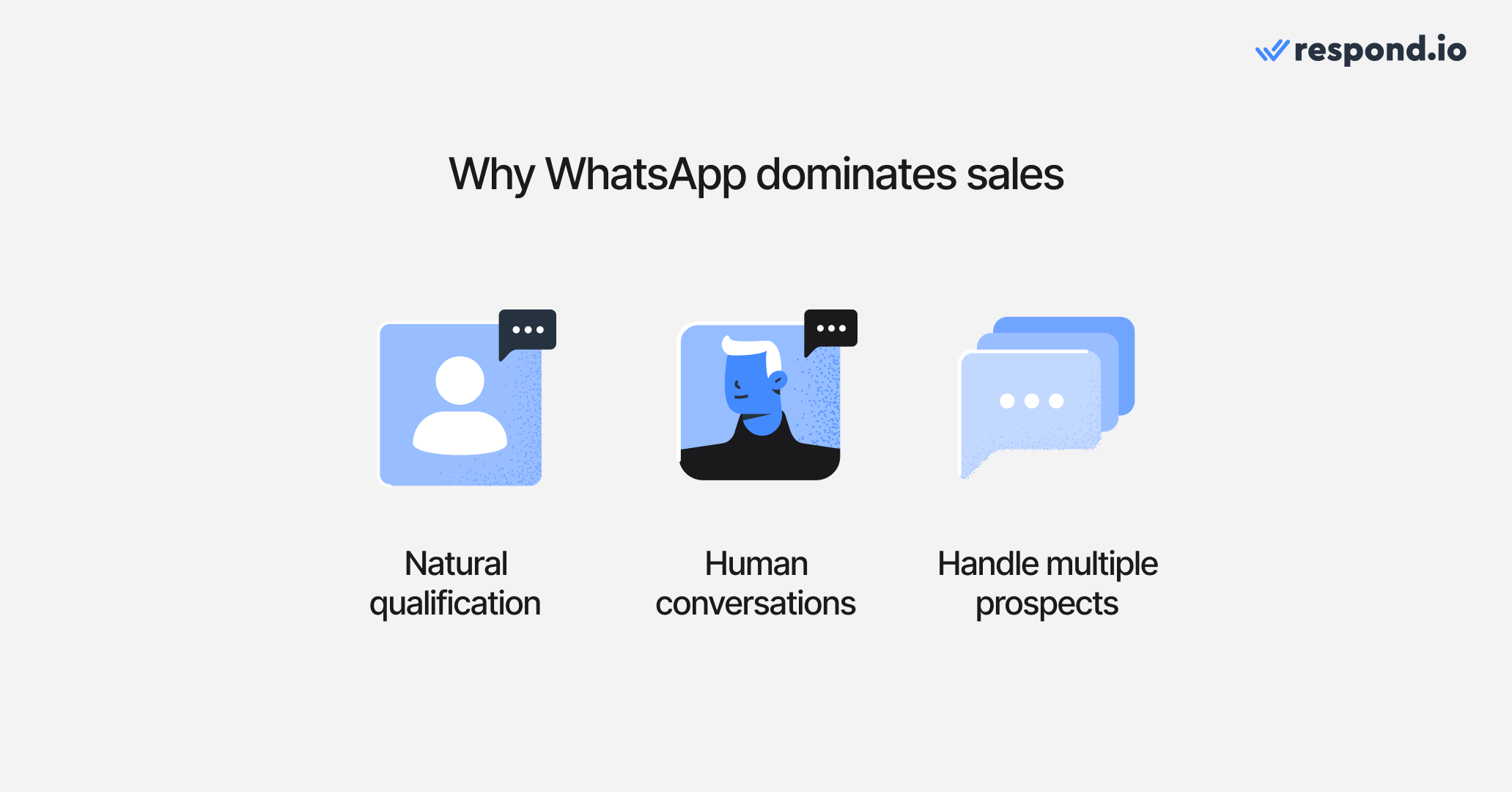
Pertama, kualifikasi terjadi secara alami. Alih-alih meninjau kolom formulir atau menjadwalkan panggilan, tenaga penjualan dapat mengetahui apa yang diinginkan pelanggan dalam beberapa pesan pertama.
Kedua, percakapan terasa manusiawi. Pengiriman pesan terasa akrab. Prospek mengajukan pertanyaan seperti saat mereka bertanya kepada teman: “Apakah ini tersedia dalam warna hitam?” "Bisakah saya memesan besok?" “What’s the price difference?”
Third, salespeople can manage several prospects at once. A phone call locks one salesperson into one conversation. Messaging lets them move between multiple buyers without losing context.
These properties create real sales leverage. But they only compound when the team behind the channel has the routing depth, AI support and manager visibility to handle the volume those properties generate. Without that infrastructure, the same high-intent leads that make WhatsApp valuable become the conversations that fall through the cracks.
What you need before selling on WhatsApp
To sell effectively on WhatsApp, you need two things: the right account setup and a sales process that works within WhatsApp's messaging rules.
Many companies begin by answering WhatsApp messages on a phone. That approach works when conversation volume is low. Someone checks the inbox, replies when they notice a message and hopes the customer is still there.
Once inquiries begin coming from ads, social media or referrals, that system breaks down. These are the two things that matter most:
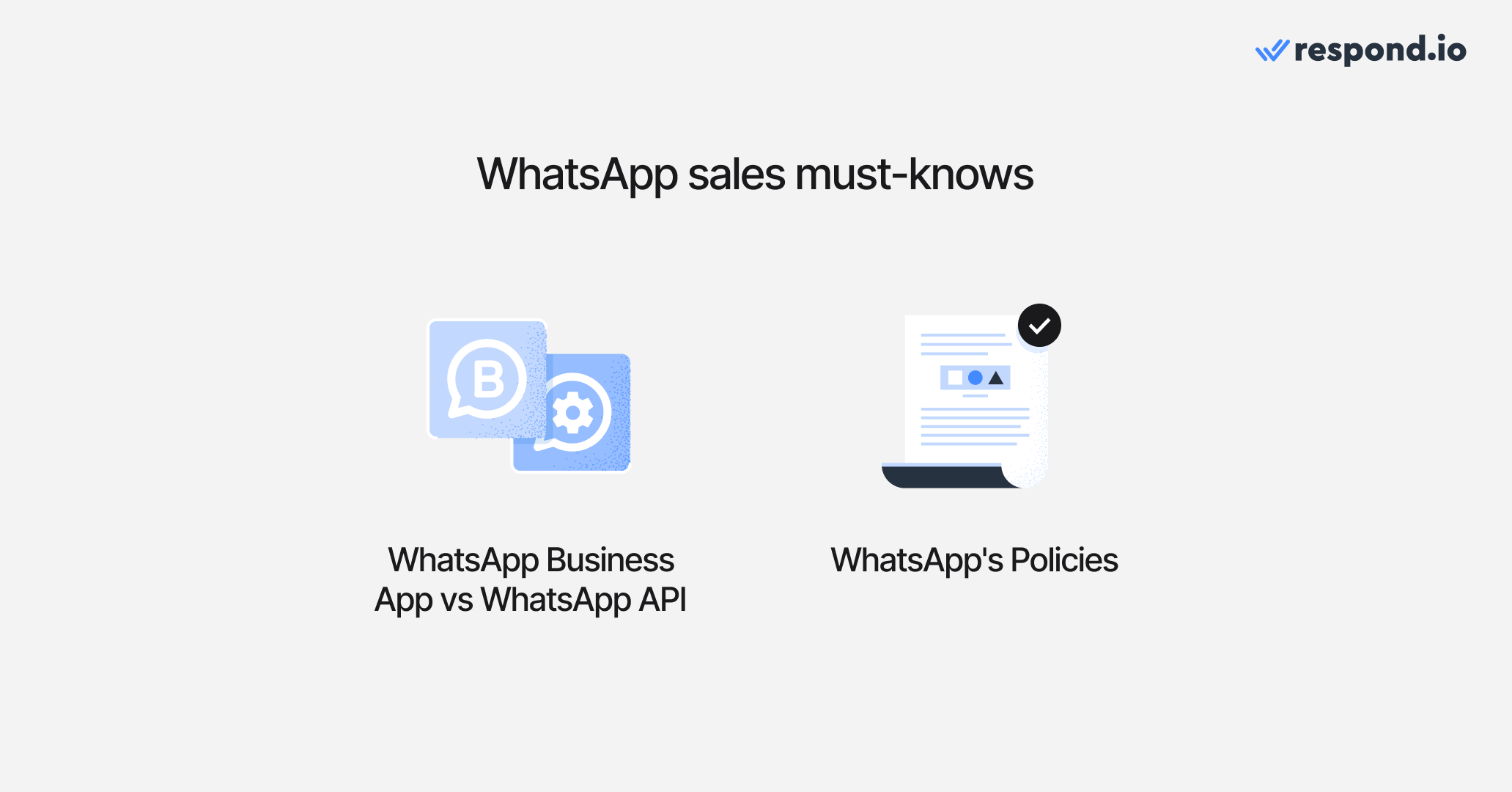
These are the two things that matter most:
Which WhatsApp product you use
Understand the rules that affect your sales flow
WhatsApp Business App vs WhatsApp Business API
The WhatsApp Business App is best for solo or tiny teams with low message volume, while the WhatsApp Business API is best for multi-agent teams that need routing, automation and tracking.
Use the WhatsApp Business App if…
You are basically running WhatsApp sales as a single-person inbox.
You have one main seller replying
You handle low daily inquiry volume (you can realistically respond fast without help)
Your sales process is simple (few steps, minimal follow-up)
You do not need a CRM to reflect every conversation
Apa yang dikerjakan dengan baik: balasan cepat, profil bisnis dasar, organisasi sederhana
What it struggles with: ownership, tracking and scaling beyond one device.
Use the WhatsApp Business API if…
WhatsApp is already a serious lead channel and you need it to behave like one.
Leads come in from ads, your website or social consistently
Multiple reps need to reply and share context
You need routing (by region, product, language or availability)
You want automation for qualification and follow-up
You need a record of conversations that survives staff changes
What it does well: multi-agent conversations, automated routing, CRM integration and reliable tracking of leads and sales activity.
What it struggles with: it cannot be used directly like an app and requires a platform to operate day to day.
Businesses usually run the API through a WhatsApp Business Solution Provider such as respond.io, which offers the official WhatsApp API without additional platform markup on messaging fees beyond what Meta charges. Critically, respond.io is not just a pass-through for the API. It adds the operational layer that makes the API usable at scale: a shared inbox where agents collaborate, configurable routing workflows that assign conversations based on language, region and product line, AI agents that stay active throughout each conversation and a manager dashboard that tracks SLA compliance and agent performance across the team. This allows mid-market B2C sales teams to run WhatsApp as a structured revenue channel rather than a busy group inbox.
Ubah percakapan menjadi pelanggan dengan WhatsApp API resmi respond.io ✨
Manage WhatsApp calls and chats in one place!
3 Key WhatsApp rules that affect your sales
Three WhatsApp rules directly affect how your sales funnel runs: opt-in requirements determine lead quality at entry, the 24-hour window defines your active selling period, and message templates control how you re-engage prospects after that window closes. Getting these wrong doesn't just affect compliance. It affects conversion.
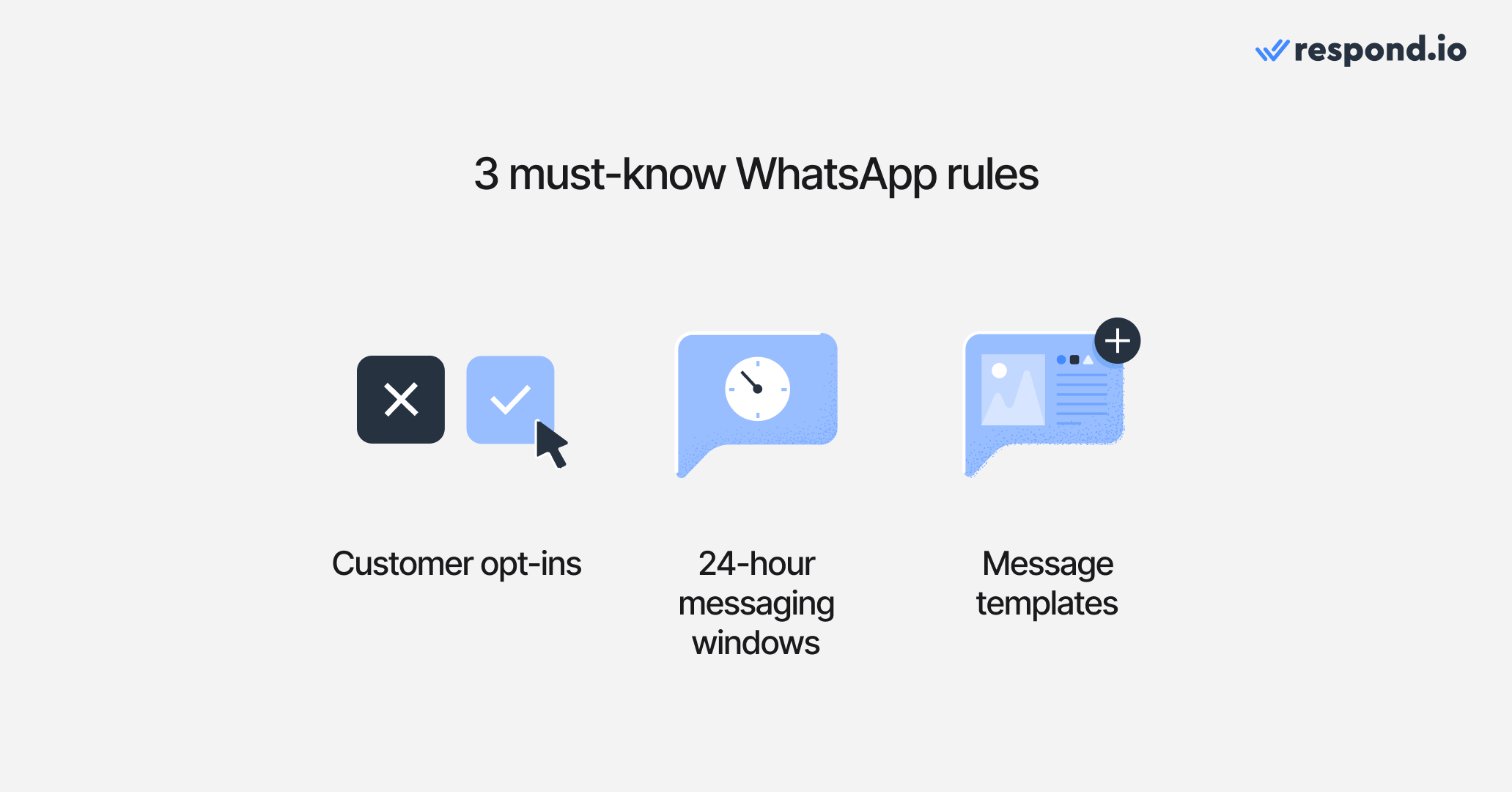
Sales teams do not need to memorize the entire WhatsApp policy. In practice, three rules influence almost every WhatsApp sales workflow: how customers opt in, how long conversations stay open and how businesses restart conversations after the window closes.
Rule #1: Customers must opt in before you message them
Businesses cannot start WhatsApp conversations with customers unless the customer has initiated contact or explicitly opted in. In practice, most opt-ins happen when someone clicks a Click-to-WhatsApp ad, taps a chat button on your website, scans a QR code or follows a direct messaging link.
This rule is actually beneficial for sales teams. Because the customer starts the conversation, the messages you receive are usually high-intent inquiries from people who already want information, pricing or availability. That makes WhatsApp leads very different from cold outreach channels.
On respond.io, opt-in entry points like Click-to-WhatsApp ads and QR codes are tracked with lead source attribution, so teams know which campaigns are generating the highest-intent conversations, not just the highest volume.
Rule #2: The 24-hour messaging window is your active sales window
Once a customer sends a message, your team can respond freely for the next 24 hours. During this period the conversation behaves like a normal chat, allowing salespeople to answer questions, qualify the lead and move the discussion toward a purchase.
Most WhatsApp sales activity happens during this window because the conversation is immediate and personal. Prospects can ask questions, compare options and make decisions without switching channels or waiting for a reply hours later. On respond.io, SLA tracking monitors whether agents are responding within the window and flags conversations at risk of going cold before the 24 hours expire.
Rule #3: Message templates reopen conversations later
If the 24-hour window closes and you want to contact the customer again, you must use WhatsApp message templates. These are pre-approved messages designed for follow-ups, confirmations, reminders or updates.
Templates allow businesses to restart conversations while staying compliant with WhatsApp's policies. In practice, they are often used to check back with interested prospects, confirm bookings or send updates that bring customers back into an active conversation. On respond.io, teams create, submit and manage approved templates inside the same shared inbox they use for live conversations, so follow-up workflows can be triggered automatically based on lifecycle stage rather than relying on agents to remember.
Cara menjual di WhatsApp dalam 6 langkah
Selling on WhatsApp works best when conversations follow a simple system: capture interested prospects, qualify them quickly, assign the right salesperson, follow up consistently and move the deal toward a decision inside the chat.
The six steps below show how teams turn WhatsApp inquiries into qualified leads, active deals and completed sales.
1. Capture high-intent leads into WhatsApp
WhatsApp sales begins by deliberately directing interested prospects into a conversation. Businesses commonly use Click-to-WhatsApp ads, website chat links or QR codes that open a WhatsApp chat instantly.
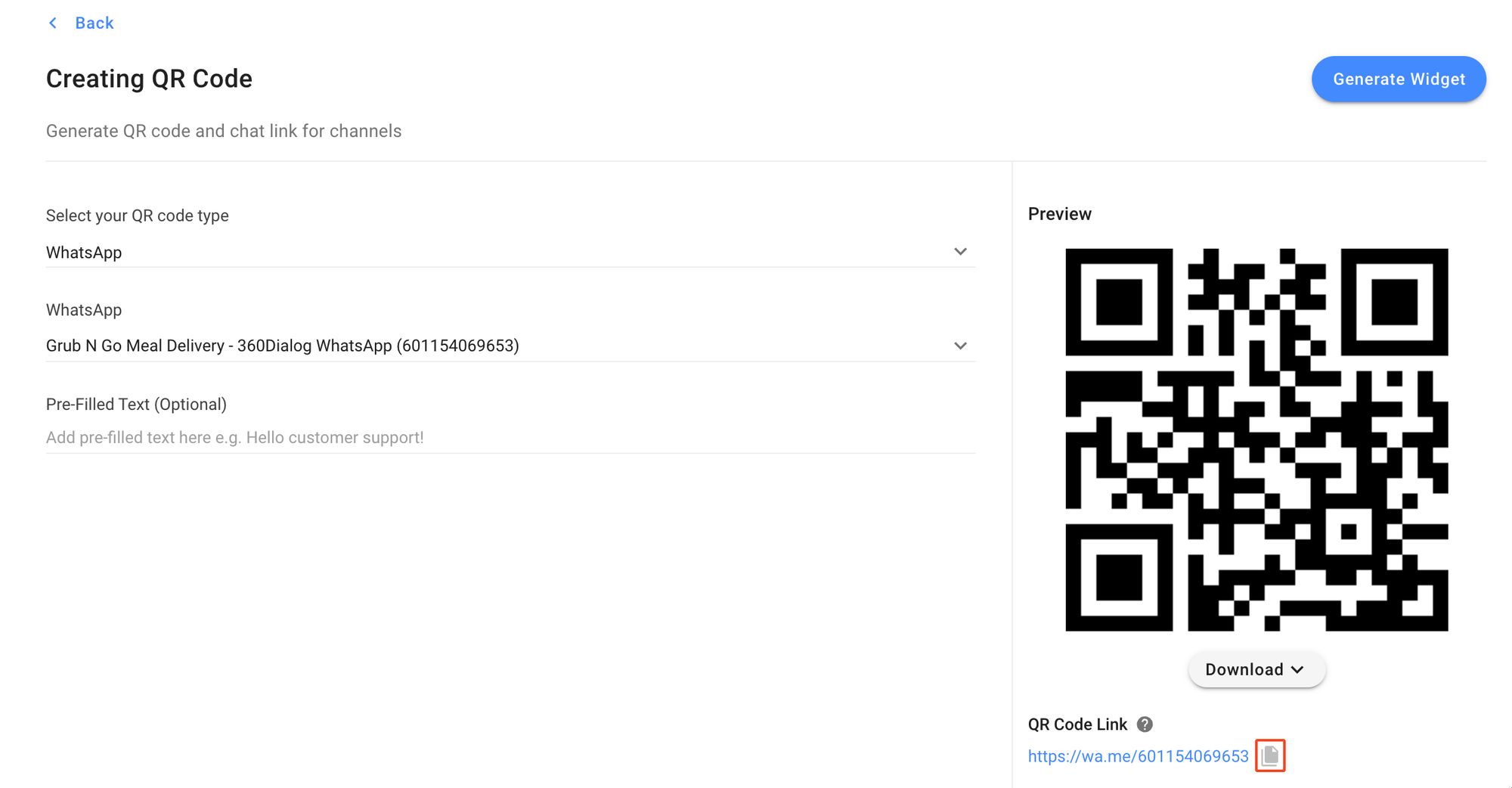
When someone messages or calls your business, you gain a persistent contact thread tied to their phone number. Unlike website forms or live chat sessions that disappear when someone leaves the page, WhatsApp conversations remain active, allowing sales teams to continue the discussion later and move the lead toward a purchase.
2. Qualify leads early in the conversation
The first few messages should determine whether a prospect is actually a good fit. Sales teams typically ask simple questions about budget, location, product interest or timeline so they can focus attention on the leads most likely to convert.
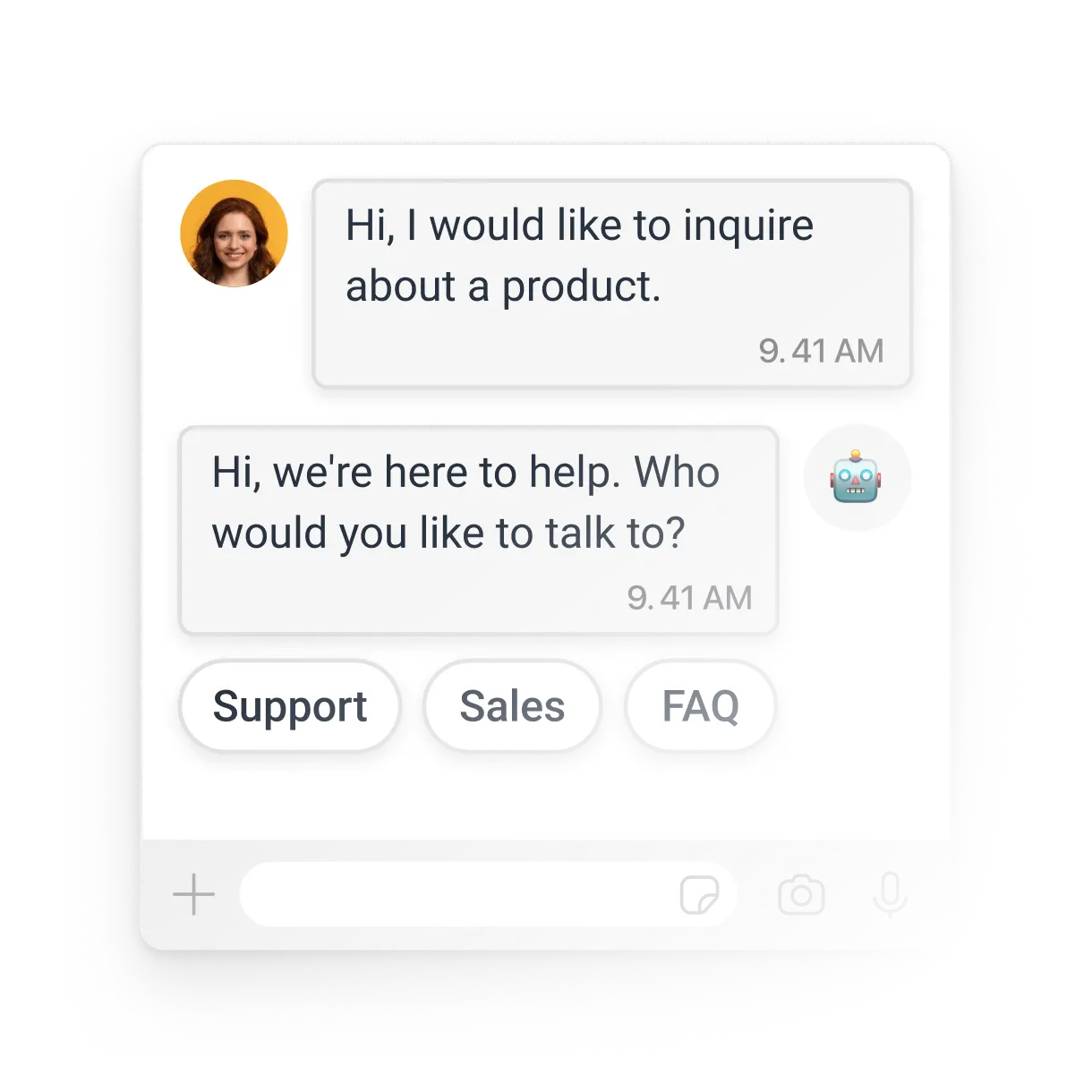
Banyak bisnis mengotomasi langkah ini menggunakan agen AI WhatsApp yang langsung menanggapi kontak baru dan mengumpulkan detail penting sebelum tenaga penjual bergabung ke percakapan. Platforms like respond.io allow teams to configure AI agents that ask qualifying questions, capture lead information, pass the conversation to a human agent with the context already recorded and trigger workflows if necessary.
Di respond.io, agen AI tidak hanya menyerahkan percakapan lalu menghilang They can surface relevant product information mid-conversation, suggest responses to agents in real time, flag high-intent signals when a prospect asks about pricing or availability and prompt the agent to take the next step. When a conversation stalls, an AI agent can re-engage the prospect automatically with a relevant follow-up, without the agent needing to remember to do it manually.
This matters because most sales happen in the middle of a conversation, not just at the entry point. Teams that treat AI as a one-time qualifier miss the compounding benefit of having AI support at every stage, from first message to closing question.
3. Route conversations to the right salesperson
As message volume increases, conversations need to be distributed across the team instead of landing on one device. But for most scaling B2C teams, routing isn't a single rule. It is a system that needs to account for multiple variables simultaneously.
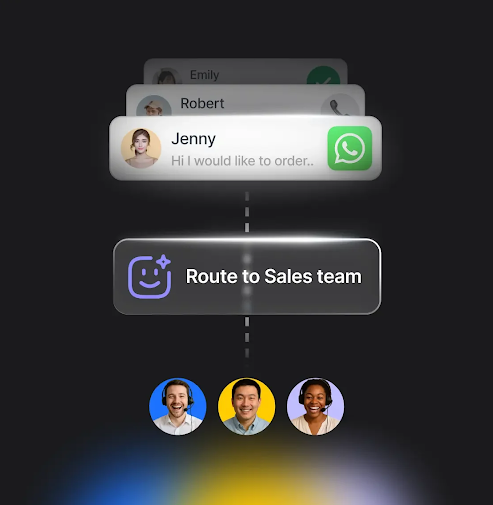
Route by region and language. A customer messaging in Spanish from Mexico should reach a Spanish-speaking agent, not whoever happens to be online. Teams operating across LATAM, EMEA and APAC need routing rules that reflect linguistic and geographic realities, not just availability.
Route by product line or service type. A lead asking about a premium vehicle at Automax shouldn't enter the same queue as someone asking about a basic service package. Routing by product category, inquiry type or deal size lets specialist agents handle conversations where they convert best.
Route by time zone and shift. When your team spans multiple regions, conversations arriving outside business hours in one market need to route to agents in a different time zone, or fall to an AI agent that keeps the conversation alive until a human is available.
Route by agent availability and load. Even within a single market, an overloaded agent receiving new conversations is worse than distributing evenly across available agents. Smart routing monitors current load and assigns accordingly.
Handle overflow and fallback. When no agent matches a routing rule because the right specialist is offline or a queue is full, conversations need a defined fallback path, not a dead end. That might be a secondary agent, a holding message or an AI agent that collects information until a human is available.
On respond.io, routing workflows can combine all of these variables, with conditions that update dynamically as agent availability changes. When conversations reach the right salesperson quickly, response times improve and prospects remain engaged while interest is still high.
4. Kelola penjualan WhatsApp di Inbox bersama
WhatsApp sales becomes difficult to scale when conversations live inside individual phones. A shared inbox allows sales teams to manage conversations collaboratively while maintaining a full history of every interaction with a lead or customer.
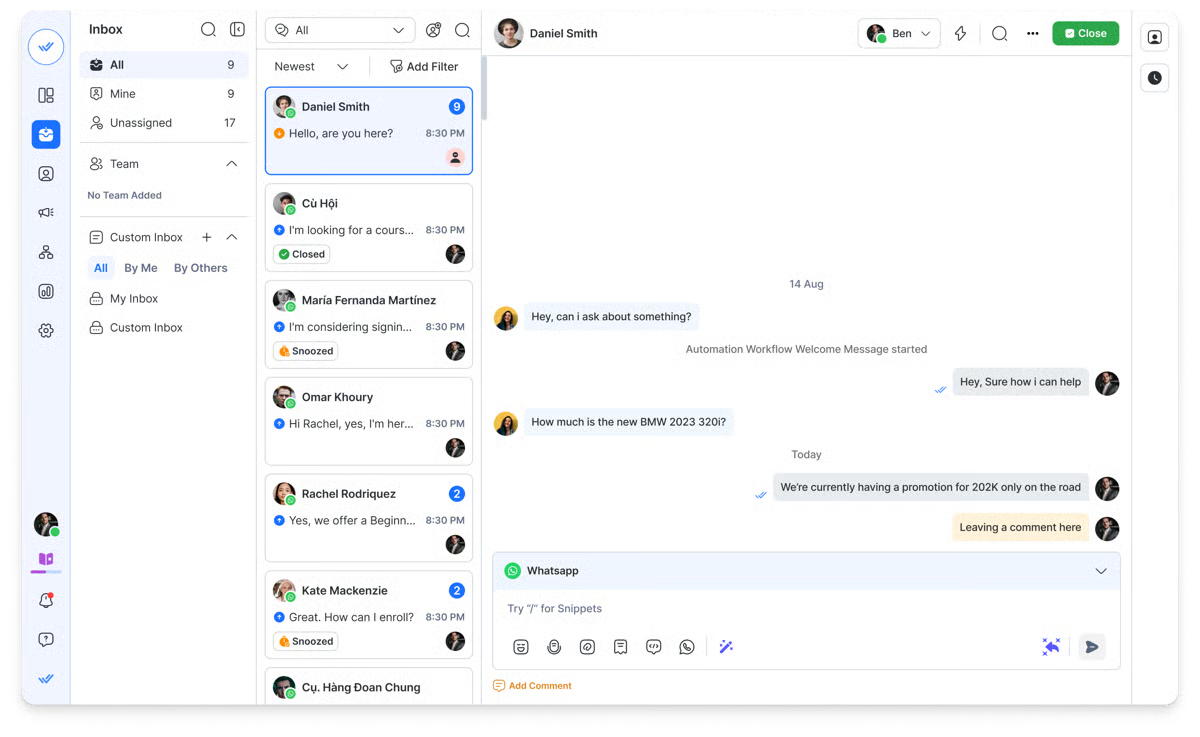
Platforms like respond.io connect the WhatsApp Business API to a shared workspace where agents can reply, transfer conversations and add internal notes. Integrations with CRMs such as Salesforce or HubSpot also ensure that WhatsApp conversations become part of the company's broader sales pipeline.
But shared inboxes solve the agent problem, not the manager problem. Sales managers running WhatsApp teams need answers to questions that conversation threads alone don't answer:
Which agents are responding within SLA and which are consistently slow?
Which leads have gone cold and haven't been followed up in more than 24 hours?
Are conversations being resolved or just closed?
How many new leads came in this week versus last week, and how many converted?
Respond.io gives managers a reporting and monitoring layer on top of the conversation workspace. Response time tracking, agent performance dashboards and conversation lifecycle data mean managers are not flying blind on a channel that is generating real revenue. QA monitoring allows team leads to review conversation quality without pulling agents out of live chats. This is the layer most teams discover is missing only after they have started scaling, when a sales manager realises they have no way to tell which of their eight agents is carrying the team and which is letting leads go cold.
5. Follow up consistently using message templates
Banyak penjualan terjadi setelah percakapan pertama, sehingga tindak lanjut yang konsisten sangat penting. Template pesan WhatsApp memungkinkan bisnis membuka kembali jendela layanan 24 jam dan mengirim pesan keluar ke prospek yang berhenti merespons.
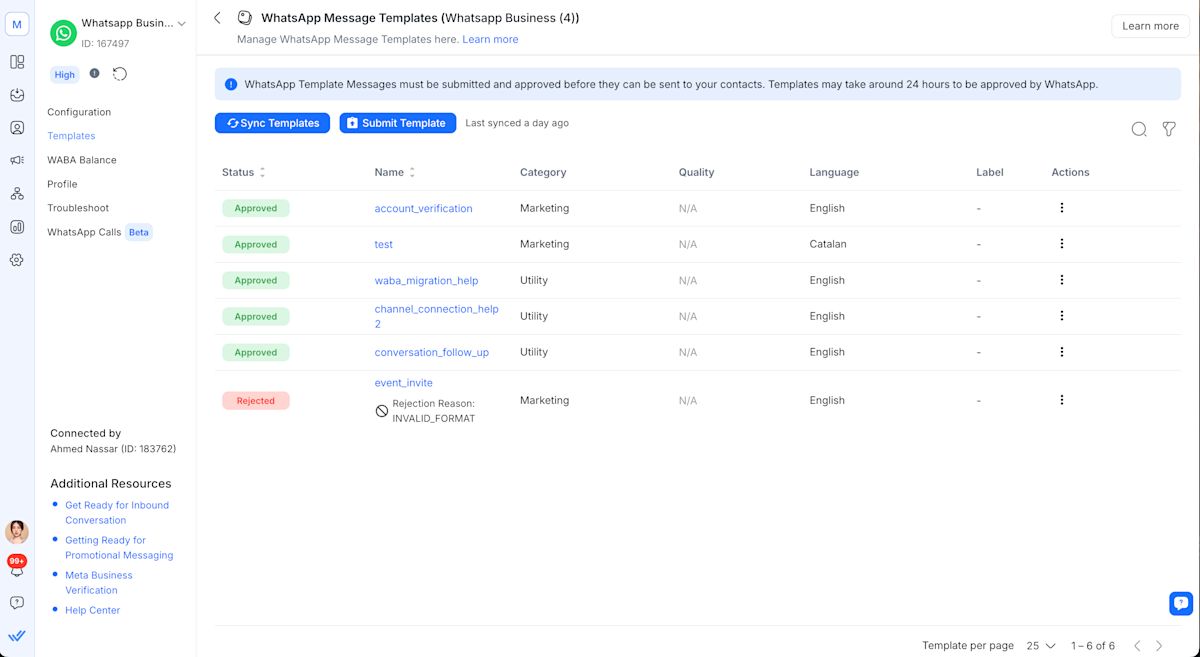
On platforms like respond.io, sales teams can create, submit and manage WhatsApp templates in the same inbox they use to handle conversations. These templates can be used for follow-ups, appointment reminders, promotions or order confirmations, helping teams maintain momentum with promising leads.
6. Tutup transaksi langsung di percakapan
Percakapan WhatsApp sering bergerak cepat dari minat ke pembelian karena pelanggan dapat bertanya dan menerima jawaban secara waktu nyata. Sales reps can send product details, booking confirmations or payment links directly inside the chat.
In many B2C use cases, the purchase process also happens inside the WhatsApp conversation. Customers confirm details in chat and complete payment through a payment link or WhatsApp's in-app payment feature where available. This keeps the sales conversation and transaction closely connected, reducing friction in the buying process.
3 real examples of WhatsApp sales
Businesses use WhatsApp to capture high-intent leads, answer questions instantly and move prospects toward a purchase inside a single conversation thread.
The examples below show how companies in travel, automotive and beauty use WhatsApp to generate bookings, nurture high-value buyers and convert service inquiries into confirmed appointments.
How SchuVar Tours shortened its sales cycle with WhatsApp

SchuVar Tours mengubah pertanyaan perjalanan menjadi pemesanan dengan memulai percakapan penjualan langsung di WhatsApp melalui iklan click-to-chat. Prospective travelers message the agency to ask about destinations, itineraries and pricing instead of filling out forms or waiting for email replies.
Because the conversation persists in a single WhatsApp thread, agents can continue guiding customers toward a decision even if they don’t book immediately. Managing these chats in a shared inbox with automation also ensures inquiries are followed up consistently and prioritized based on purchase intent.
As a result, SchuVar Tours reduced its sales cycle by 60%, achieved a 99.97% follow-up rate and scaled advertising to generate three times more ad-driven leads in three months.
How Automax drives car sales through WhatsApp conversations

Automax, a luxury car dealership in the UAE, uses WhatsApp to nurture buyers who discover vehicles through social media and online listings. Prospects message the dealership directly to ask about availability, pricing and vehicle specifications, allowing sales agents to engage them immediately.
Sales conversations continue over time as agents share photos, videos and updates when new inventory arrives. Automax also reengages interested prospects through targeted WhatsApp broadcasts, ensuring potential buyers receive relevant updates until they are ready to purchase.
Dengan menggabungkan siaran WhatsApp tertarget, automasi dan workspace pesan bersama, Automax mengirim 80.000+ siaran WhatsApp per bulan, menghasilkan 6.000–8.000 lead baru setiap bulan dan mencapai 42,5× ROI dari siaran WhatsApp, serta peningkatan 10% konversi.
How EMAX Beauté converts WhatsApp chats into booked appointments

EMAX Beauté, a multi-branch beauty and wellness provider in Kuala Lumpur, converts treatment inquiries into booked appointments by handling the entire sales conversation over chat. Customers typically discover treatments through Meta or TikTok ads and message the business to ask about pricing, availability or recommendations.
The team manages these inquiries through respond.io, where conversations from WhatsApp, Instagram, Facebook and TikTok flow into one inbox with lead source tracking. Agents prioritize new and high-intent leads using lifecycle stages, while automation assigns conversations evenly across the team and speeds up responses.
With faster replies, better lead visibility and fewer spam inquiries, EMAX dramatically improved its sales workflow. Waktu respons turun 75%, lead spam turun 60% dan janji yang dipesan lewat chat meningkat 18×, menunjukkan bagaimana manajemen percakapan yang terstruktur dapat mengubah pertanyaan WhatsApp menjadi pendapatan yang konsisten.
How do I achieve WhatsApp sales quick wins?
WhatsApp sales quick wins are small operational changes that quickly improve lead quality, response speed and follow-up consistency. Keuntungan terbesar biasanya berasal dari memperbaiki cara lead masuk ke WhatsApp, bagaimana mereka dikualifikasi, dan bagaimana percakapan dilacak melalui pipeline penjualan
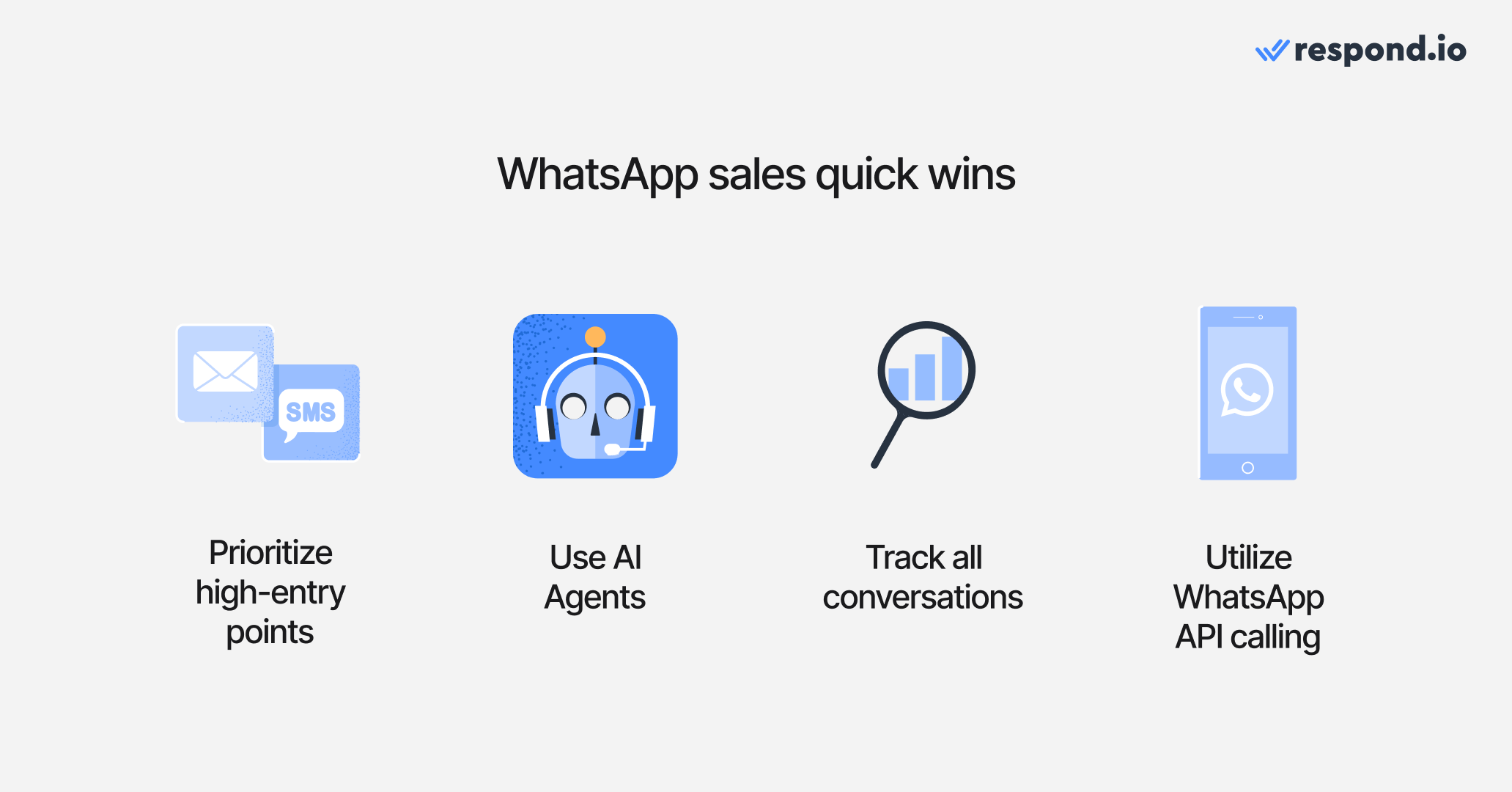
Prioritaskan titik masuk berniat tinggi
Arahkan lead ke WhatsApp melalui iklan click‑to‑WhatsApp, tautan chat di situs web, atau kode QR Ketika pelanggan memulai percakapan sendiri, pertanyaan itu sudah menunjukkan niat, sehingga tim penjualan lebih mudah mengkualifikasi dan mengarahkan diskusi menuju pembelian
Biarkan AI menangani pertukaran pertama
Agen AI dapat menyapa lead baru, menanyakan beberapa pertanyaan kualifikasi, dan mengumpulkan detail dasar sebelum tenaga penjualan bergabung ke chat Di platform seperti respond.io, hal ini memungkinkan tim penjualan memfokuskan waktu pada percakapan yang lebih mungkin menghasilkan konversi
Lacak percakapan menggunakan tahapan lifecycle
Beri label lead berdasarkan posisi mereka dalam perjalanan penjualan, seperti baru, berkualitas, atau sedang bernegosiasi Pelacakan Lifecycle, yang tersedia di respond.io, membantu tim melihat percakapan mana yang perlu tindak lanjut dan mana yang sudah bergerak menuju kesepakatan
Eskalasikan percakapan berniat tinggi ke panggilan WhatsApp
Beberapa lead mencapai titik di mana mengetik memperlambat proses pengambilan keputusan Dengan WhatsApp Business Calling API, yang didukung di respond.io, tim dapat memindahkan percakapan dari chat ke suara secara instan sambil menjaga interaksi tetap di platform yang sama
Kapan WhatsApp saja tidak cukup?
WhatsApp saja tidak lagi memadai ketika tim Anda menangani 50+ percakapan per hari yang dikerjakan lebih dari satu agen dan Anda tidak lagi dapat menjawab 'lead mana yang mandek dan mengapa' tanpa menggulir setiap thread secara manual
Ini adalah celah yang mengejutkan sebagian besar tim Mereka memulai dengan Business App, atau menghubungkan API ke setup dasar, dan untuk sementara itu bertahan Kemudian volume lead meningkat, agen kedua atau ketiga bergabung, kampanye mulai berjalan di beberapa pasar dan tiba‑tiba tidak ada yang tahu lead mana yang aktif, mana yang menjadi dingin, dan agen mana yang terakhir menyentuh setiap percakapan
Berikut yang secara spesifik rusak:
Saat percakapan mulai menumpuk, Anda membutuhkan routing dan kepemilikan. Tanpa penetapan otomatis dan catatan percakapan bersama, lead bisa mendapat balasan ganda atau diabaikan, tergantung siapa yang terakhir memeriksa Inbox Platform seperti respond.io mendistribusikan percakapan ke agen berdasarkan aturan yang dapat dikonfigurasi dan menjaga riwayat lengkap tetap terlihat oleh tim, sehingga kepemilikan tidak pernah ambigu
Saat Anda menjalankan iklan atau kampanye, Anda membutuhkan visibilitas sumber lead. Ketika lead datang dari iklan click‑to‑WhatsApp di berbagai kampanye, platform, dan pasar, pertanyaan "lead mana yang lebih bernilai?" menjadi tidak dapat dijawab tanpa data atribusi Tanpa pelacakan sumber lead, tim mengoptimalkan pengeluaran berdasarkan insting, bukan data konversi
Saat tim Anda terdiri dari lebih dari satu agen, Anda memerlukan visibilitas untuk manajer. Ini adalah celah yang paling sering diabaikan Jika Anda tidak dapat melihat agen mana yang memenuhi target waktu respons, percakapan mana yang melanggar SLA, dan lead mana yang mandek tanpa tindak lanjut, Anda mengelola saluran yang menghasilkan pendapatan hanya berdasarkan kepercayaan Itu bekerja dengan dua agen Namun gagal ketika ada delapan agen
Jika Anda ingin mengukur pendapatan dari WhatsApp, Anda memerlukan CRM. Percakapan WhatsApp sering menghasilkan kesepakatan, tetapi tanpa menyinkronkan interaksi tersebut ke CRM, dampak pendapatan menjadi tidak terlihat Menghubungkan WhatsApp ke respond.io memungkinkan percakapan, tahapan lifecycle, dan hasil dilacak sebagai bagian dari pipeline penjualan, sehingga pimpinan dapat melihat ROI nyata dari saluran tersebut, bukan sekadar hasil anekdotal
Sinyal bahwa Anda telah mencapai batas: tim Anda menangani 50+ percakapan WhatsApp per hari yang dikerjakan lebih dari satu agen, dan Anda tidak dapat menjawab "lead mana yang mandek dan mengapa" tanpa menggulir setiap thread secara manual Itulah celah operasional yang respond.io dibangun untuk menutup
Apakah respond.io platform yang tepat untuk penjualan WhatsApp?
Platform yang tepat untuk penjualan WhatsApp bergantung pada bagaimana tim Anda menangani lead dan percakapan Jika WhatsApp sudah menghasilkan aliran pertanyaan yang stabil dari iklan, media sosial, atau situs Anda, mengelola percakapan tersebut di banyak agen dan melacaknya melalui pipeline penjualan akan cepat menjadi sulit hanya dengan aplikasi WhatsApp
Platform yang dirancang untuk penjualan WhatsApp menyelesaikan masalah ini dengan menambahkan Inbox bersama, agen AI, kualifikasi lead, kedalaman routing, visibilitas manajer, dan konektivitas CRM di atas WhatsApp Business API Respond.io menggabungkan kemampuan ini dalam satu sistem, dengan agen AI yang tetap aktif sepanjang percakapan, automasi untuk merutekan chat ke agen yang tepat berdasarkan bahasa, wilayah, dan lini produk, serta dasbor manajer yang menampilkan kinerja SLA dan aktivitas agen di seluruh tim
Respond.io paling cocok untuk tim penjualan B2C menengah yang menjalankan WhatsApp di banyak agen dan pasar Ini adalah tim yang membutuhkan manajemen lead terstruktur, kedalaman routing, dan visibilitas manajer dari pesan pertama hingga konversi Kurang cocok untuk cold outreach, penjualan sepenuhnya otomatis tanpa agen manusia, atau tim sangat kecil yang membalas beberapa pertanyaan setiap hari dari satu ponsel
Mulai uji coba gratis Anda hari ini.
Ubah percakapan menjadi pelanggan dengan WhatsApp API resmi respond.io ✨
Kelola panggilan dan obrolan WhatsApp di satu tempat!
Pertanyaan yang Sering Diajukan (FAQ) tentang cara menjual di WhatsApp
Apakah WhatsApp bagus untuk penjualan?
WhatsApp cocok untuk penjualan ketika pelanggan Anda sudah menggunakannya setiap hari dan proses penjualan Anda mendapat manfaat dari percakapan bolak‑balik yang cepat daripada pengisian formulir yang lambat dan rantai email Ini paling efektif untuk perjalanan B2C di mana pertanyaan, keberatan, dan langkah berikutnya terjadi dalam ledakan singkat, dan di mana tetap dalam satu thread membuat tindak lanjut lebih mudah daripada memulai konteks ulang setiap kali Jika Anda membutuhkan penanganan multi‑agen, kualifikasi lead, dan visibilitas pipeline, biasanya Anda akan memasangkan WhatsApp Business API dengan platform yang dapat menjalankannya sehari‑hari, seperti respond.io
Apakah saya perlu WhatsApp Business App atau WhatsApp Business API untuk penjualan?
Gunakan WhatsApp Business App untuk penjualan bervolume rendah yang ditangani satu orang (atau tim sangat kecil) di mana tindak lanjut manual dan organisasi sederhana sudah cukup, dan gunakan WhatsApp Business API ketika WhatsApp menjadi saluran lead nyata yang memerlukan beberapa agen, automasi, routing, dan pelaporan. API bukanlah Inbox mandiri; ia dirancang untuk dioperasikan melalui platform penyedia, jadi keputusan praktis seringkali “App untuk yang sederhana”, “API + platform untuk skala”, dengan respond.io sebagai salah satu opsi untuk menjalankan API dalam workspace bersama
Apa aturan 24 jam dan mengapa itu penting untuk penjualan?
Jendela layanan pelanggan 24 jam berarti Anda dapat membalas pesan pengguna secara bebas dalam 24 jam sejak pesan terakhir mereka, dan di luar jendela itu Anda hanya dapat mengirim pesan menggunakan template pesan yang disetujui Ini penting untuk penjualan karena tindak lanjut yang terlambat adalah cara termudah kehilangan kesepakatan, jadi tim penjualan WhatsApp yang kuat membalas cepat selama jendela terbuka dan menggunakan template untuk memulai kembali percakapan yang mandek secara patuh
Apa itu template pesan WhatsApp dan kapan tim penjualan harus menggunakannya?
Template pesan WhatsApp adalah format pesan yang sudah disetujui sebelumnya yang digunakan untuk menghubungi pelanggan di luar jendela 24 jam, umumnya untuk tindak lanjut, pengingat, pembaruan pesanan, dan re‑engagement promosi sesuai kategori Dalam praktiknya, template adalah cara menjaga momentum ketika lead tidak merespons, karena memberi Anda cara yang patuh untuk melanjutkan percakapan daripada menunggu pelanggan mengirim pesan lagi Untuk tim yang melakukan penjualan WhatsApp berskala, mengelola template di dalam Inbox dan alur kerja yang sama (misalnya di respond.io) mengurangi hambatan dan menjaga tindak lanjut tetap konsisten
Apakah pelanggan harus melakukan opt‑in sebelum saya menghubungi mereka untuk tujuan penjualan?
Ya, aturan pesan bisnis WhatsApp mengharuskan Anda menghormati ekspektasi pengguna dan menggunakan template dengan tepat; dalam praktiknya, anggaplah opt-in wajib untuk pesan penjualan keluar agar terhindar dari masalah kebijakan dan pengalaman pelanggan yang buruk. Pendekatan paling aman adalah mendorong pelanggan untuk menghubungi Anda terlebih dahulu (iklan, tombol situs, kode QR) atau mengumpulkan persetujuan eksplisit sebelum mengirim outreach berbasis template, lalu buat tindak lanjut Anda relevan dan mudah dihentikan. Tim sering menjalankan ini dengan workflow yang diaudit dan pelacakan persetujuan di platform seperti respond.io.
Apakah iklan Click‑to‑WhatsApp sepadan untuk menghasilkan lead?
Iklan Click‑to‑WhatsApp sepadan ketika Anda ingin langsung mengubah traffic berbayar menjadi percakapan, karena klik iklan membuka chat WhatsApp alih-alih mengarahkan pengguna ke funnel landing page yang lambat. Iklan ini cenderung berkinerja terbaik ketika Anda memiliki langkah selanjutnya yang jelas (penawaran harga, pemesanan, pemeriksaan kelayakan) dan dapat merespons dengan cepat, karena kecepatan adalah pengungkit konversi utama dalam penjualan berbasis chat. Jika Anda juga melacak iklan dan kampanye yang memulai percakapan, Anda bisa menghubungkan pengeluaran dengan hasil, dan platform seperti respond.io dapat mendukung workflow atribusi tersebut.
Bisakah saya menggunakan siaran WhatsApp untuk penjualan?
Pengiriman gaya siaran dimungkinkan di WhatsApp Business Platform bila dilakukan secara patuh (persetujuan, aturan template, dan kategori pesan yang benar), dan paling efektif untuk audiens hangat seperti pertanyaan masa lalu, lead dorman, atau pelanggan yang ingin pembaruan. Kegagalan umum adalah mengirim pesan yang sama ke semua orang, yang meningkatkan biaya, keluhan, dan risiko pemblokiran; jadi segmentasi dan timing lebih penting daripada volume. Tim yang menjalankan siaran secara serius biasanya melakukannya melalui workflow API dan logika segmentasi di platform seperti respond.io.
Bagaimana saya mengukur ROI dari penjualan melalui WhatsApp?
Anda mengukur ROI dari penjualan WhatsApp dengan menghubungkan percakapan ke event di pipeline: sumber lead, hasil kualifikasi, deal dibuat/diperbarui, pendapatan yang dimenangkan, dan waktu hingga penutupan. Jika WhatsApp berada di luar CRM Anda, ia menjadi “pendapatan tak terlihat”, artinya Anda merasakan kerjanya tetapi tidak dapat membuktikannya, jadi kuncinya adalah menyinkronkan kolom kontak dan kolom deal serta memberi tag percakapan berdasarkan tahapan siklus hidup. Platform seperti respond.io dibangun untuk membuat percakapan WhatsApp dapat dilacak antar agen dan dapat diatribusikan ke hasil, alih-alih hidup dan hilang di riwayat chat.
Bacaan lanjutan
Jika Anda menemukan artikel kami bermanfaat, Anda juga harus membaca bacaan berikut:


