















 Eletrônicos
 Moda & Vestuário
 Móveis
 Joias e Relógios
 Atividades Extracurriculares
 Esportes e Fitness
 Centro de Beleza
 Clínica Dental
 Clínica Médica
 Serviços de Limpeza Residencial e Empregada
 Fotografia e Videografia
 Concessionária de Carros
 Agência de Viagens e Operadora de Tour


TL;DR — Para equipes B2C de médio porte com alto volume de conversas no WhatsApp, o ROI permanece invisível quando a plataforma não consegue vincular as conversas à receita fechada
A lacuna de atribuição é um problema da plataforma — se sua configuração parar de rastrear após o clique e não conseguir correlacionar pagamentos offline com o WhatsApp, o sistema é insuficiente.
Respond.io preenche essa lacuna por meio do CAPI para atribuição de anúncios, sincronização com o CRM para rastreamento do pipeline e relatórios de ciclo de vida que conectam a atividade das conversas aos resultados do funil.
Não é a opção certa se seu AOV for inferior a $50 sem um modelo de recompra, se você quiser automação total, ou se estiver fazendo prospecção a frio.
Para empresas B2C de médio porte que já usam o WhatsApp em grande escala, o canal funciona. O problema é se a plataforma ao redor consegue mostrar isso. Clientes enviam mensagens, conversas acontecem, negócios fecham — mas quando os pagamentos ocorrem offline, por transferência bancária ou presencialmente, o rastreamento padrão de anúncios perde o fio da meada no clique. A maioria das plataformas de WhatsApp não conecta o que acontece na conversa ao que acaba fechando.
Isso não é um problema do WhatsApp. É um problema da plataforma. Esta página explica como é um sistema que fecha a lacuna de atribuição, quanto custa, o que comprova na prática e se Respond.io se encaixa na sua configuração específica.
Sua plataforma atual tem uma lacuna de atribuição?
Se sua plataforma para de rastrear no clique e não consegue conectar o que acontece na conversa ao que acaba fechando, você tem uma lacuna de atribuição — e isso reduz sua visibilidade sobre a receita real. A maioria das plataformas de WhatsApp compartilha a mesma limitação estrutural: elas rastreiam o que acontece antes e durante a conversa, mas não o que fecha depois. Três perguntas confirmam se a sua também:
Você consegue ver quais campanhas de anúncios geram conversas que fecham?
Não sem a integração com Conversions API (CAPI). O rastreamento padrão das plataformas de anúncios termina no clique, de modo que seu gasto com anúncios é otimizado pelo volume de cliques em vez de compras, reservas ou leads qualificados. Você está investindo com base no sinal errado.
Você consegue conectar uma conversa do WhatsApp a um registro de negócio no seu CRM?
Só se sua plataforma sincronizar os dados das conversas diretamente com os registros do pipeline. Quando os clientes pagam offline, por transferência bancária ou na loja após uma conversa no WhatsApp, não há vínculo automático entre a atividade do chat e a receita fechada sem essa sincronização.
Você consegue calcular seu custo real por conversa, incluindo o tempo do agente?
Não com a maioria dos painéis padrão, que mostram as taxas do Meta, mas não os custos da plataforma nem as horas dos agentes. Sem a visão completa dos custos, os cálculos de ROI ficam estruturalmente incompletos.

Se sua plataforma atual não consegue fechar essas três lacunas, respond.io foi criado especificamente para resolvê-las — por meio do CAPI para atribuição de anúncios, sincronização com o CRM para acompanhamento do pipeline e análises integradas que incluem atividade dos agentes e resultados das conversas.
Do que a atribuição no WhatsApp realmente precisa?
A atribuição do WhatsApp requer três mecanismos funcionando em conjunto: CAPI para enviar eventos de conversão às plataformas de anúncios, sincronização com CRM para vincular conversas aos registros do pipeline, e rastreamento unificado de conversas para manter o contexto entre canais. A atribuição padrão falha porque o modelo de custo e receita do WhatsApp não se comporta como o do e-mail ou dos anúncios pagos.
A cobrança é por mensagem enviada, e não por clique ou por assento na plataforma, e cada número comercial agora recebe 1,000 mensagens de serviço gratuitas por mês dentro da janela de 24 horas antes que as respostas sejam cobradas. A receita então é fechada de maneiras que o rastreamento padrão nunca foi projetado para capturar: pagamentos offline, transferências bancárias e visitas presenciais.
ROI do marketing no WhatsApp mede o retorno sobre o gasto total com taxas de mensagens do Meta, custos de plataforma, tempo do agente e gasto com anúncios — mas só se a plataforma conectar esses custos à receita efetivamente fechada. A maioria não.
CAPI (Conversions API)
Envia eventos de conversão — compras, reservas, leads qualificados — diretamente da sua plataforma de volta ao Meta e ao TikTok. Isso conecta o gasto com anúncios aos resultados de receita em vez do volume de cliques, de modo que a otimização de campanhas reflita o que realmente fecha. No respond.io, uma etapa de Workflow Send Conversions API Event envia esses eventos, e o ID de clique dos anúncios click-to-WhatsApp é capturado automaticamente.
Sincronização de CRM
Conecta conversas do WhatsApp diretamente aos registros do pipeline. Quando um cliente envia mensagem no WhatsApp e fecha um negócio três dias depois offline, a sincronização com o CRM cria o vínculo que a atribuição padrão perde. Respond.io sincroniza automaticamente os dados das conversas e os registros dos clientes com os principais CRMs.
Rastreamento unificado de conversas
Quando conversas vêm de múltiplos canais — WhatsApp, Facebook Messenger, Instagram, TikTok — uma Inbox fragmentada significa contexto perdido e leads abandonados. Uma Inbox unificada com rastreamento do ciclo de vida encaminha conversas para a equipe certa e mantém o fio durante a jornada do cliente.
Sem os três em um só lugar, o quadro de atribuição continua incompleto, independentemente de quão bem o canal funcione.
Quais métricas do WhatsApp realmente predizem receita — e quais são vaidade?
Taxa de conversão do funil, atribuição de anúncios por campanha, desempenho dos agentes e dados da jornada do cliente preveem receita. Taxas de entrega, leitura e resposta são métricas de vaidade por si só — confirmam atividade, não resultados. A maioria das plataformas do WhatsApp mostra apenas o segundo grupo por padrão. Para empresas B2C de médio porte com alto volume de conversas, a distinção importa: uma taxa de entrega de 95% em uma transmissão mal segmentada ainda custa dinheiro e não gera nada.

Métricas de engajamento: o que a maioria das plataformas mostra por padrão
Essas métricas confirmam atividade, não resultados. São úteis para diagnosticar problemas de qualidade de lista ou de timing, mas não predizem receita.
Taxa de entrega
Percentual de mensagens entregues com sucesso. A maioria das plataformas reporta isso. Taxas baixas geralmente sinalizam problemas na qualidade da lista de contatos ou problemas técnicos que desperdiçam custos de conversa antes mesmo de ela começar. Objetivo: 95%+. Essa métrica mostra se suas mensagens estão alcançando as pessoas — não informa se elas estão gerando resultados.
Taxa de leitura
Percentual de mensagens entregues que os clientes abrem. O WhatsApp normalmente alcança 98%, bem acima do e-mail. A maioria das plataformas relata isso. Taxas mais baixas sugerem problemas no momento de envio ou no texto de pré-visualização — mas uma alta taxa de leitura sem respostas ainda custa dinheiro e não gera resultado.
Taxa de resposta
Percentual de clientes que respondem. Tipicamente 10–20% para transmissões promocionais e 30–50% para mensagens de serviço. A maioria das plataformas relata isso. Se as suas forem menores, o conteúdo da mensagem provavelmente precisa de ajuste — mas a taxa de resposta isolada não indica se as respostas convertem.
Métricas de receita: o que a maioria das plataformas não exibe — e o que Respond.io torna possível
Taxa de conversão do funil até o estágio Won
Os relatórios nativos de ciclo de vida do Respond.io acompanham os contatos desde a entrada no funil até o estágio Won, fornecendo a taxa de conversão geral do seu funil no WhatsApp. Se 100 contatos entram e 40 chegam ao estágio Won, sua taxa de conversão é 40%. Esse é o equivalente verificável mais próximo de uma taxa de conversa-para-venda que a plataforma apresenta nativamente — sem exigir agregação manual entre ferramentas separadas. A maioria das plataformas não tem isso porque requer rastreamento de estágios do ciclo de vida incorporado na camada de conversa, não acoplado de um CRM.
Atribuição de anúncios por campanha via CAPI
Com o CAPI integrado, você pode ver quais campanhas geram contatos que progridem pelo funil e fecham, não apenas contatos que iniciam uma conversa. Os Relatórios de ciclo de vida do Respond.io combinam atribuição da fonte do anúncio com os estágios do ciclo de vida — assim você pode comparar o desempenho entre campanhas para ver quais anúncios trazem leads que realmente convertem e identificar onde ocorrem quedas por campanha. Sem CAPI, sua plataforma de anúncios otimiza por cliques e não tem sinal do que acontece depois que a conversa começa.
Desempenho de agentes e conversas
Os relatórios integrados do Respond.io cobrem tempos de resposta, taxas de resolução, tendências de conversa e desempenho dos agentes. Esses são os insumos necessários para calcular manualmente o custo por conversa: os dados de atividade dos agentes do Respond.io, combinados com a taxa da sua plataforma e os custos de mensagens do Meta, dão a visão completa. A plataforma não calcula automaticamente o custo por conversa, mas fornece os dados do lado do agente que a maioria das plataformas exclui completamente.
Jornada do ciclo de vida do primeiro contato até a recompra
O rastreamento de ciclo de vida do Respond.io registra cada chat, nota e tag desde o primeiro contato até a recompra, capturando pontos de desistência ao longo da jornada do cliente. Isso dá às equipes os dados para identificar onde a retenção falha e quais estágios precisam de reengajamento — a base para entender o valor de longo prazo dos clientes adquiridos via WhatsApp. Integrações com CRM (HubSpot, Salesforce, Pipedrive e outros) mantêm dados de contato e de negócios sincronizados, conectando os dados de conversa do Respond.io aos seus registros existentes do funil.
O padrão é consistente: as métricas que predizem lucratividade exigem uma plataforma que conecte a atividade de conversa aos resultados do funil. Plataformas sem rastreamento do ciclo de vida e sem CAPI deixam a lacuna entre volume de conversas e receita fechada permanentemente invisível.
Como calcular o ROI do marketing no WhatsApp — e por que a maioria das equipes subestima os custos
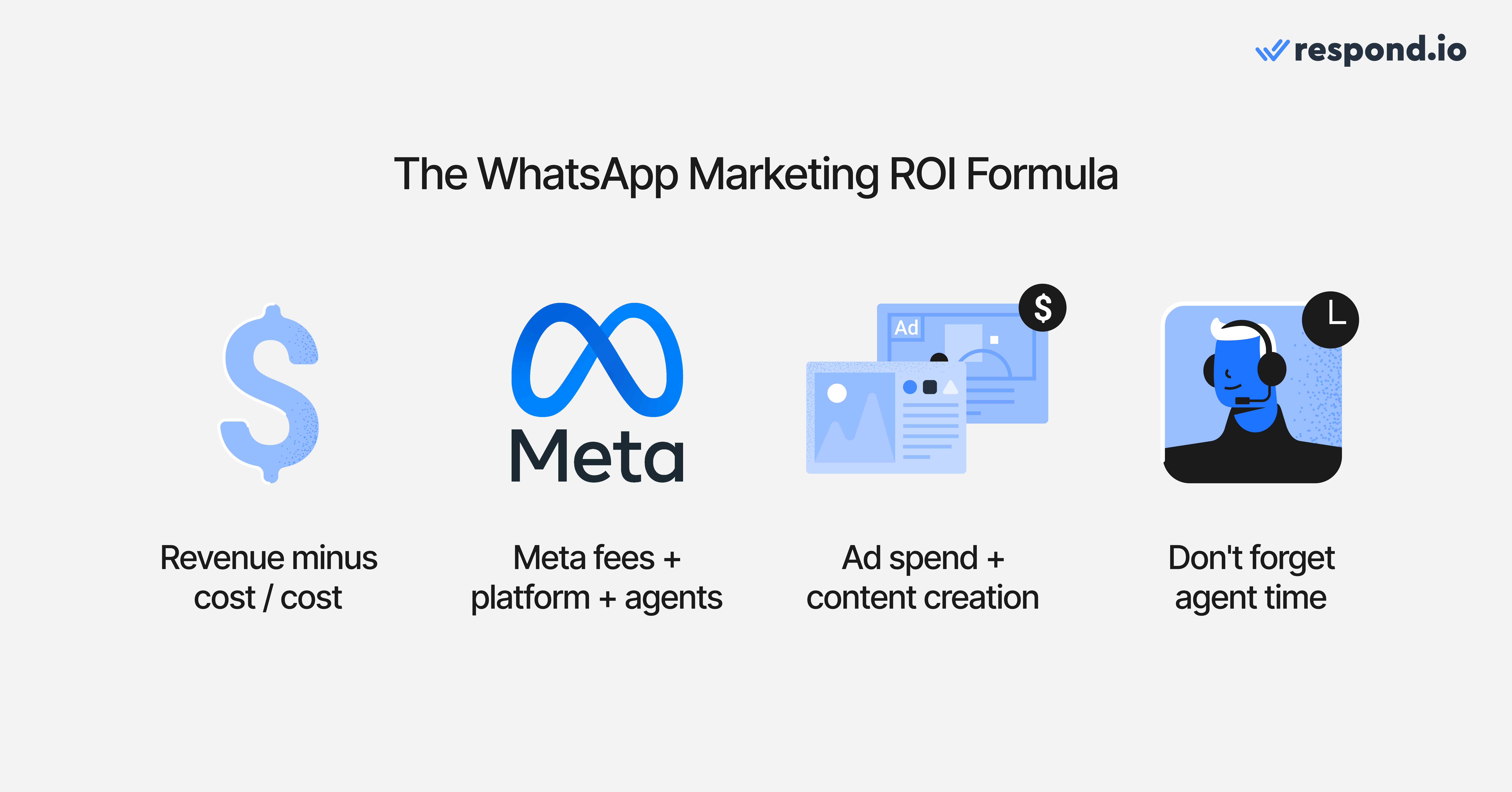
ROI = (Receita − Custo) / Custo × 100, onde custo inclui taxas de mensagens do Meta, taxas de plataforma, tempo do agente e gasto com anúncios. A maioria das equipes subestima porque o tempo do agente e os custos de plataforma são excluídos dos relatórios padrão, e porque a receita que fecha offline nunca é atribuída de volta ao canal sem sincronização com CRM e CAPI em funcionamento. O Respond.io fecha a lacuna do lado da receita através da sincronização com CRM e do CAPI, e seus relatórios fornecem os dados de atividade dos agentes que você precisa para o lado de custos.
Use a WhatsApp Pricing Calculator do Respond.io para estimar seus custos específicos por país e volume.
Como é, na prática, o sistema de atribuição do Respond.io?
Na prática, o sistema de atribuição do Respond.io conecta o gasto com anúncios a reservas e compras via CAPI, filtra leads não qualificados antes de chegarem aos agentes, e rastreia cada contato pelos estágios do ciclo de vida até uma venda fechada. As duas empresas abaixo mostram o que estava falhando antes do respond.io e o que mudou depois.
EMAX Beauté: vendas consultivas de beleza e bem-estar
EMAX Beauté agenda consultas de beleza e bem-estar via chat, com leads chegando de anúncios em múltiplos canais.

O que falhava para a EMAX Beauté sem o respond.io
Leads de spam consumiam o tempo dos agentes a custo total porque não havia uma camada de qualificação antes de as consultas chegarem à equipe. O gasto com anúncios era otimizado por cliques em vez de reservas porque o CAPI não estava conectado — a plataforma não tinha como enviar eventos de conversão de volta ao Meta ou ao TikTok. A falta de visibilidade sobre quais campanhas geravam reservas reais significava que a alocação de orçamento se baseava apenas no volume de cliques.
O que o respond.io solucionou para a EMAX Beauté
Todos os canais conectados em uma Inbox unificada com rastreamento automatizado da origem dos leads. CAPI e eventos do funil inferior do TikTok adicionados para atribuição de anúncios. Qualificação por IA filtrou consultas não qualificadas antes de chegarem aos agentes.
Resultados verificados da EMAX Beauté
Aumento de 18x em agendamentos de consultas via chat
Redução de 60% nos contatos de spam que chegavam aos agentes
Visibilidade clara de campanhas com alto desempenho em todos os canais
Automax: concessionária de carros de luxo, retenção impulsionada por transmissões
Automax é uma concessionária de carros de luxo que usa transmissões do WhatsApp para retargeting e retenção de compradores.

O que falhava para a Automax sem o respond.io
O WhatsApp Business App limitava transmissões a 256 contatos — o retargeting na escala que essa concessionária precisava era estruturalmente impossível na ferramenta nativa. O acompanhamento manual no CRM causava perda de follow‑ups porque não havia rastreamento ou roteamento automatizado do ciclo de vida. O gasto com anúncios era otimizado por alcance em vez de compras porque o CAPI não estava conectado.
O que o respond.io solucionou para a Automax
Agente de IA implantado para qualificação fora do horário e atendimento a FAQs. Transmissões segmentadas de alto volume habilitadas pelo rastreamento de ciclo de vida — escalando de 256 para 80,000+ contatos por mês. CAPI integrado para enviar eventos de compra de volta ao Meta para otimização de anúncios.
Resultados verificados da Automax
42,5x de ROI com transmissões no WhatsApp
80,000+ transmissões enviadas por mês
Aumento de 10% nas conversões
Mais resultados verificados de clientes do Respond.io
JU Productions — 718% mais vendas a partir de uma campanha de transmissões do WhatsApp para sua lista de contatos existente
GETUTOR — 24% mais vendas em tutoria acadêmica
Sport Center Los Naranjos — 20% mais conversões em consultas de vendas
iMotorbike — 2x mais leads diários atendidos com roteamento por IA em um marketplace multicanal
Dalilk Academy — 100% de aumento na captação de alunos a partir de matrículas impulsionadas por transmissões
Quando o Respond.io não é adequado — e quando o ROI do marketing no WhatsApp desmorona totalmente
Respond.io é construído para empresas B2C de médio porte com alto volume de conversas, AOV mais alto e um modelo de recompra ou retenção. O sistema de atribuição, a qualificação por IA e a infraestrutura de transmissões são projetados para operações onde as conversas são críticas para a receita e o volume justifica a implementação.
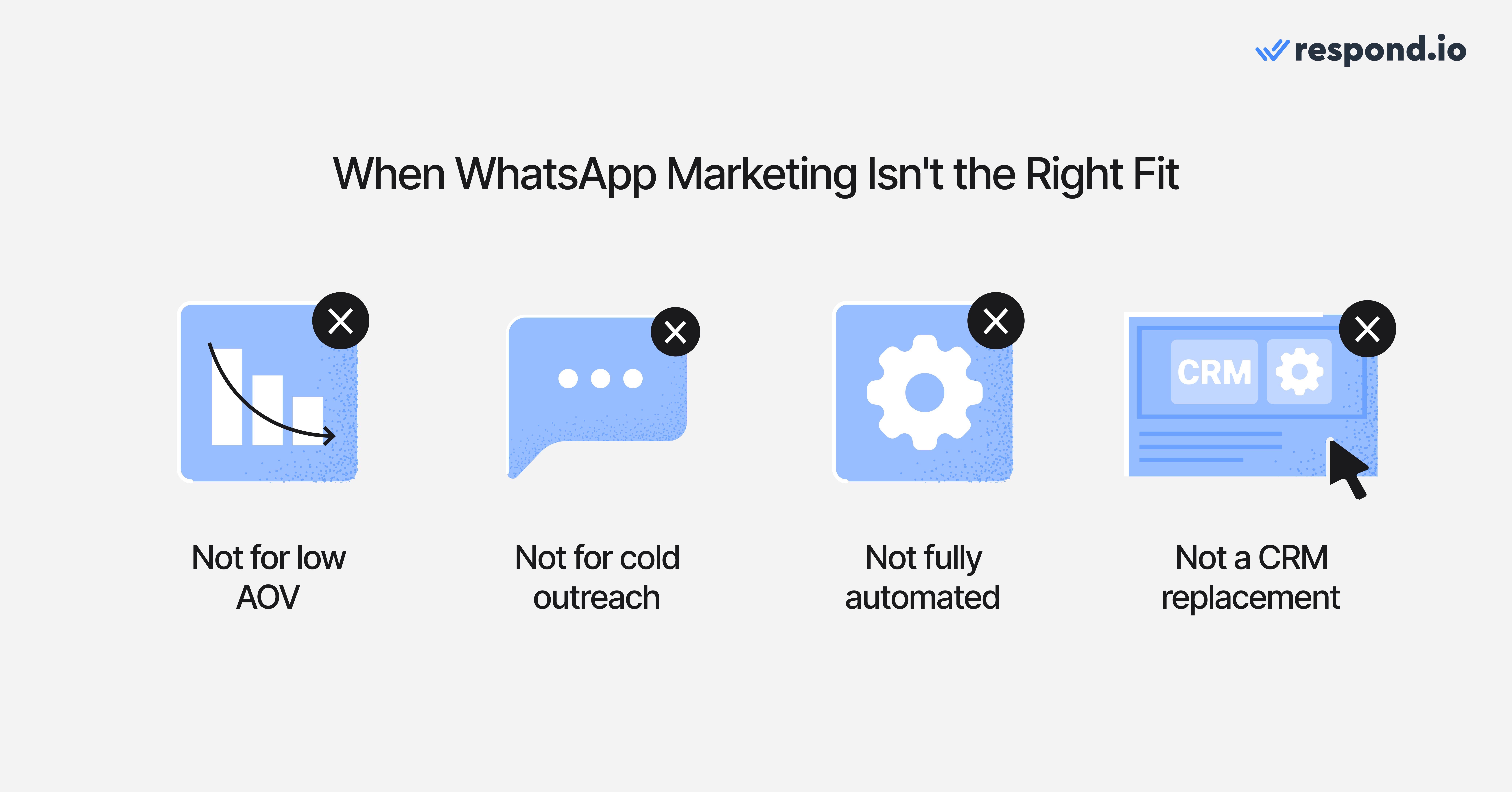
Respond.io não é a opção adequada se:
Seu ticket médio é inferior a $50 sem um modelo de recompra
Os custos de conversa no WhatsApp (taxas do Meta + plataforma + tempo do agente) provavelmente excedem o valor por cliente em AOV baixo sem retenção. E-mail ou SMS são mais econômicos para comunicações puramente transacionais e de baixo valor.
Você quer 100% de automação sem envolvimento humano
Agentes de IA lidam bem com consultas rotineiras. Compras de alta complexidade ainda exigem expertise humana para consultoria e fechamento. Se nenhum humano estiver no processo, o WhatsApp não é a opção certa — clientes que tomam decisões complexas precisam falar com uma pessoa.
Você está planejando enviar mensagens frias
Os termos de serviço do WhatsApp proíbem mensagens não solicitadas. Esse canal funciona para empresas que constroem listas de contatos opt-in via anúncios, chat no site ou consentimento de clientes existentes. Mensagens não solicitadas resultam em suspensão de contas.
Você precisa que o WhatsApp funcione como seu CRM
WhatsApp é um canal de conversas. O Respond.io conecta-se com os principais CRMs e sincroniza automaticamente os dados de conversa e os registros de clientes — mas não substitui o gerenciamento do pipeline; integra-se a ele.
O Respond.io é a plataforma certa para tornar o ROI do seu WhatsApp visível?
Sim, se você for uma empresa B2C de médio porte que gerencia conversas de alto volume no WhatsApp, nas quais os clientes precisam de suporte consultivo antes de comprar e a receita é fechada offline ou em múltiplos canais. Nesse cenário, o ROI do WhatsApp não é invisível porque o canal não funciona — é invisível porque a plataforma ao redor dele não conecta conversas à receita. Inboxes desconectadas, rastreamento manual, falta de atribuição e métricas padrão incorretas produzem o mesmo resultado: atividade que parece correta nos relatórios, mas não pode ser vinculada a negócios fechados.
O Respond.io fecha a lacuna por meio da integração CAPI para atribuição de anúncios, sincronização com CRM para acompanhamento do pipeline, agentes de IA para qualificação e gerenciamento de volume, e análises integradas que relatam resultados de receita — não apenas a contagem de mensagens. O plano Growth começa em $199/mês sem acréscimos por mensagem, sem taxas por agente e sem cobranças ocultas.
Teste grátis ou Fale com a equipe de vendas para ver como Respond.io se encaixa na sua configuração.
Transforme conversas em clientes com a API oficial do WhatsApp da Respond.io ✨
Gerencie chamadas e conversas do WhatsApp em um só lugar!
Perguntas frequentes sobre atribuição de marketing no WhatsApp
Por que minha plataforma atual não consegue me mostrar o ROI do WhatsApp com precisão?
Porque a maioria das plataformas do WhatsApp interrompe o rastreamento no clique. Elas registram cliques, aberturas e respostas, mas não a receita que se fecha após a conversa. Isso importa principalmente para empresas B2C de médio porte onde os clientes pagam offline, por transferência bancária ou na loja, já que o rastreamento padrão de anúncios não pode vincular esse pagamento de volta ao chat. O Respond.io fecha a lacuna ao enviar eventos de conversão para Meta e TikTok via CAPI e ao sincronizar os dados das conversas com os registros do pipeline do seu CRM, para que você possa ver quais conversas fecharam negócios.
Qual é um ROI realista de marketing no WhatsApp para empresas B2C de médio porte?
Depende do valor médio do pedido (AOV), da retenção e de quanto volume de conversas os Agentes de IA lidam em comparação com agentes humanos. Empresas B2C de médio porte com AOV mais alto e recompras veem os retornos mais fortes: clientes do Respond.io relataram resultados que variam desde 24% mais vendas (GETUTOR) até 42,5x de ROI em transmissões (Automax). Negócios com AOV inferior a cerca de $50 sem recompras geralmente veem pouco ou nenhum retorno, porque os custos por conversa superam o valor de cada cliente. Os retornos só se tornam mensuráveis quando a atribuição conecta a receita offline de volta ao WhatsApp.
Como saber se meus custos de marketing no WhatsApp estão altos demais?
Seus custos são altos demais se o custo por conversa exceder sua margem bruta por venda. Calcule-o como o gasto total no WhatsApp (taxas do Meta, custos da plataforma e tempo do agente) dividido pelo número de conversas. O tempo do agente é geralmente o maior custo e o que os relatórios padrão deixam de fora, então a dependência excessiva de atendimento manual é a causa mais comum. Uma segunda causa é o alto volume de mensagens de serviço e de envios de modelos utilitários dentro da janela de 24 horas: cada número recebe 1,000 mensagens de serviço gratuitas por mês, e os modelos utilitários são cobrados a partir do primeiro envio. O Respond.io reporta a atividade dos agentes junto com os relatórios de ciclo de vida e a atribuição via CAPI, para que suas entradas de custo e dados de receita fiquem em uma única plataforma em vez de três.
Como o CAPI corrige a atribuição de anúncios do WhatsApp?
O CAPI corrige a atribuição ao enviar eventos de conversão pós-clique (compras, reservas, leads qualificados) da sua plataforma de volta ao Meta e ao TikTok. O rastreamento padrão de anúncios para no clique, então sem o CAPI, as campanhas são otimizadas pelo volume de cliques em vez de pela receita. Para o WhatsApp, isso se aplica a conversas que começam a partir de anúncios click-to-WhatsApp, e os eventos devem ser enviados dentro de 7 dias do clique. No respond.io, uma etapa do fluxo de trabalho envia o evento e o ID de clique do anúncio é capturado automaticamente, de modo que o desempenho do anúncio e os resultados dos negócios são reportados na mesma plataforma.
Compensa investir em marketing no WhatsApp se meu AOV for baixo?
Geralmente não. Se seu AOV estiver abaixo de $50 e os clientes não voltarem a comprar, os custos das conversas no WhatsApp provavelmente excederão a receita por cliente, e-mail ou SMS são mais econômicos para mensagens transacionais. O WhatsApp compensa com AOV baixo apenas quando a frequência de recompra é alta o suficiente para que o valor vitalício cubra o custo de aquisição. Se você tiver um modelo de recompra, o rastreamento de ciclo de vida do respond.io mostra onde a retenção cai, para que você possa medir se a receita de recompras realmente cobre os custos das conversas.


