
















 Elektronik
 Mode & Kleidung
 Möbel
Möbel Schmuck und Uhren
 Außerschulische Aktivitäten
 Sport & Fitness
 Schönheitszentrum
 Zahnklinik
 Medizinische Klinik
 Reinigungs- und Haushaltshilfen
 Fotografie & Videografie
 Autohändler
 Reisebüro & Reiseveranstalter

TL;DR — Wie du einen WhatsApp‑Chatbot im Gesundheitswesen einsetzt
WhatsApp-Chatbots für das Gesundheitswesen automatisieren die Kommunikation mit Patient:innen, ohne geschützte Gesundheitsdaten (PHI) direkt im Chat zu verarbeiten. Sie reduzieren den administrativen Aufwand, verbessern die Reaktionszeiten der Patient:innen und bieten 24/7‑Support über einen Kanal, den Patient:innen bereits nutzen.
Wertvolle Anwendungsfälle umfassen Buchungsabläufe, Klinikinformationen, Routing, Aufklärung, nicht‑klinische Benachrichtigungen, Umfragen und sichere Ergebnisbenachrichtigungen.
So erstellst du einen: Wähle eine Chatbot‑Plattform, erhalte Zugriff auf die WhatsApp Business API, erstelle deinen WhatsApp‑Chatbot, integriere ihn in deine Patientensysteme und teste ihn vor dem Launch.
Für eine sichere, skalierbare Implementierung, die speziell für Workflows im Gesundheitswesen entwickelt wurde, ziehe eine bewährte Lösung wie respond.io in Betracht.
Teams im Gesundheitswesen stehen unter Druck. Die Patientenzahlen steigen, das Personal ist ausgelastet, und Menschen erwarten jetzt denselben sofortigen, jederzeit verfügbaren Service von Kliniken und Krankenhäusern, den sie von Consumer‑Apps kennen.
Gleichzeitig ist ein großer Teil der Gesundheitskommunikation repetitiv: Terminbuchung, Erinnerungen, Laborberichte, FAQs, einfache Triage‑Fragen und Nachkontrollen.
Ein WhatsApp‑Chatbot für das Gesundheitswesen steht genau an dieser Schnittstelle. Er automatisiert Routinegespräche über den Kanal, den deine Patient:innen bereits täglich nutzen, und hält Ärzt:innen und Pflegende von administrativen Aufgaben fern, damit sie sich auf die Versorgung konzentrieren können.
In diesem Leitfaden erfährst du:
Was ein WhatsApp‑Chatbot für das Gesundheitswesen ist (und was er nicht ist)
Wie er Patient:innen und Anbieter gleichermaßen nützt
Wertvolle Anwendungsfälle im Gesundheitswesen auf WhatsApp
Wie du einen sicheren, konformen WhatsApp‑Chatbot für das Gesundheitswesen erstellst und bereitstellst
Best Practices, Herausforderungen und die Zukunft von KI in der Gesundheitskommunikation
Los geht's.
Was ist ein WhatsApp Chatbot für das Gesundheitswesen?
Ein WhatsApp Chatbot für das Gesundheitswesen ist ein automatisierter Konversationsassistent, der über WhatsApp mit Patient:innen interagiert.
Er basiert auf der WhatsApp Business Platform (API) und nutzt KI, um Patientenanliegen zu verstehen, Abläufe zu automatisieren und strukturierte Antworten zu senden.
WhatsApp Chatbots ersetzen keine medizinischen oder administrativen Mitarbeitenden. Stattdessen übernehmen sie repetitive Empfangs‑ und Koordinationsaufgaben, sodass Serviceteams effizienter arbeiten und Klinikpersonal sich auf Diagnosen, Behandlungen und komplexe Fälle konzentrieren kann.
Arten von WhatsApp Chatbots für das Gesundheitswesen
Gesundheitsorganisationen setzen je nach benötigtem Automatisierungsgrad, Flexibilität und Komplexität unterschiedliche Arten von Chatbots ein Es gibt zwei Typen von WhatsApp‑Chatbots.
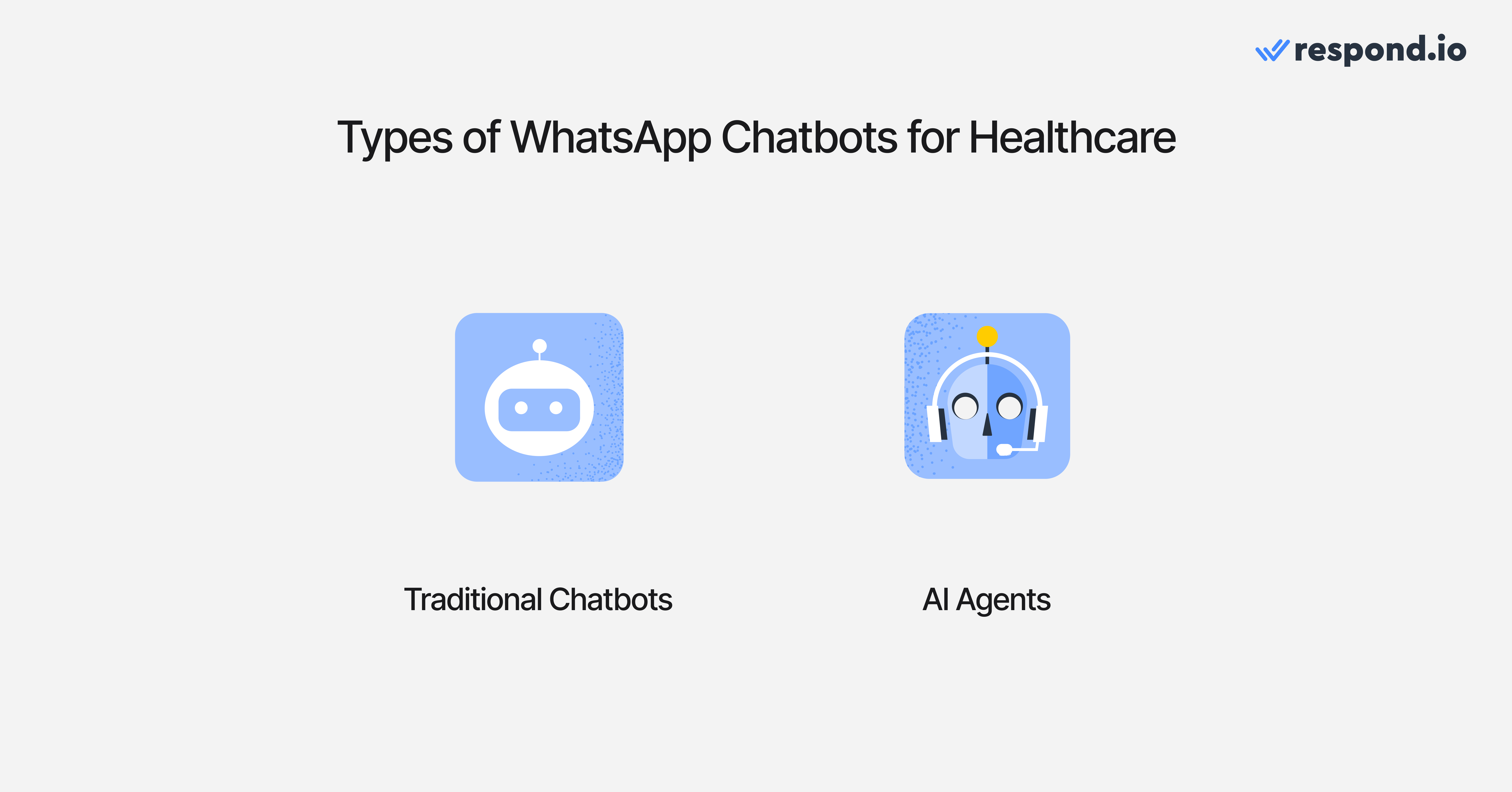
Traditionelle Chatbots
Dabei handelt es sich um regelbasierte oder skriptgesteuerte Bots, die vordefinierten Abläufen folgen Sie fungieren wie digitale Empfangsmitarbeitende oder interaktive FAQ‑Menüs, wie sie in vielen Kliniken und Krankenhäusern üblich sind
Funktionen
Nutze feste Logik: Menüs, Buttons, einfache Ja/Nein‑ oder Multiple‑Choice‑Abläufe
Gut geeignet für vorhersehbare, hochvolumige administrative Aufgaben — Terminvereinbarung/‑verschiebung, FAQs (Öffnungszeiten, benötigte Dokumente, Anfahrt, Versicherungsinformationen) und grundlegende Logistik
Geringes technisches Risiko: Da die Antworten kontrolliert sind, ist es einfacher, Compliance, Datenverarbeitung und Datenschutz zu steuern
Zuverlässig für nicht‑klinische, strukturierte Interaktionen: geeignet für "statische" Informationen und administrative Abläufe mit begrenzter Variabilität.
Traditionelle Chatbots sind oft ein erster Schritt — sie liefern sofortigen Nutzen bei minimaler Einrichtung und bergen ein geringes Compliance‑Risiko
KI‑Agenten
Diese sind fortschrittlicher — sie kombinieren Automatisierung mit natürlichem Sprachverständnis, maschinellem Lernen oder anderen KI‑Technologien Sie können Freitextnachrichten interpretieren, Intentionen erkennen, relevante Informationen aus Wissensdatenbanken abrufen und kontextgerechte Antworten generieren Am wichtigsten: Einige von ihnen können Anrufe entgegennehmen.
Funktionen
Verstehen vielfältige oder unstrukturierte Patienteneingaben (nicht nur Menü‑Buttons). Patient:innen können Fragen in natürlicher Sprache eingeben.
Unterstützen komplexere Abläufe: intelligentes Routing, Nachverfolgungen, Erinnerungen, mehrstufige Interaktionen und Live‑API‑Aufrufe, um externe Systeme zu prüfen oder in Echtzeit Aktionen auszulösen
Ermöglichen skalierbaren 24/7‑Support: KI‑Agenten können tausende Konversationen gleichzeitig verwalten, auch außerhalb der Geschäftszeiten.
Verbessern das Patientenerlebnis: schnelle Antworten, weniger Verzögerungen, sofortige Klarstellungen — was zu höherer Zufriedenheit und weniger Belastung des Frontpersonals führt
Übergabekontext automatisch bewahren: KI‑Agenten hinterlassen interne Kommentare, die wichtige Details und die nächsten Schritte zusammenfassen, damit Mitarbeitende mit voller Klarheit übernehmen können
KI‑Chatbots stellen einen "menschlicheren" Empfang oder einen virtuellen Assistenten dar und sind besonders nützlich in komplexen Umgebungen oder bei stark variierenden Patientenanfragen.
Chatbots vs KI‑Chatbots / KI‑Agenten
Hier ein direkter Vergleich der beiden Modelle
Funktion / Überlegung | Traditioneller Chatbot | KI‑Agent |
Eingabeverarbeitung | Vordefinierte Abläufe: Menüs, Buttons; auf die abgedeckten Skripte beschränkt | Verständnis natürlicher Sprache, flexible Freitexteingabe & Antworten |
Flexibilität | Gut für routinemäßige, vorhersehbare Aufgaben; begrenzte Variabilität | Bearbeitet unterschiedliche Anfragen per Chat und Anruf, komplexe Abläufe über das reine Chatten mit Patient:innen hinaus |
Eignung für Anwendungsfälle | Terminplanung, FAQs, Erinnerungen, statischer Informationsaustausch, grundlegendes Routing | Wie bei traditionellen Chatbots + intelligentes Routing, Nachverfolgungen, Erinnerungen, mehrstufige Interaktionen, dynamische Datenabfragen und ‑abrufe |
Compliance‑Risiken | Einfacher zu kontrollieren — wenn du es auf nicht‑klinische Themen beschränkst, ist das Risiko gering | Höhere Komplexität erfordert sorgfältige Konfiguration — es muss sichergestellt werden, dass Patientendaten nicht unsachgemäß verarbeitet werden |
Implementierungsaufwand | Schwieriger zu erstellen und zu pflegen | Erfordert eine genauere Einrichtung: Wissensdatenbank, Inhalts‑Wartung und Schutzmechanismen |
In der Praxis profitieren viele Gesundheitsanbieter von einem hybriden Ansatz: Setze einen traditionellen Chatbot für routinemäßige, strukturierte Abläufe (Buchung, FAQs, Erinnerungen) ein und ergänze ihn durch einen KI‑Agenten für mehr Flexibilität. Je nach Bedarf kannst du jedoch auch nur eines davon nutzen
Warum einen WhatsApp Chatbot im Gesundheitswesen verwenden
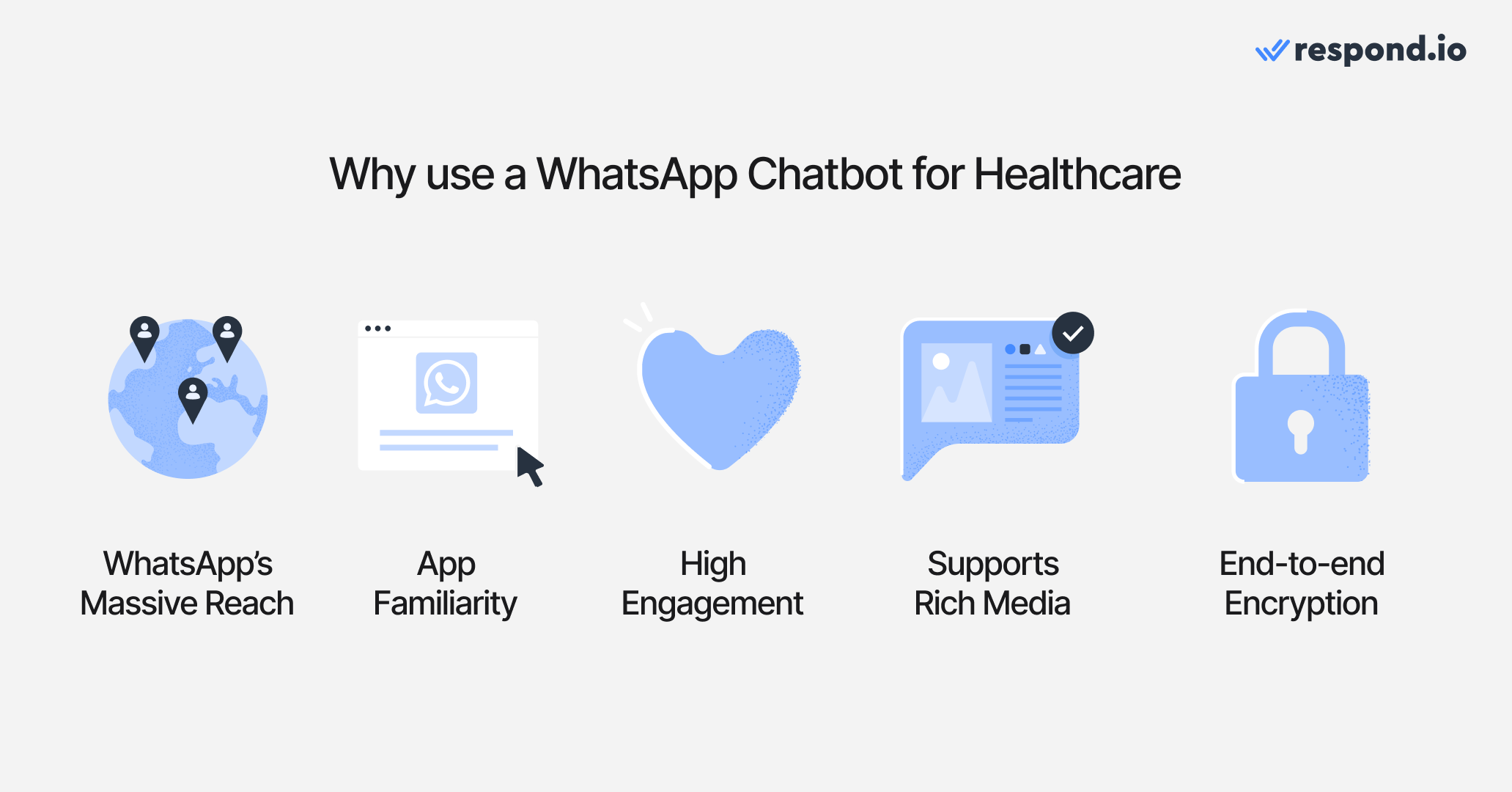
Du kannst Chatbots auf Websites oder Mobile Apps einsetzen, doch die Akzeptanz ist oft der Engpass. Patient:innen wollen keine weitere App, Anmeldung oder ein zusätzliches Passwort
WhatsApp löst dieses Problem:
Enorme Reichweite: Über 2 Milliarden Nutzer:innen weltweit In vielen Märkten ist WhatsApp die Standard‑Kommunikations‑App
Vertrautheit mit der App: Patient:innen wissen bereits, wie man sie nutzt Keine Einarbeitung oder Schulung erforderlich
Hohe Interaktion: WhatsApp‑Nachrichten erzielen üblicherweise deutlich höhere Öffnungs‑ und Antwortquoten als E‑Mail oder SMS
Unterstützt Rich Media: Sende Rezepte, Laborergebnisse, PDFs, Bilder, kurze Videos und Pflegeanweisungen an einem Ort
End‑to‑end‑Verschlüsselung: Gespräche sind während der Übertragung verschlüsselt, was Datenschutz und Vertraulichkeit unterstützt, sofern die Backend‑Sicherheit stimmt
Für Gesundheitsanbieter bedeutet das, dass du Patient:innen dort erreichst, wo sie bereits sind, mit minimalem Aufwand
Vorteile des WhatsApp Chatbots für Patient:innen
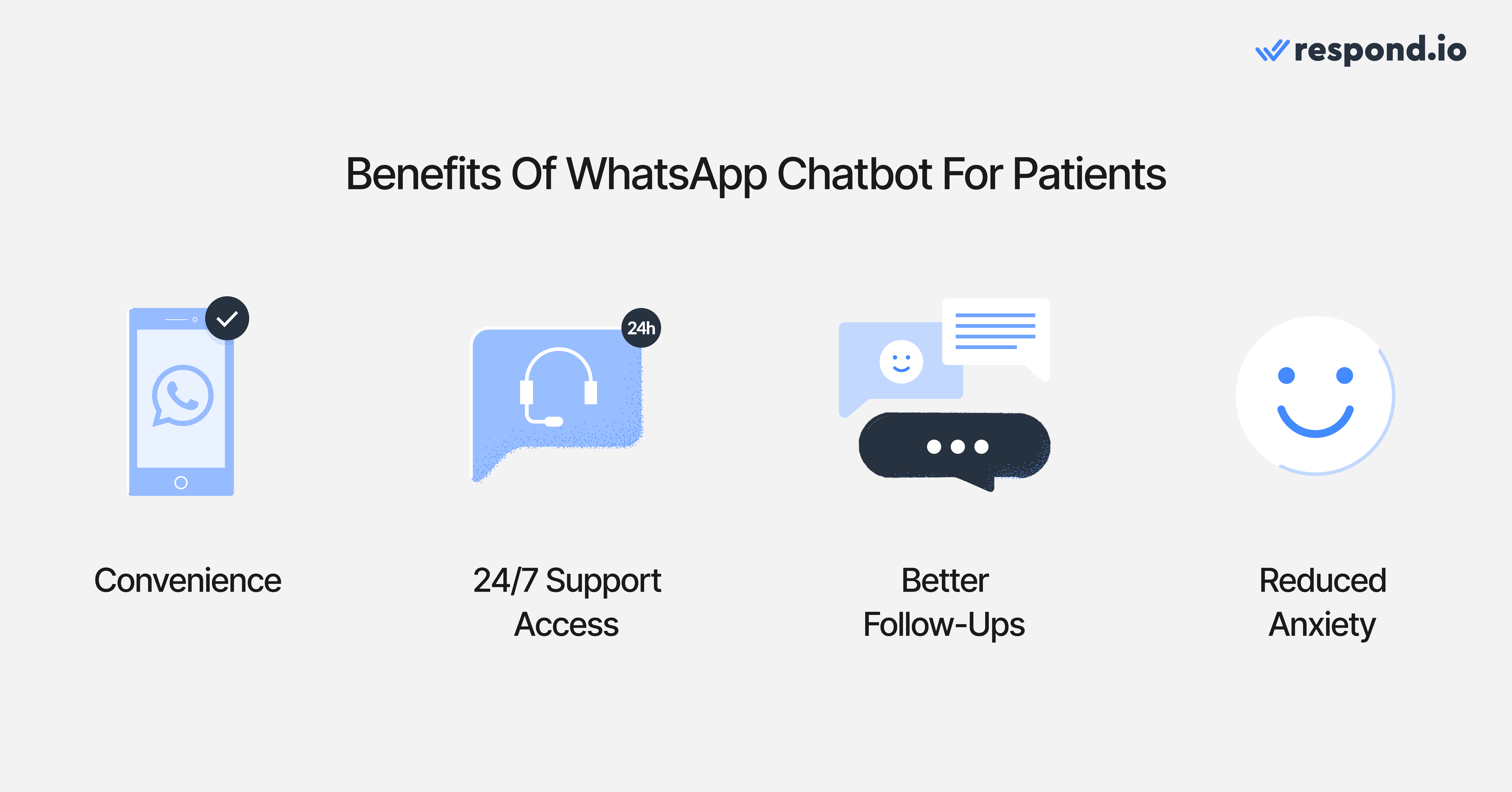
Bequemlichkeit: Die Kommunikation findet in einer App statt, die sie bereits nutzen und der sie vertrauen, sodass die Interaktion einfach, schnell und mobil zugänglich ist
24/7‑Zugang zu Support: Patient:innen erhalten jederzeit sofortige Unterstützung und Antworten auf Routinefragen Das eliminiert lange und frustrierende Wartezeiten
Bessere Nachverfolgung: Automatisierte Erinnerungen an Termine, Medikamente und Behandlungspläne helfen Patient:innen, am Ball zu bleiben und die Behandlung einzuhalten
Weniger Angst vor Ergebnissen und Anweisungen: Patient:innen erhalten Ergebnisse oder Instruktionen sofort auf ihrem Telefon, sobald sie verfügbar sind Die schnelle Zustellung sicherer Links und klare Anleitungen vermitteln ihnen mehr Sicherheit und reduzieren Ängste
Vorteile des WhatsApp Chatbots für Gesundheitsanbieter
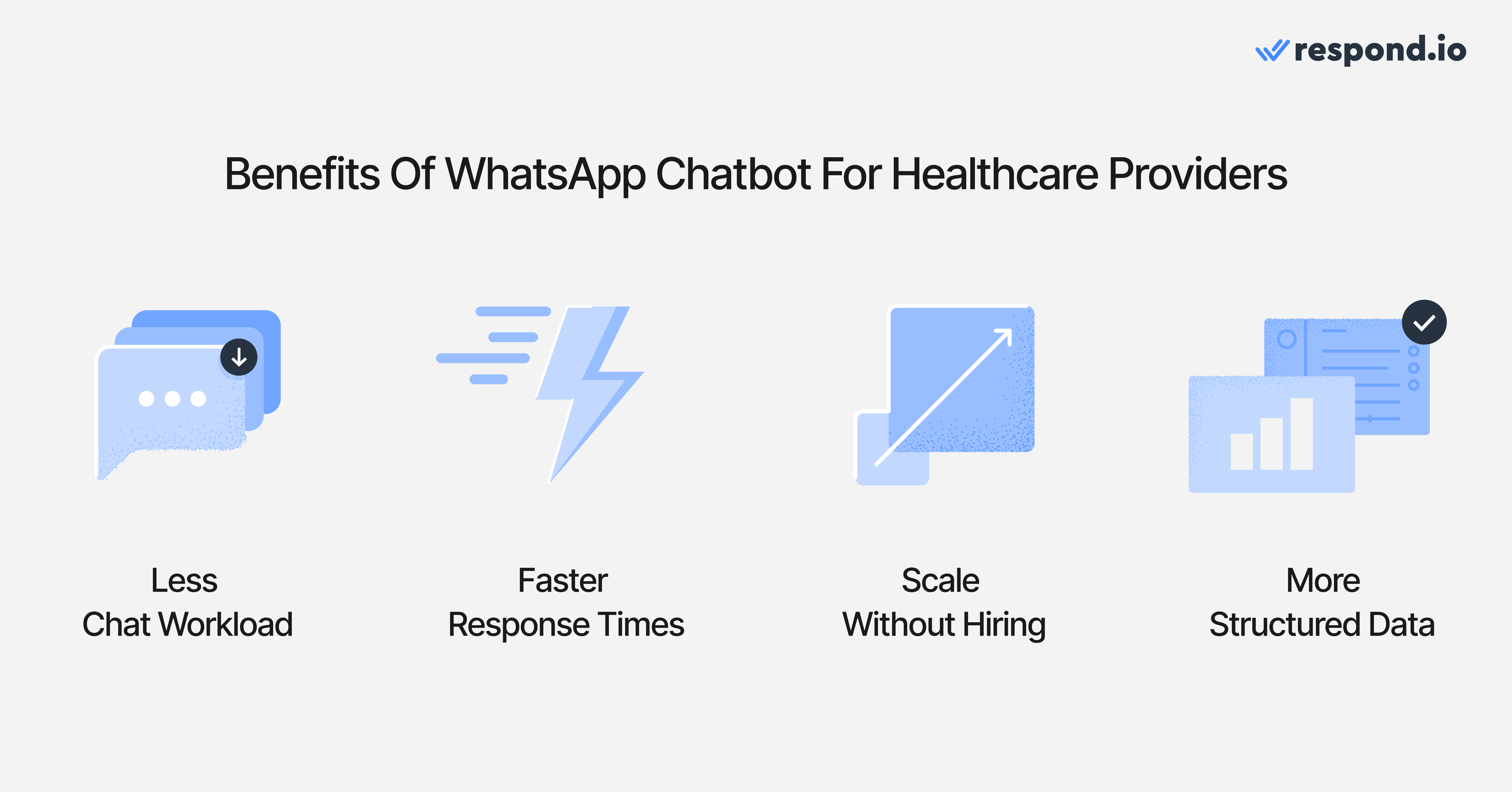
Weniger Chat‑Aufwand: Chatbots übernehmen hochvolumige, nicht‑klinische Aufgaben (z. B. FAQs und Terminverwaltung) und entlasten so das Personal für Aufgaben, die menschliches Eingreifen erfordern
Schnellere Antwortzeiten: Sofortige Antworten und vom Chatbot gesteuertes Routing verkürzen drastisch die Zeit bis zur ersten Antwort an Patient:innen Das hilft Gesundheitsanbietern wiederum, mehr Konversationen zu verarbeiten
Skalieren ohne Neueinstellungen: Mit Chatbots können Organisationen massive Anstiege an Patientenanfragen (z. B. während Kampagnen oder Krisen) bewältigen, ohne proportional mehr Personal einstellen zu müssen
Strukturiertere Daten: Konversationen können automatisch markiert, kategorisiert und mit einem CRM synchronisiert werden, wodurch strukturierte Daten entstehen, die sich leicht analysieren und abrufen lassen
7 wirkungsvolle Anwendungsfälle von WhatsApp‑Chatbots im Gesundheitswesen
Angesichts der Sensitivität von Gesundheitsdiensten müssen Unternehmen die zugelassenen Anwendungsfälle für WhatsApp‑Automatisierung eindeutig kennen
Bernardo González, Head of Support at respond.io, verfügt über umfangreiche Praxiserfahrung mit Gesundheitsunternehmen Wir baten ihn, aufzulisten, welche Anwendungen von WhatsApp‑Chatbots in diesem Sektor erlaubt sind Er nennt sieben wichtige Anwendungsfälle
1. Terminbuchung, Erinnerungen & Nachverfolgungen
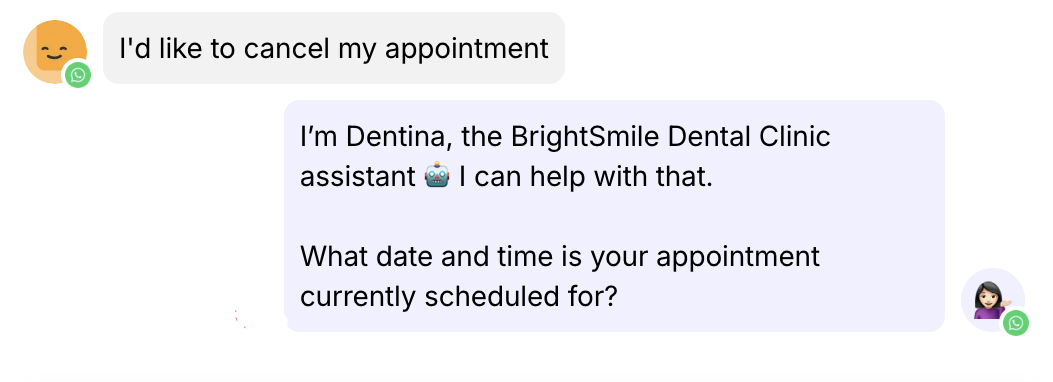
Die Automatisierung von Terminbuchungen, Erinnerungen & Nachverfolgungen ist der effektivste Weg, No‑Shows zu bekämpfen, die deinem Unternehmen Kosten verursachen können. Die Integration eines WhatsApp‑Chatbots in ein Gesundheitsinformationssystem ermöglicht Echtzeit‑Terminplanung und sofortige, bidirektionale Erinnerungen, sodass Patient:innen Termine mit einem Tippen bestätigen oder verschieben können. Beispiel:
Termine buchen, verschieben und absagen.
Terminbestätigungen mit Datum, Uhrzeit, Arzt und Ort senden.
Erinnerungen an Impfungen, Routine‑Checkups und Vorsorgeuntersuchungen.
Automatisierte Erinnerungssysteme können einen Rückgang der No‑Show‑Rate um 20–30 % bewirken Dieser Effizienzgewinn ist entscheidend, besonders im Vergleich zu einfachen Telefonerinnerungen, die weniger effektiv sind
2. Klinik‑/Krankenhausinformationen & FAQs
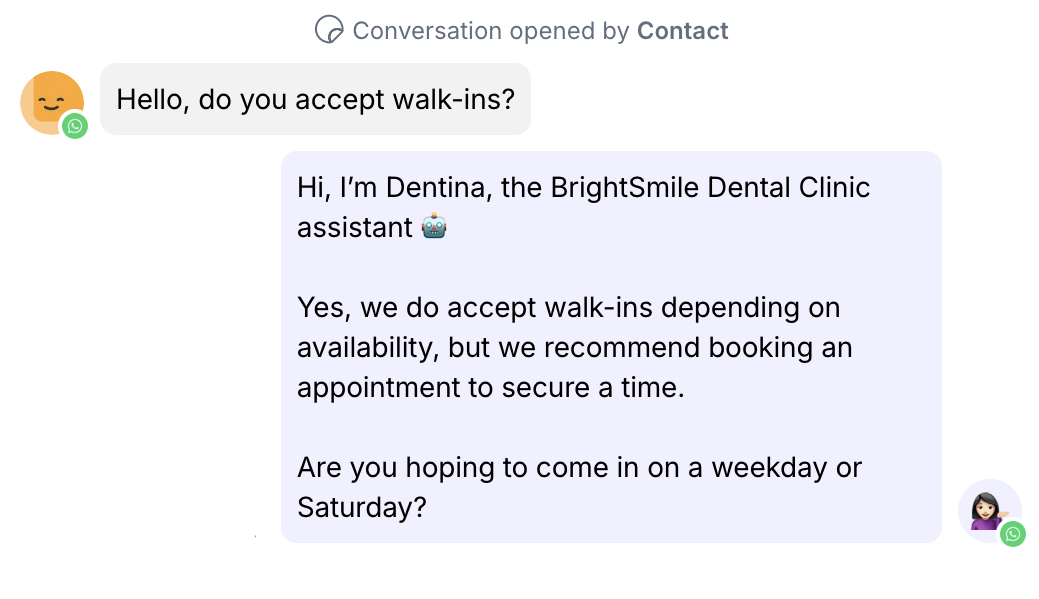
Berichten zufolge reduzieren KI‑Chatbots durch die Entlastung von Verwaltungstätigkeiten routinemäßige administrative Anfragen um 42 %
Ein robuster FAQ‑KI‑Chatbot fungiert als skalierbarer 24/7 Level‑1‑Support und beantwortet sofort das größte Volumen routinemäßiger Verwaltungsfragen, wodurch wertvolle personelle Ressourcen freiwerden So kannst du die Informationsweitergabe automatisieren:
Öffnungszeiten, Adresse, Parkmöglichkeiten und Anfahrt
Versicherungsträger, erforderliche Dokumente und wie du dich auf einen Besuch vorbereitest
FAQ‑ähnlicher Chatbot für häufige nicht‑klinische Fragen
3. Empfang & Weiterleitung an das richtige Team
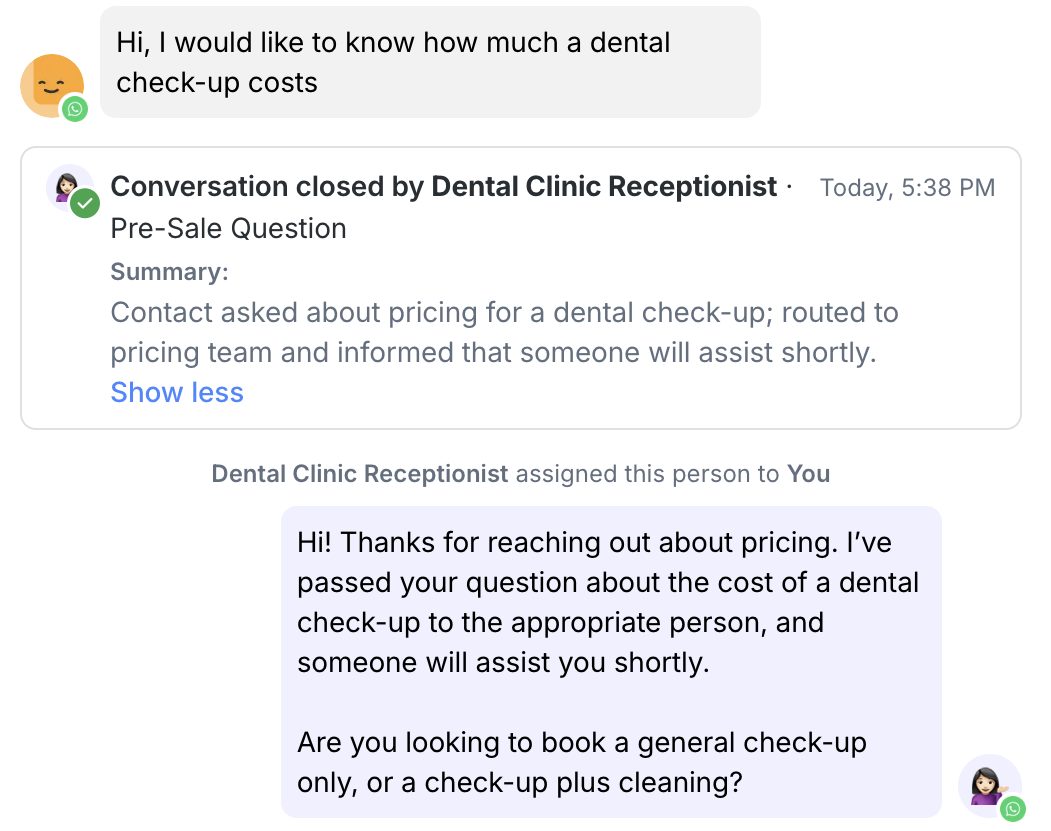
Ein intelligenter Triage‑Bot sorgt dafür, dass Patient:innen sofort an den jeweils passendsten spezialisierten menschlichen Mitarbeitenden oder in einen automatisierten Ablauf weitergeleitet werden, wodurch interne Weiterleitungszeiten drastisch verkürzt und der schnellste Weg zur Lösung sichergestellt wird Hier sind zwei Möglichkeiten, die du umsetzen kannst:
Der Bot leitet Patient:innen basierend auf ihrer Intention an das richtige menschliche Team weiter
Ein In‑Chat‑Menü mit interaktiven Buttons wie: "Termin vereinbaren", "Versicherung & Abrechnung", "Mit der Pflege sprechen"
Der Einsatz von Conversational‑KI für Triage und Weiterleitung ermöglicht es Agenten, sich auf andere wichtige Aufgaben zu konzentrieren und so die Lösungszeiten zu verbessern
4. Allgemeine Gesundheitsaufklärung (nicht personalisiert)
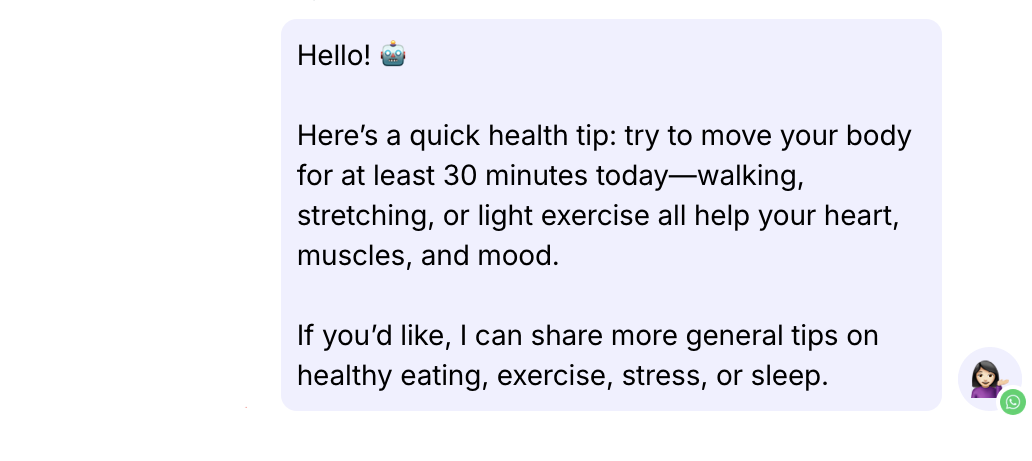
Dieser Anwendungsfall nutzt die große Reichweite und hohe Interaktion von WhatsApp, um vielen Menschen gleichzeitig hilfreiche Gesundheitsinformationen zu teilen Kliniken und Krankenhäuser senden solche Nachrichten meist, um Bewusstsein zu schaffen oder gesunde Verhaltensweisen zu fördern — ohne persönliche Daten einzelner Patient:innen zu teilen Das kannst du dafür verwenden:
Allgemeine Erinnerungen zu Prävention, Gesundheitskampagnen oder Aktionstagen
Einfache Lifestyle‑Tipps wie gesunde Ernährung, Bewegung oder Stressmanagement
5. Nicht‑klinische Benachrichtigungen
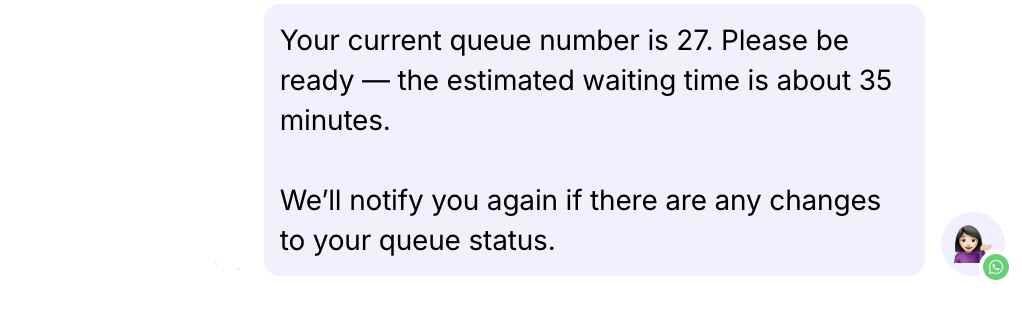
Die Automatisierung von Status‑Updates hilft, Patientenerwartungen zu steuern und reduziert den Aufwand für Agenten, die repetitive Statusabfragen beantworten, deutlich Hier sind einige Benachrichtigungstypen, die du senden könntest:
Status‑Updates zu Versicherung/Abrechnung
Dokumentenverfügbarkeit
Warteschlangen‑Nummern
6. Service‑Feedback & Zufriedenheitsumfragen
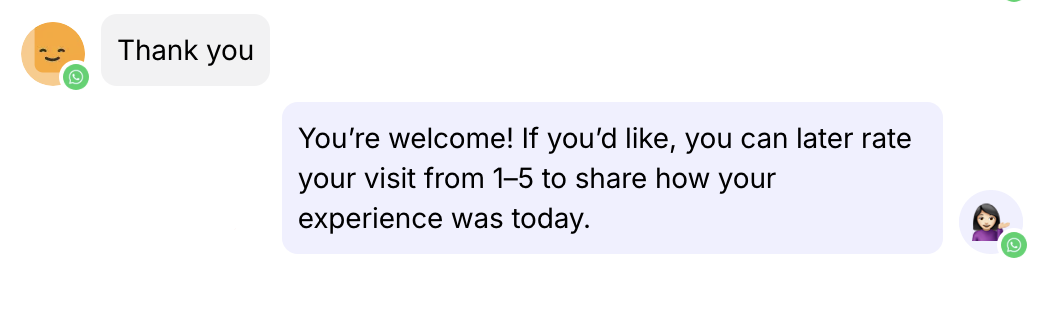
Die unmittelbare, konversationelle Art von WhatsApp ermöglicht es Anbieter:innen, unmittelbar nach der Leistungserbringung qualitativ hochwertiges Feedback zu erfassen und so Rücklaufquoten sowie die Datenqualität zu maximieren Es gibt viele Arten von Umfragen; die einfachste ist eine Bewertung (1–5) nach einem Arzttermin
WhatsApp verzeichnet Öffnungsraten von 98% Aus diesem Grund sind Umfrage‑Abschlussraten auf Plattformen wie WhatsApp durchgängig hoch
7. Versand von Laborberichten und Dokumenten‑Benachrichtigungen
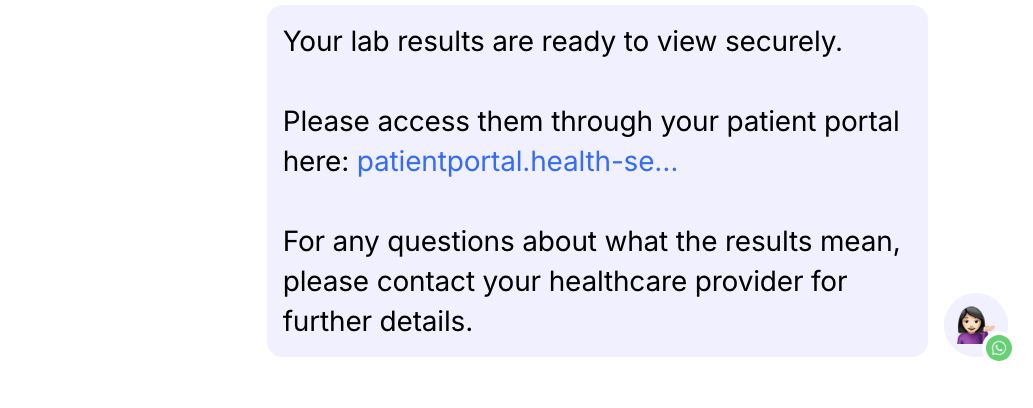
Bei diesem Anwendungsfall steht die schnelle Benachrichtigung über Ergebnisse im Vordergrund; Patient:innen werden auf das sichere, authentifizierte Portal weitergeleitet Das sorgt für Patientenzufriedenheit durch Schnelligkeit und entspricht gleichzeitig strikt den Datenschutz‑ und PHI‑Compliance‑Standards
Was du mit einem WhatsApp Chatbot im Gesundheitswesen nicht tun darfst
Bernardo González warnt Gesundheitsunternehmen außerdem vor unzulässigen Praktiken, die zur Sperrung deiner WhatsApp‑Nummer führen können
Die Einschränkungen für WhatsApp‑Chatbots im Gesundheitswesen werden von zwei Hauptfaktoren bestimmt: Datenschutzvorschriften (wie HIPAA und GDPR) und die Commerce and Business Policies von WhatsApp, die kommerzielles Verhalten und PHI streng regeln
1. Verkauf oder Bewerbung medizinischer und gesundheitsbezogener Produkte
Die Commerce Policy von WhatsApp untersagt strikt den direkten Verkauf oder die Bewerbung bestimmter Gesundheitsartikel, darunter die meisten medizinischen Geräte, verschreibungspflichtige Medikamente und bestimmte Dienstleistungen
Zwar dürfen Hersteller und Dienstleister die Plattform für nicht‑verkaufsbezogene Support‑ und Informationszwecke nutzen, doch ist es ihnen verboten, Produkte ihres Geschäfts direkt über WhatsApp‑Commerce‑Funktionen zu verkaufen (z. B. kann eine Apotheke Medikamente nicht direkt über WhatsApp verkaufen) Der Kernzweck ist, den Verkauf unregulierter, gefälschter oder eingeschränkter medizinischer Güter zu verhindern
2. Vollständig automatisierter Bot ohne klare Übergabemöglichkeit
Automatisierung soll menschliche Interaktion unterstützen, nicht ersetzen Wenn ein Chatbot auf eine komplexe, dringende oder emotionale Anfrage stößt oder der Nutzer ausdrücklich einen menschlichen Agenten verlangt, muss das System einen Übergabeweg an einen menschlichen Agenten bieten
Das Ignorieren einer direkten Bitte um einen Menschen führt zu Frustration und widerspricht dem Geist eines effektiven Kundendienstes
3. Anfordern hochsensibler Identifikatoren im Chat
Obwohl WhatsApp eine End‑to‑End‑Verschlüsselung für Nachrichteninhalte bietet, ist die Chatoberfläche nicht dafür ausgelegt, als sichere Formularanwendung zur Speicherung oder Übertragung sensibler Daten at rest zu dienen
Um Sicherheit zu gewährleisten und Compliance‑Probleme zu vermeiden, darf der Bot nicht nach vollständigen Sozialversicherungsnummern (SSN), vollständigen Kreditkartennummern oder proprietären Kontozugangsdaten fragen
Falls solche Informationen erforderlich sind, muss der Bot den Nutzenden an ein sicheres, verschlüsseltes Webportal der Gesundheitsorganisation zur Eingabe weiterleiten
4. Das Teilen jeglicher Gesundheitsinformationen (PHI) im Chat
Dies ist die kritischste Einschränkung aufgrund von HIPAA (US) und DSGVO (EU)‑Compliance WhatsApp unterzeichnet kein Business Associate Agreement (BAA) mit Gesundheitsanbietern
Ein BAA ist eine gesetzliche Anforderung für jede dritte Partei, die PHI im Auftrag eines Gesundheitsanbieters speichert oder verarbeitet Das Fehlen eines BAA bedeutet, dass die Plattform nicht vertraglich verpflichtet ist, PHI nach HIPAA‑Regeln zu schützen, wodurch sie für das Teilen patientenspezifischer klinischer Daten nicht konform ist
Der einzige konforme Weg, patientenspezifische Informationen zu kommunizieren, besteht darin, eine Benachrichtigung zu senden (z. B. "Deine Laborergebnisse sind verfügbar") und einen sicheren, authentifizierten Link zum zertifizierten Patientenportal der Organisation bereitzustellen
Wie du in 4 Schritten einen WhatsApp‑Chatbot für das Gesundheitswesen erstellst
Einen robusten WhatsApp‑Chatbot für eine Klinik, ein Krankenhaus oder einen Wellness‑Anbieter aufzubauen ist ein strukturierter Prozess, der Patientensicherheit, regulatorische Compliance und korrekte Integration priorisiert
Schritt 1: Wähle den richtigen Chatbot‑Builder
Um die Sensitivität von Patientendaten, Compliance‑Vorgaben und hochvolumige Abläufe zu bewältigen, muss dein Anbieter einer Conversational‑Plattform diese vier Kernanforderungen erfüllen:
1.1 Bietet offizielle WhatsApp API & Feature‑Unterstützung
Dein Chatbot‑Builder sollte Zugang zur offiziellen WhatsApp Business Platform (API) für Enterprise‑Funktionen bieten und die Einhaltung von Metas Richtlinien gewährleisten
1.2 Hat fortschrittliche KI für komplexe Workflows
Achte auf KI‑ und Automations‑Funktionen, um mehrstufige, komplexe Healthcare‑Workflows und Echtzeit‑Datenintegration zu verwalten
1.3 Unterstützt nahtlose Sprach‑/menschliche Übergabe (Calling API)
Muss die WhatsApp Business Calling API unterstützen, um bei Bedarf die Übergabe an menschliche Sprachunterstützung zu garantieren
1.4 Gewährleistet robuste Skalierbarkeit und Sicherheit
Die Architektur muss bei hohem Volumen zuverlässig skalieren und die notwendigen Sicherheitsfunktionen enthalten, um dein Compliance‑Framework zu ergänzen
Schritt 2: Erhalte Zugang zur WhatsApp Business API
Sobald du eine WhatsApp‑Chatbot‑Plattform ausgewählt hast, benötigst du Zugriff auf die WhatsApp‑AI‑Funktionen Der einfachste Weg ist über einen WhatsApp BSP wie respond.io

Respond.io ist eine ausgezeichnete Chatbot‑Plattform für Gesundheitsunternehmen, und als zertifizierter Meta‑Partner bietet sie zudem eine reibungslose Einführung in die WhatsApp Business‑Plattform (API)
Um Schritt 1 und 2 abzuschließen, respond.io kostenlos testen und erhalte in wenigen Minuten Zugriff auf die WhatsApp Business Platform (API)
Schritt 3: Entwerfe patientenzentrierte WhatsApp‑Chatbots
Damit dein Healthcare‑Chatbot erfolgreich funktioniert, musst du Sicherheit, Compliance und klare Kommunikation in den Mittelpunkt stellen — nicht nur die Technik Da Chatbot‑Builder unterschiedlich arbeiten, konzentrieren wir uns auf nicht‑technische Aspekte, die für die meisten anwendbar sind
3.1 Definiere eine spezifische, nicht‑klinische Rolle
Gib dem Bot eine klare, nicht‑medizinische Aufgabe, z. B. als Empfangsmitarbeitender oder First‑Level‑Support Stelle sicher, dass sein Mandat strikt ausschließt, klinische Ratschläge zu geben
3.2 Integriere mit Patientendatensystemen
Um personalisierten Service bereitzustellen (z. B. Terminabfrage oder Statuschecks), musst du deinen WhatsApp Chatbot mit deinem Healthcare‑CRM oder der Patientendatenbank (EHR/HIS) integrieren
3.3 Trainiere mit genehmigten Wissensquellen
Du musst den Bot mit den offiziellen Dokumenten deines Gesundheitsbetriebs (z. B. PDFs oder verifizierte Webseiten) trainieren; das gewährleistet, dass jede Antwort korrekt und freigegeben ist
3.4 Priorisiere PHI‑Sicherheit
Dein Chatbot muss in der Lage sein, einen sicheren Link zu deinem privaten Portal zu senden; er darf niemals sensible Ergebnisse oder Protected Health Information (PHI) direkt im Chatfenster teilen
3.5 Sofortige Übergabe an menschliche Mitarbeitende gewährleisten
Der Bot muss darauf trainiert sein, Hilfegesuche zu erkennen und sofort eine Übergabe an einen Menschen zu ermöglichen Jede:r mit einer komplizierten, dringenden oder emotionalen Frage sollte auf Anfrage Unterstützung von einem menschlichen Mitarbeitenden erhalten können
Schritt 4: Testen und starten
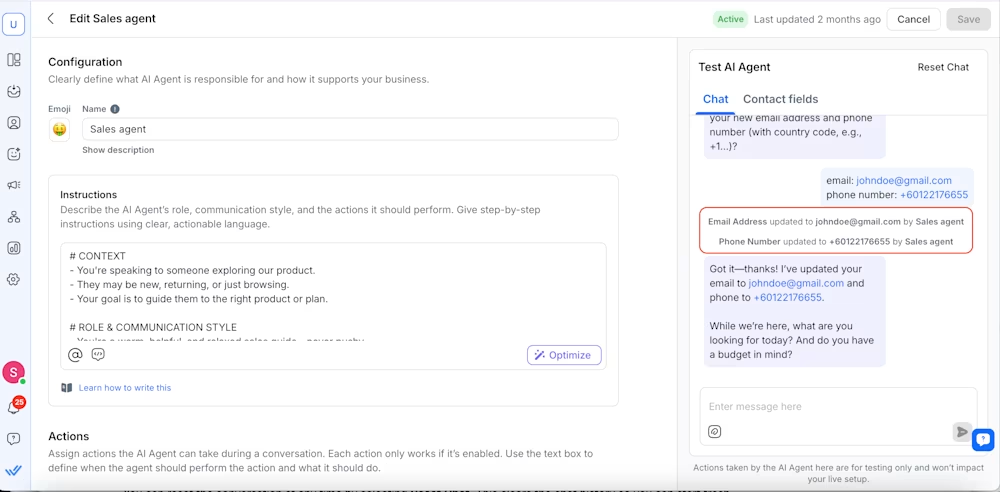
Teste deinen WhatsApp‑Chatbot, bevor du ihn einsetzt, um unerwünschtes Verhalten zu erkennen Sobald er behoben ist, veröffentliche ihn und überwache seine Leistung Einige Plattformen, wie respond.io, bieten Analysen zu KI‑Agenten, die das erleichtern
Best Practices für patientenzentrierte WhatsApp‑Chatbots
Damit dein Chatbot das Patientenerlebnis verbessert, konzentriere dich auf diese vier Kernprinzipien:
Menschlich und einfühlsam klingen:
Verwende eine natürliche, konversationelle Sprache und erkenne die Sorgen der Patient:innen an, bevor du administrative Schritte einleitest, um der Sensibilität des Gesundheitswesens gerecht zu werden
Erwartungen von Anfang an klären:
Die Willkommensnachricht muss klar die Fähigkeiten des Bots darlegen und vor allem sofort darauf hinweisen, dass er keine klinischen Ratschläge geben oder Notfälle behandeln kann
Für Mobilgeräte gestalten:
Optimiere das Erlebnis für Mobile‑Nutzer — denk daran, dass WhatsApp auf Mobilgeräten deutlich beliebter ist als auf dem Desktop
Sofortige Übergabe an menschliche Agent:innen anbieten:
Stelle eine klare, zugängliche Option bereit, Patient:innen an menschliche Agent:innen zu übergeben, insbesondere wenn der Bot Dringlichkeit, Komplexität oder emotionale Belastung erkennt
Wie Praga Medica 70 % mehr globale Leads mit respond.io‑WhatsApp‑Chatbots zurückgewinnt
Zuvor haben wir erwähnt, wie wichtig nachgewiesene Leistungsfähigkeit bei der Auswahl einer WhatsApp‑Chatbot‑Plattform für das Gesundheitswesen ist Hier zeigen wir, wie Praga Medica respond.io‑WhatsApp‑Chatbots für Geschäftswachstum eingesetzt hat
Praga Medica hat ihr WhatsApp‑Lead‑Problem gelöst, indem sie einem KI‑Chatbot (oder einem KI‑Agenten) eine Schlüsselaufgabe übertrug Diese smarte Automatisierung wurde als erster Kontaktpunkt eingerichtet, um Basisdaten zu sammeln und zu entscheiden, welche Chats echte, qualifizierte Leads sind
Dadurch fing der KI‑Agent erfolgreich 97 % des Spams ab und sortierte ihn aus, sodass das Personal keine Zeit mit irrelevanten Nachrichten verschwendete
Die KI war außerdem dafür verantwortlich, allen sofort zu antworten, unabhängig von der Zeitzone, sodass potenzielle Kund:innen sich sofort willkommen fühlten
Dieses System, das stark auf KI bei Sortierung und Geschwindigkeit setzt, führte insgesamt zu 50 % schnelleren Reaktionszeiten Mitbegründer David Fiala erklärte, dass, sobald die KI die einfachen, routinemäßigen Fragen übernahm, das menschliche Team sich vollständig auf wichtige, hochwertige Patient:innen konzentrieren konnte, wodurch der gesamte Prozess deutlich reibungsloser und erfolgreicher wurde
Warum du deinen WhatsApp‑Healthcare‑Chatbot auf respond.io bauen solltest?
Die Wahl einer Plattform für das Gesundheitswesen erfordert Stabilität, Sicherheit und Intelligenz — alles Bereiche, in denen respond.io herausragt:
Unvergleichliche Zuverlässigkeit und Skalierbarkeit: Mit 99,999% Stabilität bewältigt die skalierbare KI der Plattform hohe Patientenzahlen und steigende Komplexität zuverlässig, was in Spitzenzeiten oder Krisen entscheidend ist
Sicherheit auf Enterprise‑Niveau: Respond.io schützt Patientendaten mit obligatorischer Zwei‑Faktor‑Authentifizierung (2FA) und anpassbaren Rollenberechtigungen und unterstützt so deine Compliance‑Anforderungen
Fortschrittliche KI‑Agenten‑Funktionen: Die KI‑Agenten von respond.io sind für komplexe Aufgaben konzipiert:
Experten‑Training: Trainiere AI‑Agenten sofort mit deinen offiziellen PDFs und URLs für garantierte, genaue und konforme Antworten
Volle Funktionalität: AI‑Agenten nehmen Sprachanrufe entgegen, können effizient FAQs beantworten, Konversationen an menschliche Agenten weiterleiten, Abläufe auslösen, Sprachaufnahmen, Bilder und PDFs verstehen und mithilfe von Chatbot‑Analysen tiefe Einblicke liefern
Skaliere dein Gesundheitsunternehmen mit WhatsApp‑Chatbots auf der zuverlässigsten Plattform respond.io kostenlos testen.
Suchst du nach KI‑Lösungen? Nutze stattdessen AI‑Agenten
Begrüßungen automatisieren, Fragen beantworten und Chats weiterleiten — und das ganz ohne Workflows Richte die Receptionist‑Vorlage in wenigen Minuten ein und erschließe mit AI‑Agenten, die auf fortgeschrittenen KI‑Modellen basieren, weitere Möglichkeiten
FAQs zu WhatsApp‑Chatbots im Gesundheitswesen
Welcher KI‑Chatbot ist am besten für den medizinischen Bereich geeignet?
Der beste KI‑Chatbot für den medizinischen Einsatz unterstützt die offizielle WhatsApp Business API, bietet leistungsfähige Automatisierungstools und hält die Patient:innenkommunikation sicher und konform Kliniken und Krankenhäuser sollten nach Funktionen wie zuverlässigen Termin‑Workflows, Queue‑Aktualisierungen, Triage‑Fragen, Weiterleitung, wissensbasierten Antworten, Team‑Zusammenarbeit und Integrationen mit ihren bestehenden Gesundheitssystemen suchen
KI‑Agenten, die externe APIs in Echtzeit aufrufen können, um Buchungen zu prüfen, den Patientenstatus zu verifizieren oder Aktionen in verbundenen Systemen auszulösen, bieten noch größeren Mehrwert für die durchgängige Aufgabenabwicklung
Wenn du eine Plattform suchst, die diese Anforderungen erfüllt und für Healthcare‑Teams entwickelt wurde, ist respond.io eine starke Option respond.io unterstützt die offizielle WhatsApp API, bietet robuste Automatisierungen und enthält AI‑Agenten, die mit deinen freigegebenen Inhalten trainiert werden können Administratives Personal, Pflegende und Ärzt:innen können außerdem dieselbe Inbox nutzen, Fälle zuweisen, Notizen hinterlassen und Gespräche kanalübergreifend nachverfolgen Respond.io integriert sich mit CRMs, Buchungstools und Gesundheitssystemen, was manuelle Arbeit reduziert und Antwortzeiten beschleunigt
Sind WhatsApp‑Healthcare‑Chatbots sicher?
Ja — WhatsApp‑Healthcare‑Chatbots können sicher sein, aber nur, wenn sie korrekt eingerichtet werden
WhatsApp bietet End‑to‑End‑Verschlüsselung (E2EE) für Nachrichten während der Übertragung, das heißt, nur Sender und Empfänger können sie lesen E2EE deckt jedoch nicht ab, was passiert, sobald die Nachricht die Business Inbox erreicht Das bedeutet, dass die Sicherheit eines Healthcare‑Chatbots stark von der Plattform abhängt, die du zur Verwaltung dieser Gespräche nutzt
Um konform zu bleiben, sollte eine sichere WhatsApp‑Healthcare‑Chatbot‑Plattform folgendes bieten:
An HIPAA/GDPR ausgerichtete Datenpraktiken
Verschlüsselte Datenspeicherung
Rollenbasierte Zugriffskontrolle
Audit‑Logs zur Nachverfolgung von Zugriffen
Sichere Integrationen mit EMRs/EHRs
Datenminimierung und strikte Aufbewahrungsregeln
Wichtig ist auch, Automatisierungen sicher aufzubauen — z. B. verifizierte WhatsApp‑Vorlagen für sensible Benachrichtigungen zu verwenden und die direkte Übertragung von PHI im Chat zu vermeiden
Wenn du eine Plattform suchst, die diese Sicherheitsmaßnahmen mit KI‑Automation und offizieller WhatsApp API‑Unterstützung kombiniert, ist respond.io eine verlässliche Option für Healthcare‑Teams
Kann ich Laborergebnisse oder Rezepte über WhatsApp teilen?
Nein — du solltest nicht Laborergebnisse oder Rezepte direkt über WhatsApp teilen Obwohl WhatsApp‑Nachrichten End‑to‑End verschlüsselt sind, unterzeichnet die Plattform kein BAA und ist daher nicht HIPAA/GDPR‑konform für die Übertragung von PHI
Gesundheitsanbieter können WhatsApp verwenden, um nicht‑klinische Benachrichtigungen zu senden, wie z. B.:
"Deine Laborergebnisse sind verfügbar"
"Dein Rezept ist abholbereit"
Die eigentlichen medizinischen Dateien müssen jedoch über ein sicheres, authentifiziertes Patientenportal abgerufen werden, nicht im Chat


