
















 Electronics
 Fashion & Apparel
 Furniture
 Jewelry and Watches
 Afterschool Activities
 Sport & Fitness
 Beauty Center
 Dental Clinic
 Medical Clinic
 Home Cleaning & Maid Services
 Photography & Videography
 Car Dealership
 Travel Agency & Tour Operator

TL;DR – Zoko Review
Zoko is a solid choice for small to medium businesses that need an affordable WhatsApp CRM with simple automation and quick setup.
Pricing scales quickly with message volume, limited omnichannel scope and no published SLA or enterprise-grade reliability.
For businesses planning to scale or adopt an omnichannel approach, respond.io provides more advanced automation, AI capabilities and enterprise-grade reliability.
Zoko positions itself as a WhatsApp platform purpose-built for Shopify stores that lets businesses turn chat into sales. It’s ideal for small to medium Shopify businesses wanting to drive sales via WhatsApp, but growth-stage B2C companies must carefully validate costs and enterprise readiness. This is because Zoko’s pricing scales with message volume and its infrastructure lacks public reliability guarantees and advanced automation support.
In this review, we’ll take a closer look at what Zoko offers: its features, pricing, strengths and weaknesses, and help you decide if it’s the right fit for your business. We’ll also compare it with an alternative product, such as respond.io, for growing businesses.
What is Zoko?
Zoko is a commerce-first WhatsApp tool built around Shopify integration. It supports catalog sync, abandoned cart recovery, order updates, broadcast campaigns and a shared inbox for agents along with basic ChatGPT-powered automation.
For mid-market B2C teams, that makes it a strong commerce workflow layer, not a full customer relationship management system on its own. Buyers should confirm whether conversation history follows the contact record, whether lifecycle stages update automatically and whether conversations can be tied back to pipeline and revenue inside the systems already used by sales and marketing.
Zoko’s positioning is clear: “WhatsApp built for Shopify stores”, which turns chat into a revenue channel rather than merely support.
The platform works best when the revenue flow starts and ends in Shopify. It covers the core use cases most teams expect at launch: product sync, abandoned cart recovery, order updates and broadcast campaigns tied to store activity.
The limit appears when teams need longer nurture paths, non-Shopify data or follow-up across more than one channel. At that point, a broader customer conversation platform like respond.io becomes easier to justify because it can coordinate customer journeys beyond a Shopify-only setup.
Zoko review, at a glance
Category | Details |
Verdict | 7 / 10 |
Best for | Shopify-led small to medium businesses, early B2C businesses |
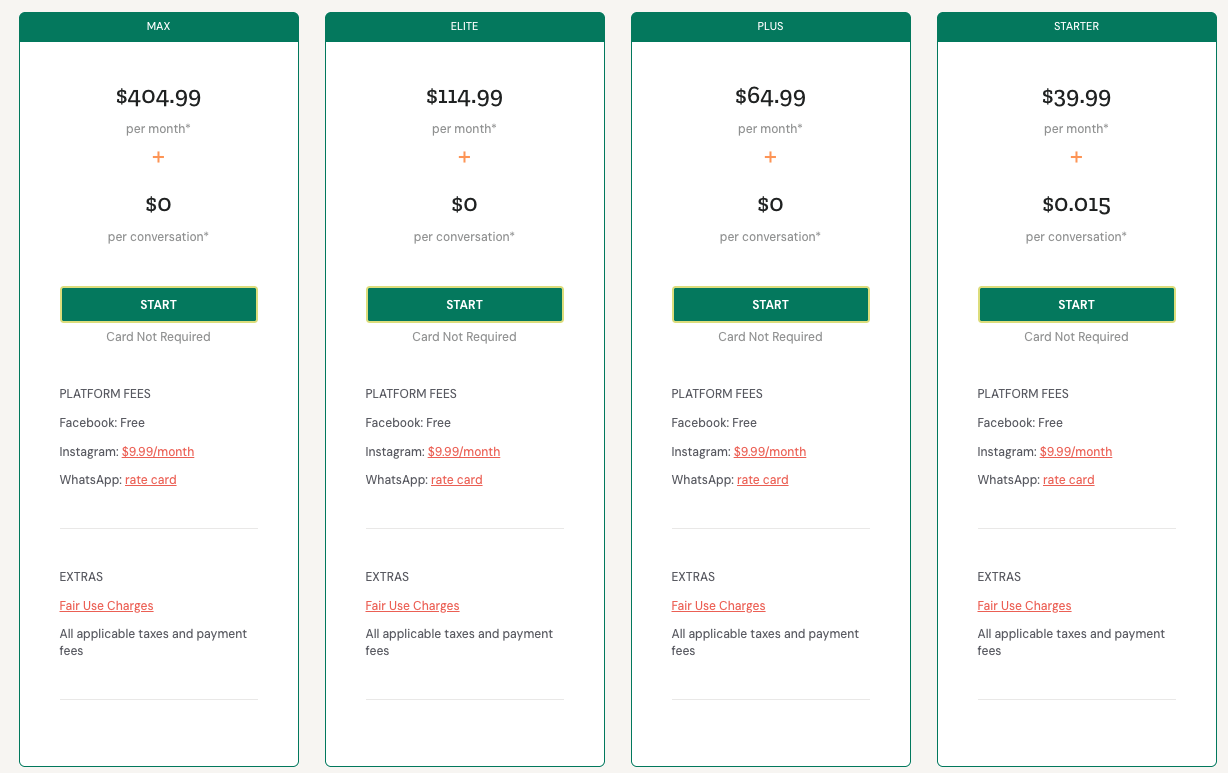
Zoko pricing | Affordable, with tiered plans available (Ranging from USD39.99 to USD404.99) |
Core Strength | Fast setup, deep Shopify alignment that supports WhatsApp features and AI bots |
Primary Weaknesses | Cost and scale concerns may emerge for Zoko. It also has limited omnichannel scope and enterprise-grade reliability |
Best Zoko alternative: Respond.io | More suited for medium to large B2C businesses requiring scale, reliability and true omnichannel reach |
Turn customer conversations into business growth with respond.io. ✨
Manage calls, chats and emails in one place!
Ratings & user feedback
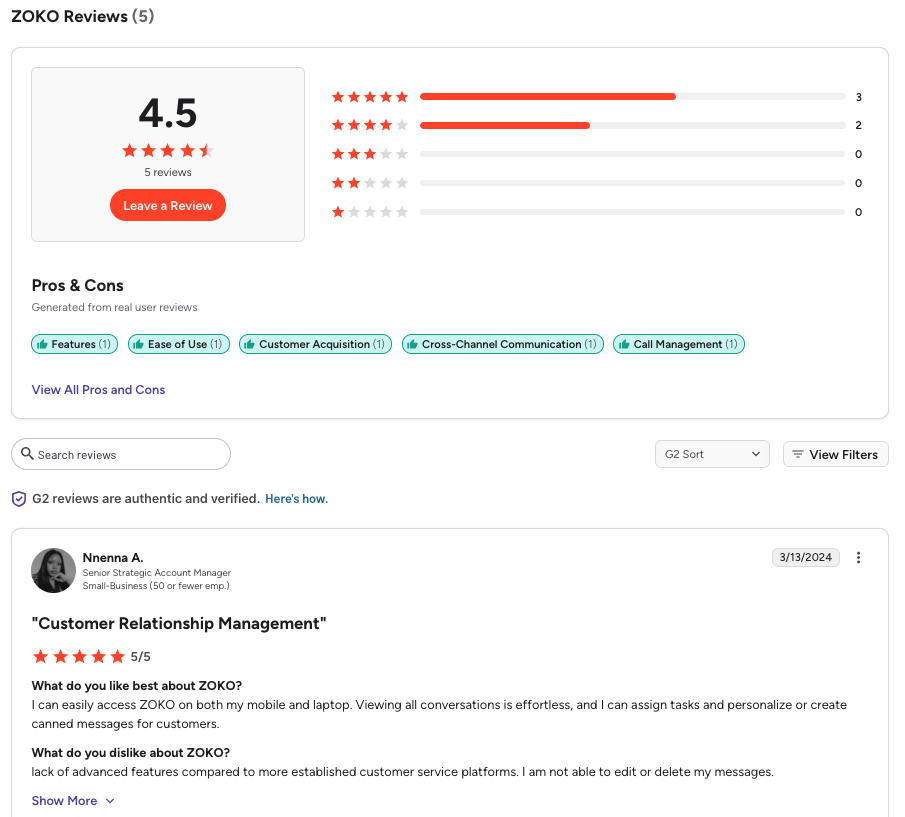
G2: 4.5 / 5 (5 reviews)
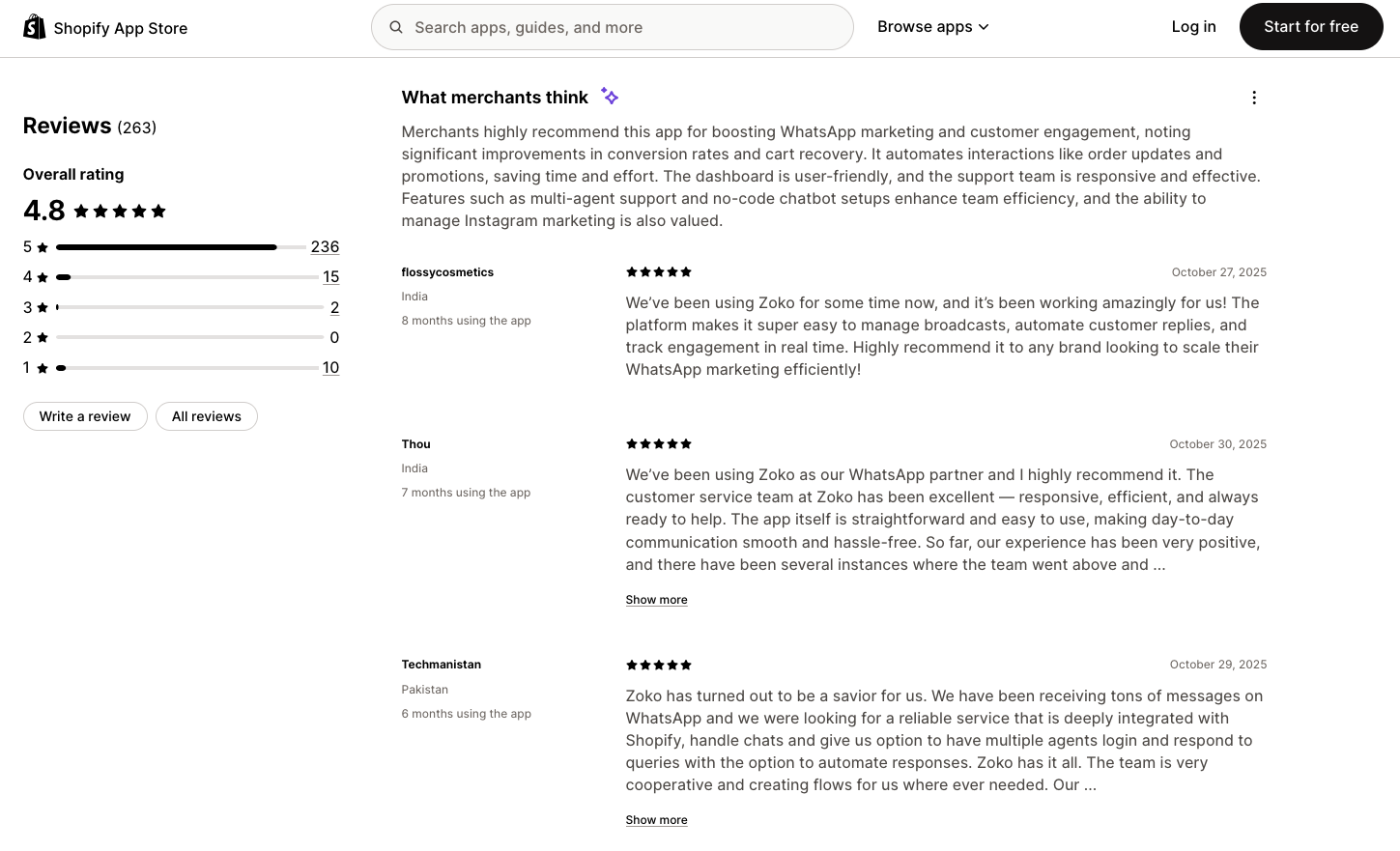
Shopify App Store: 4.8 / 5 (259 reviews)
Overall positive themes
Users praise Zoko for its automation, seamless Shopify integration, chatbots and broadcasting. Many see a lot of improvement in their efficiency and sales, highlighting features such as cart recovery workflows via WhatsApp.
Their support team is also responsive and supportive.
Overall negative themes
Critiques often mention onboarding friction, pricing escalations and the need to understand WhatsApp Business API setup behind the scenes.
For growth teams, that is not just a service issue. Buyers should confirm whether live help is available when campaigns fail, how escalation works and how much internal effort is needed to keep sales and support conversations moving.
Who is Zoko best for?
Zoko is best for Shopify-native small to medium businesses that use WhatsApp as their main commerce and communication channel. It suits:
Shopify-native small to medium businesses selling online and using WhatsApp as a primary commerce and communication channel.
Businesses with moderate volume, focused on conversion via chat and cart recovery.
Businesses that want a WhatsApp-centric CRM without heavy multi-channel ambition.
If your business expands to include channels beyond WhatsApp or heavy concurrency, Zoko may feel restrictive in the future.
Zoko plans 2026
Zoko’s cost is structured as:
Base subscription or tiered plan fee
Zoko WhatsApp pricing: WhatsApp messaging (API) charges by Meta
Feature, fair-use and overcharge fees on Zoko platform
Zoko plans | Zoko pricing (monthly) | Fair use limit | Additional fee per conversation |
Starter | $39.99 | N/A | N/A |
Plus | $64.99 | 5k conversations per month | *$0.00199 per conversation |
Elite | $114.99 | 100k conversations per month | *$0.00099 per conversation |
Max | $404.99 | 5m conversations per month | *$0.00049 per conversation |
The main differences between each Zoko pricing plan lie in their fair usage limits and the number of agents included.
Each plan has a “fair use” number of agents. Extra agents are an extra cost per agent.
Plus: 5 agents; $15 per extra agent (monthly)
Elite: 10 agents; $12 per extra agent (monthly)
Max: 30 agents; contact Zoko for more agents
Other notable details:
Zoko Flows: Prebuilt e-commerce flows are typically free, but custom flows may incur “per flow” charges at $5.99 per flow, per month.
Instagram is an additional add-on, priced $9.99/month.
The entry cost is competitive, but as you scale, expenses may add up as your conversation volume increases or you require more advanced features. If you value clear, predictable pricing as you grow, you may want to consider respond.io. Meta's own WhatsApp charges now cover service messages past 1,000 per number monthly and utility templates sent inside the 24-hour window, so check whether a provider adds a markup on top. respond.io adds none, and waives the card processing fee on WhatsApp balance top-ups until further notice.
Zoko pros and cons
Zoko pros
Deep Shopify integration: Zoko automatically syncs product catalog, order details, cart recovery and supports in-chat sales.
Multi-agent shared inbox: Multiple agents can use the same WhatsApp number to use the shared inbox with team handovers, private notes and assignments.
Pre-built flows & automation tools for commerce: Useabandonedcart recovery, order updates, broadcast campaigns and sequence flows built for Shopify use cases.
Bot or AI integration: There’s also the option to use ChatGPT-powered bots or automated responses on top of conversation flows. Remember to add credits to your ChatGPT account for Zoko AI to work.
Zoko cons
Complex pricing: Many users report that once scaling, flow steps, agent or fair-use charges can accumulate heavily.
Channel and integration scope limitation: Zoko is heavily WhatsApp- and Shopify-centric, with some Meta surfaces, but other channels (email, TikTok, Telegram, WeChat, etc.) are not available.
Limited transparency: Zoko does not publish enterprise-grade uptime guarantees.
Scalability complexity: As volume or flow complexity rises, performance, API latency or rate limits may become constraints.
Notable capabilities
Flows & automation (Zoko Flow builder): You can build multi-step workflows (e.g., abandoned cart, order notifications, upsell prompts). Most are prebuilt and free, while you can also customize your own.
Broadcasts & segment campaigns: Zoko can run segmented WhatsApp campaigns for promotions, reminders and reactivation. Buyers should still test how precise the segmentation is, whether campaigns can be scheduled around buying moments, whether replies can trigger follow-up workflows and whether reporting connects campaign activity to downstream sales outcomes rather than only message delivery.
Shared inbox & team collaboration: Chat assignment, agent handover and private internal notes under the same WhatsApp number.
Bot integration (ChatGPT): The platform supports ChatGPT-powered replies for simple frequently asked questions and basic conversation flows, but buyers should separate that from rule-based automation and AI Agents that take action inside the workflow. Growing B2C teams should test whether a platform can qualify leads, update lifecycle stages, trigger workflows, route by intent and generate summaries for handovers.
Zoko is excellent for businesses centred on WhatsApp commerce within the Shopify ecosystem. However, if you anticipate high volume, complex routing or multi-channel growth, Zoko may impose hidden constraints. You’ll be safer looking at platforms like respond.io.
How to use Zoko
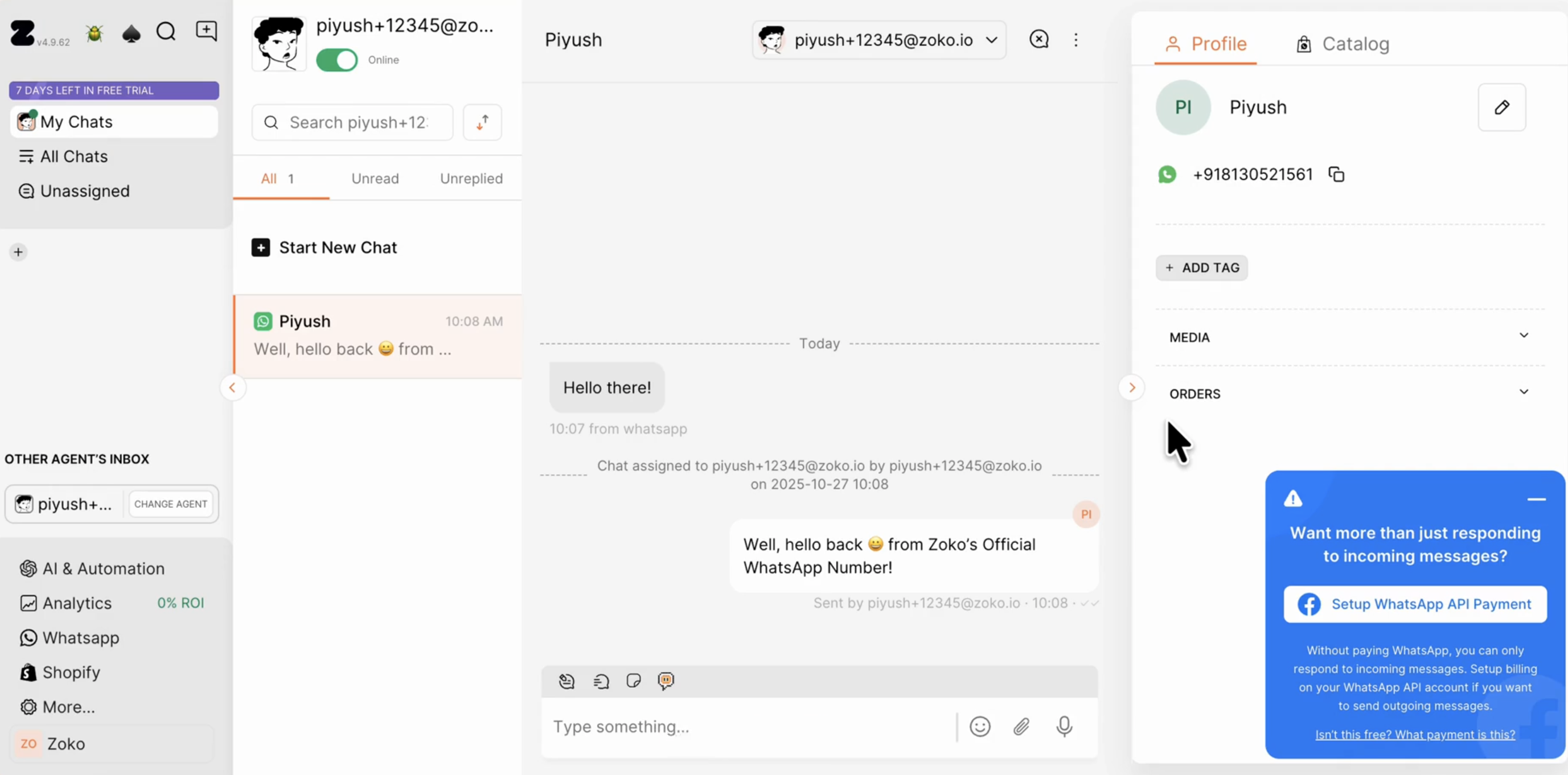
Sign up and connect your WhatsApp Business API number via Zoko’s onboarding.
Connect your Shopify store to sync catalog, orders and customer data.
Enable the shared inbox, assign agents and define routing rules.
Create flows and broadcast campaigns.
Optional: Activate chatbots, custom flows or message templates.
Setup is relatively intuitive for Shopify merchants, but advanced flow logic may require support or input from a developer.
Zoko's scalability & limitations
Conversation volume: As message volume scales, exceeding fair-use caps can lead to extra fees.
Flow complexity: Deep branching or high-step flows may hit performance or step-cost limits.
Operational risks: Without published downtime or performance issues could impact high-stakes projects. The risks could be higher.
Additional expenses: Hidden fees (flows, overages, agents) could decrease margins.
The bigger issue is automation scope. Timed messages and simple sequences can handle reminders or order updates, but mid-market teams should also test whether the platform can qualify leads, route conversations, move contacts through lifecycle stages and trigger follow-up actions across channels.
That is where a customer conversation platform like respond.io becomes the stronger benchmark. It helps growing B2C teams automate more of the lead-to-sale process instead of stopping at message delivery.
Quick-start features
Zoko provides several quick-start features:
Prebuilt flows: Recover abandoned carts, order notifications and more.
Pre-approved WhatsApp templates for broadcasting promotions, reactivation and more.
Quick replies: Create pre-composed messages for faster responses to customers.
These provide a fast launch pad, though heavy personalization or custom branching may need additional customized work.
Verdict
Zoko is a solid choice for Shopify-centric businesses looking for a simple, ready-to-use WhatsApp commerce platform. Its Shopify alignment, catalog sync and shared inbox make it ideal for small to medium businesses focused on cart recovery, order confirmations and conversational selling.
However, scaling B2C companies should take note of its pricing complexity, limited channel coverage and lack of enterprise-grade reliability.
In short: Start with Zoko if you’re a small business. But if you’re scaling or plan to manage conversations across multiple channels with deeper automation and enterprise reliability, plan your upgrade path toward respond.io.
Best Zoko alternatives
If you're evaluating beyond Zoko, these are the best Zoko alternatives:
1. Respond.io
Ideal for fast-growing businesses ready to scale. Respond.io is an omnichannel platform with robust workflows and mature enterprise-ready AI.
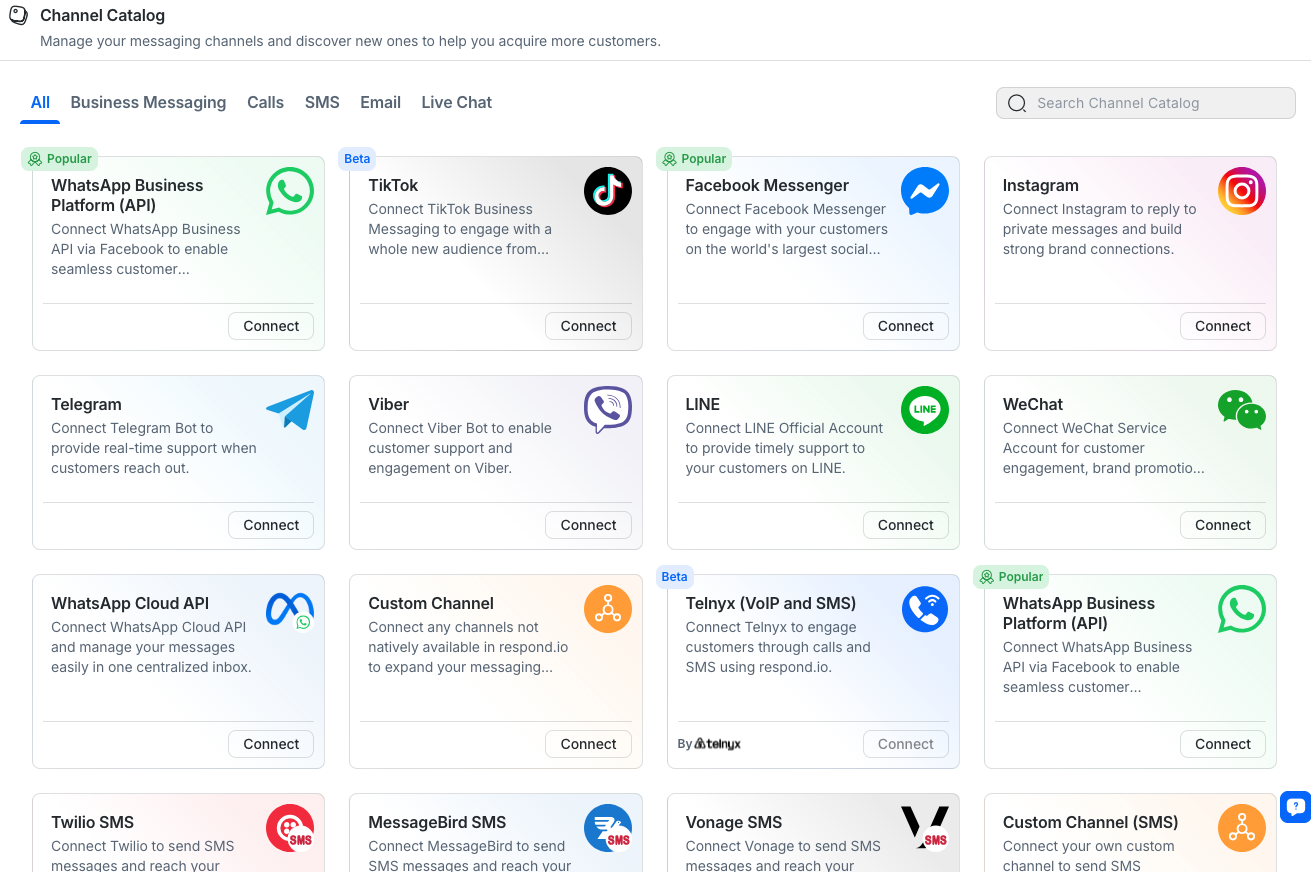
Connect to a broad coverage of channels, comprising WhatsApp, TikTok, Facebook, Instagram, Telegram, VOIP and more.
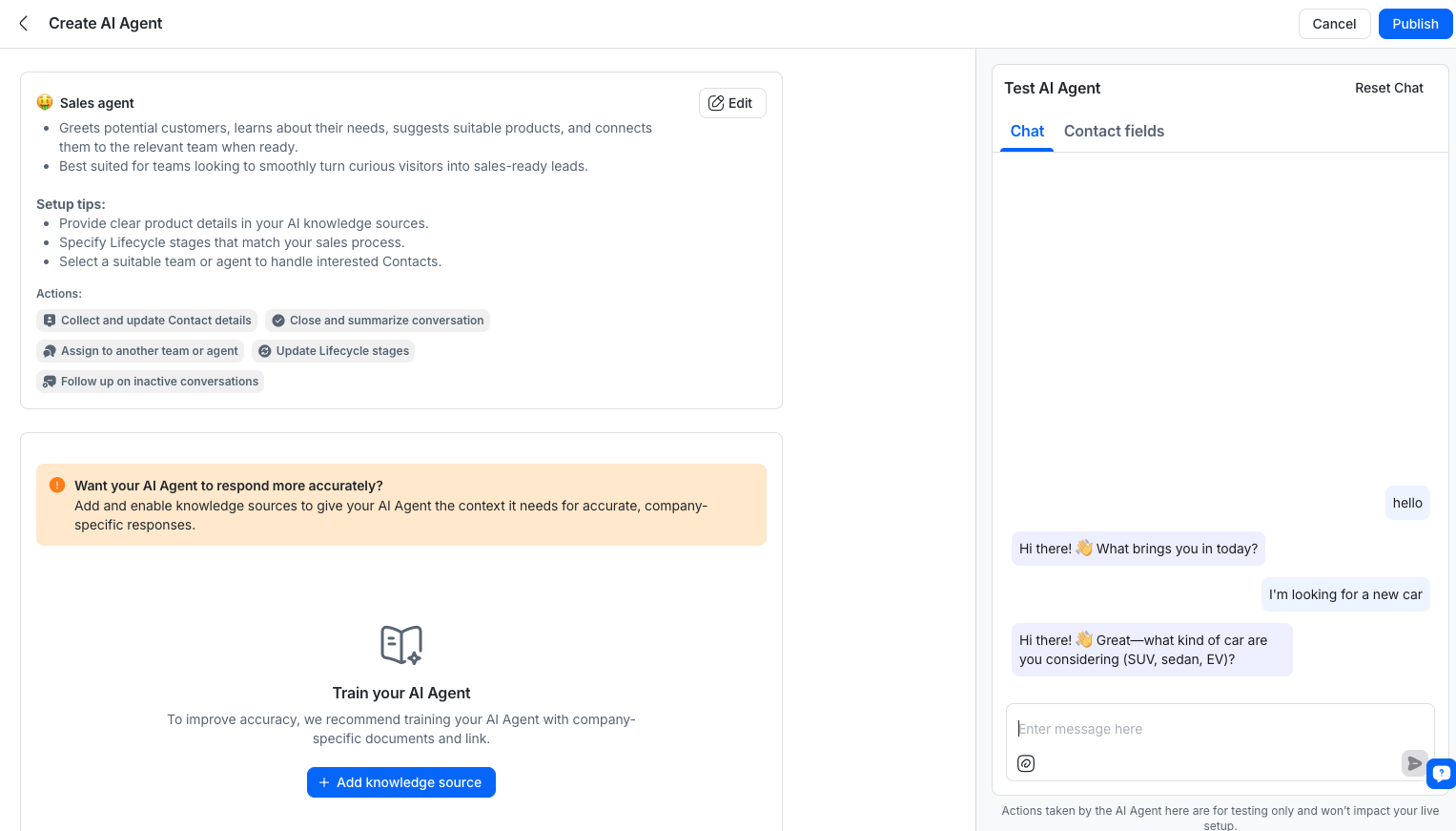
Automate intelligently: Use advanced AI Agents that understand context, draw from your business knowledge and deliver natural replies across every channel.
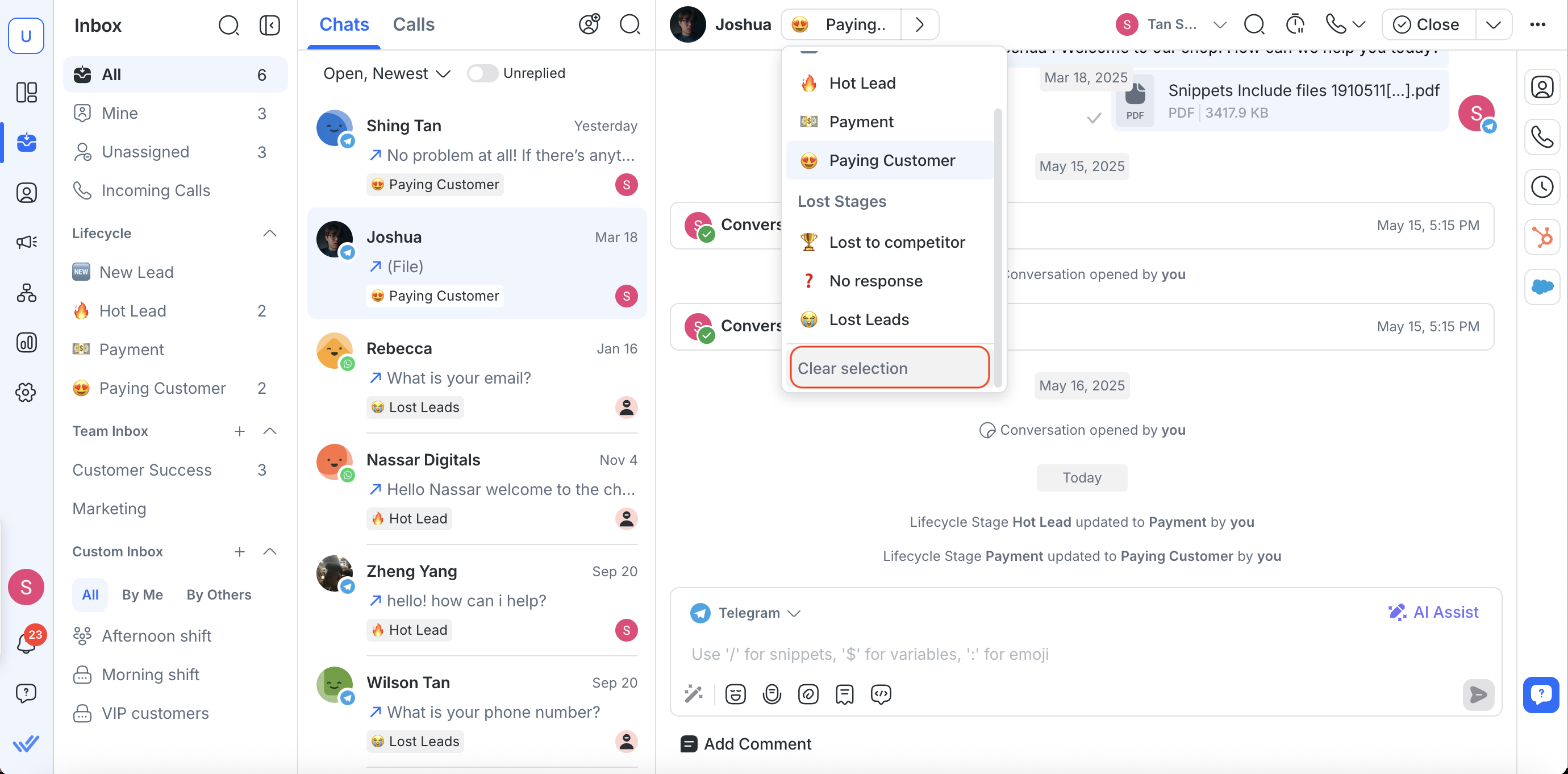
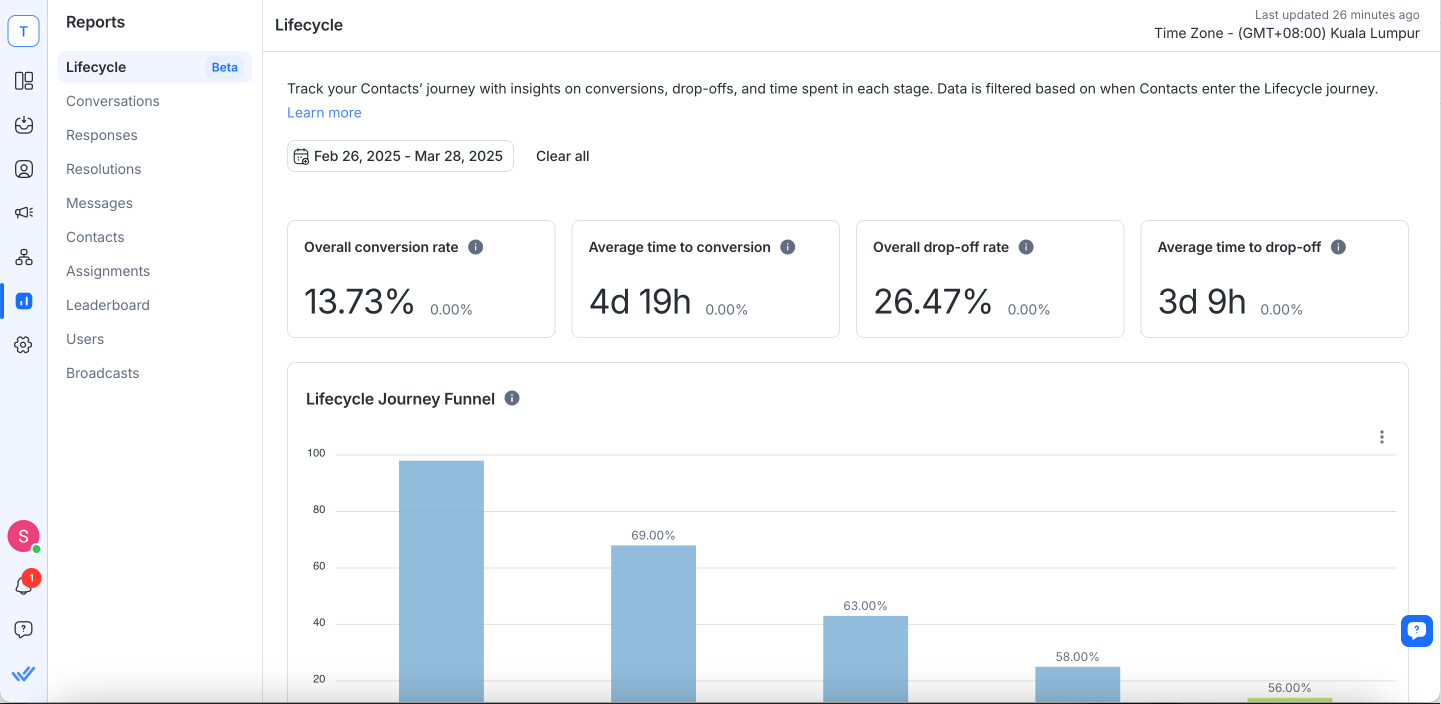
Manage customer pipeline: Monitor and engage Contacts at every stage of the customer journey with the Lifecycle view built into the shared unified inbox.
Gain actionable insights: Use the Reports module to analyze trends, track agent productivity and understand customer journeys. These insights can then help teams make data-driven decisions and improve overall performance.
2. Interakt
Best for teams that mainly want WhatsApp and Instagram coverage with lighter automation. It can suit simpler promotional workflows, but buyers should check channel limits, integration depth, onboarding support and whether service stays responsive once conversation volume rises.
3. Sleekflow
Best for teams that want broader coverage than Zoko, but not necessarily the deepest workflow control. Buyers should verify how far automation goes beyond message sending, what reporting is included and whether the pricing model stays predictable as campaigns and agent workload grow.
The fastest way to narrow the shortlist is to match the reason for leaving to the type of platform being evaluated. Teams struggling with unpredictable scaling costs, limited channel coverage or the need for deeper automation and revenue visibility should prioritize respond.io, while teams with narrower WhatsApp-first needs may still prefer a lighter option.
For mid-market B2C brands handling high conversation volume, the better choice is usually the platform that can support lead qualification, routing, follow-up and reporting across the full customer journey rather than only message sending.
Shopify depth matters most when revenue operations depend on native catalog sync, abandoned cart recovery, order updates and commerce-triggered messaging that starts from store activity. For teams that sell mainly through a single Shopify store and keep most post-click journeys inside WhatsApp, that focus can be a real advantage.
Broader coverage becomes more important when leads and repeat buyers move across WhatsApp, Instagram, Facebook Messenger, TikTok, Telegram, LINE, Viber, WeChat, voice calls (VoIP and WhatsApp Business Calling) and email. In that case, a customer conversation platform like respond.io may be a better long-term fit because it can coordinate follow-up across channels even if the workflow is less Shopify-specific. Teams planning a switch should still confirm whether the existing WhatsApp Business API number can stay in place, what happens to contacts and approved templates and how quickly sales and support conversations can resume after cutover.
Zoko vs respond.io (2026 comparison table)
Category | Zoko | Respond.io | Takeaway |
Core fit | Shopify small-medium businesses focused on WhatsApp CRM | Enterprise & growth B2C brands needing omnichannel reach. B2Cs and enterprises that need a scalable customer conversation platform to manage high chat and call volumes with AI, deep automation, reporting, analytics and integrations. | Zoko is niche; respond.io covers a broader market. Both cater to different audiences |
Channel Support | WhatsApp and Meta surfaces (Instagram, Facebook Messenger) | Omnichannel (WhatsApp, Instagram, Facebook Messenger, SMS, email, VoIP, TikTok and much more) | Respond.io future-proofs channel needs |
Automation & AI | Prebuilt flows with customizable options and basic ChatGPT bots | Advanced workflows and mature AI Agent | Respond.io is better for more complex operations |
Reliability | Small to medium business grade | 99.999% uptime, enterprise infrastructure | Respond.io is safer at scale and lower risk |
Support | Only general support via email | 24/7 human and AI support, with onboarding support as an add-on, along with scheduled customer calls | Respond.io offers more reliable and partnership-driven support. |
Pricing | Attractive entry and good for e-commerce growth, but rising costs with overages | Predictable model based on usage tiers and MACs (Monthly Active Contacts) | Respond.io is easier for long-term planning |
Zoko review takeaways
Zoko serves as an excellent entry point for WhatsApp-driven Shopify commerce, offering simplicity and quick wins for smaller teams. But as your customer base expands and expectations rise, you’ll need a platform that can grow with you.
That’s where respond.io comes in, with its omnichannel reach, mature AI Agents and enterprise-grade infrastructure, it provides the flexibility and reliability needed for growth-focused B2C companies. So, if your long-term growth strategy includes managing multiple channels, building advanced automation and ensuring predictable ROI at scale, respond.io is the natural next step.
Try Zoko as a WhatsApp + Shopify commerce starter if you’re a small business, but use respond.io to future-proof your customer engagement for growing beyond WhatsApp.
Turn customer conversations into business growth with respond.io. ✨
Manage calls, chats and emails in one place!
Frequently asked questions about Zoko
Does Zoko work with Shopify?
Yes. Zoko is deeply integrated with Shopify, allowing you to sync product catalogs, recover abandoned carts and send automated order updates via WhatsApp. This makes it ideal for small Shopify sellers.
However, if you operate across multiple e-commerce platforms, respond.io offers broader integration options beyond Shopify.
What channels does Zoko support?
Zoko primarily supports WhatsApp, as well as Instagram and Facebook, with some Meta ecosystem features like click-to-WhatsApp ads. It does not support other channels such as VOIP, Telegram, TikTok, or email.
Businesses seeking an omnichannel approach should consider respond.io, which unifies all major messaging channels in one platform.
What AI capabilities does Zoko have?
Zoko includes basic ChatGPT-powered chatbots for FAQs and simple conversation flows. However, these bots have limited contextual understanding and customization.
Respond.io provides more advanced AI Agents that understand intent, reference your business knowledge sources and automate workflows end-to-end.
How much does Zoko cost?
Zoko’s pricing is based on a subscription fee plus usage charges tied to message volume and Meta’s conversation fees. Prebuilt flows are free, but custom flows incur additional charges.
While its entry cost is attractive, costs can increase quickly as conversation volume grows. In contrast, respond.io offers predictable, contact-based pricing designed for scalability and long-term ROI.
Can a business migrate its WhatsApp Business API number to another platform?
Yes. A WhatsApp Business API number can usually move between providers, but the cutover should be treated as a planned migration rather than a simple settings change.
Buyers should confirm number portability, whether message templates need resubmission, whether contacts can be imported and whether chat history will stay behind. The safest approach is to test templates and routing first, plan a short parallel run where possible and align the cutover with the campaign calendar so sales and support activity is not disrupted.
Is Zoko suitable for enterprise teams?
Not yet. Zoko works best for small to medium Shopify stores. It does not provide advanced reliability guarantees.
For enterprise teams needing dedicated infrastructure, 99.999% uptime and 24/7 live support, respond.io is the safer and more scalable choice.
Further reading
If you’ve found this article helpful, here are some more for you to check out:


