
















 Electronics
 Fashion & Apparel
 Furniture
 Jewelry and Watches
 Afterschool Activities
 Sport & Fitness
 Beauty Center
 Dental Clinic
 Medical Clinic
 Home Cleaning & Maid Services
 Photography & Videography
 Car Dealership
 Travel Agency & Tour Operator

TL;DR: What is the best Interakt alternative in 2026?
Best overall: Respond.io is the best Interakt alternative for mid-market B2C businesses that handle high chat volume across multiple channels and need advanced routing, workflow automation and reliability at scale.
Other options: Trengo (support-led inbox), Zoko (Shopify WhatsApp commerce), Wati (budget WhatsApp automation) and SleekFlow (social messaging for lower chat volume).
Why teams switch: Interakt is WhatsApp-first. Scaling teams outgrow it when they need omnichannel coverage, deeper automation and enterprise reliability.
Interakt is a customer messaging tool built primarily around WhatsApp, with expanding support for Instagram, used by mid-market B2C teams to manage sales and support conversations.
But growth-focused B2C teams often need more capabilities: multiple channels, mature AI, deeper automations, and published enterprise.
Why businesses look for Interakt alternatives
Growing teams commonly raise the same concerns about Interakt. These are limitations you should weigh in your decision.
Limited workflow depth
Interakt is good for simple flows, but complex branching is limited. For teams managing higher volumes or different customer journeys, these constraints can slow operations and require more manual intervention.
AI maturity is early
Interakt offers AI through Haptik, but its AI Agents are still new. They can handle basic queries, but lack the maturity needed for complex conversations.
Lack of omnichannel support
Interakt focuses on WhatsApp and Instagram, so it does not unify every other channel (email, SMS, voice, TikTok messaging, etc). This might create fragmented conversations for agents handling multiple tools.
Reporting limitations
Interakt provides basic reporting, but detailed analytics, dashboards and cross-channel performance reports are less mature. Without deeper reporting, teams can see activity but not commercial impact.
Revenue leaders should separate tools that mainly report delivery, read and reply metrics from platforms that can show lifecycle movement, rep or team performance and conversation-to-conversion visibility across channels. That difference affects coaching, budget decisions and how quickly managers can spot where handoffs or response delays are hurting revenue.
Buyers should look for campaign attribution, conversation-to-conversion visibility, rep or team performance views and cross-channel reporting that connects messaging activity to sales and support outcomes. When managers need commercial accountability rather than just campaign activity, respond.io is usually the stronger fit.
Pricing can become harder to forecast
List price is only one part of the real cost. As usage grows, buyers should check whether add-ons, message markups, broadcast limits or gated features make the platform more expensive to run than it first appears. When costs become harder to predict, campaign return on investment gets harder to defend and scaling decisions slow down.
Support responsiveness affects revenue during peak periods
Support quality matters most when launches, promotions or lead spikes are live and the team cannot afford delays. If routing breaks, templates fail or inbox performance drops, slow support response can leave sales and support teams waiting while conversations cool off. Buyers should test not just support availability, but also escalation paths and how quickly urgent issues are handled.
Scalability concerns
As message volume and concurrency increase, teams may experience performance issues, slower inbox loading and more friction in daily navigation. When agents wait for pages to load or actions to complete, response speed drops, follow-up slows and campaign throughput suffers, so dashboard performance should be tested in demos and trials.
If you expect higher concurrency, multi-channel campaigns, or strict availability guarantees, you should consider other Interakt alternatives or competitors that can solve these.
Key factors to consider when choosing an Interakt alternative
If you're switching from Interakt, prioritize the factors that match both current complexity and the next stage of growth. The best choice is not the platform with the most features. It is the one that can support the channels, routing rules and lifecycle automation the team will actually use without creating unnecessary operational overhead.
A lighter WhatsApp-first option can work when the business mainly needs broadcasts, basic automation and a small team setup. A broader customer conversation platform makes more sense when sales and support need more channels, intent-based routing, lifecycle tracking and tighter control as volume grows. Mid-market B2C teams should avoid both underbuying a tool they will outgrow quickly and overbuying enterprise complexity they will not use.
Channel coverage beyond WhatsApp
Channel coverage should be assessed based on the full customer journey across WhatsApp, Instagram, Facebook Messenger, TikTok, Telegram, LINE, Viber, WeChat, voice calls and email. Native support matters because teams can route conversations, keep context and report on performance without stitching together separate tools.

Voice deserves special attention when reps qualify leads in chat and then close or rescue deals by phone. Keeping voice and messaging in the same workspace preserves conversation history, shortens follow-up time and gives managers a clearer view of what moved the deal forward.
Click-to-WhatsApp ads and lead capture
For teams buying traffic from Facebook and Instagram, a strong platform should send ad clicks straight into the same conversation workspace the sales team already uses. That keeps the ad source, customer context and first response in one place instead of splitting them across tools.
Buyers should check whether the platform captures lead details from the ad, routes the conversation immediately to the right team or rep and supports the free follow-up window after the click. The best setups also let AI Agents qualify the lead, update lifecycle stage and help managers see which ad-sourced conversations turned into qualified opportunities or sales outcomes.
Automation and workflow capabilities
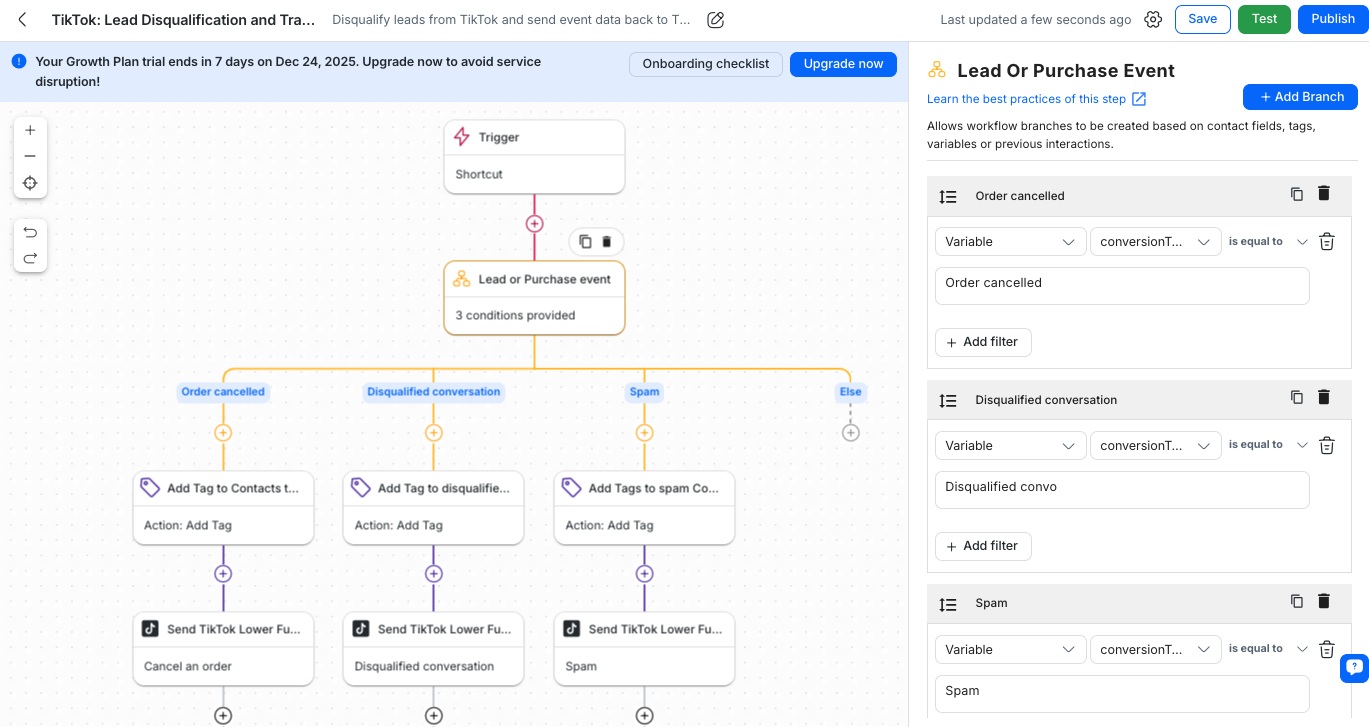
Look for workflow builders that can start from real revenue triggers such as a new ad lead, an inbound message, a missed follow-up or a lifecycle change. The evaluation should cover branches, wait steps, assignment rules, webhook or Application Programming Interface actions and whether the platform can move a customer from chat to email or voice without losing context.
A good test is a click-to-WhatsApp lead. The platform should let AI Agents qualify the lead, update lifecycle stage, sync the outcome to a customer relationship management system, route by intent and escalate to a rep when buying signals appear. If the workflow breaks at handoff, cannot call external systems or only works inside one channel, the team will still be patching key revenue steps by hand.
Team inbox and agent collaboration
When several reps share the same WhatsApp number or multi-channel queue, inbox quality directly affects response speed and conversion. Buyers should look for clear assignment rules, collision prevention, queue visibility and handoff controls so two agents do not work the same lead or leave a customer waiting between teams.
Strong collaboration also depends on internal notes, ownership history and performance views by rep or team. A platform should make it obvious who replied last, who owns the next action and where conversations are getting stuck. That keeps sales and support organized as volume grows instead of creating reply chaos.
Advanced AI capabilities
A strong AI Agent should do more than reply faster. During evaluation, buyers should test whether it can qualify leads, update lifecycle stages, route by intent, trigger workflows, escalate high-value opportunities and generate a clean handover summary for the next rep across multiple turns.
The test should use messy real conversations, not a scripted demo. Buyers should include incomplete answers, changes of mind, mixed-language replies and unstructured inputs such as voice notes, images and documents. If the AI Agent only performs when the customer follows a perfect path, the team is still buying manual work rather than real automation.
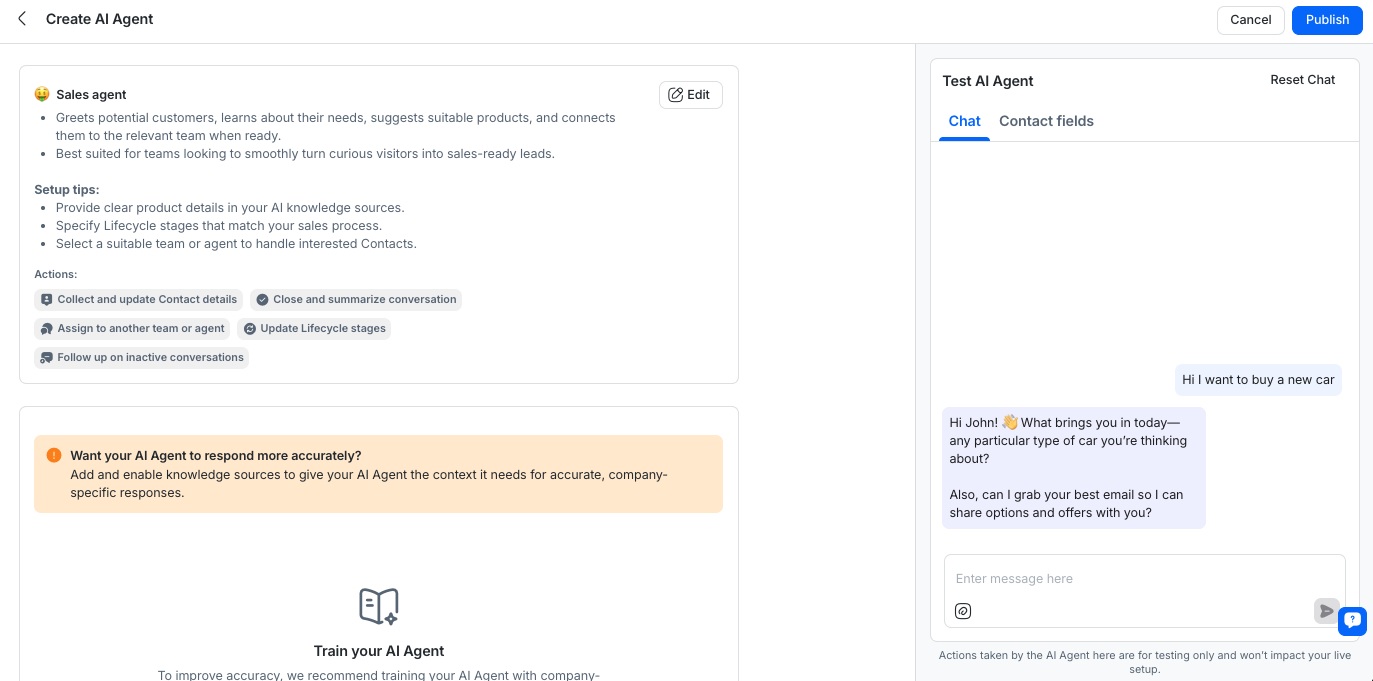
That is different from basic auto-replies or rule-based flows that only react to exact keywords. Buyers should separate platforms that assist conversations from platforms that can actually move conversations forward with context across multiple turns.
Broadcast and bulk messaging controls
Bulk messaging is only commercially useful when targeting, timing and delivery controls are strong. Buyers should look for segmentation, scheduling, template governance and suppression rules so campaigns reach the right contacts without disrupting active sales or support conversations.
They should also verify delivery visibility, retry controls and campaign analytics. A strong platform shows which sends were delivered, which failed, which segments responded and whether broadcast campaigns created qualified conversations or follow-up opportunities instead of just high send volume.
CRM and tech stack integrations
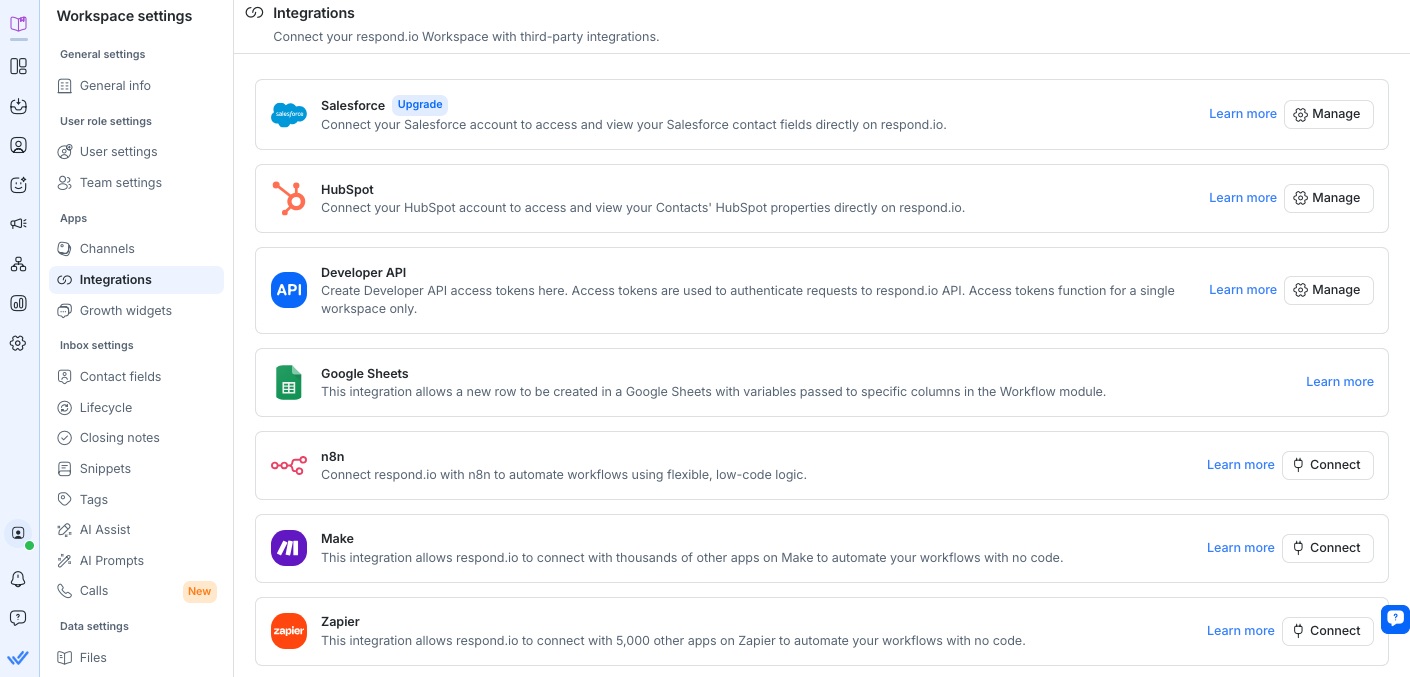
A list of integrations is not enough. Buyers should check whether the platform can turn conversations into pipeline and commerce actions by syncing more than contact data.
For commerce-led teams, commerce depth should be tested separately from a generic Shopify integration claim. Buyers should ask whether the setup is native or connector-based, whether real cart events trigger abandoned-cart follow-ups automatically, whether catalog data stays current, whether order or shipping status is visible during the conversation and whether in-chat flows such as cash-on-delivery confirmation are supported. If those steps still rely on manual exports or delayed syncs, the integration is helping data move but not helping revenue move.
A Shopify-first setup makes sense when most sales motion happens inside WhatsApp and the team needs deep store triggers more than broader channel coverage. Respond.io is the stronger fit when the business needs Shopify context plus broader customer journeys across WhatsApp and other key messaging, social, voice and email channels.
For pipeline work, most shortlisted tools fall into one of three models: a WhatsApp sales workspace with lightweight pipeline features, a commerce-led workspace tied closely to store events, or a customer conversation platform that syncs lifecycle and ownership into an existing customer relationship management system. The right model depends on where the business wants deal control to live. Teams that already run forecasting, attribution and sales reporting in HubSpot or Salesforce usually get more value from strong lifecycle sync than from duplicating another pipeline in the inbox.
Managers should test the workflow, not just the integration label. If conversations cannot create or update records, move stages, assign owners and pass clean outcomes back for reporting automatically, reps still end up copying data by hand and leaders lose visibility into which chats create pipeline and revenue. Respond.io suits teams that want the customer relationship management system to stay the source of truth: AI Agents qualify leads, update lifecycle stages, route by intent and trigger workflows, and the outcomes sync back for pipeline reporting.
Platform reliability
Published uptime guarantees and clear commitments matter, but support responsiveness matters just as much once something breaks.
Buyers should compare support hours, escalation paths and onboarding quality before signing. A reliable platform should not only stay available, but also help teams recover quickly when operational issues appear.
Official WhatsApp partner status and API access
When revenue depends on WhatsApp, official WhatsApp Application Programming Interface access is a commercial check, not a technical footnote. Buyers should separate official WhatsApp Business Platform access from linked-device or QR-code setups. The faster setup path can look attractive early, but official access is usually the safer choice when the team needs stable template use, formal business verification, clearer escalation paths and room to scale without rebuilding the setup later.
The trade-off is speed versus control. Linked-device tools can be quicker to start, but buyers should ask whether they support business verification properly, whether the number can be ported later and whether green tick eligibility, template management or account support become harder once campaigns are live. For revenue-critical teams, the better choice is the one that protects number continuity and lowers operating risk as conversation volume grows.
Predictable scaling cost
Entry pricing matters, but revenue leaders should compare pricing against the way the business is likely to grow over the next 12 months. The clearest method is to ask every shortlisted vendor to price the same three scenarios: more Monthly Active Contacts, more users and more broadcast volume. That turns pricing into an operating-model comparison instead of a headline-plan comparison.
The goal is to see how each model behaves when usage changes. Monthly Active Contacts pricing usually tracks customer activity more closely, while seat-based pricing rises as more reps and managers need access. Fair-use caps, artificial intelligence add-ons and message markups can also change the real monthly bill after growth starts, so buyers should test long-term cost confidence, not just signup cost.
If active contacts rise faster than headcount, Monthly Active Contacts pricing is usually easier to forecast because cost follows the number of customers the team actually speaks with. That is where respond.io can stay predictable for growing B2C teams. If the team expands across sales, support and management, seat-based pricing can climb quickly because every added user raises platform cost. Broadcast-heavy teams should also check whether campaign limits, paid messaging add-ons or voice-related charges appear only after usage grows.
During evaluation, each vendor should price the same three scenarios and show Meta template fees, service-message volume per number, provider markups, extra seats, AI add-ons, broadcast limits and voice-related charges on the same worksheet.
Look beyond Meta’s WhatsApp fees
WhatsApp Business pricing is template-based, with charges for marketing, utility and authentication messages. Service replies inside the 24-hour window are also charged after 1,000 per number each month. That is why buyers need to separate Meta's base charges from the provider's own pricing before they compare platforms.
WhatsApp Business pricing should be audited in layers before any contract is signed. Buyers should separate Meta's template fees from the vendor's own pricing, then ask whether the vendor adds markup to WhatsApp messages, where that charge appears on the invoice and whether it changes by template type, campaign volume or support tier. Respond.io adds no markup to Meta's WhatsApp rates and waives the card processing fee on balance top-ups until further notice.
Respond.io uses Monthly Active Contacts pricing, which makes platform cost easier to review separately from Meta charges. That helps teams see whether spend is rising because they are talking to more active contacts or because hidden message costs are being added on top. The same audit should cover extra user seats, AI add-ons, broadcast fees and voice-related charges so return on investment is measured on full operating cost, not headline plan price.
The key question for revenue leaders is not which tool looks cheapest at signup, but which cost model stays predictable as campaigns, headcount and conversation volume increase.
Team size changes the math quickly. Buyers should check how many users are included, what additional seats cost and whether pricing expands mainly by contacts or by users — because a platform that looks affordable for a small team can become harder to justify once more sales reps, agents or managers need access. Understanding both volume-based and team-based charges upfront makes it easier to forecast whether cost will rise from talking to more contacts, adding more people or both.
Visit our WhatsApp Pricing Calculator to explore messaging costs and get an estimate of how much it could cost you.
Turn customer conversations into business growth with respond.io. ✨
Manage calls, chats and emails in one place!
5 best Interakt alternatives and competitors
These alternatives fall into adjacent categories: WhatsApp-first sales tools, support-led inboxes and a broader customer conversation platform. The pricing column should be read in four parts: the base plan, whether cost grows by Monthly Active Contacts or user seats, whether WhatsApp charges are passed through cleanly or layered with markup and which add-ons or fair-use limits can change the monthly bill.
In this shortlist, respond.io prices by Monthly Active Contacts, Trengo adds cost as seats and extras expand, Zoko combines a lower headline price with usage limits and add-ons, Wati starts lower but adds provider markup on WhatsApp fees and SleekFlow blends Monthly Active Contacts with included user caps and extra number costs. That makes the cheapest signup plan different from the easiest plan to forecast once contacts, users and campaign volume grow.
Below is a compact comparison table for a quick takeaway.
Platform | Channels | Automation & AI | Pricing (Per month, paid yearly) | G2 / Capterra/ Shopify rating |
Respond.io | WhatsApp, WhatsApp Business Calling, Instagram, Facebook Messenger, Telegram, TikTok, webchat, SMS, voice, email, WeChat, Viber, LINE, custom channels | Advanced workflows, mature AI Agents and AI Assist | Growth plan is $199. All plans are based on monthly active contacts. Additional add-ons are available for users | G2 (4.8/5) Capterra (4.6/5) |
Trengo | WhatsApp, Instagram, Facebook Messenger, email, voice, live chat | Solid workflow builder, AI Agent and automation | Pro ($695), with additional add-ons for users, broadcasting, voice. | G2 (4.3/5) Capterra (4.1/5) |
Zoko | WhatsApp, Instagram, Facebook Messenger | Prebuilt commerce flows, ChatGPT bots | Elite ($114.99) with additional add-ons for agents | G2 (4.5/5) Shopify (4.8/5) |
Wati | WhatsApp, Instagram, Facebook Messenger, WhatsApp Business Calling | Good WhatsApp automation and AI Agents | Pro ($149), with additional add-ons for users and AI | G2 (4.6/5) Capterra (4.6/5) |
SleekFlow | WhatsApp, Instagram, Telegram, Facebook, WeChat, Viber, LINE, voice, email | Good flow builder and AI Agents | Premium ($349), with additional add-ons for users, WhatsApp phone number hosting | G2 (4.6/5) Capterra (4.5/5) |
1. Respond.io
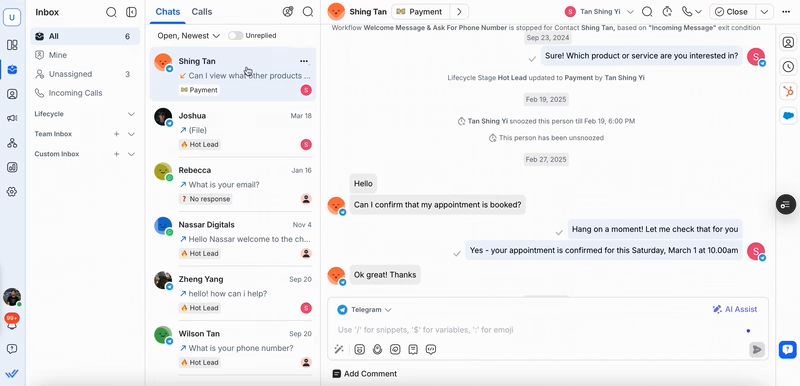
Respond.io is a customer conversation platform that helps mid-market B2C teams manage high volumes of customer conversations across channels, with routing, automation, and lifecycle workflows.
Respond.io best fit
Growth-focused B2C teams that need omnichannel reach, advanced automation, and enterprise reliability.
Respond.io pros
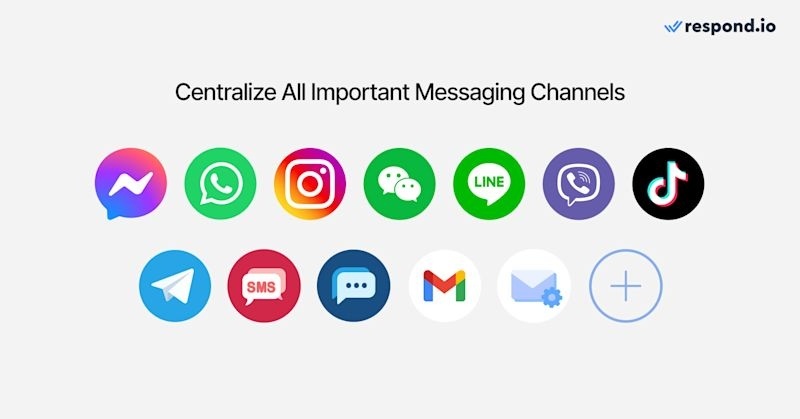
Supports omnichannel inbox with popular channels and custom channels, including WhatsApp, TikTok, Facebook Messenger, and Instagram. Respond.io offers also offers voice channels such as VoIP, Facebook Messenger calls and including WhatsApp Business Calling API.
Supports CRM integrations, including native integrations with HubSpot and Salesforce. It also integrates with other software via Make and Zapier.
Mature AI Agent can reference your entire company knowledge sources and handle multi-turn dialogs
Mature AI Assist provides quicker and more accurate replies to customers for driving sales.
Customer lifecycle management which helps track and manage your customers throughout their entire lifecycle journey. This helps to prioritize leads and improve conversions.
Excellent customer support, with 24/7 human and AI support available on every plan.
Excellent enterprise-grade security for speed and stability with 99.999% uptime under high volume of messages.
Predictable, value-based pricing by monthly active contacts (starter tiers available)
Respond.io cons
Enterprise-grade features can come at higher price points for heavy volumes.
Higher learning curve, as teams need time to tune AI agents and complex workflows. However, our customer support team is ready to support anytime.
Respond.io pricing
Respond.io's mid-tier plan starts at their Growth plan ($199 - paid monthly). MAC-based (Monthly Active Contact) ensures you only pay for the contacts you interact with in a month. Enterprise plans can be customized based on your needs.
Respond.io customer sentiment & rating
It's frequently cited for ROI, multi-channel support and enterprise features. Customers are also satisfied with the customer service quality and quick implementation.
G2 (4.8/5 rating with 394 reviews)
Capterra (4.6/5 rating with 43 reviews).
Trengo
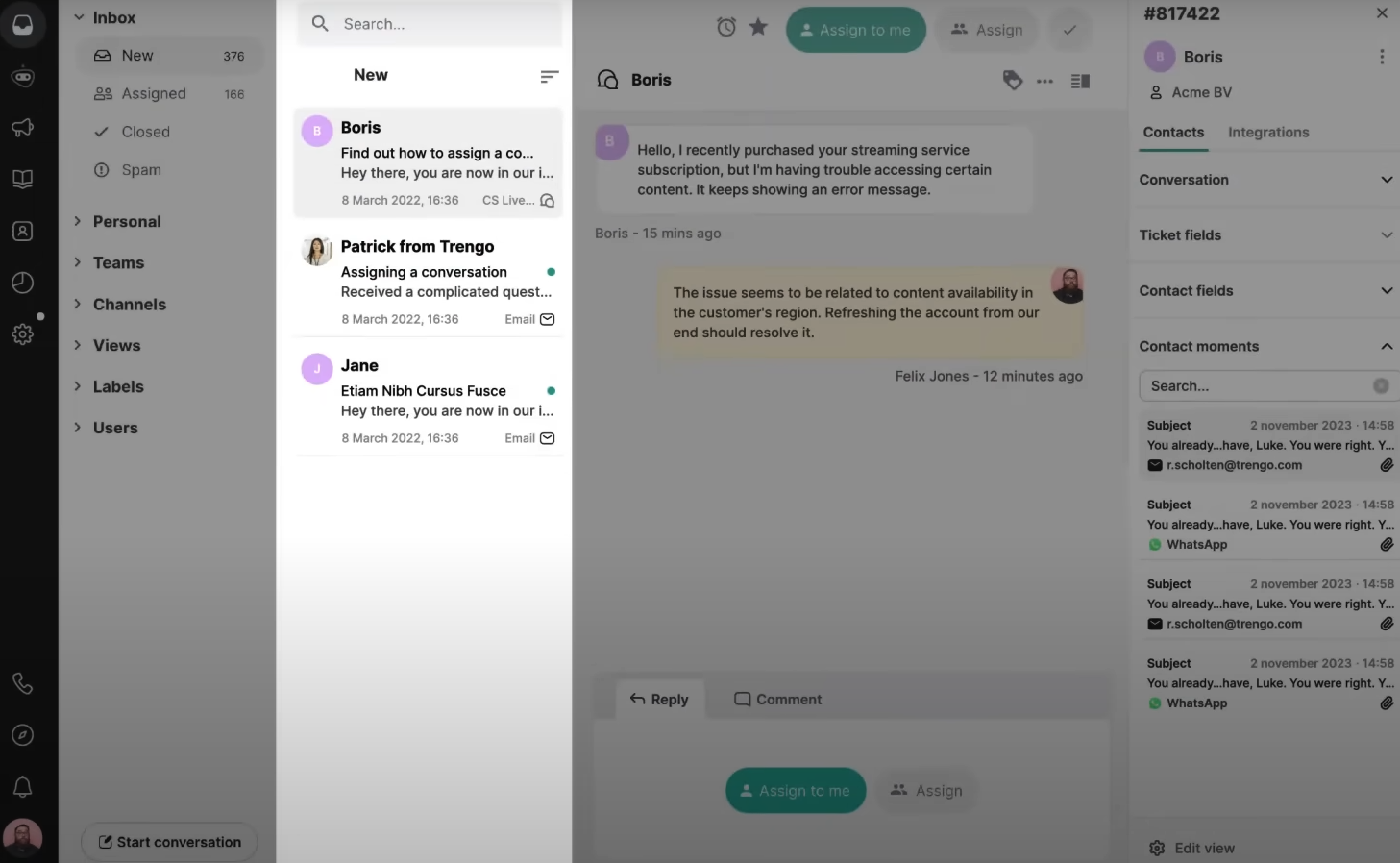
Trengo is an omnichannel inbox and collaboration platform built for support teams.
Trengo best fit
Companies that want an omnichannel inbox with team collaboration tools.
Trengo pros
Supports WhatsApp, Instagram, Facebook Messenger, email, SMS and more, including VoIP.
Supports CRM integration such as HubSpot, Salesforce, Shopify, Magento and WooCommerce.
Offers AI Agent to automate conversations and workflows.
Strong team collaboration and inbox organization.
Trengo cons
No support for WhatsApp Business Calling API.
Poor customer support, with limited support hours (Central European timezone)
Their automation is limited and cannot support complex processes.
No native mobile app — replaced with a browser-based PWA in 2025.
Trengo pricing
Their Pro plan starts at $695 (paid monthly), and higher plans scale significantly.
Trengo customer sentiment & rating
Users praise its organization and ease of use.
G2 (4.3/5 rating with 243 reviews)
Capterra (4.1/5 rating with 26 reviews)
Zoko
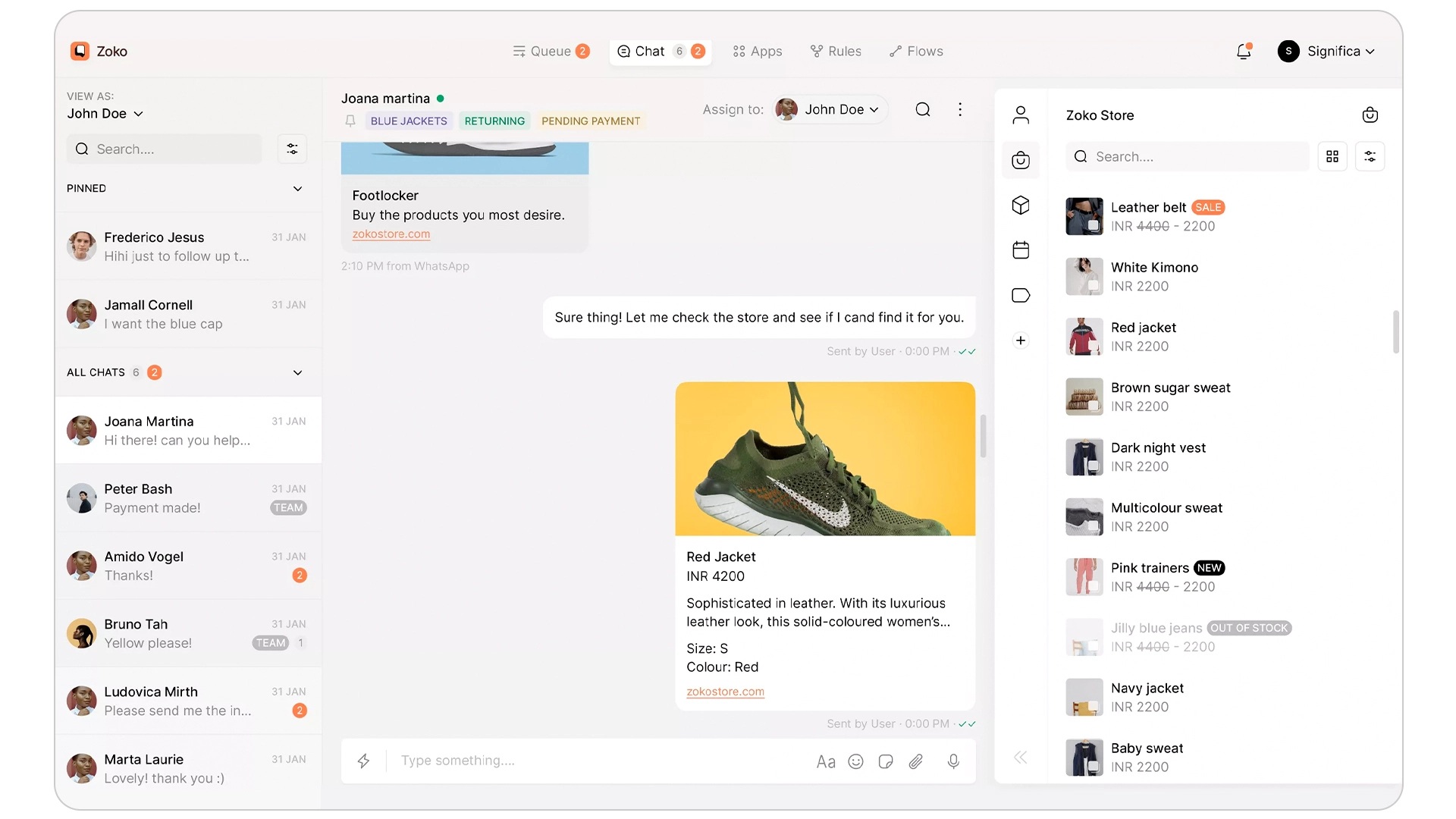
Zoko is a WhatsApp CRM platform built for Shopify brands to turn chat into sales. It enables businesses to sync product catalog directly to WhatsApp, recover abandoned carts, and run broadcast campaigns.
Zoko best fit
Small to medium Shopify businesses wanting to drive sales via WhatsApp.
Zoko pros
Deep Shopify integration and prebuilt commerce flows.
Multiple agents can use the same WhatsApp number to use the shared inbox with team collaboration
ChatGPT-powered bots or automated responses on top of conversation flows.
Zoko cons
Flow steps, fair-charges caps, and add-ons can raise costs, as you scale
Limited omnichannel options
Zoko pricing
Zoko's mid-tier plan starts at Elite ($114.99, paid monthly). Note the platform's fair use limit and additional fee per conversation rules on some tiers.
Zoko customer sentiment and rating
Customers praise its automation and seamless Shopify integration.
Shopify (4.8/5 rating with 285 reviews)
G2 (4.5/5 rating with 5 reviews). Keep in mind that Shopify App Store ratings reflect ease-of-use within the Shopify + WhatsApp ecosystem — if your needs extend beyond that to omnichannel routing or cross-channel analytics, it's worth evaluating a broader platform.
Wati
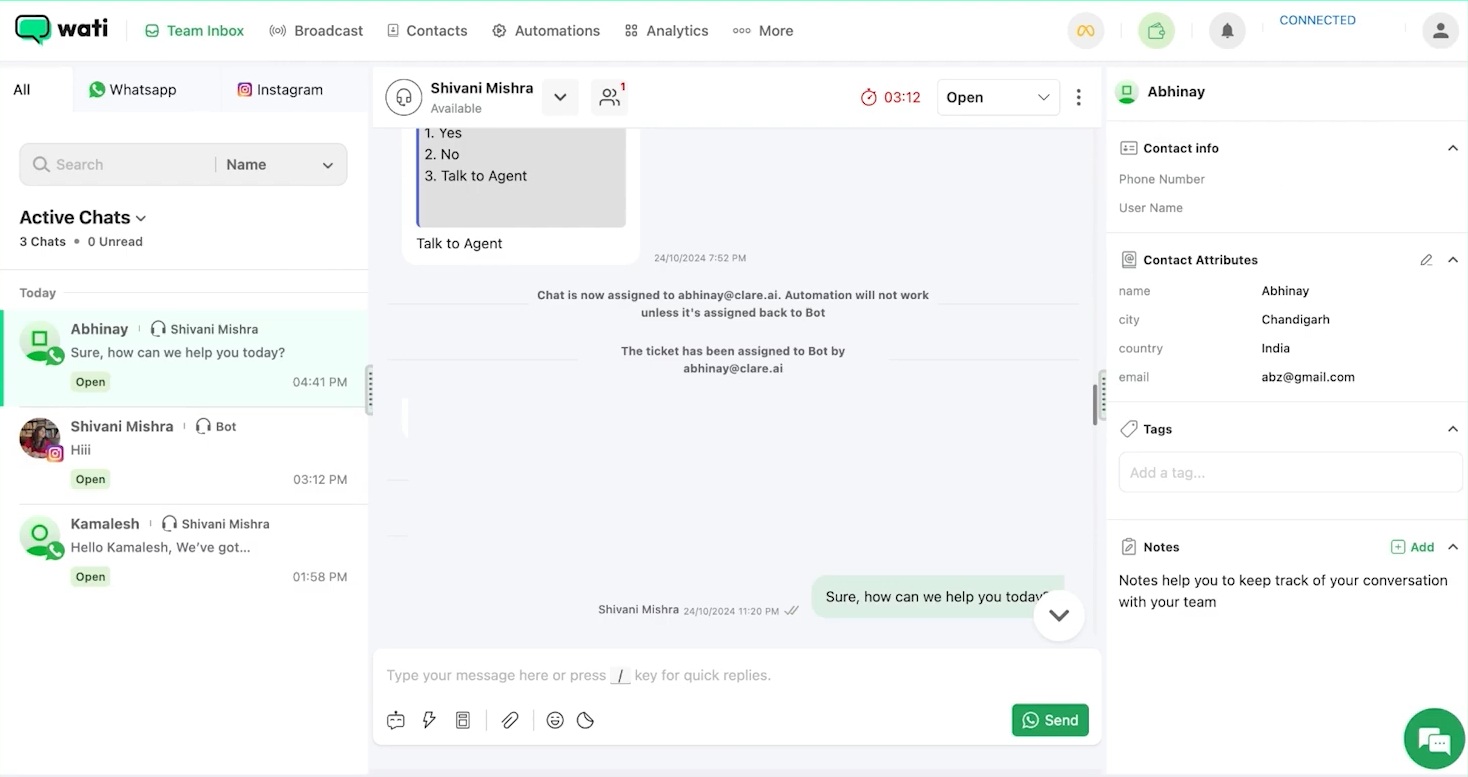
Wati is a budget-friendly WhatsApp-first platform focused on marketing and support use cases.
Wati best fit
Small businesses that need a reliable WhatsApp automation platform without complex workflows.
Wati pros
Good WhatsApp features such as WhatsApp Catalog and WhatsApp Broadcasts.
Good basic chat automation workflows to send instant replies, including chatbots.
Offers AI Agent to automate conversations too.
Lower cost, ideal for budget-friendly businesses.
Wati cons
Not a full omnichannel platform, but best for WhatsApp-first businesses.
Imposes markup on WhatsApp API charges set by Meta.
As you scale, additional add-ons may increase existing Wati plans, such as additional Astra AI Agents.
Wati pricing
Lower entry tier, with their Pro plan starting at $149 (paid monthly).
Wati customer sentiment and rating
Users commonly cite ease of use and automation features.
G2 (4.6/5 rating with 421 reviews)
Capterra (4.6/5 rating with 185 reviews)
SleekFlow
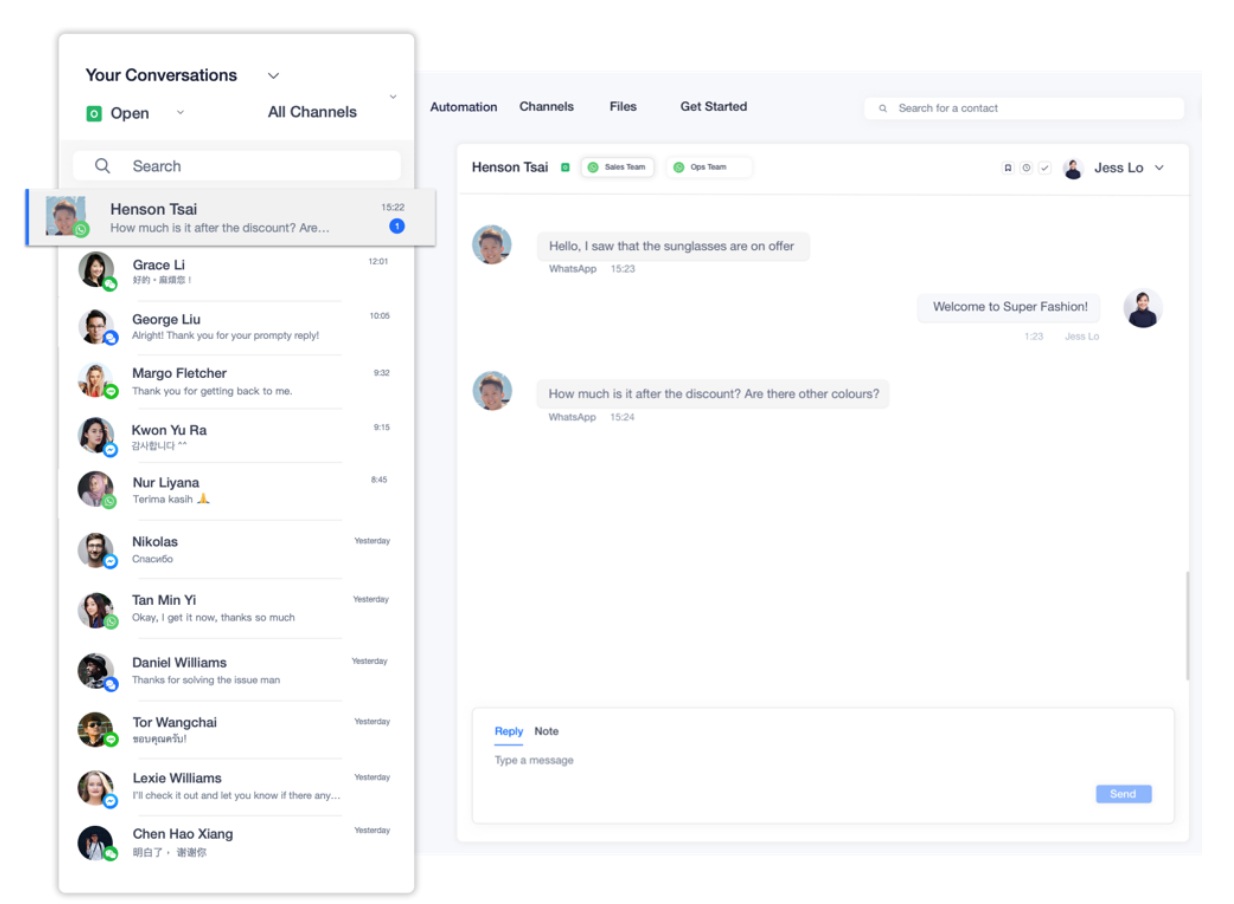
SleekFlow is a conversation management platform with strong regional presence in Asia. It supports multiple channels and an automation builder.
SleekFlow best fit
Low-volume businesses that need social messaging and decent automation.
SleekFlow pros
Supports channels such as WhatsApp, Instagram, Facebook Messenger, Telegram and SMS.
Native integrations with HubSpot, Salesforce and Shopify. It also integrates with other CRM and other software via Make and Zapier.
AI Agent "AgentFlow" can converse and guide customers to conversion based on your company's knowledge sources.
SleekFlow cons
Chat support is available but priority response times require the Business Consultancy Plan ($499/month), which isn't included in standard plans.
Some customers report slower performance at higher message volumes.
SleekFlow pricing
SleekFlow's Premium plan starts at US$349/month (10 users, starting at 1,000 monthly active contacts) on a Monthly Active Contacts model, with WhatsApp Business API numbers billed separately at US$15/month each.
SleekFlow ustomer sentiment and rating
SleekFlow has solid scores for user-friendly inbox features.
G2 (4.6/5 rating with 188 reviews)
Capterra (4.5/5 rating with 4 reviews)
Verdict: Which Interakt alternative is best?
Respond.io is usually the strongest fit for mid-market B2C teams that need WhatsApp, Instagram, Facebook Messenger, TikTok, Telegram, LINE, Viber, WeChat, voice calls and email in one customer conversation platform, plus AI Agents that qualify leads, update lifecycle stages, route by intent and trigger workflows.
A narrower WhatsApp-first option can be enough when the business mainly needs lower-cost broadcasts and basic automation. A commerce-focused WhatsApp option makes more sense when catalog-led sales flows matter most. A support-led inbox fits better when the main priority is internal collaboration rather than routing revenue conversations across channels. If the business expects more channels, more handoffs or more complex automation in the next stage of growth, the broader platform is usually the safer choice.
Choose based on your operating model: pick Wati if you're WhatsApp-only and price-sensitive; pick Zoko if you're a Shopify brand prioritizing WhatsApp commerce flows; pick Trengo if your main need is a collaborative support inbox; pick SleekFlow if you need social messaging in Asia; pick respond.io when you need omnichannel routing, deeper workflow automation, and a platform that stays reliable as conversation volume or your business grows.
Interakt itself can still be enough if the team is mostly WhatsApp-first, runs straightforward broadcasts, doesn't need voice, and can manage with basic reporting and lighter automation — in that case, respond.io may be more platform than you need. The upgrade point usually comes when sales and support need omnichannel routing, AI qualification, lifecycle automation, or clearer visibility into which conversations turn into revenue. Once those needs show up, respond.io becomes the safer long-term choice, since teams won't need to rebuild around a new platform later.
Trial access is not equal across the shortlist. Respond.io offers a 7-day free trial, and Wati publishes a 14-day trial, though buyers should confirm any sandbox or self-send limits before treating it as a full production test. For the other shortlisted options, public trial terms are less consistently published, so revenue leaders should confirm whether evaluation is demo-led or hands-on and whether they can test routing, AI Agents, broadcasts, customer relationship management sync and voice workflows before signing.
If you want to validate fit quickly, book a demo or start a trial with respond.io to test your highest-volume workflows and routing rules.
Turn customer conversations into business growth with respond.io. ✨
Manage calls, chats and emails in one place!
FAQs about Interakt alternatives
What is the best Interakt alternative for growing teams?
Respond.io is the best Interakt alternative for mid-market B2C businesses scaling beyond WhatsApp that need deeper automation, omnichannel coverage and mature AI for higher-volume operations. For narrower use cases, Wati fits budget WhatsApp automation, Zoko fits Shopify commerce flows and Trengo fits a collaborative support inbox.
Which alternative is best for Shopify brands that rely on abandoned-cart recovery and catalog sync?
Zoko is the best fit when the business mainly needs native catalog sync, abandoned-cart recovery and order-led WhatsApp sales flows. That setup is strongest when reps need product context and commerce triggers inside the same workspace, not just a basic contact sync.
If the brand also needs WhatsApp and other key messaging, social, voice and email channels, more advanced routing or broader lifecycle automation, respond.io is the stronger fit. The deciding factor is whether the business is optimizing a Shopify-first sales journey or a wider multi-channel customer journey.
Which Interakt alternative has the most predictable pricing as volume grows?
Respond.io has the most predictable pricing for mid-market B2C businesses because platform cost is based on Monthly Active Contacts. Plans start at $99 per month, with Growth at $199 per month and Advanced at $349 per month.
Buyers should still separate platform cost from Meta's WhatsApp template charges and ask whether broadcast limits, AI add-ons, voice-related fees or provider markups appear as usage grows. The most predictable option keeps those costs visible before signing, not after the team scales.
How should you compare the real 12-month cost of WhatsApp platform alternatives as message volume grows?
Build the same 12-month worksheet for every shortlisted tool and price three scenarios: more Monthly Active Contacts, more users and more broadcast volume. The comparison should separate platform fees, Meta template fees, monthly service-message volume per number, any provider markup, artificial intelligence add-ons, voice-related charges and any limits tied to broadcasts or fair use.
The best 12-month option is not the one with the lowest starting price. It is the one that keeps total cost understandable as usage changes, so leaders can see whether spend is rising because the team is talking to more active contacts, adding more people or sending more campaigns.
How do official WhatsApp API platforms compare with QR-code or linked-device options?
Official WhatsApp Application Programming Interface platforms are the safer choice for revenue-critical use because they are built for formal business verification, template use, number portability and long-term scale. QR-code or linked-device options can be faster to start, but they carry more operating risk once campaigns, handoffs and support queues depend on the channel.
During evaluation, buyers should ask which connection model is being used, who handles business verification and template support, whether the number can be ported later and whether green tick eligibility or escalation paths are affected. The best choice protects continuity as conversation volume grows, not just speed to go live.
Which Interakt alternative is cheapest?
Respond.io Starter and [competitor name] share the lowest published entry price in this shortlist at $99 per month. Respond.io Starter uses a Monthly Active Contacts model.
The cheaper signup price is not always the lower operating cost. Buyers should compare whether cost grows through Monthly Active Contacts, extra seats, broadcast limits, AI add-ons or WhatsApp markups before deciding which option is actually cheapest for the next stage of growth.
Why switch from Interakt?
Teams switch from Interakt when they need more channels beyond WhatsApp, deeper workflow automation, more mature AI and clearer reliability as message volume and customer journeys grow. Interakt works well for smaller, WhatsApp-first teams, but those limits show up quickly at scale.
If the business expects to grow into multiple channels or needs predictable performance at scale, respond.io offers the infrastructure and flexibility Interakt lacks.
When should you stay with Interakt instead of switching?
Stay with Interakt when the business is mostly WhatsApp-first, runs simple broadcasts and follow-ups, and does not need voice, deeper reporting or advanced AI qualification. It can also be enough when the team is small and the customer journey does not require complex routing or lifecycle automation.
A switch becomes easier to justify when sales and support need more channels, clearer conversion visibility or automation that can qualify and route conversations with less manual work. At that point, respond.io is the safer fit for mid-market B2C businesses because it supports growth without forcing the team to patch together more tools.
Should you choose an official WhatsApp Business partner when replacing Interakt?
Yes. When WhatsApp drives sales or support, official partner status reduces avoidable risk around account setup, template approvals and escalation when live campaigns are affected.
Buyers should verify whether the provider has official WhatsApp Business Solution Provider status or direct WhatsApp Business Platform access, who supports business verification and template approvals and whether the number can be ported later without lock-in. That check protects continuity, not just compliance.
Which alternative offers true omnichannel support?
Respond.io offers the widest omnichannel support, covering WhatsApp, Instagram, Facebook Messenger, Viber, Telegram, webchat, email, VoIP, WhatsApp Business Calling API and custom channels. Trengo and SleekFlow also support multiple channels, while Interakt, Wati and Zoko remain WhatsApp-first.
For teams preparing to expand beyond WhatsApp, respond.io offers the most future-proof setup.
Which alternative offers the strongest support for revenue-critical campaigns?
Respond.io offers the strongest support for revenue-critical campaigns, with 24/7 human and AI support on every plan to help teams resolve routing, template and workflow issues fast. That matters most when launches, promotions or lead spikes depend on quick replies.
During evaluation, buyers should ask who handles urgent escalations, what hours are included and whether onboarding covers routing, AI Agents, broadcasts and voice workflows before go-live. A strong support model reduces campaign risk when conversation volume is highest.
Can businesses migrate from Interakt to another platform without losing momentum?
Usually, yes. In many cases the existing WhatsApp Business number can be ported to a new provider, and the new provider often manages most of the Meta handover steps. Before approving a switch, buyers should confirm four things: whether the number stays with the business account, whether green tick status remains tied to that number, whether approved templates stay available or need to be recreated and whether any brief sending pause is expected during cutover.
Not everything moves with the number. Chat history often does not transfer natively, and platform-specific automations, routing rules, inbox settings, reports and internal notes usually need to be rebuilt in the new platform. The safest migration plan exports key conversation records, rebuilds templates and workflows before launch and schedules cutover when live lead volume is lowest.
How soon can you start using a new WhatsApp Business API provider after switching?
You can start as soon as the number is ported or activated, business verification is complete and templates are approved. The fastest switches prepare those steps before cutover rather than after.
Buyers should ask which steps can be completed in advance, who handles number migration, whether templates need to be recreated and what downtime is expected during the switch. The safest provider shortens setup work without putting live campaigns or open sales conversations at risk.
Further reading
If you've found this article helpful, check out these other guides:


