















 Electronics
 Fashion & Apparel
 Furniture
 Jewelry and Watches
 Afterschool Activities
 Sport & Fitness
 Beauty Center
 Dental Clinic
 Medical Clinic
 Home Cleaning & Maid Services
 Photography & Videography
 Car Dealership
 Travel Agency & Tour Operator


TL;DR: Best AI sales tools by use case
Choose an AI sales tool based on the channels your customers message you on and the volume your team handles daily — whether that's WhatsApp, Instagram, TikTok or Facebook Messenger. Here are the ones worth your time:
Respond.io: Best for sales teams that need AI Agents to qualify leads and handle high-volume customer conversations across chat + calling.
Zoko: Best for Shopify brands selling on WhatsApp.
Kommo: Best for teams that want a CRM-led pipeline with built-in messaging.
Manychat: Best for B2C brands running social media sales automation on Instagram, WhatsApp and TikTok.
SleekFlow: Best for smaller teams managing social DMs with AI-assisted automation across WhatsApp, Instagram and Messenger.
Why look for an AI sales tool as your business grows
As businesses that sell directly to consumers add more channels — WhatsApp, Instagram, TikTok — the cracks in a disconnected sales stack become harder to ignore. Leads slip through handoffs. Follow-ups get missed. Reps spend time on manual logging instead of selling. The tools that worked at 10 conversations a day don’t hold up at 500.
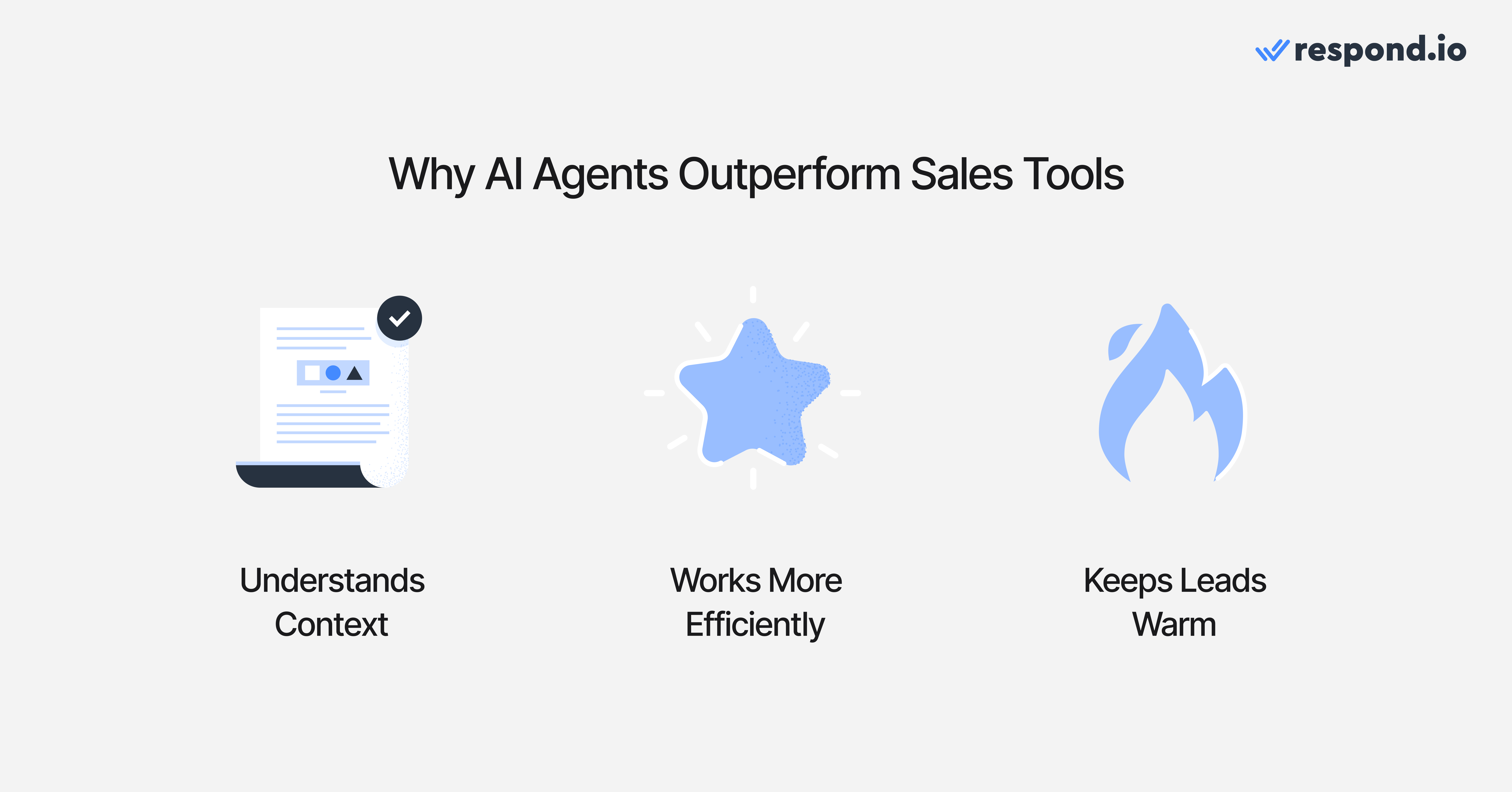
The right AI sales tool reduces that friction — automating qualification, routing and follow-up so your team focuses on conversations that require human judgment. The wrong one adds another tab to manage without solving the underlying problem.
Common switching triggers: response SLAs slipping on WhatsApp or Instagram, manual routing between agents, missed follow-ups after first contact, and rising per-seat costs across disconnected point tools.
Turn customer conversations into business growth with respond.io. ✨
Manage calls, chats and emails in one place!
Key criteria to choose the best AI sales tools
To choose the best AI sales tool for a business that sells directly to consumers, evaluate it by how well it handles high-volume inbound conversations, automates qualification and follow-up across channels, and integrates with your CRM without manual work.
Channel coverage: Does the tool support the channels your customers actually use — WhatsApp, Instagram, TikTok, Facebook Messenger? Check whether voice calls on those channels run in the same thread as the chat.
AI Agent capability: Can the AI Agent do more than answer FAQs? Look for tools where the agent can qualify leads, update contact fields, trigger workflows, read catalog and order details, and hand off to a human with full context.
Automation depth: Beyond auto-replies, can the platform handle conditional routing, multi-step follow-up sequences and lifecycle stage updates without developer involvement? Check for trigger limits on lower-tier plans.
CRM sync: Does the tool offer two-way sync with HubSpot or Salesforce, or only one-way exports? Two-way sync means your CRM reflects every conversation update automatically — no manual data entry.
Pricing behavior at scale: How does cost grow as you add agents, contacts and conversation volume? Per-seat tools compound fast. Check for per-message markups, contact caps and add-on structures beyond the base plan.
Support quality: Is live human support accessible on the plan you’re evaluating, or is it bot-only? For teams managing high inbound volumes, support responsiveness directly affects uptime.
Security and compliance: ISO 27001 certification, GDPR compliance, SSO and contact data masking are non-negotiable at mid-market scale.
Comparison table: best AI sales tools by category
Tool | Best For | Main uses | Most popular plan |
Respond.io | Mid-market businesses managing high-volume sales conversations across chat and calling | Revenue conversation management across chat, voice and campaigns — AI Agents, workflow automation, CRM sync, lifecycle tracking | Growth plan: $199/month |
Zoko | Shopify ecommerce brands selling and supporting customers on WhatsApp | Cart recovery, order automation, shared inbox, WhatsApp broadcasts | Elite plan: $139/month |
Kommo | Small and medium teams selling directly through messaging apps with a CRM alongside | Pipeline management, WhatsApp inbox, no-code salesbot | Advanced plan: $45/user/month |
Manychat | Brands and creators running sales automation across Instagram, WhatsApp, Facebook Messenger and TikTok | Comment-to-DM flows, broadcast campaigns, AI-powered chat automation, lead capture | Pro plan: $39/month (2,500 contacts) |
SleekFlow | Businesses managing customer conversations across WhatsApp, Instagram and Messenger | Unified inbox, flow builder, AI Agent, Meta Ads integration | Premium AI plan: $399/month |
Best AI sales tools for B2C teams: Detailed breakdown
Here’s how each tool performs across the criteria that matter most for B2C sales teams — channel coverage, AI depth, automation, pricing and support. We’ve included pros, cons, verified pricing and G2/Capterra ratings for each.
Respond.io
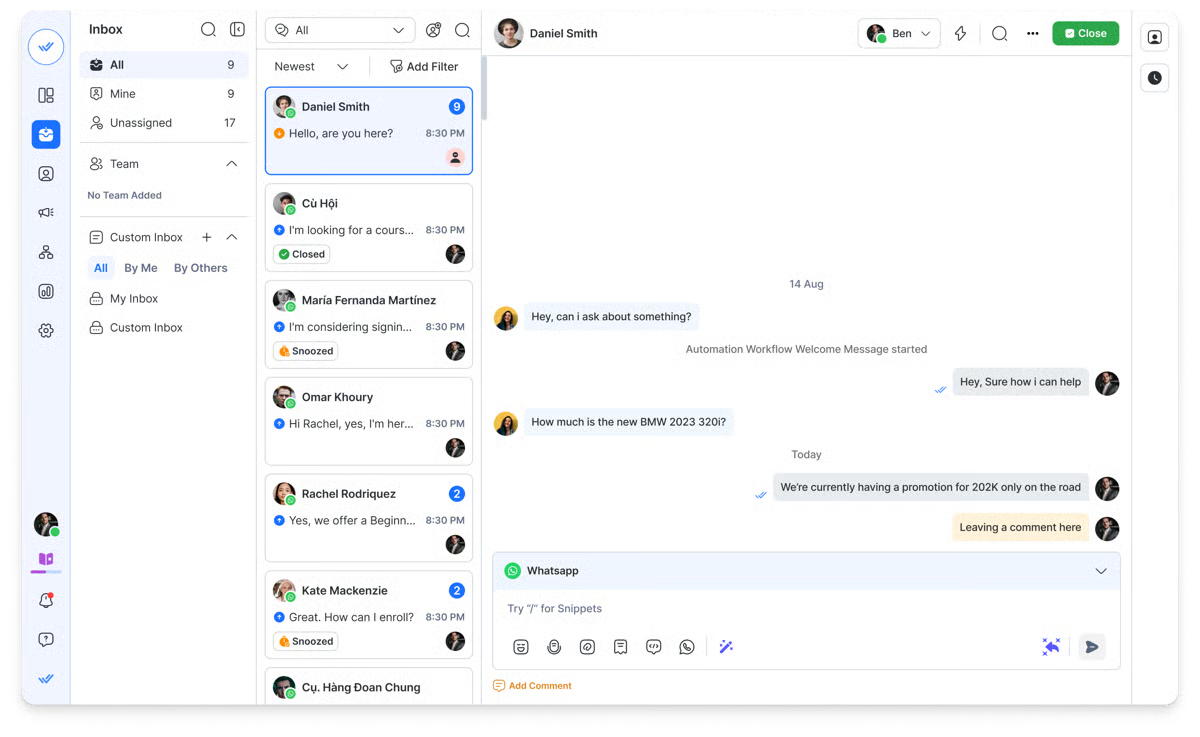
Respond.io is a customer conversation platform for mid-market B2C businesses that drive revenue from high-volume conversations.
Best for
Mid-market B2C businesses managing high-volume customer conversations across chat and calling that need AI Agents, routing logic and workflow automation to run reliably at scale. If your team handles high-volume inbound across WhatsApp, Instagram or voice and needs CRM sync and handoff context at every step, respond.io is built for that.
Pros
Lets teams build workflows with a simple drag-and-drop interface for auto replies, surveys and escalations
Uses AI Agents that can qualify leads, answer questions using your knowledge base, trigger workflows, and hand over complex cases to humans with internal comments for context
Incorporates AI Agents into voice services; AI Agents can understand and reply to voice messages, transcribe calls, answer calls and transfer them to humans as needed
AI Agents read WhatsApp catalog products and order details to answer availability and pricing questions
Ships a native MCP connector so teams can configure their AI Agent directly from Claude or ChatGPT, no self-hosting required
Handles Facebook Messenger voice calls in the same thread as the chat
Includes a test environment so teams can preview how their AI Agents respond before going live
Integrates with major CRMs like HubSpot and Salesforce to keep data and conversations connected
Offers AI reply suggestions that help agents respond faster and maintain a consistent tone
Manage and execute outbound campaigns across all your messaging channels from a single unified inbox
Transparent pricing with no hidden fees or add-ons
GDPR and ISO 27001 certified, coupled with 99.999% availability
Cons
Requires initial configuration and onboarding time to get full value — not plug-and-play
Best results come with CRM integration, which adds configuration time
Breadth of features can feel overwhelming for teams with simple needs, though respond.io's onboarding support helps teams get up to speed
Pricing
The Growth plan starts at $199 per month for 10 users. It includes unlimited AI Agent usage, advanced automation and full access to the omnichannel inbox. Costs rise as you add users and expand calling, workflow and CRM usage across higher conversation volumes, but pricing remains more predictable than add-on-heavy point tools.
Customer sentiment and rating
Respond.io is rated 4.8/5 on G2 (495+ reviews) and 4.6/5 on Capterra. Reviewers consistently highlight automation depth, AI Agent reliability and 24/5 support responsiveness. The most common adjustment period noted is initial configuration.
G2 rating: 4.8/5
Capterra rating: 4.6/5
Zoko
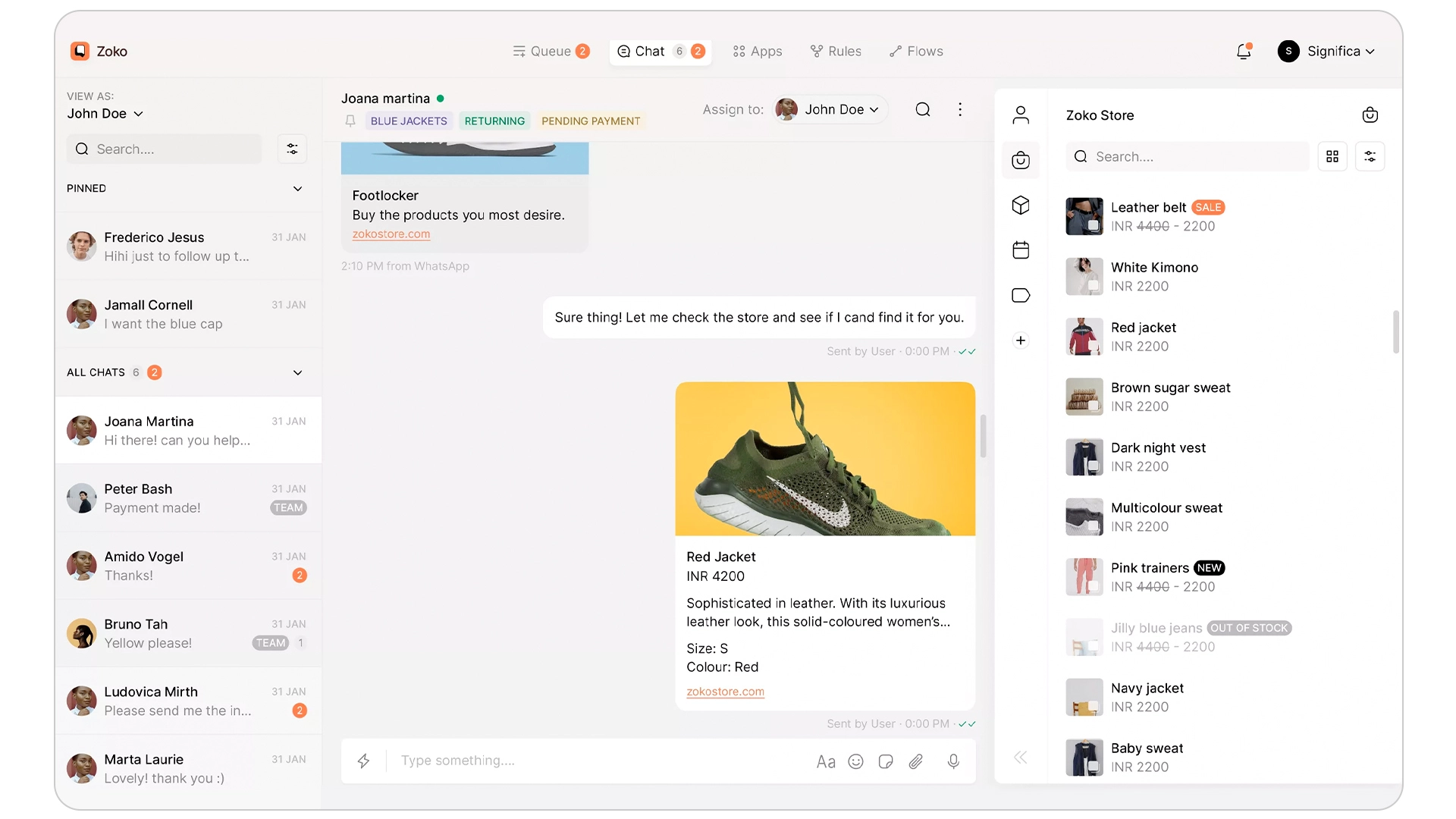
Zoko is a B2C tool built for Shopify ecommerce brands. It connects to Shopify so teams can recover abandoned carts, confirm COD orders and send broadcasts from a shared inbox.
Best for
Small, Shopify-focused B2C businesses that want to manage WhatsApp sales, support and broadcasts from one shared inbox.
Pros
Syncs with Shopify to automate cart recovery, order updates and payment confirmations
Visual flow builder for designing promotions, reminders and custom chat journeys
Shared inbox with agent assignment, tags and saved replies for faster collaboration
Integrates with Meta and WhatsApp Ads to capture and message leads instantly
Cons
Limited to WhatsApp and Shopify — not built for multi-channel operations
No in-depth analytics or lifecycle management
No AI Agent capability beyond basic automation
Pricing
Zoko's Elite plan is $139/month for up to 10 agents, with additional agents charged separately. Costs increase with WhatsApp messaging fees and broadcast volume.
Customer sentiment
Zoko is rated 4.5/5 on G2. Reviewers highlight ease of setup and WhatsApp broadcast features. Common requests include deeper analytics and a more modern UI.
G2 rating: 4.5/5
Capterra rating: Not available
Kommo
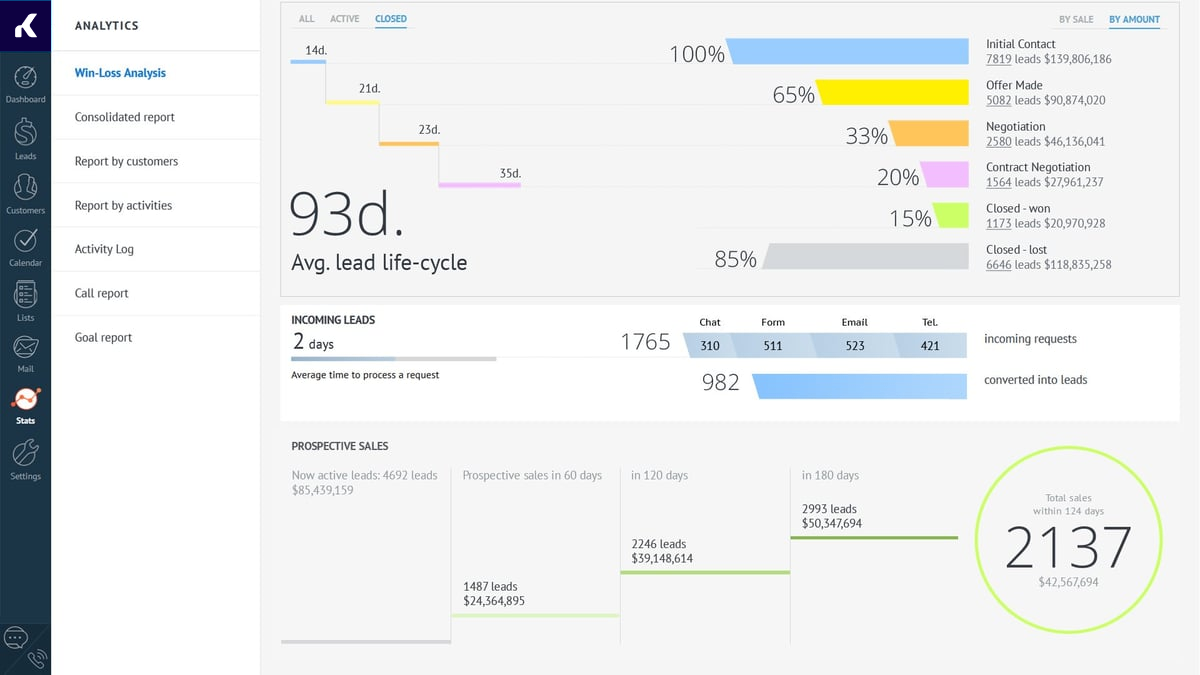
Kommo is a B2C/SMB tool — a CRM with built-in messaging that connects pipeline management, chat and automation in one interface. It links messaging apps, calls and deal stages so sales activity is tracked from first message to closed deal.
Best for
Small and medium teams that want a CRM where WhatsApp, Messenger and Instagram live right beside the sales pipeline.
Pros
A unified inbox for WhatsApp, Messenger, Instagram, SMS, email and web chat
Built-in WhatsApp Cloud API with automation and broadcasting
Customizable pipelines that show every deal’s progress at a glance.
No-code salesbot that can be set up to qualify leads, assign chats and trigger workflows
Cons
Outdated UI with limited advanced AI features
Routing restricted to round-robin — no conditional logic
Not built to scale beyond small teams
Pricing
Starts at $25/user/month. Includes the no-code Salesbot, pipeline automation and triggered SMS and emails. Total cost scales with seat count and add-on usage.
Customer sentiment
Kommo is rated 3.8/5 on G2 and 4.3/5 on Capterra. Reviewers find it useful for small teams managing WhatsApp pipelines, but flag limitations in routing logic and reliability at higher volumes.
G2 rating: 3.8/5
Capterra rating: 4.3/5
Manychat
Manychat is a B2C social messaging automation platform built for Instagram, WhatsApp, Facebook Messenger and TikTok. It is purpose-built for comment-to-DM flows, broadcast campaigns and lead generation — not complex routing or lifecycle management.

Best for
B2C brands and creators that drive sales through social media and need automated DM flows, broadcast campaigns and lead capture at a low entry price.
Pros
Comment-to-DM flows and post-interaction automations built for social media campaigns.
Drag-and-drop flow builder — easy to set up without technical skills.
Supports WhatsApp, Instagram, Facebook Messenger, TikTok, SMS and email in one platform.
Large template library and active user community.
Lowest entry price of any tool in this comparison.
Cons
Free plan severely limited after March 2026 restructure — now capped at 25 contacts.
Cost escalates as contact list grows; overage fees apply beyond plan limits.
AI features are a separate $29/month add-on on all plans.
No routing logic, lifecycle management or CRM sync depth.
Not suited for high-volume WhatsApp API management or complex sales workflows.
Pricing
Pro plan: $39/month (2,500 contacts, monthly billing). Business: $69/month (7,500 contacts). AI features: $29/month add-on. WhatsApp and SMS fees charged separately.
Customer sentiment
Manychat is rated 4.5/5 on G2 (164 reviews) and 4.5/5 on Capterra. Reviewers praise the flow builder and comment-to-DM reliability. Cost escalation and billing issues are the dominant complaints as contact lists grow.
G2 rating: 4.5/5
Capterra rating: 4.5/5
SleekFlow
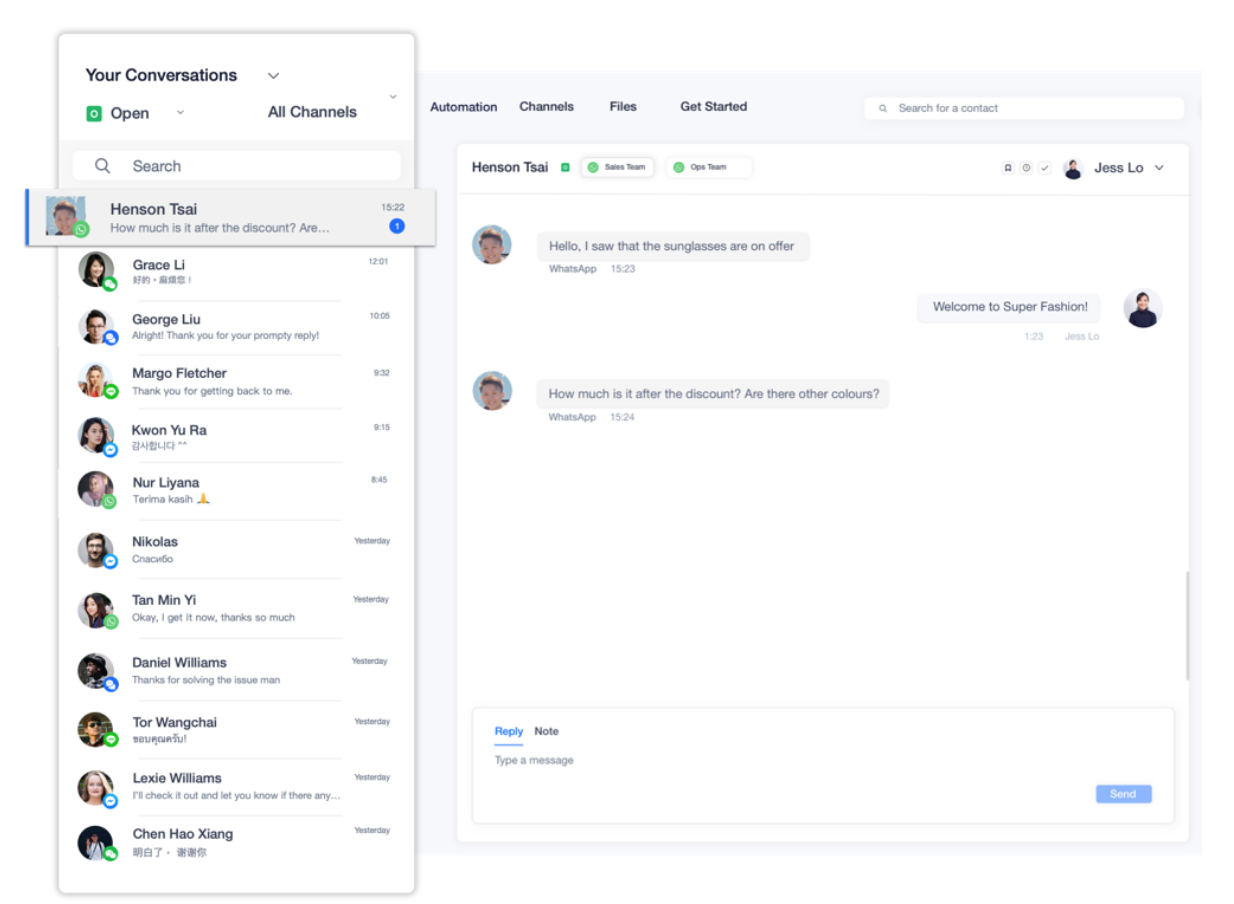
SleekFlow is a B2C tool that gives smaller teams a centralized way to manage WhatsApp, Messenger and Instagram conversations from a shared inbox, with AI-powered automation built in.
Best for
Small businesses that want to handle all customer conversations on WhatsApp, Messenger, Instagram and more, from one inbox with AI-powered automation built in.
Pros
Unified inbox for WhatsApp, Messenger, Instagram, SMS and web chat among others
Flow Builder to automate replies, campaigns and follow-ups without code
AI Agent and Inbox Co-Pilot that understand context and assist live agents
Integrations with Shopify, HubSpot, Salesforce and Meta Ads for a complete customer view
Cons
Starting price is higher than most tools in this comparison, with additional fees for WhatsApp hosting and per-message costs
Some G2 reviews flag AI Agent underperformance
Inconsistent platform stability with reported bugs and lag
Pricing
SleekFlow's Premium AI plan starts at US$399/month (5 users, 1,000 contacts included, capped at 12,000) on a Monthly Active Contacts model, with WhatsApp Business API numbers billed separately at US$15/month each.
Customer sentiment
SleekFlow is rated 4.6/5 on G2 and 4.5/5 on Capterra. Reviewers cite the inbox and automation builder as strengths. Recurring complaints cover pricing escalation, platform instability at higher volumes and bugs that slow peak-period performance.
G2 rating: 4.6/5
Capterra rating: 4.5/5
Verdict: which AI sales tool should you choose in 2026?
The best AI sales tool for B2C teams depends on which channel your customers use most and how complex your sales workflow is.
Choose respond.io when your bottleneck is qualifying and managing high-volume sales conversations across chat and calling with AI-led routing and workflow automation.
Choose Zoko if you run a Shopify-based business and WhatsApp is your primary sales and support channel.
Choose SleekFlow if you manage WhatsApp, Instagram and Messenger together and your sales conversations are straightforward enough not to need AI-led routing or lifecycle tracking.
Choose Kommo if you want a CRM with messaging built in and your team sells directly through WhatsApp or Instagram without needing advanced automation.
Choose Manychat if your primary sales motion is through social media — Instagram comment-to-DM flows, Facebook Messenger campaigns or WhatsApp broadcasts — and you need an affordable, low-code entry point.
Respond.io is the recommended fit for mid-market B2C businesses managing high-volume sales conversations across chat and calling — where lead qualification, routing logic and handoff context need to run reliably at scale.
Only Tourism automated 80% of conversations during peak season using respond.io's AI Agents.
Praga Medica filtered out 97% of spam so their sales team could focus on real leads.
Book a respond.io demo to see if it fits your workflow.
Turn customer conversations into business growth with respond.io. ✨
Manage calls, chats and emails in one place!
FAQs about the best AI sales tools
Are AI sales tools worth it for small businesses or startups?
Yes, but only if the tool matches your actual workflow. Small teams don't need complex enterprise software — they need something that reduces manual work and speeds up response. Respond.io scales with you as conversation volume grows, without forcing a replatform.
What AI sales tools integrate with CRM platforms like HubSpot or Salesforce?
Most do. Respond.io, SleekFlow, Kommo and Manychat all connect with HubSpot or Salesforce. Prioritize tools that offer two-way sync to avoid manual data reconciliation.
Can AI sales tools answer business calls?
Yes, some AI sales tools can answer and route business calls, but capabilities vary by compliance, handoff, and reporting needs. On respond.io, you can configure the AI Agent's voice, add instructions and test the experience before going live. This gives you full control over how calls are handled.
How hard is it to switch AI sales tools without losing conversation history or CRM data?
It depends on how much history, automation logic and CRM mapping needs to transfer. Before migrating, confirm the new platform supports conversation imports, field mapping, workflow rebuilding and two-way CRM sync. Respond.io supports all of these.
When should I choose respond.io vs Manychat or Zoko?
Choose respond.io when the bottleneck is qualifying and routing high-volume conversations across multiple channels with AI Agents, lifecycle tracking and CRM sync. Choose Manychat if your primary use case is social media marketing automation — Instagram DMs, comment-to-DM flows, Facebook Messenger campaigns. Choose Zoko if you run a Shopify store and only need WhatsApp commerce features.
Further reading
If you found our article helpful, you should check out the following:


