
















 Electrónica
 Moda y vestimenta
 Muebles
 Joyería y Relojes
 Actividades extracurriculares
 Deportes y fitness
 Centro de belleza
 Clínica dental
 Clínica médica
 Servicios de limpieza y servicio de camareras
 Fotografía y videografía
 Concesionario de automóviles
 Agencia de viajes y operador turístico


WhatsApp CRM TL;DR: Qué hacer cuando tu CRM no puede seguir el ritmo de WhatsApp
Para equipos B2C de mercado medio cuyo CRM no puede seguir el ritmo de WhatsApp, la solución es una plataforma de conversaciones con clientes entre ambos. Las integraciones nativas de WhatsApp en Salesforce, HubSpot y Zendesk limitan la automatización y no soportan las llamadas de WhatsApp, por lo que los agentes tienen que alternar entre pestañas mientras los clientes potenciales pierden interés. Respond.io, una plataforma de conversaciones con clientes y BSP oficial de WhatsApp, cierra la brecha:
Cambio de agente: Una Inbox unificada pone las conversaciones de WhatsApp, los registros de contacto y los datos del CRM en una sola pantalla, para que los agentes registren respuestas y actualicen los registros sin salir de ella.
Calificación y enrutamiento de clientes potenciales: Los Agentes IA califican, etiquetan y enrutan contactos en tiempo real, para que los clientes potenciales de alto valor lleguen al agente correcto antes de que se enfríen. Hmlet utilizó esto para multiplicar por 2.5 su tasa de conversión en WhatsApp.
Automatización y llamadas: Los flujos de trabajo, los Agentes IA y las llamadas de WhatsApp Business se ejecutan de forma nativa dentro de Respond.io, sin necesidad de discadores de terceros.
No apto para: Empresas que usan la aplicación estándar WhatsApp Business (Respond.io requiere la API de WhatsApp Business) o equipos que buscan reemplazar completamente su CRM.
Si tu equipo B2C de mercado medio gestiona WhatsApp en una pantalla y tu CRM en otra, estás perdiendo tiempo, perdiendo contexto y creando brechas en los datos de tus clientes. Una plataforma de gestión de conversaciones con clientes es la capa que conecta ambos — y respond.io está diseñada específicamente para ese trabajo, vinculando conversaciones, registros de contacto y automatización para que tus agentes trabajen desde un solo lugar en vez de dos. Así funciona y cómo configurarlo.
API de WhatsApp + tu CRM: Por qué necesitas una capa intermedia
La mayoría de los CRM no fueron diseñados para la mensajería en tiempo real. Cuando conectas WhatsApp directamente a Salesforce, HubSpot o Zendesk, los agentes terminan cambiando entre herramientas para responder — y cuando lo hacen, los clientes potenciales ya se han enfriado. Respond.io se sitúa entre WhatsApp y tu CRM para que los agentes nunca tengan que salir de la Inbox para hacer su trabajo.
Esta es la diferencia entre integrar WhatsApp con un CRM directamente y usar respond.io como plataforma de conversaciones con clientes para integrarlos.
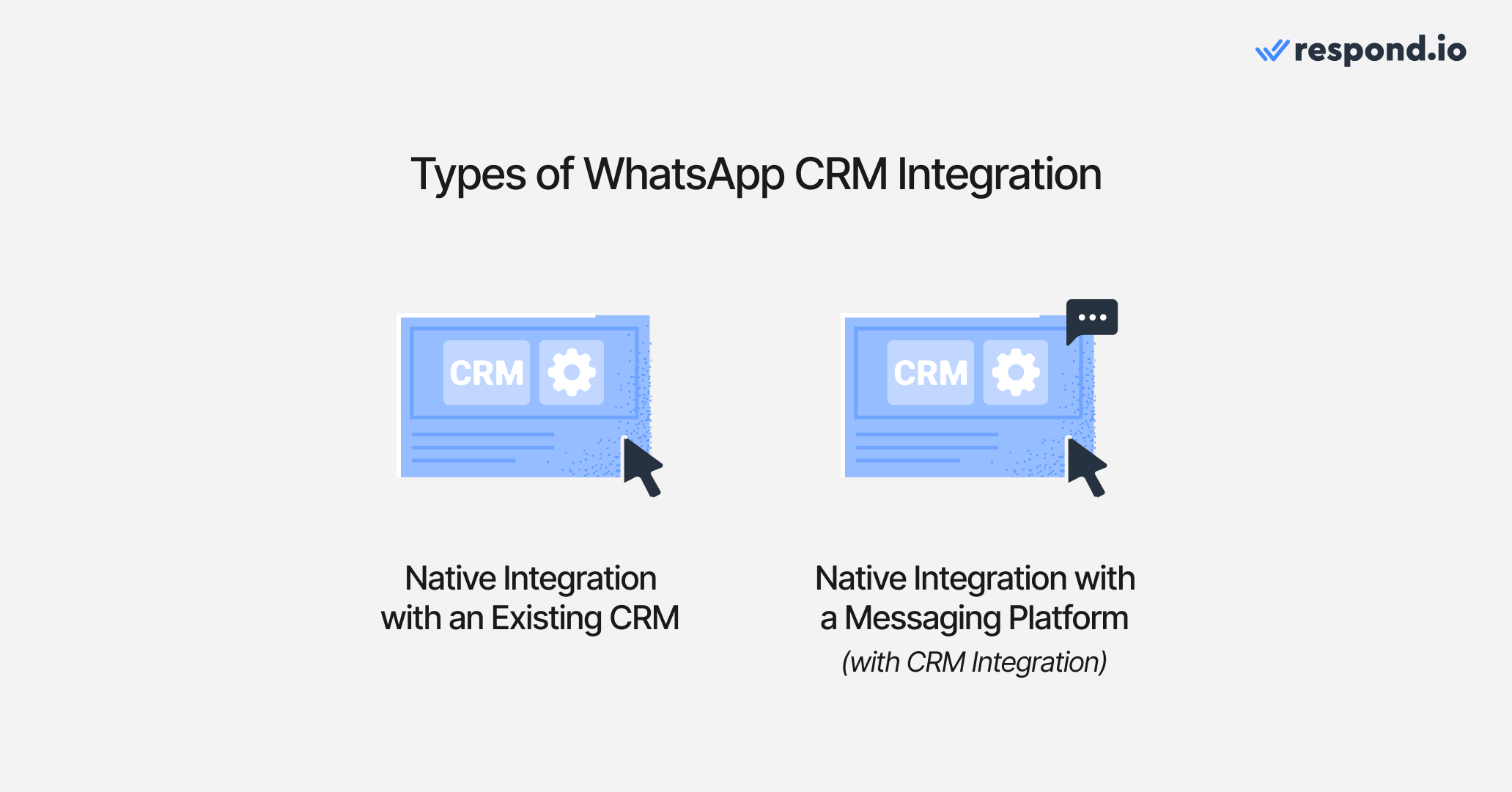
1. Integración nativa de la API de WhatsApp con un CRM existente
Las empresas que integran WhatsApp con su CRM quieren enviar y recibir mensajes dentro de su sistema existente Mientras que algunos CRMs, como Salesforce, HubSpot y Zendesk, ofrecen integración nativa de WhatsApp, a menudo carecen de funciones clave de mensajería, ya que fueron diseñados originalmente para el correo electrónico
Por ejemplo, las integraciones de HubSpot y Salesforce limitan las capacidades de automatización, lo que dificulta cualificar clientes potenciales y gestionar conversaciones de manera eficiente De forma similar, la integración nativa de WhatsApp de Zendesk no admite vistas previas de video ni la reproducción de notas de voz dentro de la Inbox — los agentes deben descargar los archivos para verlos, lo que interrumpe los flujos de trabajo
Además, ninguna de estas integraciones admite llamadas de WhatsApp de forma nativa, lo que obliga a los agentes a cambiar de plataforma
Además, restringen el uso de la API de WhatsApp a un solo CRM, impidiendo que las empresas compartan datos de WhatsApp entre plataformas o los utilicen junto con otras herramientas Afortunadamente, la mayoría de los CRM admiten integraciones de terceros, lo que permite a las empresas conectarse con plataformas de gestión de conversaciones con clientes como respond.io, que ofrecen soporte completo para WhatsApp, desbloqueando capacidades de mensajería avanzadas, automatización y omnicanalidad.
API de WhatsApp + CRM existente | API de WhatsApp + Respond.io | |
|---|---|---|
Integración nativa de WhatsApp | Disponible pero limitada (Salesforce, HubSpot, Zendesk) | Diseñada específicamente para la mensajería de WhatsApp |
Funciones de mensajería | Sin llamadas de WhatsApp, vistas previas de video ni reproducción de notas de voz | Soporta completamente las funciones de WhatsApp |
Automatización | Automatización limitada | Automatización avanzada |
Manejo de archivos multimedia | Los archivos multimedia deben descargarse por separado | Reproducción de medios en la Inbox |
Flexibilidad del CRM | Restringido a un solo CRM | Se integra con múltiples CRMs |
Mensajería omnicanal | Limitado | Soporta Messenger, Instagram, TikTok, Telegram y más |
Impacto en ingresos | Los clientes potenciales se enfrían mientras los agentes cambian entre herramientas para responder | Los agentes responden desde un solo lugar — conversaciones, datos de contacto y automatización en una única Inbox |
2. Integración de la API de WhatsApp con CRM mediante una plataforma de gestión de conversaciones con clientes
A diferencia de los CRMs tradicionales, las plataformas de gestión de conversaciones con clientes están diseñadas específicamente para la mensajería instantánea, ofreciendo soporte completo para las funciones de WhatsApp. Aunque Salesforce, HubSpot y Zendesk ofrecen integraciones nativas con WhatsApp, carecen de funcionalidades clave de mensajería como las llamadas de WhatsApp y la automatización avanzada
Respond.io es una plataforma de conversaciones con clientes que mantiene tu CRM como el sistema de registro y gestiona la capa de mensajería para la que tu CRM nunca fue diseñado.
Proporciona funciones de comunicación esenciales que las empresas B2C de mercado medio necesitan, incluyendo gestión del ciclo de vida del cliente, calificación de clientes potenciales, automatización y Agentes IA mientras se integra con CRMs existentes como HubSpot,Salesforce, Pipedrive, ActiveCampaign y más. Esto asegura que las empresas puedan gestionar las conversaciones de WhatsApp sin limitaciones de la API o restricciones de mensajería.
Para confirmar que la sincronización funciona, envía un mensaje a tu número de WhatsApp desde un teléfono de prueba y verifica que aparezca un Contacto en tu CRM con el número de teléfono, la etapa del ciclo de vida y el propietario que mapeaste. Si el registro falta o está duplicado, corrige el mapeo de campos antes de enrutar tráfico en vivo a través de él.
Más allá de WhatsApp, soluciones como respond.io soportan mensajería omnicanal, permitiendo a las empresas interactuar con clientes a través de Messenger, Instagram, TikTok, Telegram y más, todo desde una Inbox omnicanal unificada.
Requisitos
Antes de empezar, asegúrate de tener los elementos esenciales para una configuración fluida del CRM de WhatsApp:
Necesitarás acceso a la API de WhatsApp Business en lugar de la aplicación estándar WhatsApp Business.
Si corresponde, confirma que tu Meta Business Account esté verificada.
También debes tener acceso de administrador a tu CRM, una lista clara de los campos a sincronizar como correo electrónico, número de teléfono, etapa del ciclo de vida y propietario, y un responsable designado para el opt-in de WhatsApp y el cumplimiento.
Cómo integrar la API de WhatsApp con tu CRM usando respond.io en 3 pasos
Integrar la API de WhatsApp con tu CRM a través de respond.io requiere tres pasos: abre una cuenta de la API de WhatsApp Business en respond.io, conecta tu CRM con una integración de API nativa, de terceros o personalizada, y mapea los campos que quieres sincronizar. Ten listos tu acceso a la API de WhatsApp y los permisos de administrador del CRM antes de empezar.
Paso 1: Crea una cuenta de la API de WhatsApp Business en respond.io
Antes de cualquier otra cosa, necesitarás acceso a la API de WhatsApp Business. Esto se debe a que no puedes integrar la aplicación regular de WhatsApp Business con un CRM.
Como WhatsApp Business Solution Provider oficial, respond.io permite a las empresas configurar su API rápidamente y de forma segura. Aprende a crear una cuenta de la API de WhatsApp Business con respond.io.
Paso 2: Conecta WhatsApp a tu CRM
Gracias a las Integraciones nativas de respond.io, las empresas pueden conectar WhatsApp a su CRM mediante diferentes métodos:
Integración nativa: Integra directamente CRMs como HubSpot y Salesforce con respond.io para sincronizar contactos, mensajes y flujos de trabajo.
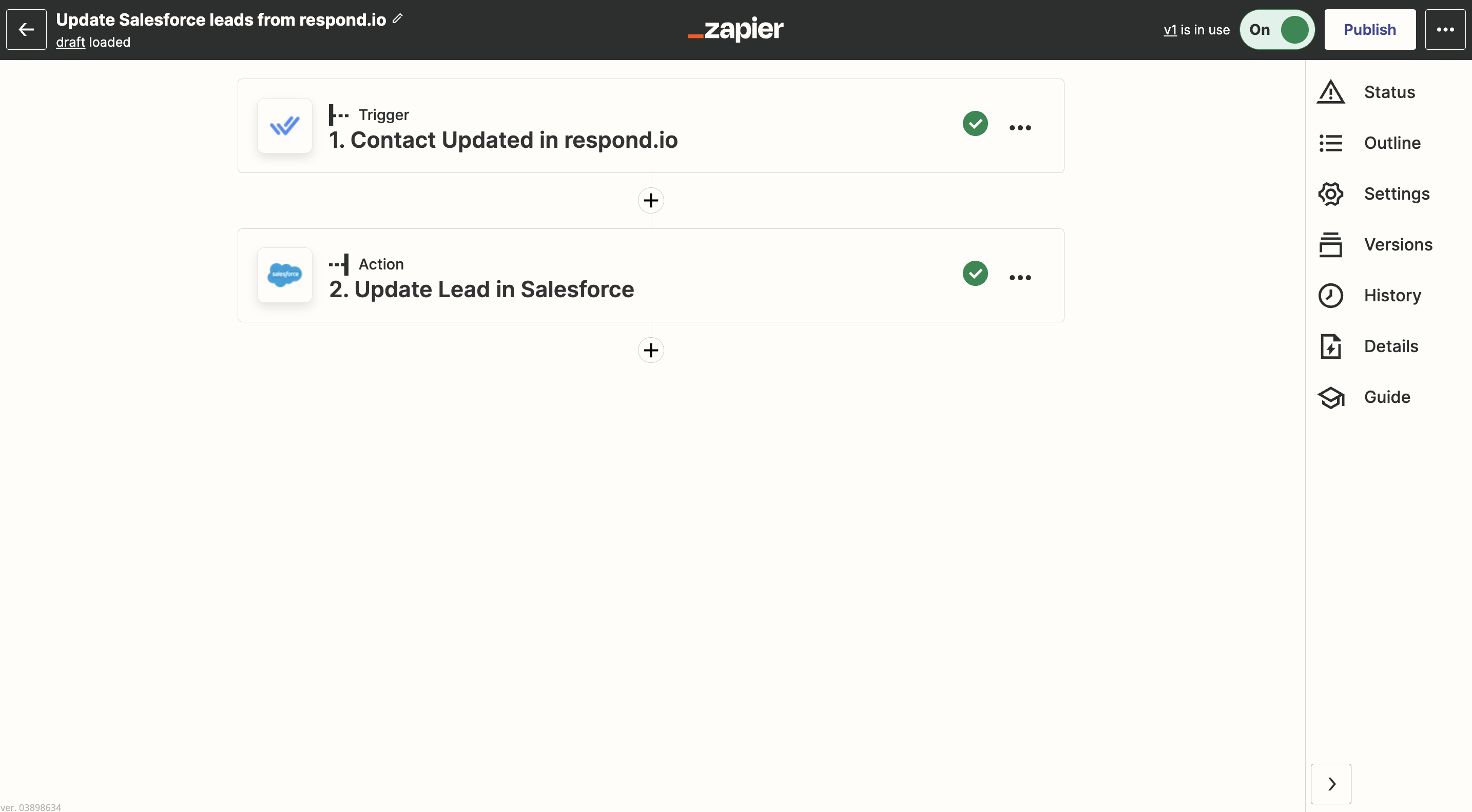
Automatización de terceros: Usa Zapier o Make para conectar respond.io con otras plataformas de CRM.
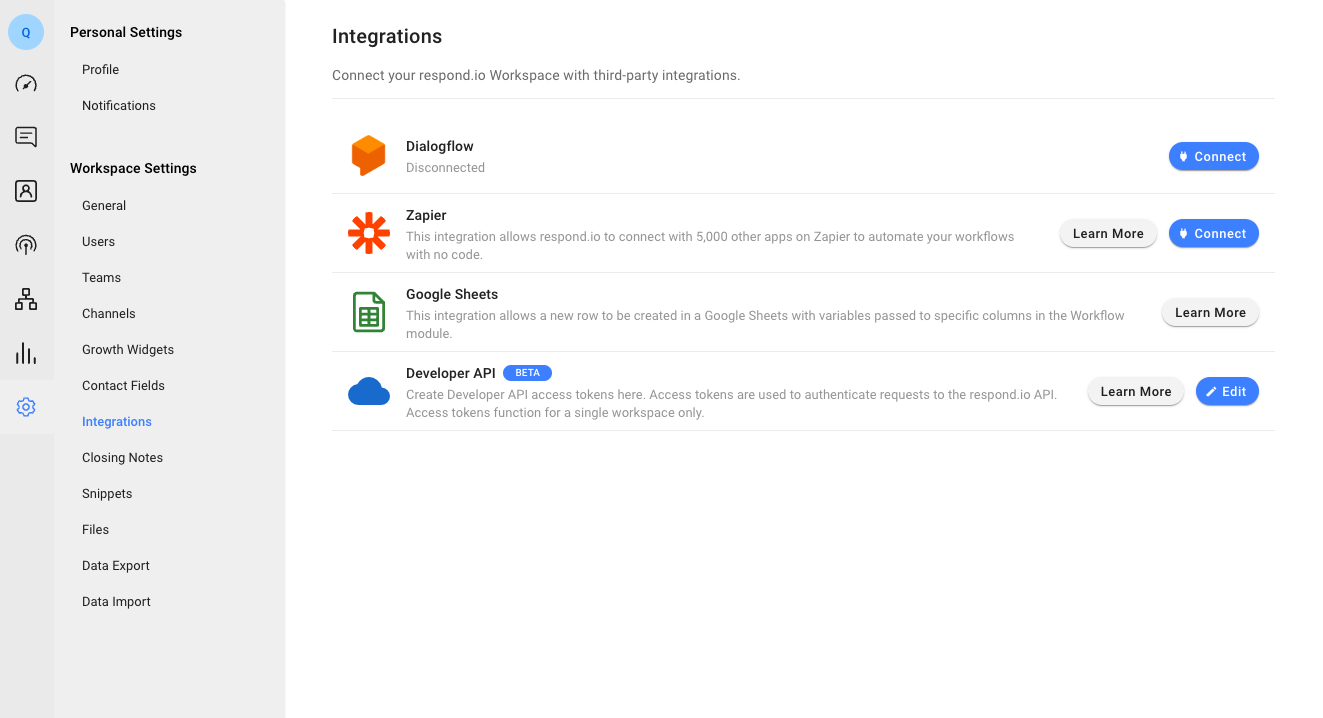
Integración de API personalizada: Crea un nuevo Flujo de trabajo y añade el Paso de Solicitud HTTP para integrar cualquier CRM con respond.io. Los metadatos de llamadas de voz, las transcripciones y las grabaciones también pueden enviarse a sistemas externos mediante un webhook.
Configuración asistida por MCP: Una vez que la sincronización de tu CRM esté activa, pídele a Claude o a ChatGPT que creen los campos personalizados, las etiquetas o las etapas del ciclo de vida de las que depende la sincronización, o verifica si un contacto se sincronizó correctamente. El servidor MCP alojado de Respond.io permite que tu cliente de IA haga este trabajo directamente dentro de Respond.io, con los permisos que ya tienes.

Paso 3: Configura la información para sincronizar
Una vez conectado, asegúrate de que la sincronización de datos funcione correctamente entre WhatsApp y tu CRM. Respond.io permite a las empresas sincronizar contactos, el historial de conversaciones y las etapas del ciclo de vida, mientras automatiza la asignación de clientes potenciales, el enrutamiento del chat y los seguimientos.
Esto asegura que las conversaciones de WhatsApp se gestionen de manera eficiente sin cambiar entre plataformas.
Por qué los equipos B2C de mercado medio usan respond.io entre WhatsApp y su CRM
Una plataforma de gestión de conversaciones con clientes suele ser la mejor opción cuando necesitas que WhatsApp funcione como un canal de CRM, sincronizando registros, automatizando el enrutamiento y manteniendo el contexto sin obligar a los agentes a trabajar dentro de la interfaz del CRM.
Respond.io es una plataforma de gestión de conversaciones con clientes diseñada para ofrecer esa capa con sincronización multi-CRM, flujos de trabajo y soporte de llamadas — y es un WhatsApp Business Solution Provider y Meta Business Partner. Facilita la sincronización de conversaciones, la automatización de flujos de trabajo y la gestión de interacciones con los clientes desde un solo lugar. Con una sólida fiabilidad de la plataforma y soporte al cliente dedicado, las empresas pueden asegurar operaciones fluidas y mensajería ininterrumpida.
Exploremos cómo las empresas utilizan respond.io para marketing, ventas, servicio al cliente, Colaboración de Equipo y seguimiento del rendimiento para ver por qué es la mejor solución.
Marketing: Cómo captar y fidelizar clientes potenciales
Las empresas pueden atraer clientes potenciales en WhatsApp usando códigos QR en materiales físicos, enlaces de chat en contenido digital o widgets de chat en sitios web. Para la generación proactiva de clientes potenciales, anuncios click-to-WhatsApp en Facebook e Instagram ayudan a las empresas a alcanzar audiencias específicas y llevarlas hacia la conversión.
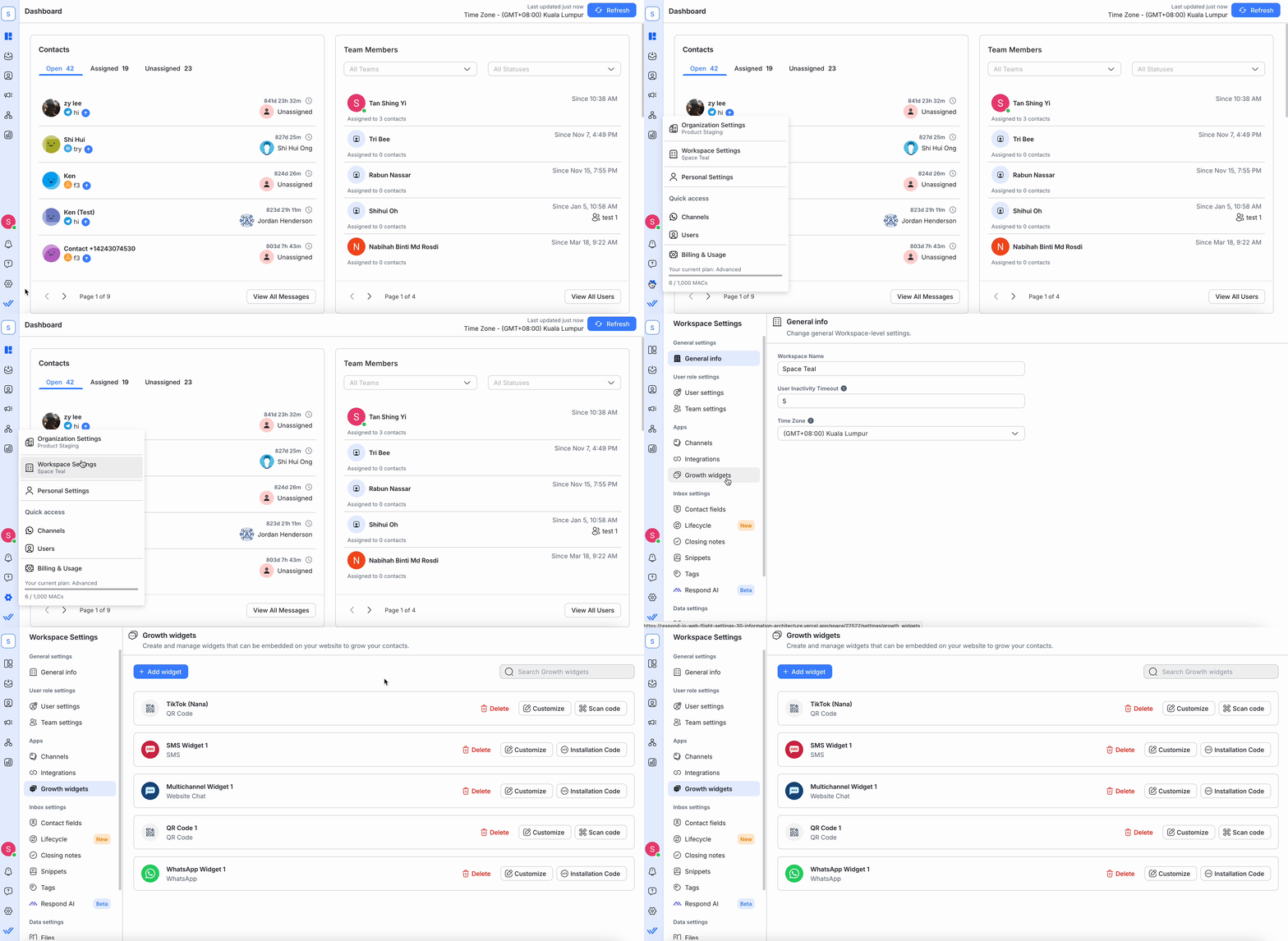
Una vez que un cliente potencial se pone en contacto, respond.io recopila y sincroniza automáticamente los datos de contacto en el CRM, permitiendo a las empresas segmentar a los clientes, enviar difusiones y personalizar los seguimientos con herramientas como catálogos de WhatsApp, mensajes interactivos y notificaciones push.
Ventas: automatización de la calificación de clientes potenciales y tareas de ventas
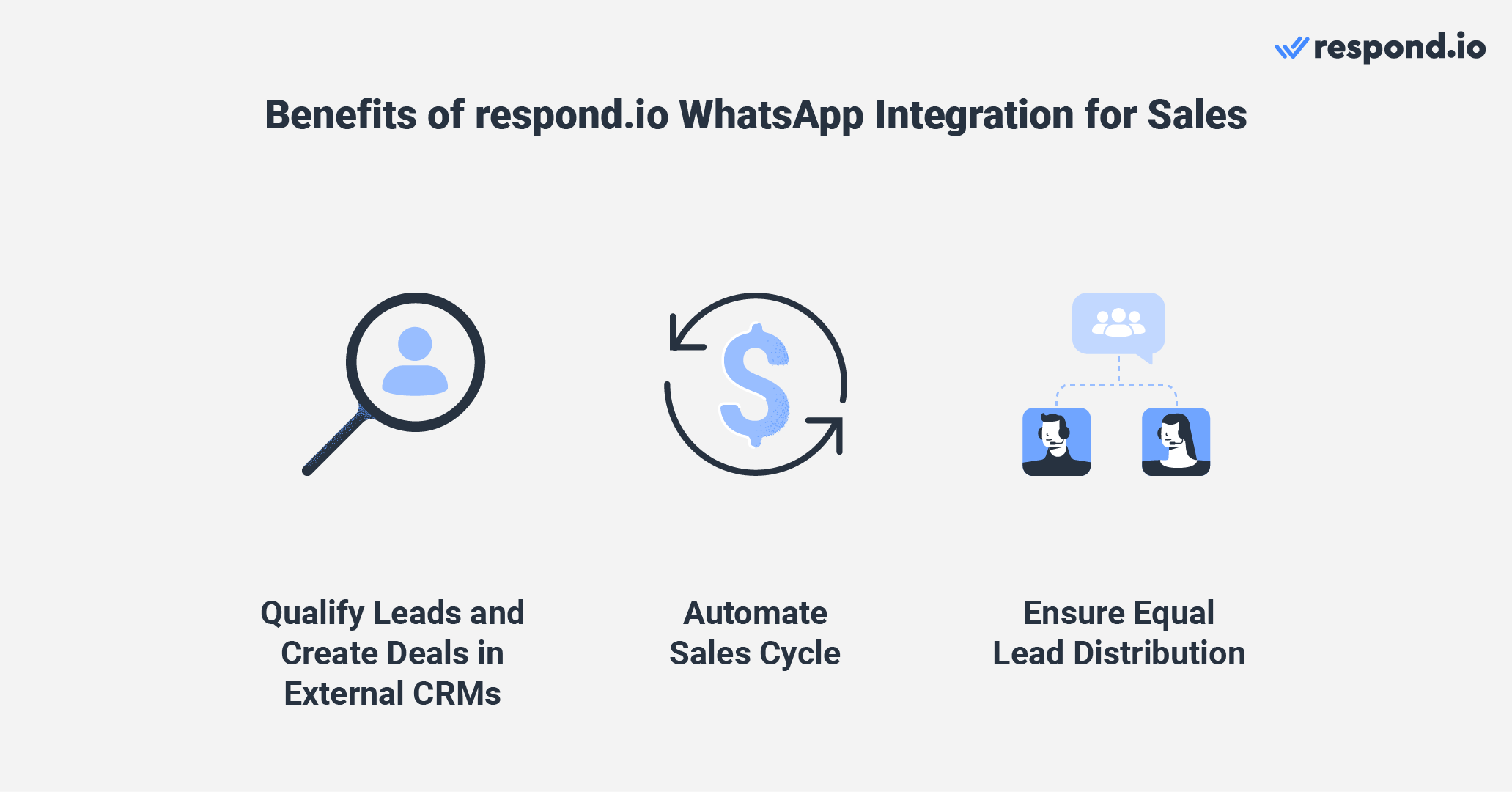
respond.io se integra de forma nativa con CRMs como HubSpot y Salesforce, lo que permite a los equipos de ventas calificar clientes potenciales, realizar un seguimiento de las conversaciones y cerrar ventas, todo desde una sola plataforma. Con automatización impulsada por IA, las empresas pueden filtrar clientes potenciales de baja prioridad automatizando las preguntas de calificación y la puntuación de clientes potenciales.
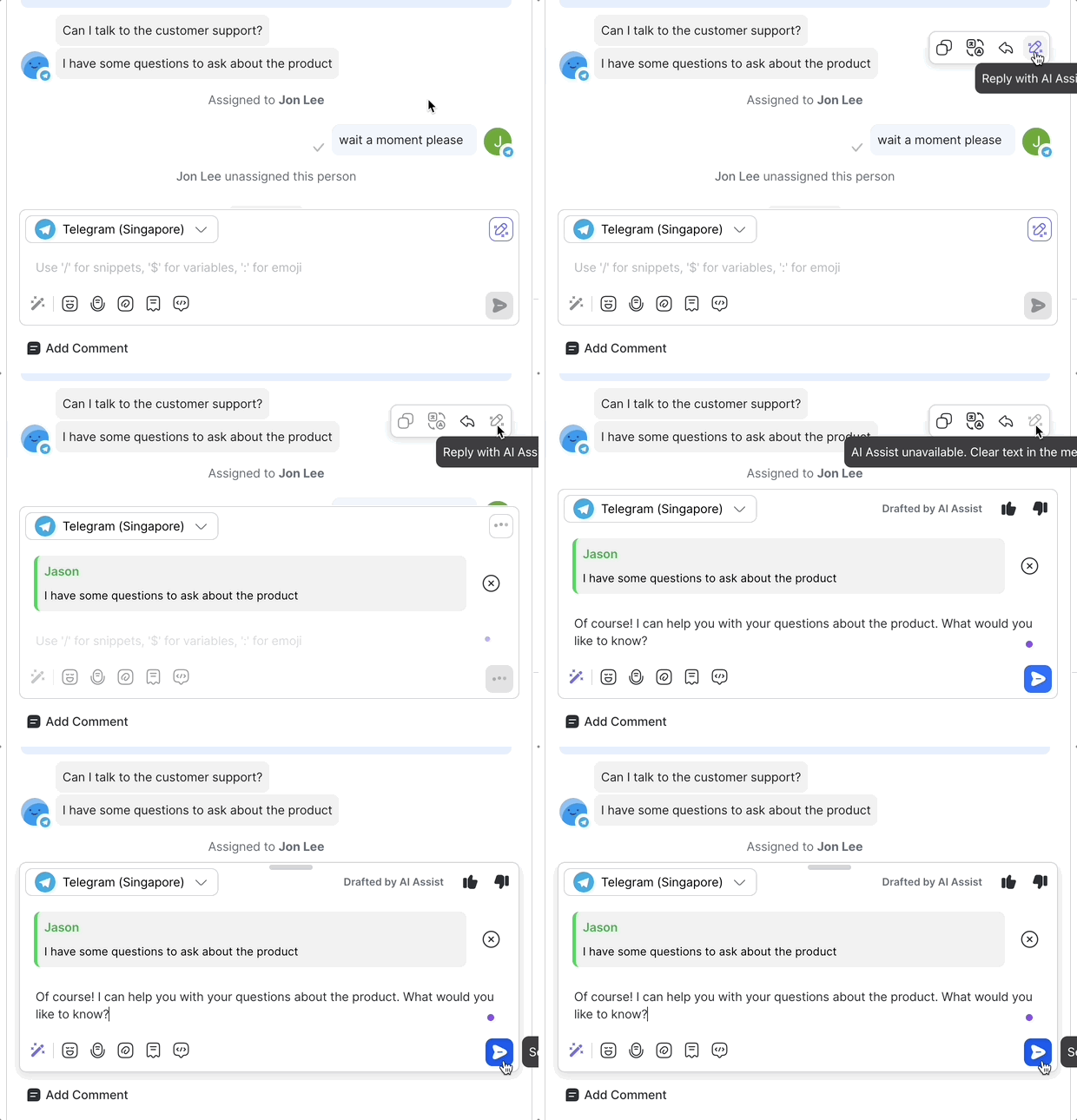
Muchos equipos también añaden un Agente IA de respond.io para gestionar consultas en las primeras etapas, recomendar productos y enviar enlaces de pago o de reserva. La empresa de alquiler a corto plazo Hmlet usa uno para filtrar cada nueva consulta por WhatsApp, de modo que su equipo de ventas solo recibe contactos de personas que realmente quieren una habitación. Con el 90% del spam filtrado antes de que un agente lo vea, la tasa de conversión en WhatsApp de Hmlet aumentó 2.5x.
Una vez que un cliente potencial está verificado, respond.io puede dirigir las conversaciones al agente de ventas correcto según la prioridad, el tamaño de la venta o la región. Respuestas asistidas por IA, mensajes multimedia enriquecidos y soporte para llamadas de WhatsApp permiten una interacción y conversiones más rápidas.
Retención: mejora la calidad y la eficiencia del soporte al cliente
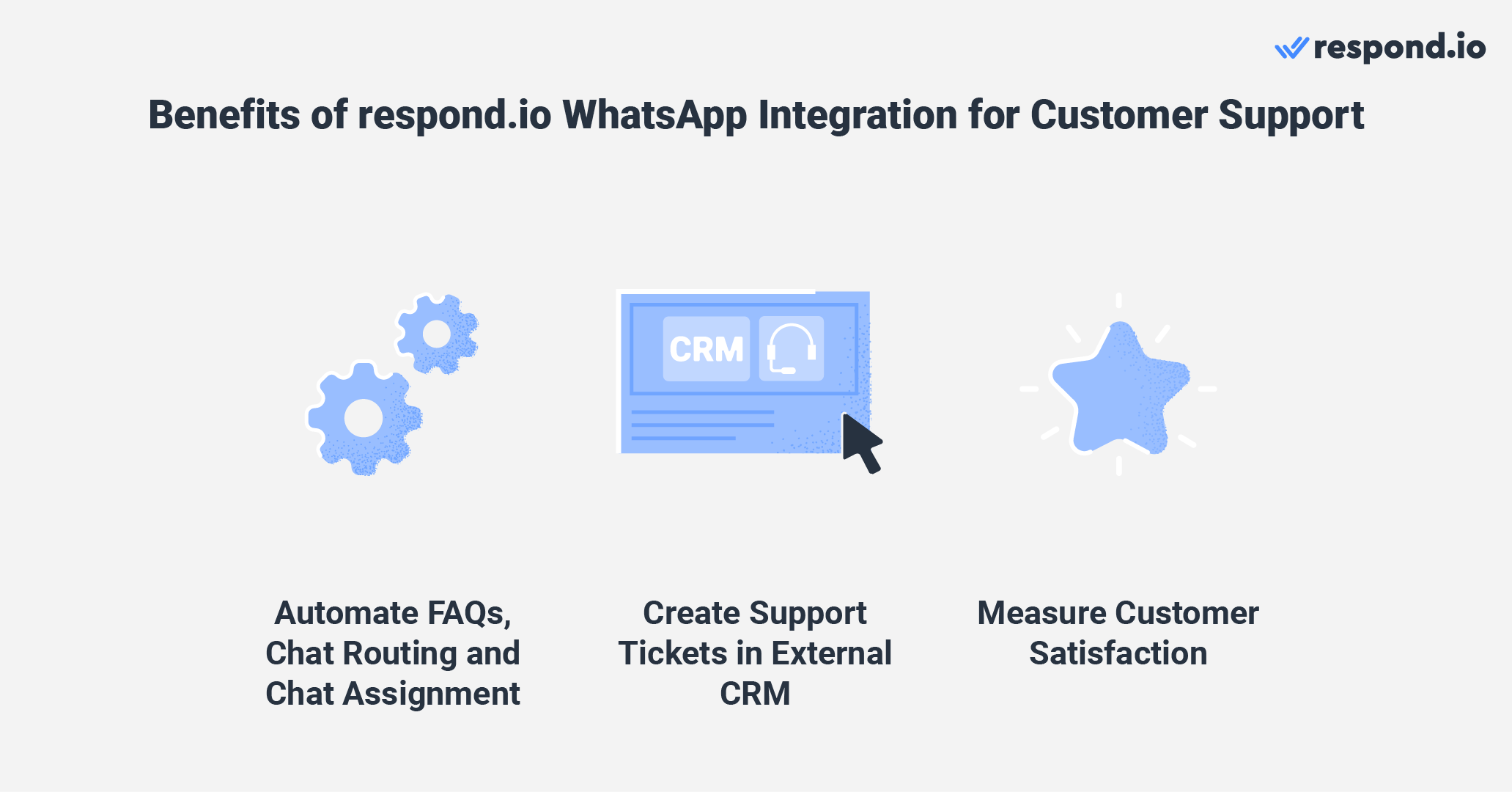
Las empresas pueden automatizar las preguntas frecuentes y guiar a los clientes a través de opciones de autoservicio utilizando preguntas de opción múltiple. Para consultas complejas, la plataforma puede dirigir automáticamente a los clientes al equipo adecuado.
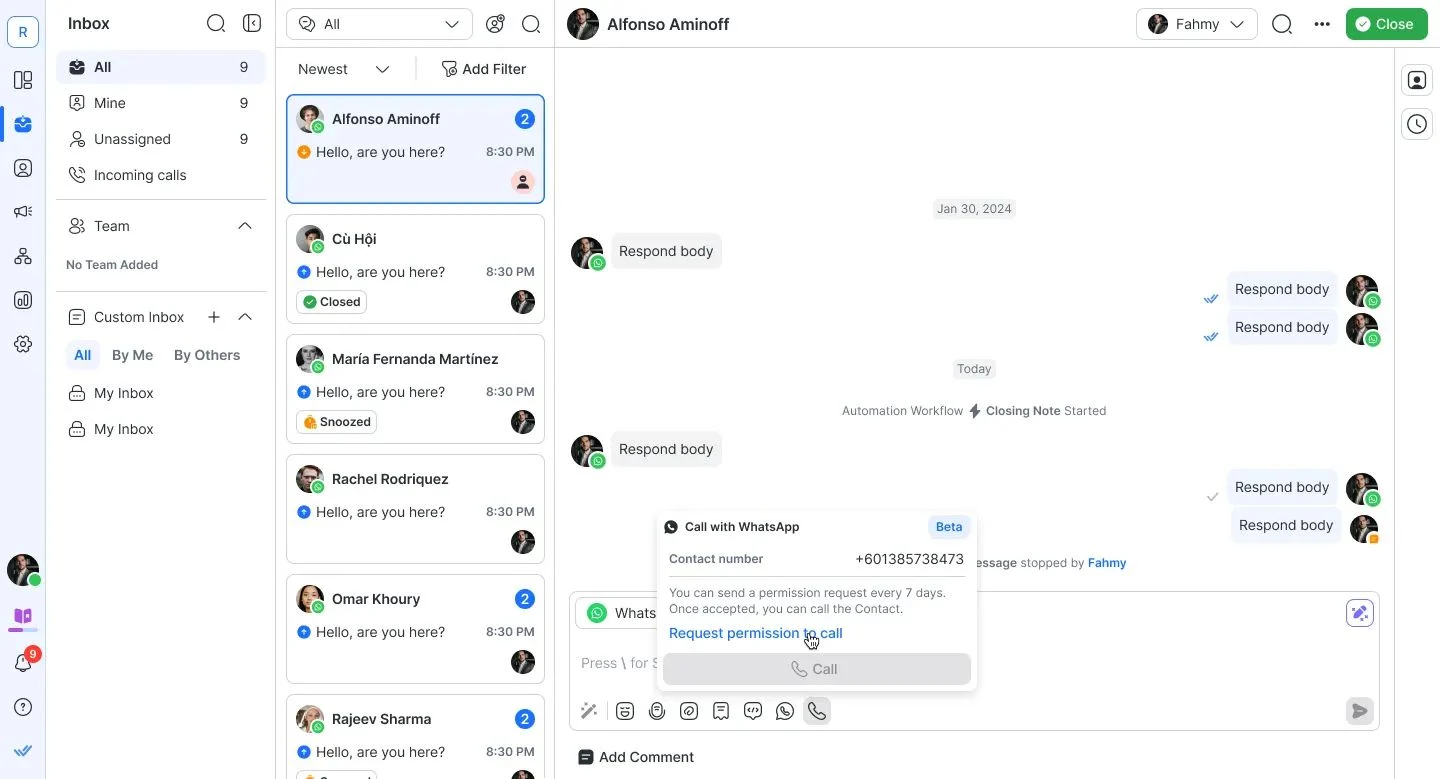
El Asistente IA proporciona a los agentes acceso rápido a las bases de conocimiento, mejorando los tiempos de respuesta y la precisión. Cuando sea necesario, los agentes pueden escalar fácilmente a conversaciones de voz utilizando la API de llamadas de WhatsApp Business, permitiendo la comunicación directa dentro de la misma plataforma. Las empresas también pueden enviar encuestas CSAT después de la conversación para medir la satisfacción del cliente.
Colaboración de Equipo: mejora de la comunicación interna
Respond.io facilita que los miembros del equipo colaboren en un buzón del equipo. A través de comentarios internos, los agentes pueden proporcionar información de contexto sobre un Contacto para facilitar seguimientos posteriores.
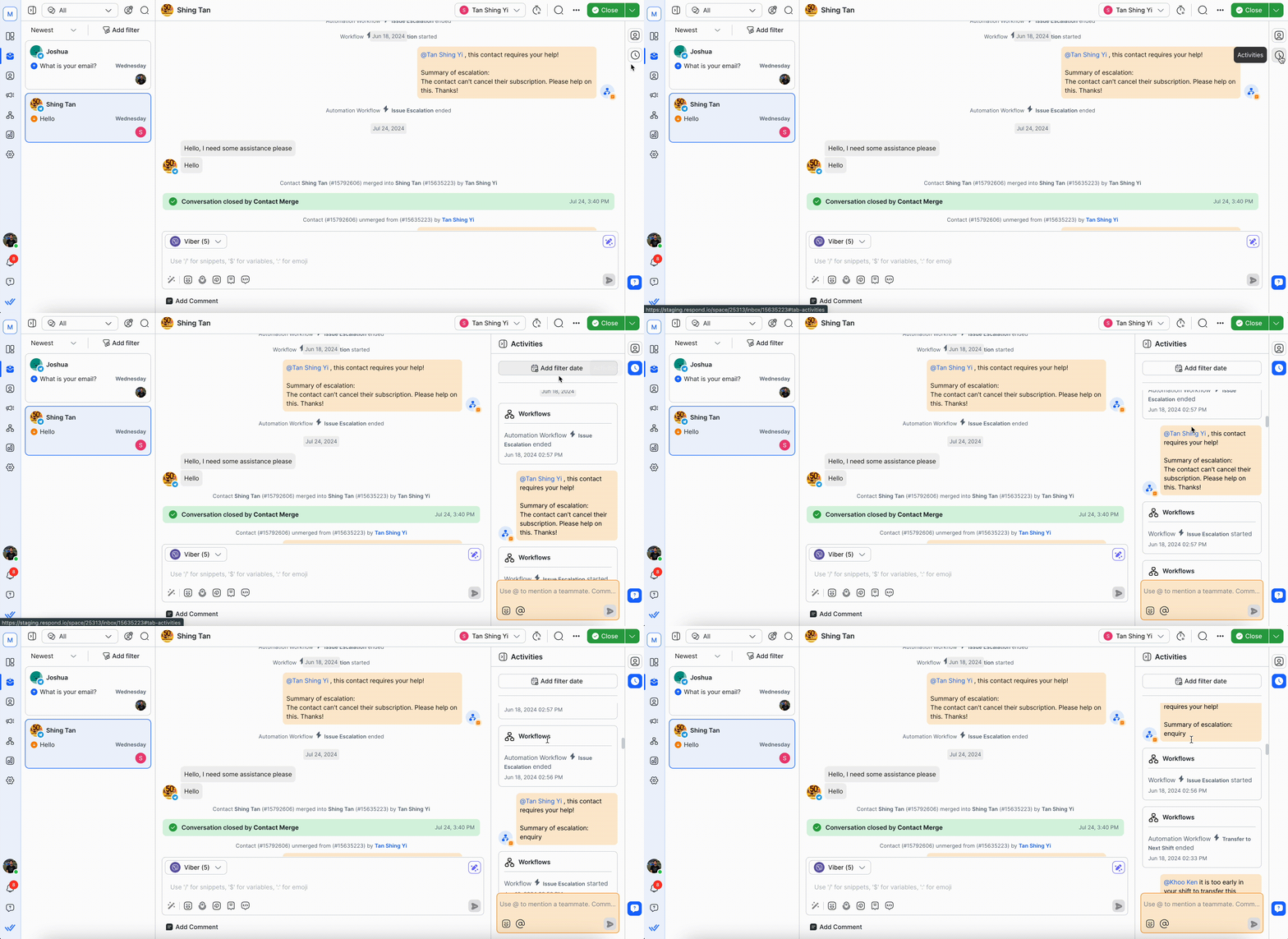
Los agentes también pueden etiquetar a sus compañeros para discutir la mejor forma de ayudar a un cliente o escalar casos complejos cuando sea necesario. Lo mejor de todo es que los agentes pueden colaborar fácilmente, chatear con los clientes y administrar sus tareas en cualquier lugar con la App Móvil de respond.io.
Seguimiento del rendimiento: obtención de información para mejorar
Los gerentes pueden seguir métricas en tiempo real usando el panel de analíticas de respond.io para medir el rendimiento de los agentes, la interacción con los clientes y los tiempos de respuesta.
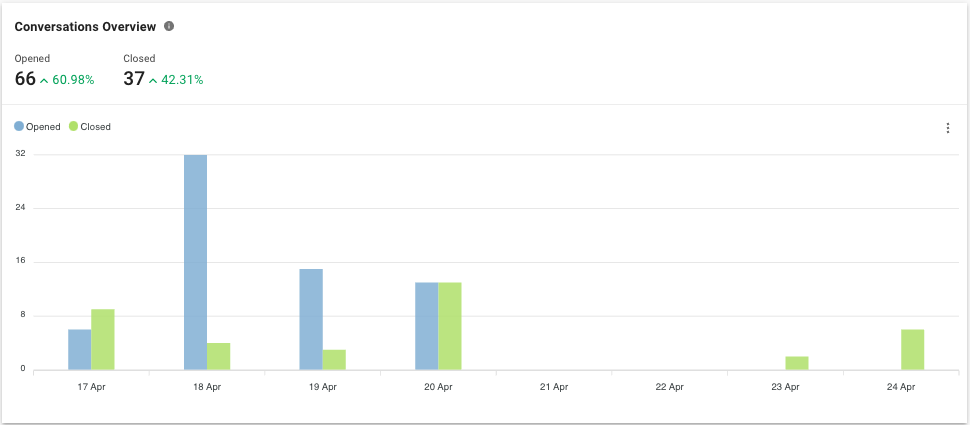
Las conversaciones de alto valor pueden filtrarse y revisarse usando un Buzón personalizado para optimizar las interacciones con los clientes y mejorar la calidad del servicio en general.
Mejores prácticas para usar respond.io y conectar WhatsApp con tu CRM
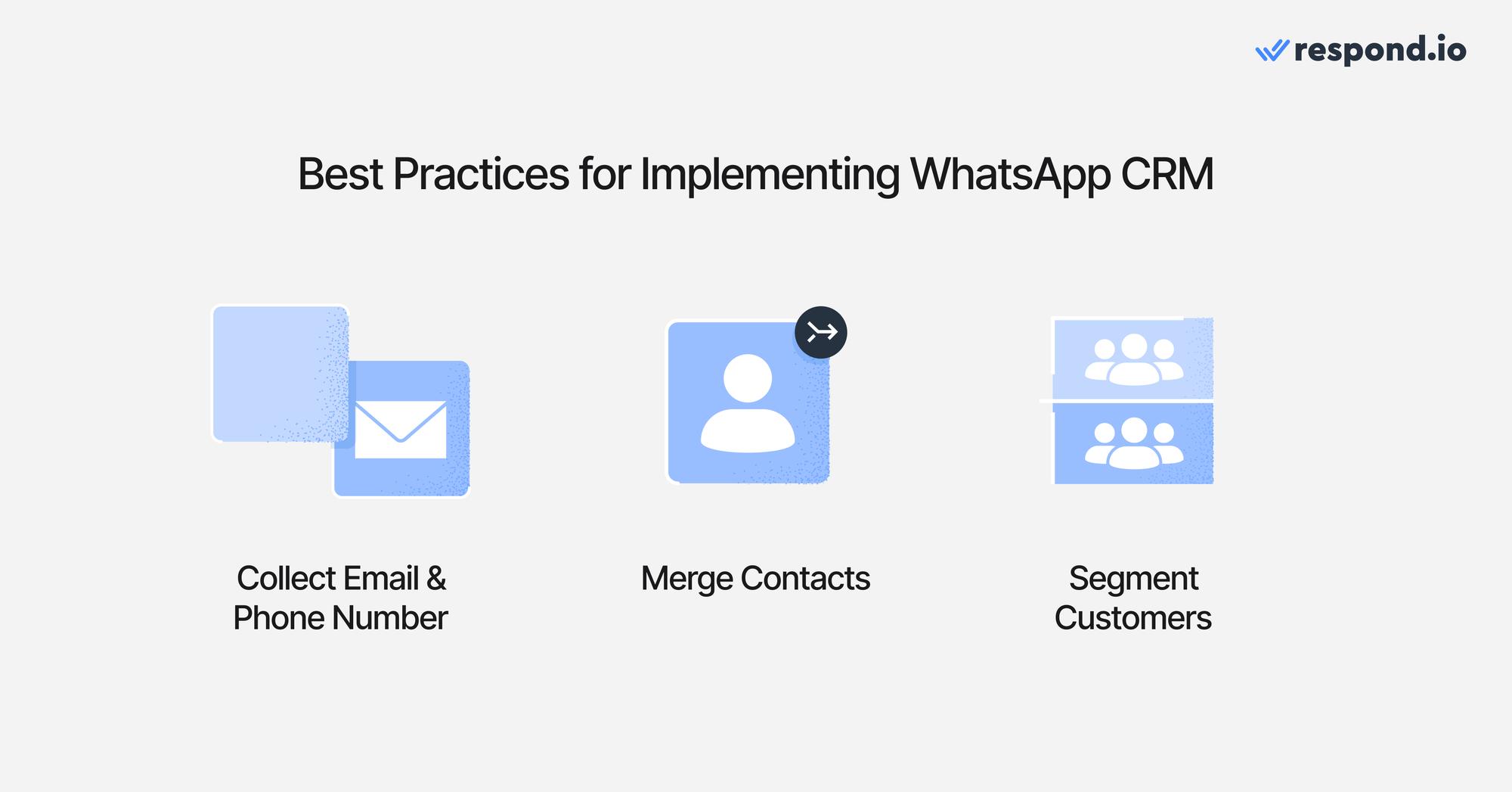
Para aprovechar al máximo respond.io como enlace entre WhatsApp y tu CRM, sigue estas mejores prácticas para asegurarte de que los datos de contacto se transfieran correctamente, que los contactos se fusionen entre canales y que los clientes potenciales se segmenten para su seguimiento a lo largo del ciclo de vida del cliente. De lo contrario, los contactos podrían no sincronizarse y no se dará seguimiento a los clientes potenciales de forma oportuna.
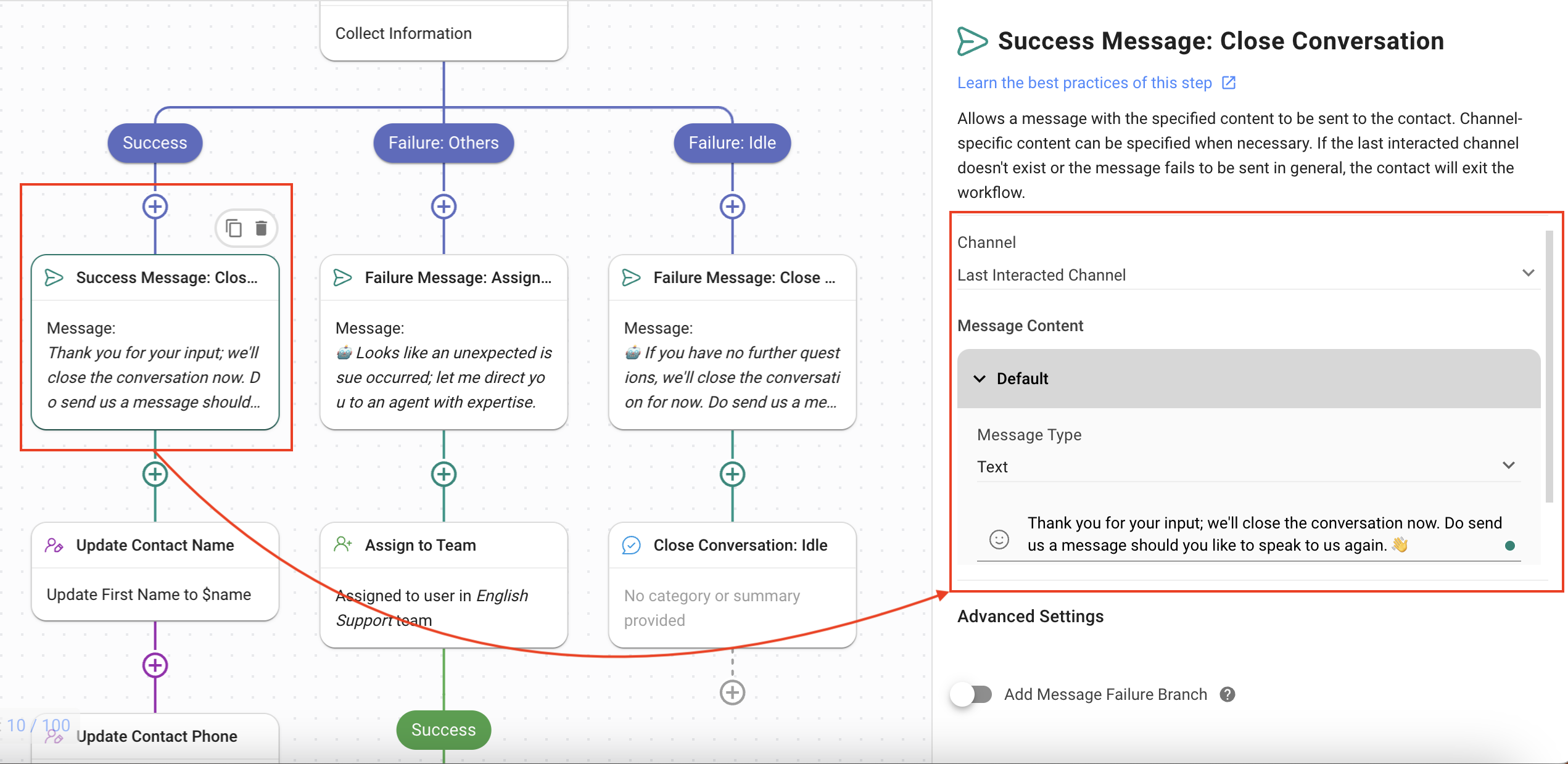
1. Recopilar correos electrónicos y números de teléfono
Para la mayoría de los CRM, cada cliente potencial o cliente debe tener un identificador único, como su dirección de correo electrónico o número de teléfono. Cuando un cliente potencial te contacte por WhatsApp, respond.io captura automáticamente su número de teléfono. Para el correo electrónico, configura un Agente IA o flujo de trabajo para solicitarlo en el momento adecuado — luego sincroniza ambos campos con tu CRM en tiempo real. Sin ingreso manual de datos, sin registros perdidos
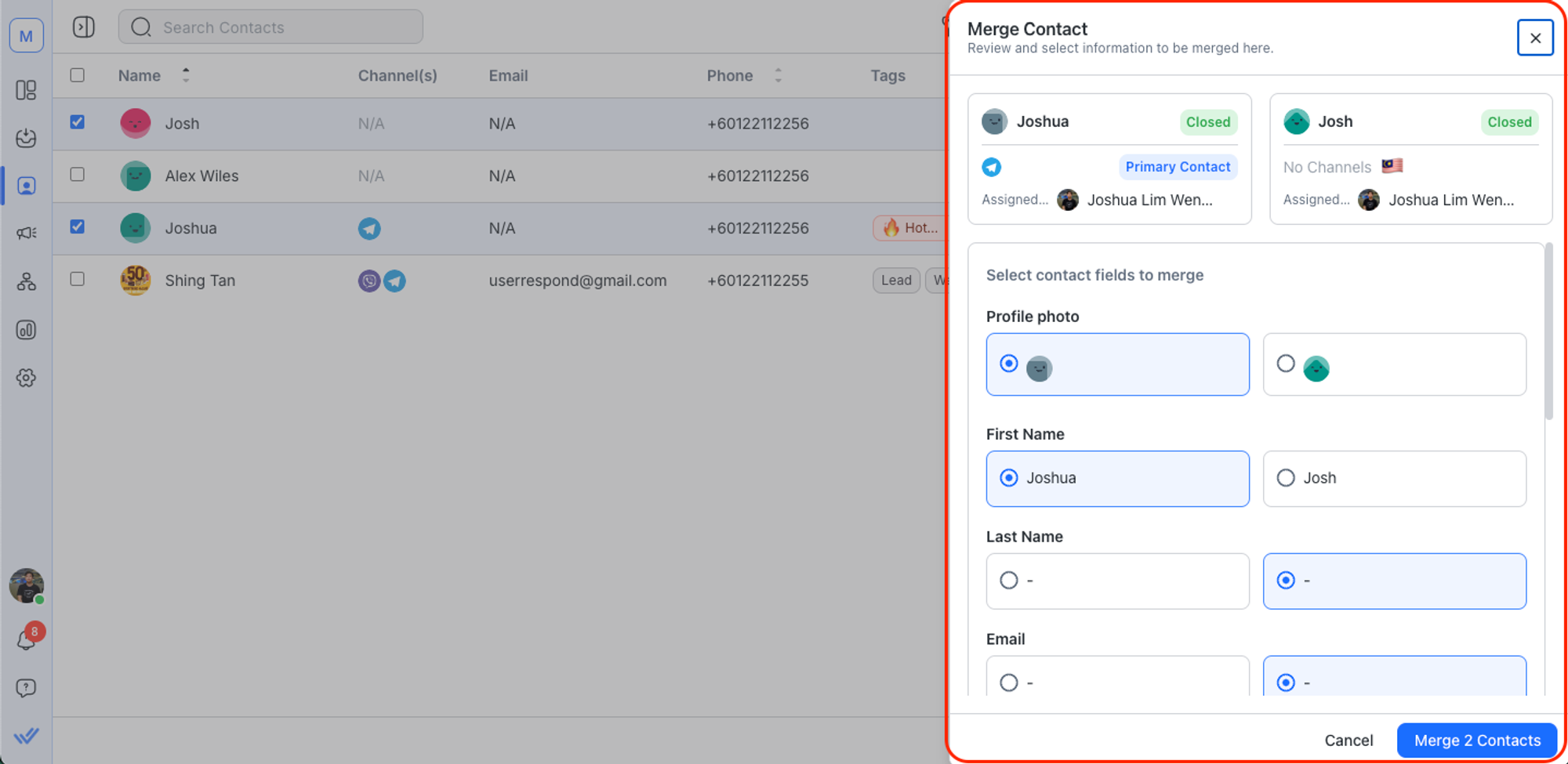
2. Fusionar contactos para evitar duplicados
La mayoría de las plataformas de WhatsApp tratan cada canal como un contacto separado. Respond.io detecta automáticamente cuando la misma persona se ha comunicado por WhatsApp y otro canal, los empareja por correo electrónico o número de teléfono, y sugiere a tu equipo que los fusione — manteniendo un único registro de contacto completo en tu Inbox y CRM.
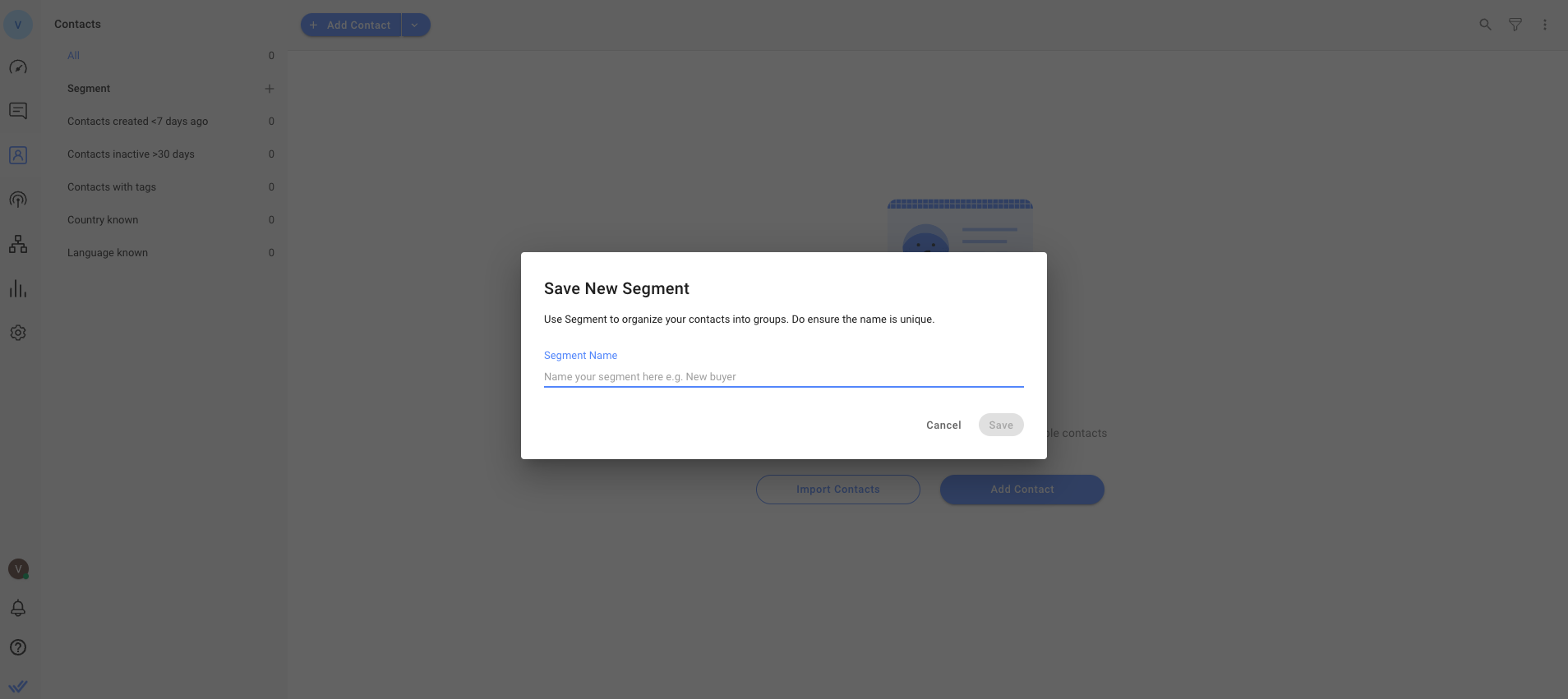
3. Segmenta clientes para difusiones de WhatsApp
A diferencia del emparejamiento básico de campos del CRM, la función de gestión del ciclo de vida de respond.io te permite segmentar contactos según en qué etapa del proceso de ventas se encuentran — y orientar las difusiones de WhatsApp en consecuencia. Los Agentes IA pueden actualizar automáticamente las etapas del ciclo de vida durante la conversación, por lo que tus segmentos se mantienen actualizados sin intervención manual.
Antes de empezar: cuando respond.io no es la opción adecuada
respond.io funciona mejor como la capa entre WhatsApp y tu CRM — no como una solución alternativa, un reemplazo de CRM ni como una herramienta de difusión para contactos fríos. Si alguna de las siguientes describe tu configuración, puede que no sea la opción adecuada.
No es un reemplazo de CRM
respond.io se sitúa entre WhatsApp y tu CRM — no es un reemplazo de CRM. Si necesitas un único sistema para gestionar toda tu base de clientes, el pipeline de ventas y los informes, aún necesitarás un CRM dedicado junto a él.
No para empresas que quieren enviar mensajes masivos a contactos fríos
Respond.io requiere opt-in de WhatsApp. Si tu plan es importar una lista de contactos del CRM y enviarles mensajes promocionales no solicitados, respond.io no es la herramienta adecuada — y WhatsApp te bloqueará el número antes de mucho.
No para empresas que quieran evadir las políticas de WhatsApp
Respond.io es un BSP oficial de WhatsApp, por lo que opera dentro de las reglas de WhatsApp, no al margen de ellas. Si tu flujo de trabajo depende de plantillas de mensajes no aprobadas o de envíos masivos a contactos en frío, esta no es la plataforma para eso.
CRM de WhatsApp: Conclusiones clave
Cuando WhatsApp y tu CRM funcionan como dos herramientas separadas, los agentes alternan entre ellas para responder — y los clientes potenciales se enfrían en esa brecha. Respond.io cierra esa brecha al situarse entre WhatsApp y tu CRM, conectando conversaciones, datos de contacto, automatización y llamadas en una sola Inbox para que tu equipo nunca tenga que elegir entre responder rápido y mantener los registros precisos.
Es adecuado para equipos B2C de mercado medio que gestionan ventas o soporte en WhatsApp a gran escala y que quieren mantener su CRM existente. Si aún usas la aplicación WhatsApp Business, migra primero a la API.
Las empresas de F&B, hospitalidad, salud, educación, inmuebles y comercio minorista han visto resultados reales con este enfoque. Revisa nuestras historias de clientes para ver cómo las empresas están mejorando los tiempos de respuesta, automatizando flujos de trabajo y manejando más conversaciones sin esfuerzo adicional.
Para ver cómo la sincronización con CRM conecta las ventas offline con las conversaciones de WhatsApp, lee nuestra guía sobre atribución de ROI de WhatsApp.
Ahora es el momento de poner esto en práctica. Regístrate para la API de WhatsApp Business de respond.io y comienza a gestionar las conversaciones de WhatsApp de manera más efectiva hoy mismo!
Convierte conversaciones en clientes con la API oficial de WhatsApp de Respond.io ✨
Administra llamadas y chats de WhatsApp en un solo lugar!
Preguntas frecuentes sobre el uso de respond.io para integrar WhatsApp con un CRM
¿Cuál es el mejor CRM con integración de WhatsApp?
No existe un único CRM ideal para WhatsApp; la configuración adecuada depende de tu volumen de mensajes y de cuántos sistemas necesiten los datos. Las integraciones nativas en Salesforce, HubSpot y Zendesk funcionan para equipos con poco tráfico de WhatsApp y un solo CRM, pero limitan la automatización, no admiten las llamadas de WhatsApp y vinculan la API a un único CRM.
Los equipos B2C de mercado medio que manejan WhatsApp a gran volumen suelen conservar su CRM y añadir una plataforma de conversaciones con clientes como respond.io entre ambos. Respond.io sincroniza contactos y etapas del ciclo de vida con múltiples CRMs y utiliza Agentes IA para calificar y enrutar clientes potenciales, con chats y llamadas gestionados en una sola Inbox.
¿Puedo integrar WhatsApp con múltiples CRM?
Puedes integrar WhatsApp con múltiples CRM usando una plataforma intermedia de gestión de conversaciones con clientes que pueda sincronizar los mismos datos de contacto y de conversación de WhatsApp con más de un sistema.
respond.io funciona como tu centro para las conversaciones de WhatsApp y puede enviar detalles de contacto, mensajes y actualizaciones del ciclo de vida a sistemas externos como Salesforce, HubSpot o Pipedrive simultáneamente. Esta configuración permite que diferentes equipos usen su CRM preferido mientras mantienen una vista unificada de todas las interacciones de WhatsApp, asegurando consistencia y evitando registros duplicados.
¿Puedo hacer llamadas de WhatsApp dentro de mi CRM?
Las integraciones nativas de CRM — incluidas Salesforce y HubSpot — no admiten llamadas de WhatsApp. Con respond.io, los agentes pueden gestionar las llamadas de WhatsApp Business en el mismo espacio de trabajo de conversación que se usa para el chat, mientras sincronizan el contexto de la llamada con tu CRM. El historial de llamadas, las transcripciones, las grabaciones y los resúmenes generados por IA están todos en un solo lugar y pueden sincronizarse con tu CRM mediante Webhook, por lo que los agentes nunca necesitan cambiar de plataforma para interacciones de voz.
¿Pueden los Agentes IA contestar llamadas de negocio?
Sí, los Agentes IA pueden atender llamadas de voz si usas la herramienta adecuada. En respond.io puedes configurar la voz del Agente IA, añadir instrucciones y probar la experiencia antes de activarla. Esto te da control total sobre cómo se gestionan las llamadas. A diferencia de los bots de voz independientes, el Agente de Voz IA de respond.io está totalmente integrado en una Inbox unificada, lo que permite a empresas B2C de mercado medio gestionar mensajes e interacciones de voz en un único Hilo con cada cliente, con registros e informes compartidos.
¿Cómo puedo usar Agentes IA para dar seguimiento a las conversaciones con clientes?
Si las conversaciones quedan pendientes a la espera de la respuesta del cliente, puedes configurar tu Agente IA para que les envíe un recordatorio con una pregunta de seguimiento relevante. Por ejemplo, el Agente IA de respond.io va más allá de simples recordatorios basados en tiempo o disparadores de flujo de trabajo. Utiliza el historial de conversaciones para comprender el contexto y determinar cuándo y cómo hacer el seguimiento. Esta comprensión le ayuda a evitar contactar a clientes cuyos problemas ya están resueltos y a enviar recordatorios personalizados con tono humano en el momento adecuado.
¿Necesito reemplazar mi CRM para usar WhatsApp con respond.io?
Puedes conservar tu CRM. Respond.io es una plataforma de conversaciones con clientes que funciona junto a él, por lo que tu CRM sigue siendo el sistema de registro para el pipeline de ventas y los informes. Respond.io gestiona la parte de WhatsApp, incluyendo conversaciones, calificación por IA, enrutamiento y llamadas. Sincroniza Contactos y actualizaciones del ciclo de vida de vuelta a CRMs como HubSpot, Salesforce y Pipedrive. Si quieres una herramienta que reemplace por completo tu CRM, respond.io no está diseñada para ese trabajo.
¿Es respond.io solo un Buzón Compartido para WhatsApp?
Respond.io es una plataforma de conversaciones con clientes que incluye un Buzón del equipo compartido, además de Agentes IA, Flujos de trabajo, seguimiento del ciclo de vida y sincronización con CRM, funciones que a un Buzón Compartido le faltan. También va más allá de WhatsApp. Messenger, Instagram, TikTok, Telegram y otros canales llegan a la misma Inbox, con fusión de contactos entre canales.
Eso importa cuando los clientes potenciales cambian de canal a mitad de la conversación, lo que Hmlet gestiona en cinco canales mientras sus Agentes IA filtran el 90% del spam. Un Buzón Compartido básico sirve para equipos pequeños que responden manualmente. Una vez que necesites calificación, enrutamiento o sincronización con CRM, se te quedará corto.
Lecturas recomendadas
¿Necesitas un artículo más detallado para iniciar tu viaje de marketing, ventas y soporte con respond.io? Aquí hay algunos blogs que podrían ayudarte.


