







 Electronics
 Fashion & Apparel
 Furniture
 Jewelry and Watches

 Afterschool Activities
 Sport & Fitness

 Beauty Center
 Dental Clinic
 Medical Clinic

 Home Cleaning & Maid Services
 Photography & Videography

 Car Dealership

 Travel Agency & Tour Operator



WhatsApp CRM TL;DR: What to do when your CRM can't keep up with WhatsApp
For mid-market B2C teams whose CRM can't keep pace with WhatsApp, the fix is a customer conversation platform between the two. Native WhatsApp integrations in Salesforce, HubSpot and Zendesk limit automation and tie your WhatsApp number to one CRM, so agents juggle tabs while leads cool off. Respond.io, a customer conversation platform and official WhatsApp BSP, closes the gap:
Agent switching: A unified inbox puts WhatsApp conversations, contact records and CRM data on one screen, so agents log replies and update records without leaving it.
Lead qualification and routing: AI Agents qualify, tag and route contacts in real time, so high-value leads reach the right agent while they're still warm. Hmlet used this to lift its WhatsApp conversion rate 2.5x.
Automation and calls: Workflows, AI Agents and WhatsApp Business Calls run natively inside respond.io, with no third-party dialers to bolt on.
Not for: Teams that want to stay app-only without moving to WhatsApp Business API (respond.io supports Coexistence if you want to keep the app alongside it) or teams looking to replace their CRM entirely.
If your mid-market B2C team is managing WhatsApp on one screen and your CRM on another, you're losing time, missing context and creating gaps in your customer data. A customer conversation platform is the layer that connects the two — and respond.io is built specifically for that job, linking conversations, contact records and automation so your agents work from one place instead of two. Here's how it works and how to set it up.
WhatsApp API + your CRM: Why you need a layer in between
Most CRMs weren't built for real-time messaging. When you connect WhatsApp directly to Salesforce, HubSpot or Zendesk, agents end up switching between tools to reply — and by the time they do, leads have gone cold. Respond.io sits between WhatsApp and your CRM so agents never have to leave the inbox to do their job.
Here’s the difference between directly integrating WhatsApp with a CRM and using respond.io as a customer conversation platform to integrate them.
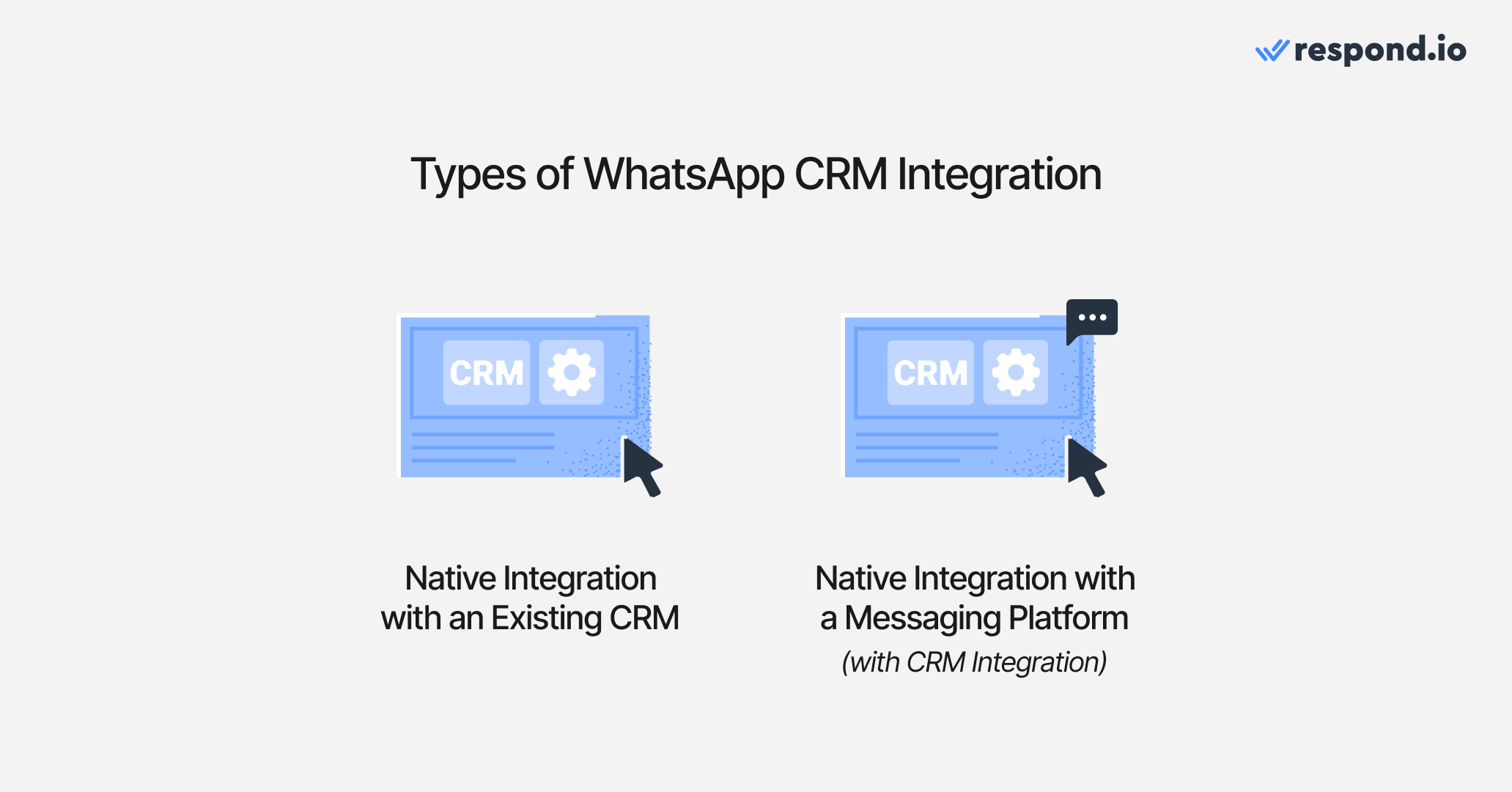
1. WhatsApp API native integration with an existing CRM
Businesses integrating WhatsApp with their CRM want to send and receive messages within their existing system. While some CRMs, like Salesforce, HubSpot and Zendesk, offer native WhatsApp integration, they often lack key messaging features since they were originally designed for email.
For example, HubSpot and Salesforce’s integrations limit automation capabilities, making it harder to qualify leads and manage conversations efficiently. Similarly, Zendesk’s native WhatsApp integration doesn’t support video previews or voice note playback within the inbox—agents must download files to view them, disrupting workflows.
Additionally, most of these integrations don’t support WhatsApp calls natively, requiring agents to switch platforms.
Beyond these, they also restrict WhatsApp API usage to a single CRM, preventing businesses from sharing WhatsApp data across platforms or using it alongside other tools. Fortunately, most CRMs support third-party integrations, allowing businesses to connect with customer conversation platforms like respond.io that fully support WhatsApp, unlocking advanced messaging, automation and omnichannel capabilities.
WhatsApp API + Existing CRM | WhatsApp API + Respond.io | |
|---|---|---|
Native WhatsApp Integration | Available but limited (Salesforce, HubSpot, Zendesk) | Built specifically for WhatsApp messaging |
WhatsApp calls | Available through Salesforce Contact Center in supported regions; varies by provider | Handle WhatsApp chats and calls in the same workspace |
Automation | Depends on the CRM subscription, allowances and add-ons | Use AI Agents and Workflows to qualify inquiries, assign conversations and trigger follow-up |
Media handling | Check each provider’s supported formats and playback options | Play supported customer media directly in the inbox |
CRM Flexibility | Restricted to a single CRM | Integrates with multiple CRMs |
Omnichannel Messaging | Limited | Supports Messenger, Instagram, TikTok, Telegram and more |
Revenue Consequence | Leads go cold while agents switch between tools to respond | Agents respond from one place — conversations, contact data and automation in a single inbox |
2. WhatsApp API CRM integration via a customer conversation platform
Unlike traditional CRMs, customer conversation platforms are built specifically for instant messaging, offering full support for WhatsApp’s features. Respond.io adds a shared workspace for customer conversations. Your team can answer WhatsApp chats and calls, manage inquiries from other channels and use AI Agents and Workflows to qualify customers and follow up. Contact Merge brings duplicate customer profiles and their histories together, helping staff continue the conversation without asking customers to repeat themselves.
Respond.io is a customer conversation platform that keeps your CRM as the system of record and handles the messaging layer your CRM was never built for.
It provides vital communication features mid-market B2C businesses need, including customer lifecycle management, lead qualification, automation and AI Agents while integrating with existing CRMs like HubSpot,Salesforce, Pipedrive, ActiveCampaign and more. This ensures businesses can manage WhatsApp conversations without API limitations or messaging restrictions.
To confirm the sync works, message your WhatsApp number from a test phone and check that a contact appears in your CRM with the phone number, lifecycle stage and owner you mapped. If the record is missing or duplicated, fix the field mapping before routing live traffic through it.
Beyond WhatsApp, solutions like respond.io support omnichannel messaging, allowing businesses to engage customers across Messenger, Instagram, TikTok, Telegram and more, all from a unified omnichannel inbox.
Prerequisites
Before you start, make sure you have the essentials needed for a smooth WhatsApp CRM setup:
You’ll need access to WhatsApp Business API rather than the standard WhatsApp Business App.
If applicable, confirm your Meta Business Account is verified.
You should also have admin access to your CRM, a clear list of the fields to sync such as email, phone number, lifecycle stage and owner, and a designated owner for WhatsApp opt-in and compliance.
How to integrate WhatsApp API with your CRM using respond.io in 3 steps
Integrating WhatsApp API with your CRM through respond.io takes three steps: open a WhatsApp Business API account on respond.io, connect your CRM with a native, third-party or custom API integration, then map the fields you want to sync. Have your WhatsApp API access and CRM admin rights ready before you start.
Step 1: Create a respond.io WhatsApp Business API account
Before anything else, you’ll need access to the WhatsApp Business API. This is because a CRM integration runs on the official WhatsApp Business API. Unofficial linked-device or QR-code connections to the app might cover basic manual replies, but mid-market B2C teams need the API for message templates, broadcasts to opted-in segments, Click-to-WhatsApp ad attribution and reliable multi-agent operations at volume.
If you already use the WhatsApp Business app, coexistence lets you keep the app on the same number while connecting it to the API.
As an official WhatsApp Business Solution Provider, respond.io allows businesses to set up their API quickly and securely. Learn how to create a WhatsApp Business API account with respond.io.
Step 2: Connect WhatsApp to your CRM
With respond.io’s built-in integration capabilities, businesses can connect WhatsApp to their CRM using different methods:
Native Integration: Directly integrate CRMs like HubSpot and Salesforce with respond.io to sync contact details and Lifecycle stages.
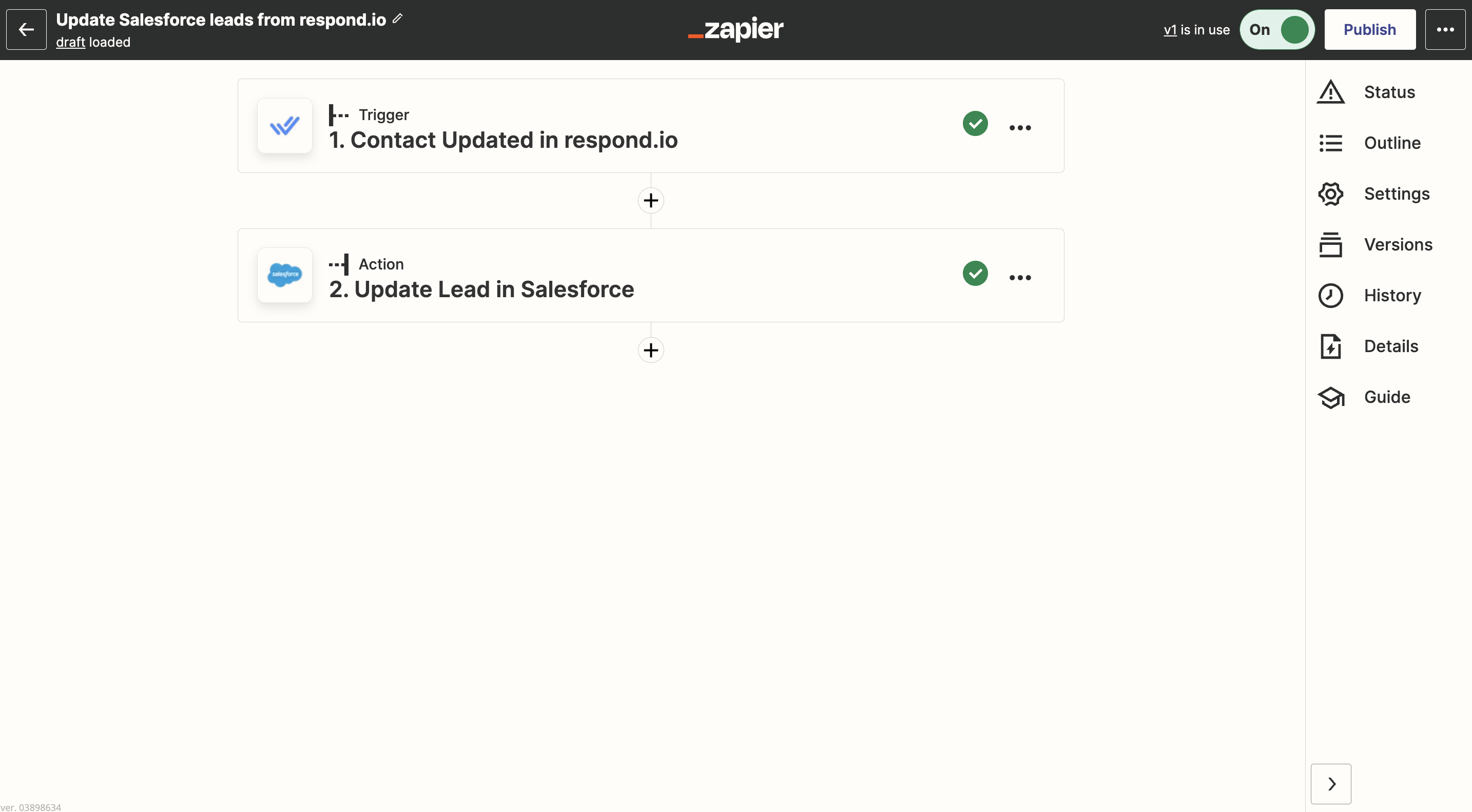
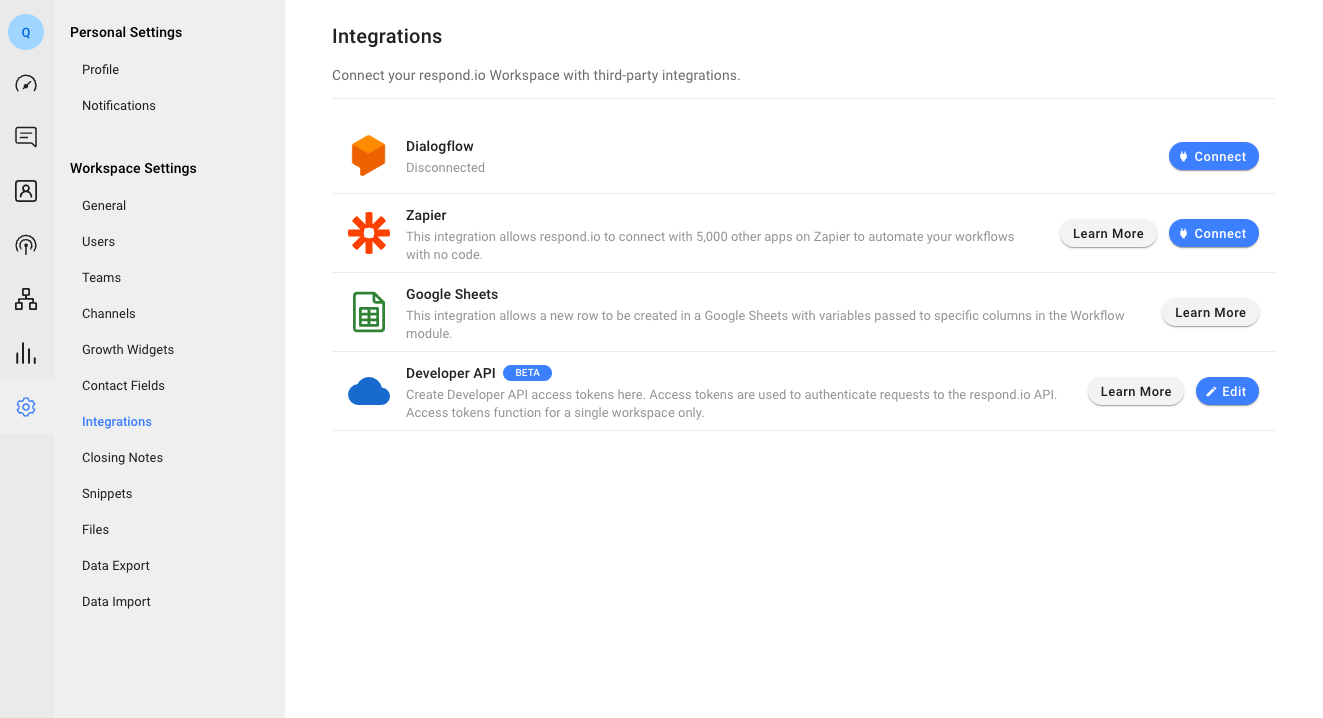
Custom API Integration: Create a new Workflow and add the HTTP Request Step to integrate any CRM with respond.io. On Advanced and above, you can configure call event webhooks to send call details to your CRM or another connected system. For completed calls, these can include recordings, transcripts and call summaries when enabled in your workspace. Your integration determines how that information is stored in the CRM.
MCP-assisted configuration: Once your CRM sync is live, ask Claude or ChatGPT to create the custom fields, tags or lifecycle stages that sync depends on, or check whether a contact synced correctly. Respond.io's hosted MCP server lets your AI client do this work inside respond.io directly, under your existing permissions.

Step 3: Set up information to sync
Once connected, ensure data syncing works properly between WhatsApp and your CRM. Respond.io allows businesses to sync contacts and lifecycle stages while automating lead assignments, chat routing and follow-ups.
This ensures WhatsApp conversations are managed efficiently without switching between platforms.
Why mid-market B2C teams use respond.io between WhatsApp and their CRM
A customer conversation platform is often the best choice when you need WhatsApp to behave like a CRM channel by syncing records, automating routing and keeping context without forcing agents to work inside the CRM UI.
Respond.io is a customer conversation platform designed to provide that layer with multi-CRM sync, workflows and call support — and is an official WhatsApp Business Solution Provider and Meta Premier Partner & TikTok Marketing Partner. It makes it easy to sync conversations, automate workflows and manage customer interactions from one place. With solid platform reliability and dedicated customer support, businesses can ensure smooth operations and uninterrupted messaging.
Here's how businesses use respond.io for marketing, sales, customer service, team collaboration and performance tracking to see why it’s the best solution.
Marketing: Capturing and engaging leads
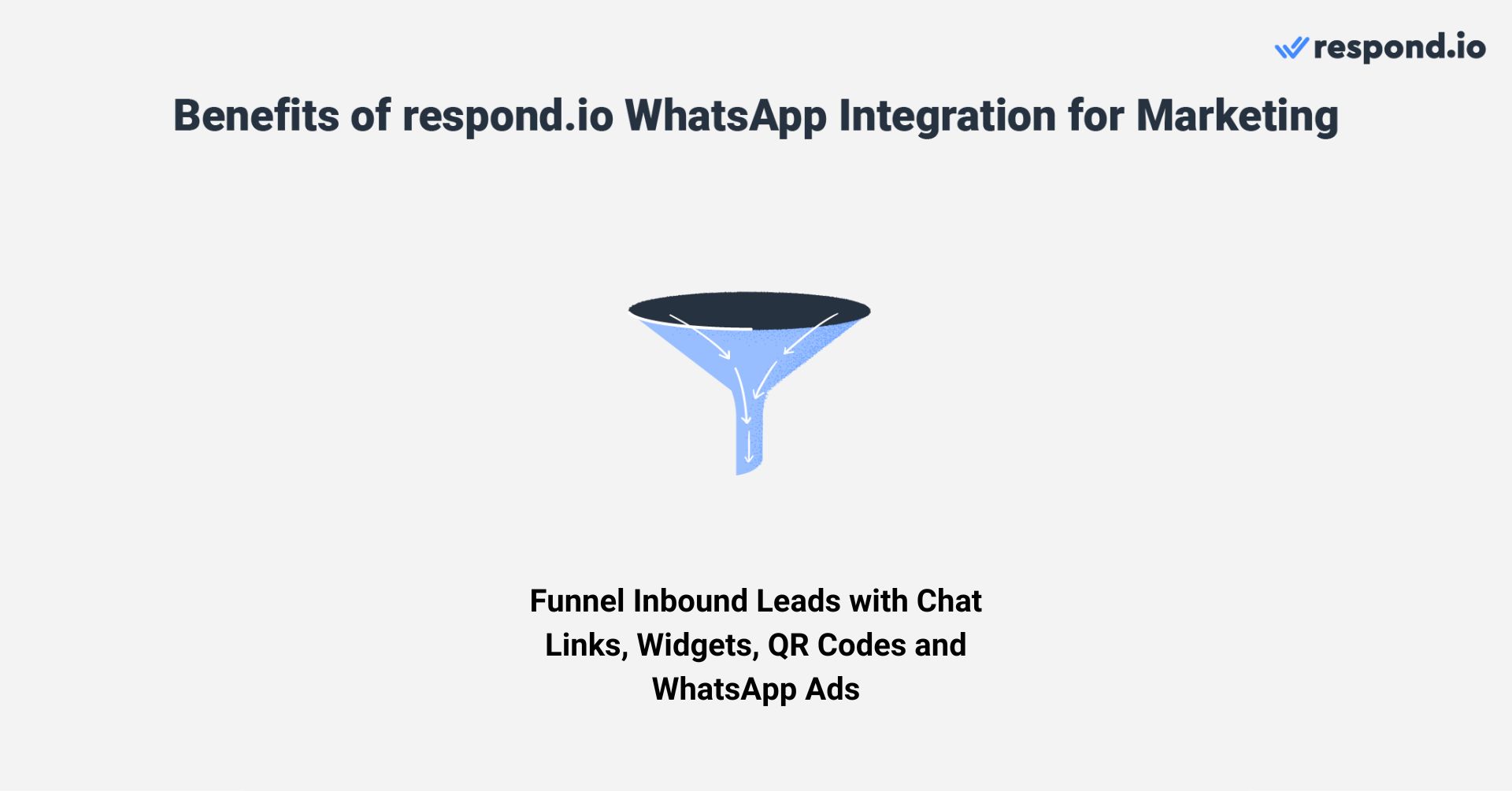
Businesses can attract WhatsApp leads using QR codes on physical materials, chat links in digital content or chat widgets on websites. For proactive lead generation, click-to-WhatsApp ads on Facebook and Instagram help businesses reach targeted audiences and drive them toward conversion.
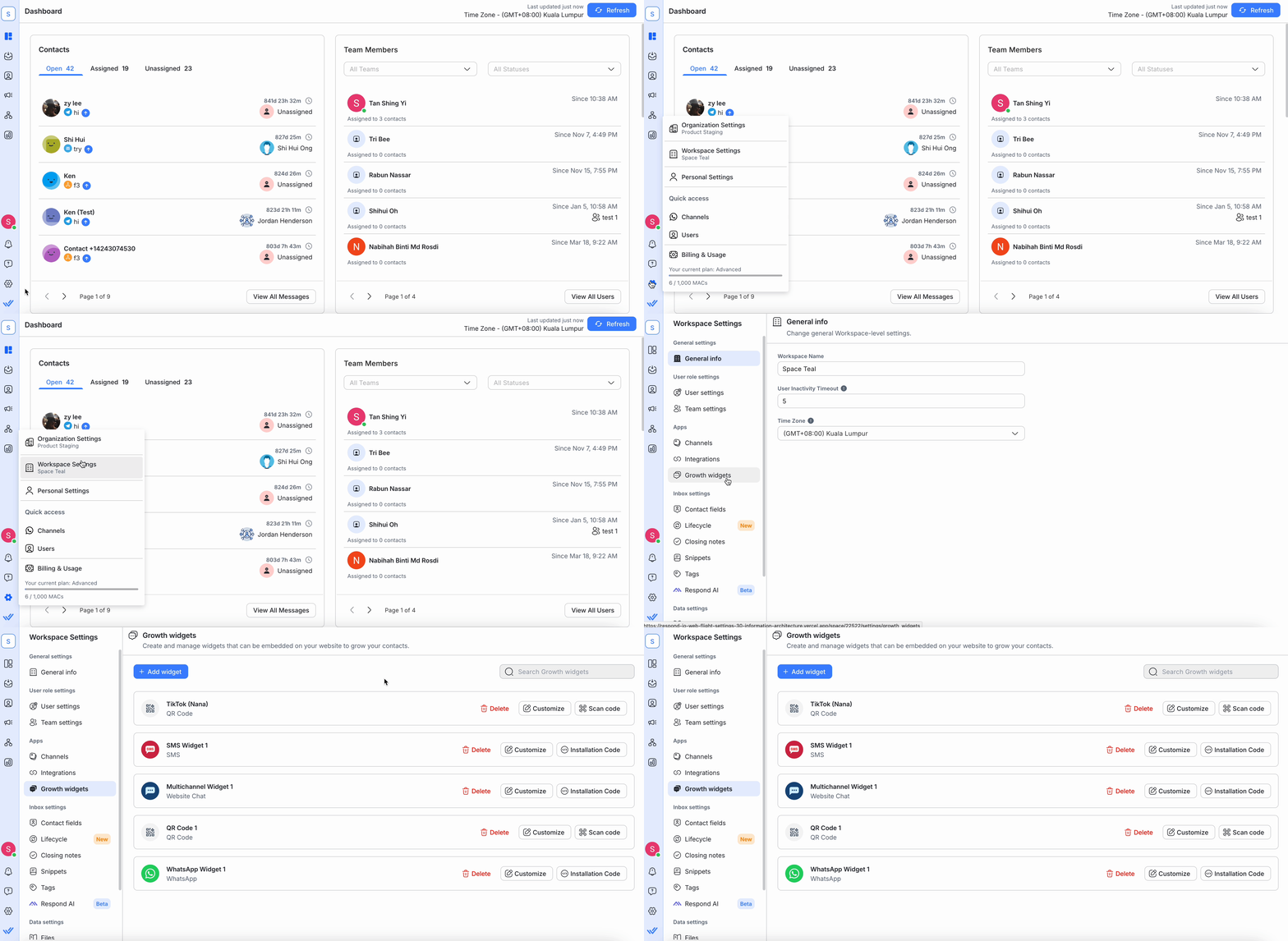
Once a lead reaches out, respond.io automatically collects and syncs contact details into the CRM, allowing businesses to segment customers, send broadcasts and personalize follow-ups with tools like WhatsApp catalogs, interactive messages and push notifications.
Teams can also use WhatsApp Flows and other structured prompts to collect appointment slots, product preferences, budgets and other buying details inside the chat, so leads never leave WhatsApp to fill in a form. The result is cleaner CRM fields, faster routing to the right rep and fewer leads dropping off while they’re still keen.
Sales: Automating lead qualification and sales tasks
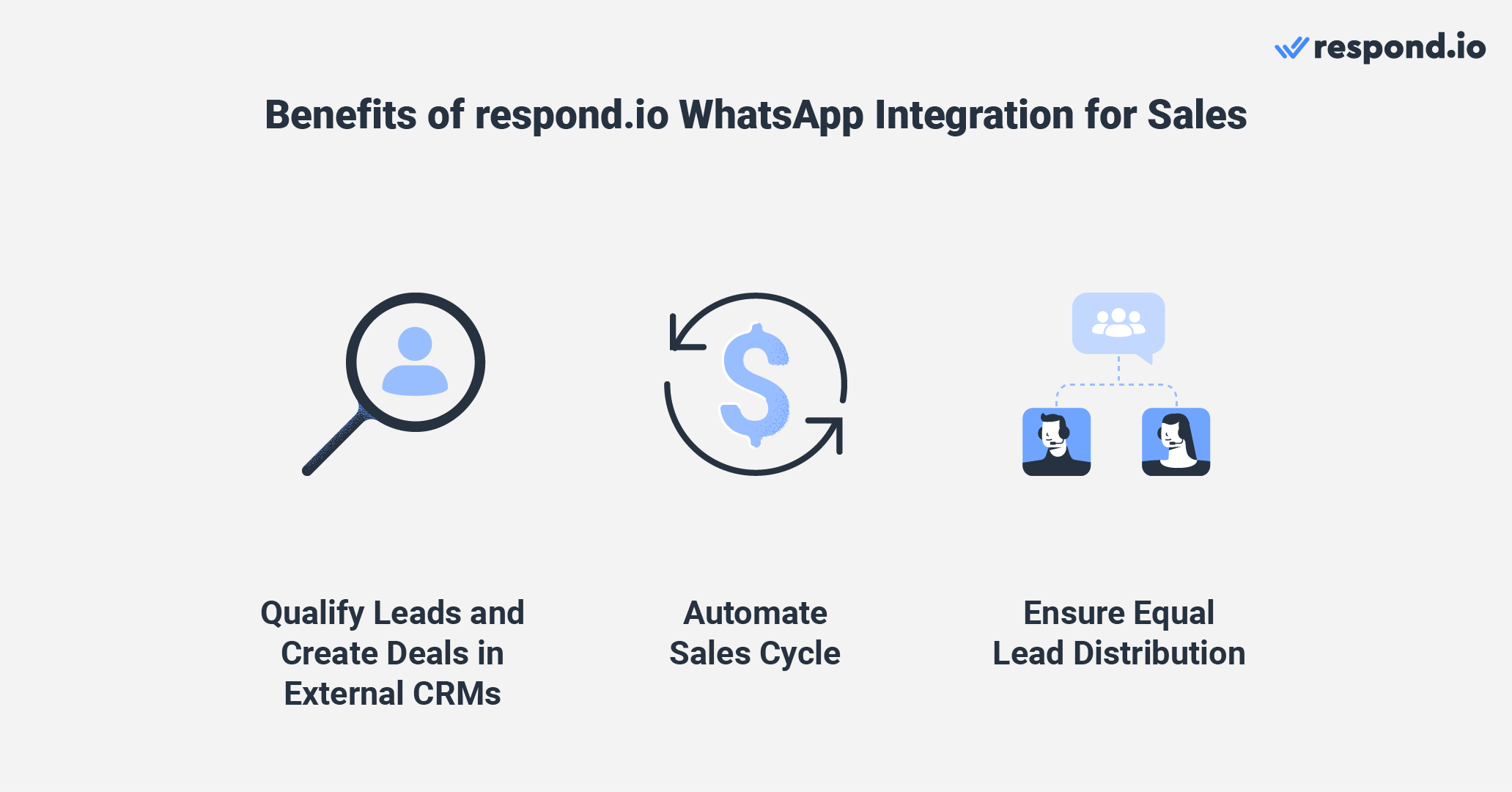
Respond.io natively integrates with CRMs like HubSpot and Salesforce, enabling sales teams to qualify leads, track conversations and close deals—all from one platform. With AI-powered automation, businesses can filter out low-priority leads by automating qualifying questions and lead scoring.
Contact details, product interest and purchase intent captured in the chat are saved to contact fields and lifecycle stages, then synced to the CRM your sales team already works from. Reps stop re-typing details, and serious inquiries get followed up sooner.
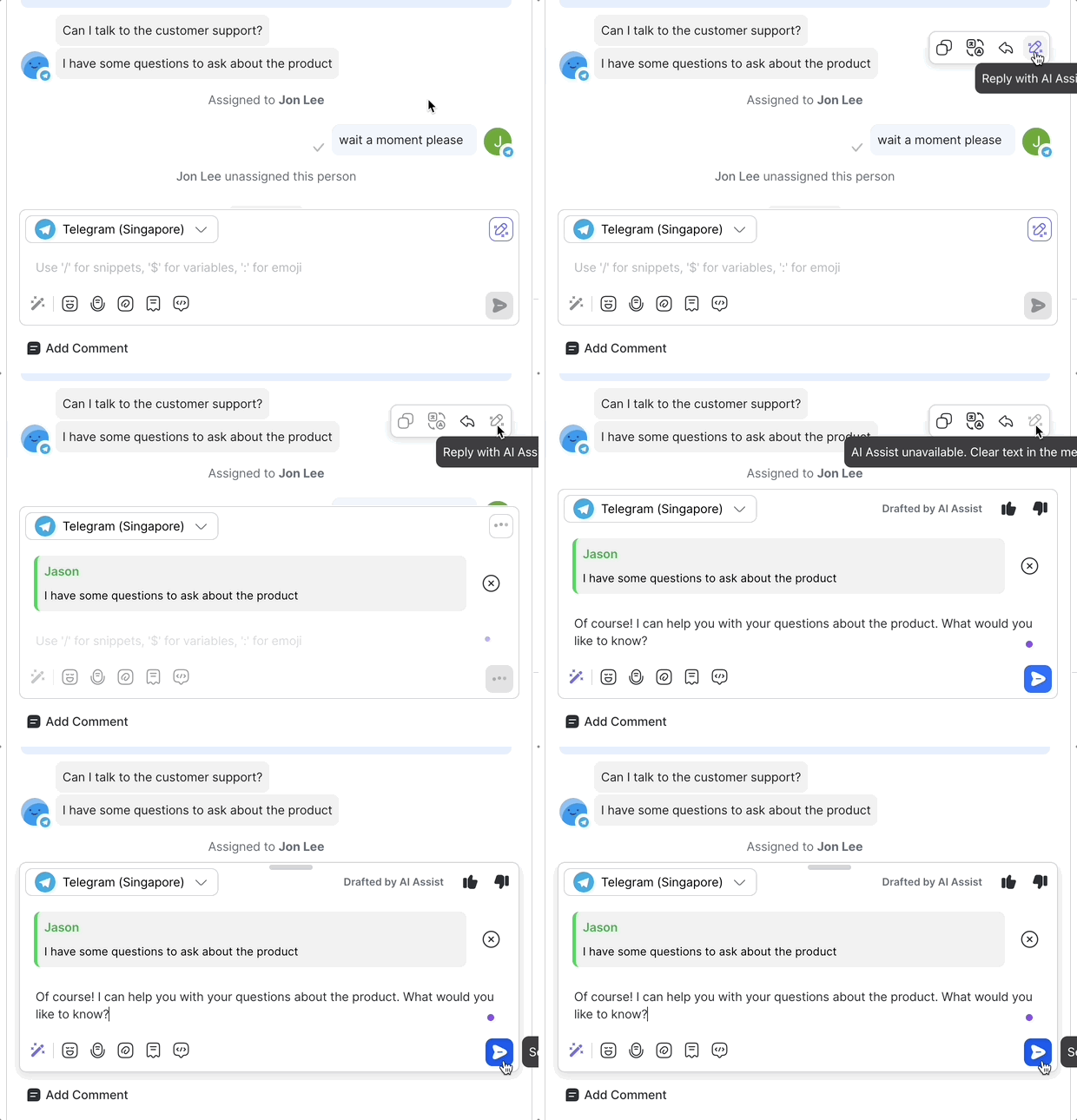
Many teams also add a respond.io AI Agent to handle early-stage inquiries, recommend products and send payment or booking links. Short-term rental business Hmlet uses one to screen every new WhatsApp inquiry, so its sales team only hears from people who actually want a room. With 90% of spam filtered out before an agent sees it, Hmlet's WhatsApp conversion rate rose 2.5x.
AI Agents can also qualify leads, update lifecycle stages and assign conversations so high-value opportunities reach the right rep faster. When a human needs to step in, the AI Agent leaves an internal comment summarizing the conversation, so the rep can pick up without scrolling the full thread or asking the buyer to repeat themselves.
Once a lead is verified, respond.io can route conversations to the right sales agent based on priority, deal size or region. AI-assisted replies, rich media messages and WhatsApp Call Support enable faster engagement and conversions.
Retention: Improve customer support quality and efficiency
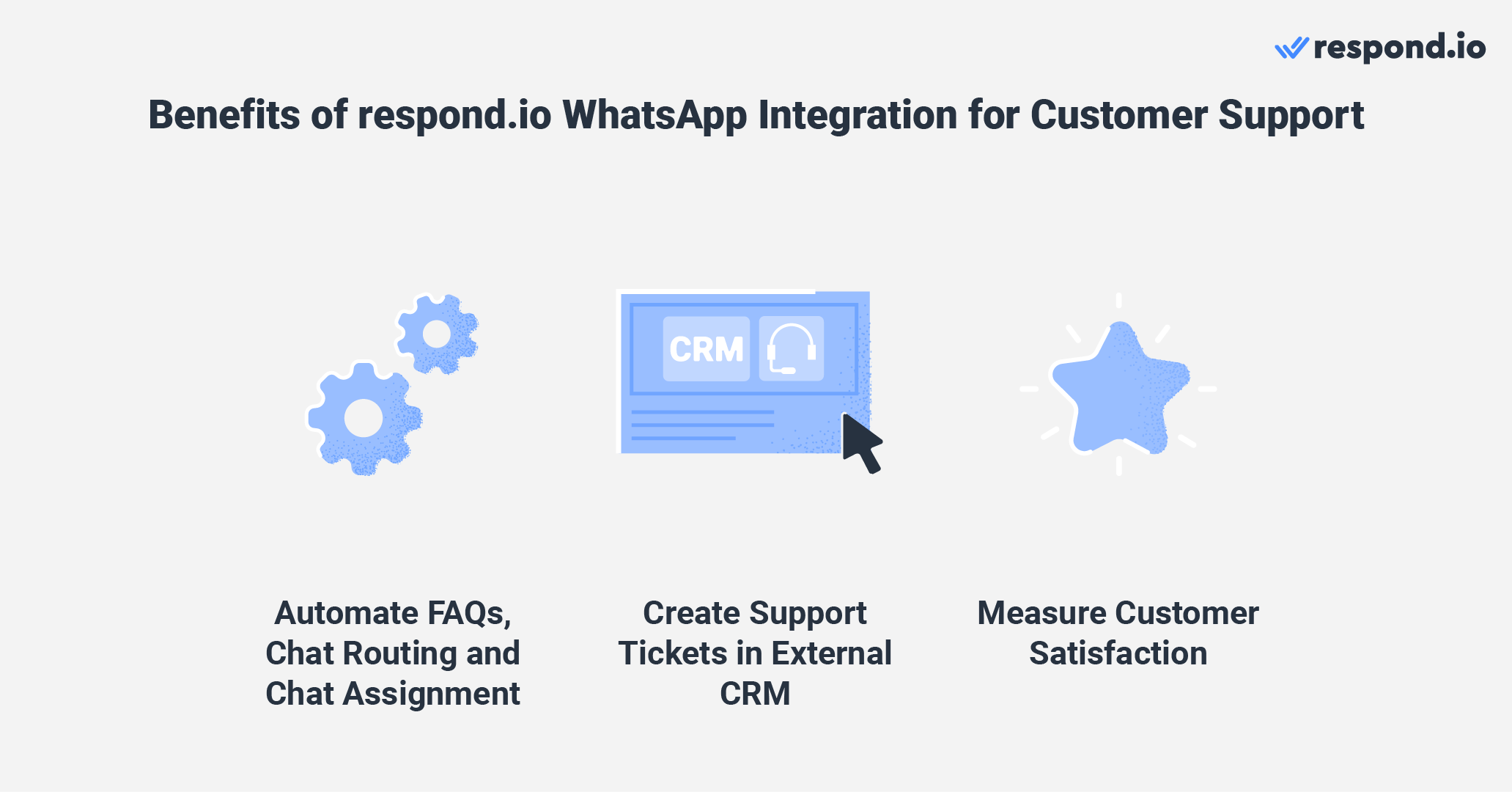
Businesses can automate FAQs and guide customers through self-service options using . For complex inquiries, the platform can automatically multiple-choice questionsroute customers to the right team.
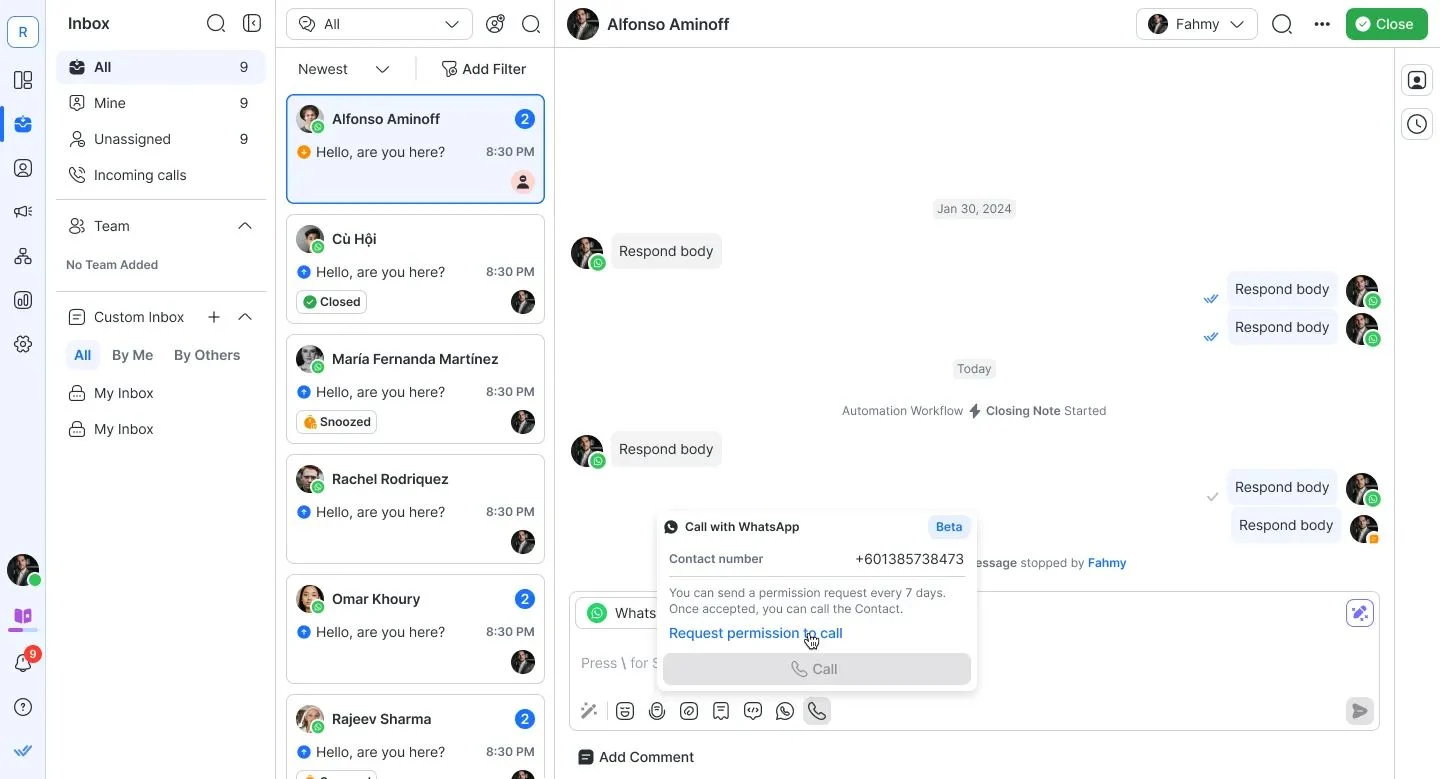
AI Assist provides agents with quick access to knowledge bases, improving response times and accuracy. When necessary, agents can easily escalate to voice conversations using the WhatsApp Business Calling API, enabling direct communication within the same platform. Businesses can also send CSAT surveys post-conversation to measure customer satisfaction.
Team collaboration: Improving internal communication
Respond.io makes it easy for team members to collaborate in a team inbox. Through internal comments, agents can provide background information about a Contact for more follow-ups.
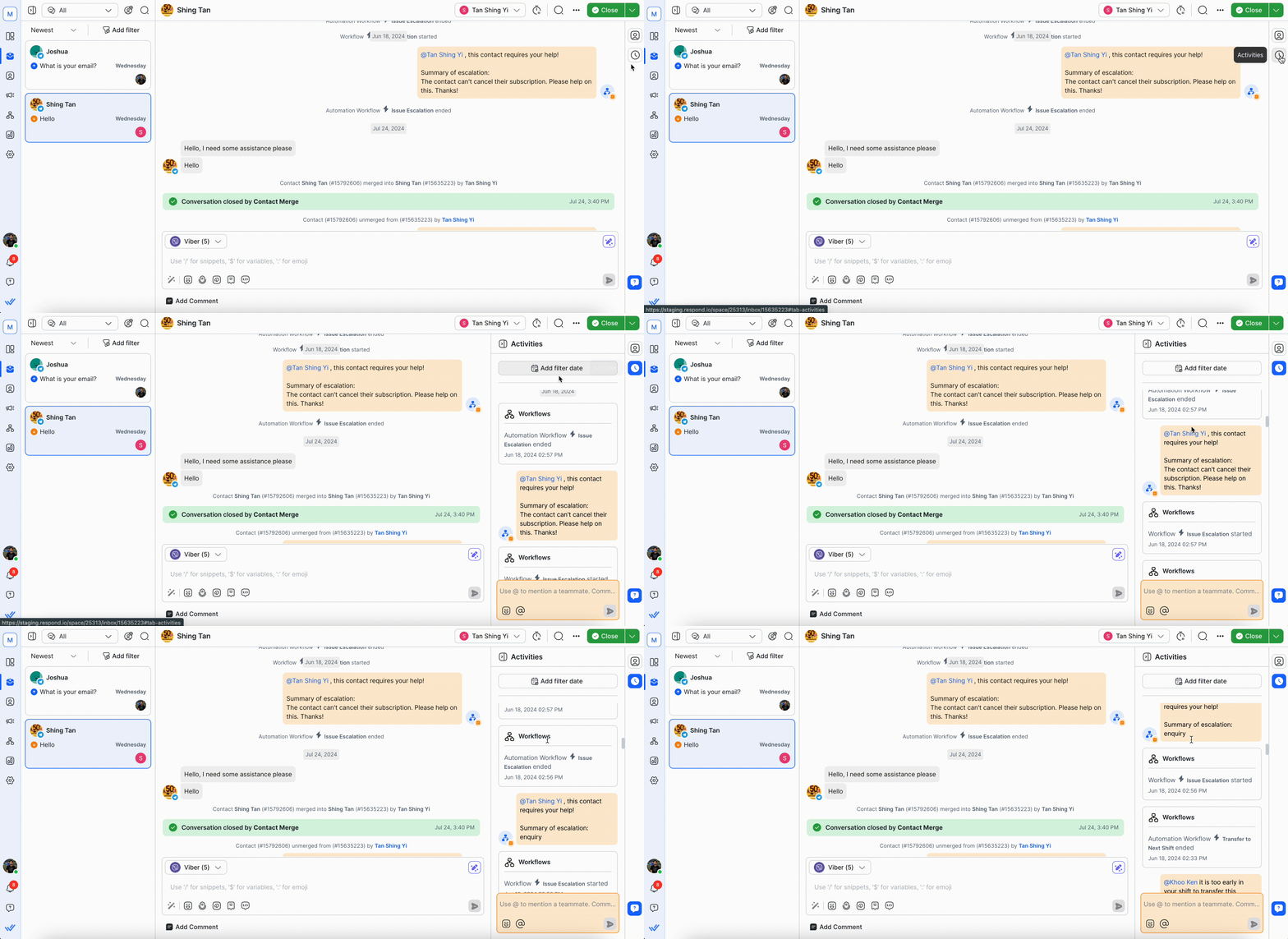
Agents can also tag their teammates to discuss the best way to help a customer or escalate complex cases whenever necessary. Conversation history belongs to the business, so a lead doesn’t have to start over when ownership changes, a shift ends or someone leaves the team. The next agent sees the full timeline across WhatsApp, social, voice and email and picks up where the last one left off. Best of all, agents can easily collaborate, chat with customers and manage their tasks anywhere with the respond.io mobile app.
Performance tracking: Gaining insights for improvement
Managers can track real-time metrics using respond.io’s analytics dashboard to measure response times, conversation ownership, lifecycle progression and broadcast replies once the CRM sync is live. That shows where handoffs slow down, where follow-ups stall and which conversations become pipeline. Leaders can then coach agents, fix routing rules and put more budget into the channels that bring in revenue.
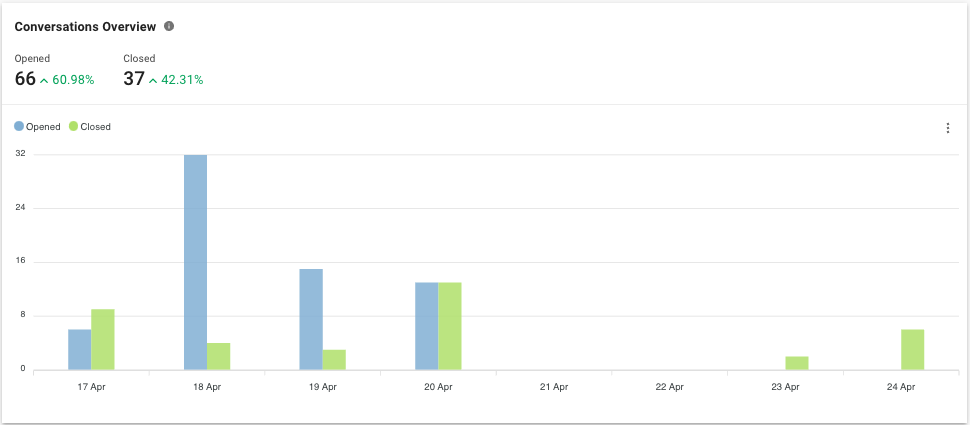
High-value conversations can be filtered and reviewed using a custom inbox to optimize customer interactions and improve overall service quality.
Best practices for using respond.io to bridge WhatsApp and your CRM
To get the most out of respond.io as a link between WhatsApp and your CRM, follow these best practices to ensure you have contact data that will transfer cleanly, merge contacts across channels and segment leads for follow-up across the customer lifecycle. If you don’t, contacts may not sync and leads won’t be followed up with in a timely manner.
1. Collect email and phone numbers
For most CRMs, every lead or customer must have a unique identifier, like their email address or phone number. When a lead contacts you on WhatsApp, respond.io captures their phone number automatically. For email, set up an AI Agent or workflow to ask for it at the right moment. Map the fields your team needs through the supported HubSpot or Salesforce integration. For other CRMs or additional updates, configure Zapier, Make or an HTTP request in Workflows. Check which fields the connection can read or update so staff have the right information when following up.
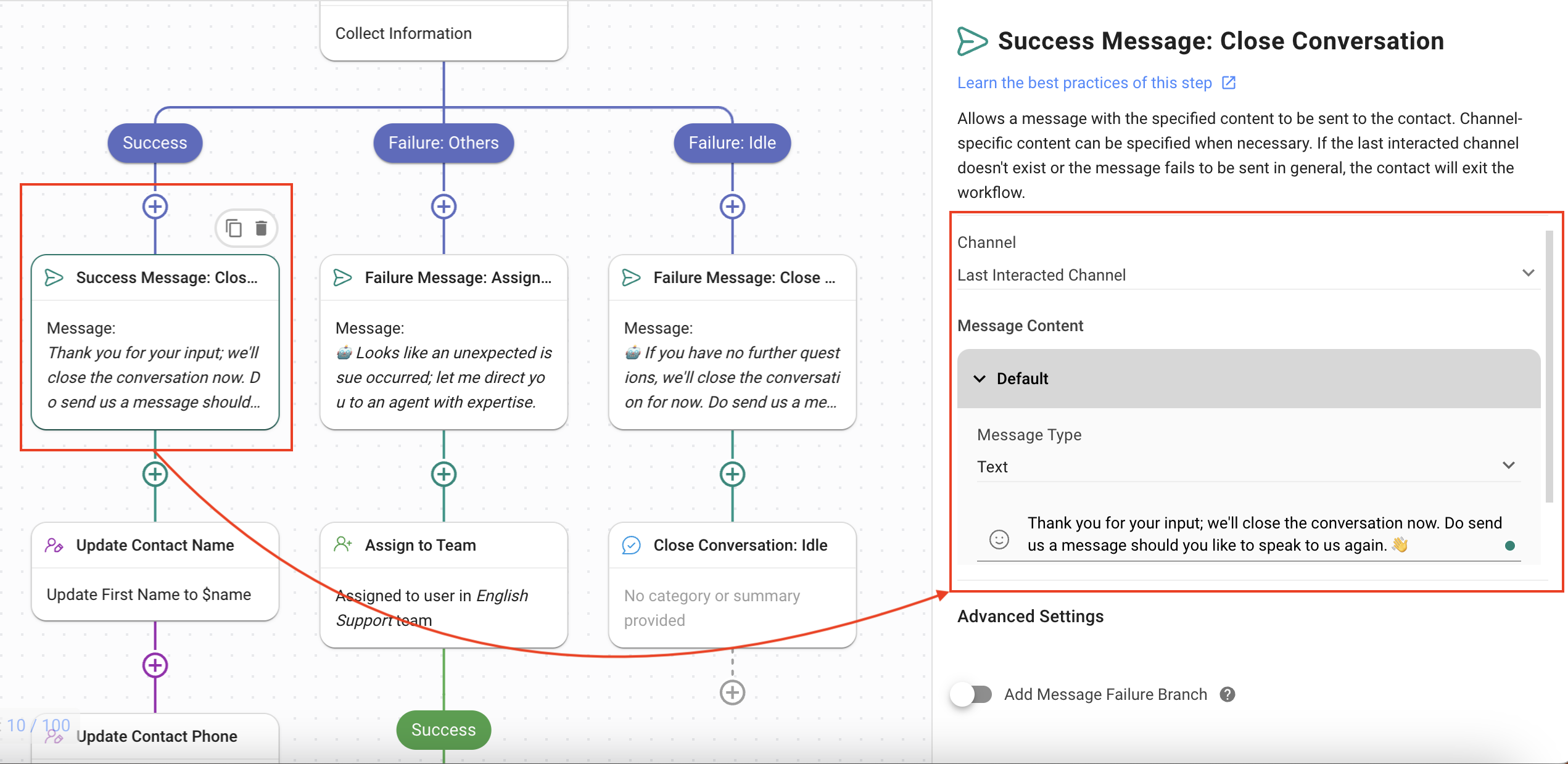
2. Merge contacts to avoid duplicates
Most WhatsApp platforms treat each channel as a separate contact. Respond.io automatically detects when the same person has reached out via WhatsApp and another channel, matches them by email or phone number, and prompts your team to merge — keeping a single, complete contact record across your inbox and CRM.
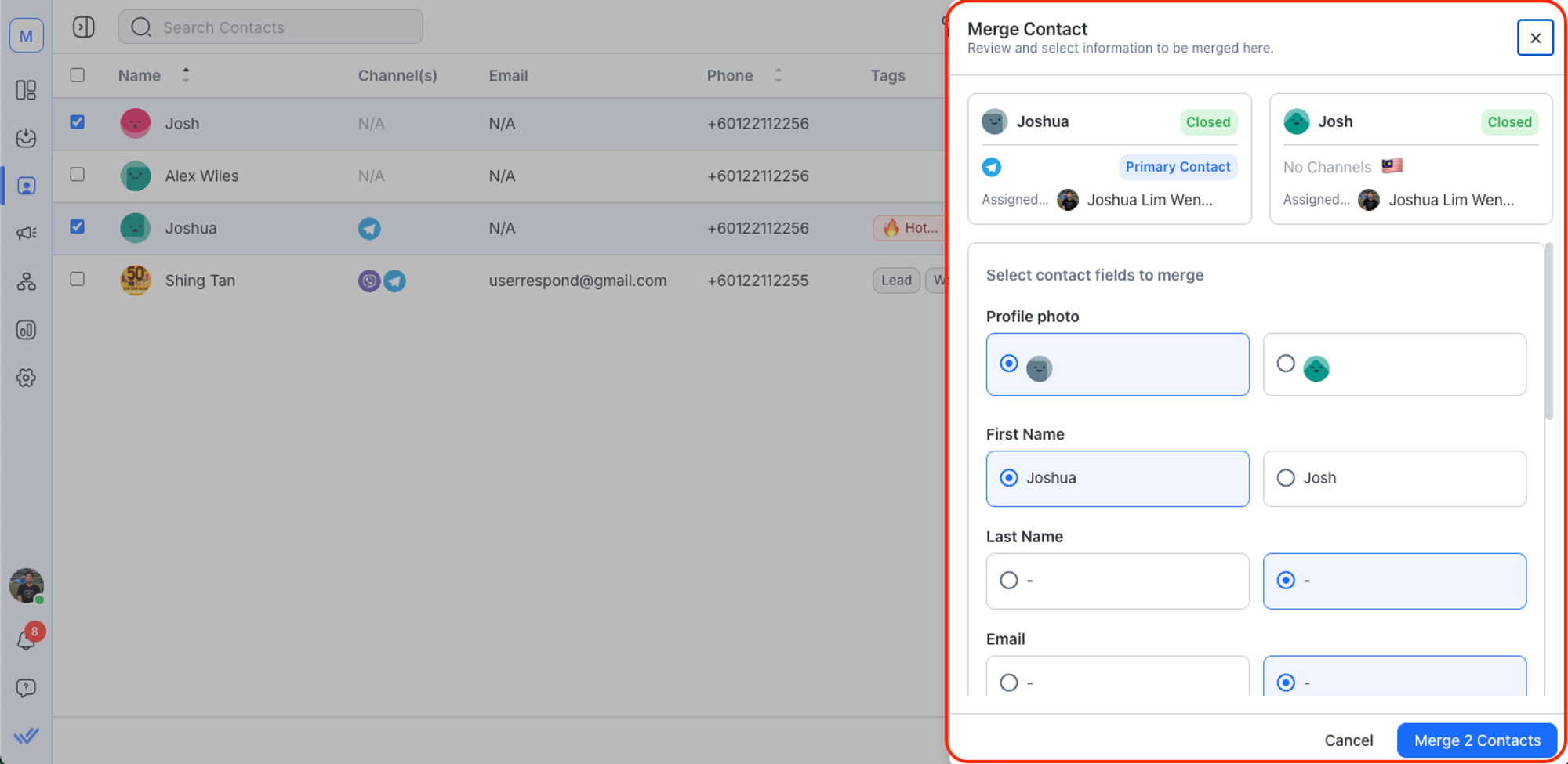
3. Segment customers for WhatsApp broadcasts
Unlike basic CRM field matching, respond.io's Lifecycle feature lets you segment contacts by where they are in the sales process — and target WhatsApp broadcasts accordingly. AI Agents can update Lifecycle stages automatically mid-conversation, so your segments stay current without manual intervention.
Before you get started: When respond.io isn't the right fit
Respond.io works best as the layer between WhatsApp and your CRM — not as a workaround, a CRM replacement, or a broadcast tool for cold contacts. If your CRM’s native WhatsApp integration already handles your volume, routing and reporting, and staff can reply without switching tools, you may not need another platform. If any of the following describes your setup, it may not be the right fit.
Not a CRM replacement
Respond.io sits between WhatsApp and your CRM — it's not a CRM replacement. If you need a single system to manage your entire customer database, pipeline and reporting, you'll still need a dedicated CRM alongside it.
Not for businesses that want to blast cold contacts
Respond.io requires WhatsApp opt-in. If your plan is to import a list of CRM contacts and send them unsolicited promotional messages, respond.io isn't the right tool — and WhatsApp will ban your number before long anyway.
Not for businesses that want to work around WhatsApp's policies
Respond.io is an official WhatsApp BSP, so it operates within WhatsApp's rules, not around them. If your workflow depends on unapproved message templates or high-volume cold outreach, this isn't the platform for that.
WhatsApp CRM: Key takeaways
When WhatsApp and your CRM operate as two separate tools, agents switch between them to reply — and leads go cold in the gap. Respond.io closes that gap by sitting between WhatsApp and your CRM, connecting conversations, contact data, automation and calls in one inbox so your team never has to choose between responding fast and keeping records accurate.
It suits mid-market B2C teams running sales or support on WhatsApp at volume who want to keep their existing CRM. If you're still on the WhatsApp Business App, move to the API first.
Consider switching when customers wait too long for replies, staff move between tools to answer them or your native integration cannot handle the routing and reporting you need. Respond.io lets your team manage those conversations while keeping its existing CRM.
Most teams connect WhatsApp and their CRM in one day, although migrations and custom integrations can take longer.
Comparing options first? Explore the best WhatsApp CRM systems for mid-market B2C teams.
Companies in F&B, hospitality, healthcare, education, real estate and retail have seen real results with this approach. Check out our customer stories to see how businesses are improving response times, automating workflows and handling more conversations without extra effort.
To see how CRM sync connects offline sales back to WhatsApp conversations, read our guide to WhatsApp ROI attribution.
Now it’s time to put this into practice. Sign up for respond.io’s WhatsApp Business API and start managing WhatsApp conversations more effectively today!
FAQ about using respond.io to integrate WhatsApp with a CRM
Is WhatsApp a CRM tool?
No. The WhatsApp Business App has labels, quick replies and a product catalog, but it has no pipeline, lifecycle stages, assignment rules or reporting. It's a messaging app, and customer data stays on the phone it lives on.
A WhatsApp CRM setup connects WhatsApp Business API to a system that stores contacts, tracks where each lead sits in the sales process and lets a team share the work. Respond.io handles the conversation side and syncs that data to the CRM you already use.
What is the difference between WhatsApp Business and WhatsApp CRM?
WhatsApp Business is the free app built for one person or a very small team replying by hand. A WhatsApp CRM runs on WhatsApp Business API and adds what the app can't do: multiple agents on one number, automated routing, lifecycle tracking, broadcasts to opted-in segments and two-way sync with a CRM.
The practical test is volume. If one person can keep up with every chat and nobody needs a report, the app is enough. Once leads wait for replies or ownership gets unclear, it's time for a CRM setup.
What is the best CRM with WhatsApp integration?
The best CRM for WhatsApp depends on your conversation volume, the systems that need customer data and whether your team needs calls and automated follow-up.
Compare the best WhatsApp CRM tools to find the right fit.
What are the biggest mistakes mid-market B2C teams make when setting up a WhatsApp CRM?
The first mistake is choosing based on sticker price alone. Buyers should look at total cost, including platform pricing, WhatsApp messaging charges that now grow with service and utility volume, any provider markup on Meta's rates and the revenue lost when agents switch tools or miss follow-up.
The second is confusing the WhatsApp Business App with the WhatsApp Business API. The app is fine for simple one-person use, but it doesn't support the routing, automation and CRM syncing that larger teams need. The third is automating too early without clear ownership, lifecycle stages and opt-in rules, which creates messy follow-up and weaker campaign performance.
Can I integrate WhatsApp with multiple CRMs?
You can integrate WhatsApp with multiple CRMs by using an intermediary customer conversation platform that can sync the same WhatsApp contact and conversation data to more than one system.
You can configure connections to update contact details and customer lifecycle information in the relevant CRM. For example, different teams or regions can send updates to different systems. The records and fields available depend on each connection.
How much does a WhatsApp CRM cost?
Budget for two parts: the platform that runs your conversations and Meta’s charges for WhatsApp messages. Meta’s October 2026 pricing update made the second part harder to predict, so model your expected message mix and volume before comparing sticker prices.
Respond.io prices by Monthly Active Contacts: Starter from $79/month, Growth from $159/month and Advanced from $279/month when billed annually ($99, $199 and $349 month-to-month), with Enterprise on custom pricing. Meta’s fees are billed separately with no markup, and you can test everything on a 7-day free trial.
Which CRMs support WhatsApp integration?
HubSpot, Salesforce and Zendesk offer native WhatsApp integrations, but their plans and capabilities differ. HubSpot requires Marketing Hub or Service Hub Professional or Enterprise. Salesforce also supports inbound WhatsApp calling through Contact Center in supported regions.
Respond.io connects natively to HubSpot and Salesforce, and to Pipedrive, ActiveCampaign and most other CRMs through Zapier, Make or a custom HTTP request in Workflows. That means you can keep your existing CRM and still run full WhatsApp messaging, automation and calls.
Can I make WhatsApp calls inside my CRM?
Salesforce supports inbound WhatsApp calls through Contact Center for WhatsApp Business numbers in the US, Canada, Mexico and Brazil. Check your CRM’s current WhatsApp calling support rather than assuming its messaging integration includes calls.
With respond.io, your team handles WhatsApp Business Calls in the same workspace as chats. On Advanced and above, configured call event webhooks can send call details to your CRM, including recordings, transcripts and call summaries when enabled.
Can AI Agents answer business calls?
Yes, AI agents can answer voice calls if you use the right tool. On respond.io, you can configure the AI agent’s voice, add instructions and test the experience before going live. This gives you full control over how calls are handled. Unlike standalone voice bots, respond.io’s AI Voice Agent is fully integrated into a unified inbox, allowing mid-market B2C businesses to manage messaging and voice interactions in a seamless thread with every customer, with shared logs and reporting.
How can I use AI Agents to follow up on customer conversations?
If conversations are left hanging pending a customer’s response, you can set your AI Agent to nudge them with a relevant follow-up question. For example, respond.io’s AI Agent goes beyond simple time-based nudges or workflow triggers. It uses conversation history to understand its context and determines when and how to follow up. This understanding helps it avoid contacting customers whose issues are already resolved, and to send personalized, human-like nudges at the right time.
Can multiple agents use one WhatsApp number in a CRM?
Yes, with the WhatsApp Business API. Every agent works from the same number in a shared inbox, with chats assigned by team, shift, language or priority, so two agents don't reply to the same customer. If you want to keep the WhatsApp Business app on that number, coexistence connects it to the API, but messages sent from the phone app don't trigger automations. Some numbers aren't eligible, such as those with a previous account suspension.
Can I automate WhatsApp messages without technical knowledge?
Yes. Respond.io's Workflows use a drag-and-drop builder, so marketing, sales or support managers can set up routing, follow-ups and lead qualification without writing code. AI Agents are configured from your website and business documents, with prompt templates to get the instructions right.
Developer help is only needed for custom integrations, such as connecting a CRM that has no Zapier or Make connector.
How long does WhatsApp Business API approval take?
It depends on how quickly the business clears Meta’s business verification, display name review and phone number setup. Teams with business documents, a live website and an internal owner for approvals ready tend to move faster, while missing verification items cause most delays.
Treat approval as a launch task and finish verification before paid campaigns or live routing depend on the number.
Do I need to replace my CRM to use WhatsApp with respond.io?
You can keep your CRM. Respond.io is a customer conversation platform that works alongside it, so your CRM stays the system of record for pipeline and reporting. Respond.io runs the WhatsApp side, including conversations, AI qualification, routing and calls. It syncs contacts and lifecycle updates back to CRMs like HubSpot, Salesforce and Pipedrive. If you want one tool to replace your CRM entirely, respond.io isn't built for that job.
Is respond.io just a shared inbox for WhatsApp?
No. Respond.io is a customer conversation platform that brings WhatsApp, Instagram, Facebook Messenger, TikTok, Telegram, LINE, Viber, WeChat, voice calls and email into one workspace. It merges contacts across channels and adds AI Agents, Workflows, lifecycle tracking and CRM sync on top.
That matters for mid-market B2C teams because buyers rarely stick to one channel between first inquiry and purchase. With every conversation in one place, agents keep the context and ownership stays clear, whichever channel the customer uses next.
Can WhatsApp be used on multiple devices from a CRM?
Yes. Once WhatsApp runs on the API through respond.io, agents aren’t tied to the phone that registered the number. They can reply from a browser or the respond.io mobile app on any device they’re logged into, and conversation history stays in sync.
If you’d like to keep WhatsApp on a phone too, coexistence lets you use the WhatsApp Business app and the API on the same number. Messages sent from the phone still appear in respond.io, though they won’t trigger automations or open a new service window.
Further reading
Need a more in-depth article to kickstart your marketing, sales and support journey with respond.io? Here are some blogs that might help you.


